In this article
What you’ll learn
- Identify if your grates are cast iron, porcelain-enamel, or ceramic before cleaning.
- Ammonia vapor is the most effective method for heavy carbonized grease.
- Avoid the self-cleaning oven cycle to prevent warping and discoloration.
Maintaining a pristine kitchen is about more than just aesthetics; it is a matter of safety and mechanical efficiency. If you want to clean stovetop grates effectively, you must look beyond the surface grime. In 2025, research from the National Fire Protection Association (NFPA) reminds us that cooking remains the leading cause of home fires. Accumulated grease on your grates serves as a primary fuel source for dangerous "flash fires." Furthermore, heavy carbon buildup can reduce your burner's thermal efficiency by up to 5%, costing you time and money every time you boil a pot of water.
In this guide, we will explore the most advanced, safe, and efficient ways to restore your stovetop to its showroom glory. Whether you are dealing with light weekly splatter or years of "burnt-on" carbonized grease, these professional techniques will ensure your kitchen remains the heart of a safe, high-performing home.
Understanding Your Stovetop Material
Before you reach for the scrub brush, you must identify what your grates are made of. Approximately 85% of modern gas stovetop grates are manufactured from cast iron, typically finished with a porcelain enamel coating. However, the 2025-2026 market has seen a surge in high-end ceramic-coated grates and traditional raw cast iron.
Cast Iron and Porcelain Enamel
Most standard grates from brands like Bosch or Samsung use this combination. The porcelain provides a slick surface, but it is prone to "crazing" or microscopic cracking if exposed to extreme temperature shifts or harsh abrasives.
Ceramic-Coated Grates
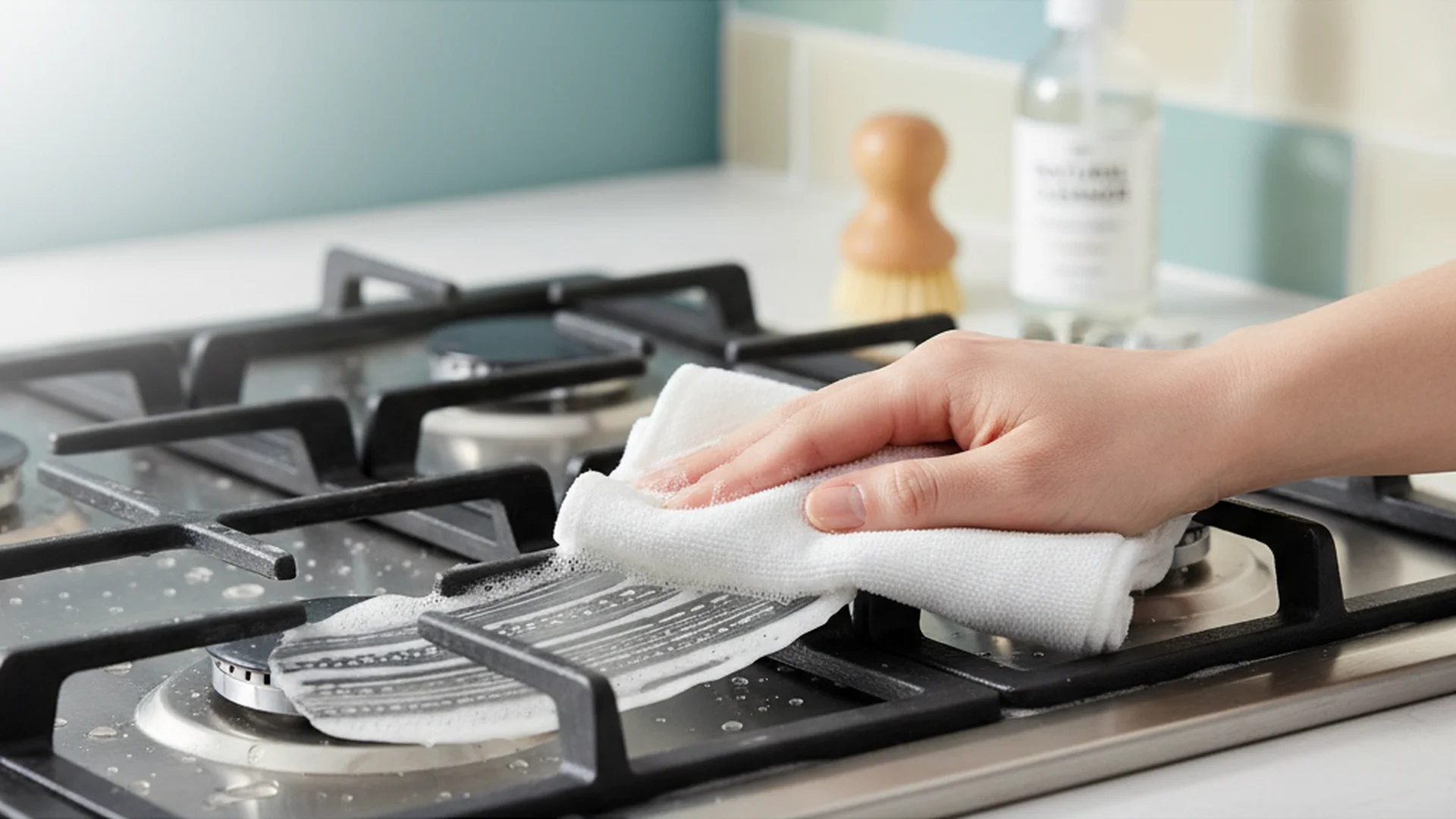
The newest trend in 2026 kitchen tech is the "easy-clean" ceramic coating. These are highly oleophobic, meaning they naturally repel oil. If you have these, you should avoid heavy chemicals entirely, as a simple microfiber cloth and warm water are often all you need.
Raw Cast Iron
Common in vintage or professional-grade ranges, these require "seasoning" similar to a cast-iron skillet. If you strip the grease off these, you must re-oil them to prevent rust.
Note: Check your appliance manual or the manufacturer's website to confirm your grate material. Using the wrong chemical on ceramic or raw iron can cause permanent damage.
Method 1: The Eco-Friendly Daily Scrub
If you clean your kitchen regularly, you likely don't need harsh chemicals. This is the best way clean stovetop grates without impacting your indoor air quality, which can drop significantly when using industrial degreasers.
- Create the Paste: Mix a solution of baking soda and a few drops of grease-cutting dish soap. The mild alkalinity of the baking soda works to neutralize acidic food residues.
- Application: Coat the grates in the paste and let them sit for at least 20 minutes.
- Scrubbing: Use a nylon-bristle brush. Avoid steel wool at all costs.
- Rinse and Dry: Rinse with hot water and dry immediately.
Success: Regular maintenance with baking soda prevents the polymerization of grease, making deep cleans much less frequent.
Method 2: The Ammonia Vapor Hack (Deep Cleaning)
For grates that haven't been touched in months, you need a chemical reaction to break the carbon bonds. This is widely considered the most effective way to clean stovetop grates easily when dealing with "burnt-on" messes.
This method does not require you to soak the metal in liquid; instead, it uses the power of fumes.
- The Setup: Place each individual grate into a heavy-duty, gallon-sized Ziploc bag.
- The Catalyst: Add only 1/4 cup of clear ammonia to the bag. You do not need to cover the grate; the liquid should just sit at the bottom.
- The Seal: Seal the bag tightly.
- The Wait: Leave the bags in a well-ventilated area—ideally a garage or outdoors—for 12 hours.
- The Result: The ammonia fumes penetrate the porous surface of the grease. When you open the bag (away from your face!), the grime will wipe away with a simple sponge.
Warning: Never mix ammonia with bleach. This creates toxic chloramine gas. Always perform this method in a space with high airflow.
Method 3: 2026 Tech – Steam and Enzymes
As we move into 2026, the cleaning industry is shifting away from traditional solvents toward mechanical and biological solutions.
High-Pressure Dry Steam
Handheld steam cleaners have become a staple for professional cleaning consultants. By using high-pressure "dry" steam (water heated above 212°F with low moisture content), you can blast carbonized grease out of the textures of cast iron without any chemicals. This is the gold standard for maintaining the integrity of porcelain coatings.
Enzymatic "Soak Pods"
A new innovation for late 2025 is the stovetop soak pod. These contain concentrated lipases—enzymes specifically engineered to "eat" organic fats and proteins.
| Method | Best For | Chemical Level |
|---|---|---|
| Baking Soda | Weekly Maintenance | Zero |
| Ammonia Vapor | Heavy Carbon Buildup | High |
| Steam Cleaning | Eco-Conscious Deep Clean | Zero |
| Enzymatic Pods | Effortless Soaking | Low |
Real-World Examples
To understand how these methods work in practice, consider these three scenarios:
- The Suburban Family Kitchen: A family of four cooks daily, leading to a "tacky" feel on the grates. By using the Baking Soda Paste every Sunday, they maintain a 100% fire-safe environment without any chemical odors lingering during dinner.
- The Rental Property Turn-Over: A Professional Cleaning Consultant (like myself) enters a home where the grates are completely black with carbon. We utilize the Ammonia Vapor Method overnight. By the next morning, the grates look brand new for the incoming tenants, requiring zero manual scrubbing.
- The High-End Chef’s Kitchen: Using a Wolf range with ceramic-coated grates, the owner uses a handheld steamer with a brass-bristle attachment. This allows them to clean the grates in place (after the range has cooled) in under five minutes, maintaining the oleophobic properties of the ceramic.
Common Mistakes to Avoid
Even with the right intentions, many homeowners inadvertently damage their appliances. Avoid these frequent pitfalls:
- Using the Self-Cleaning Oven: It is a common myth that you can put grates in the oven during a self-clean cycle. The extreme heat (often exceeding 900°F) can warp the metal, destroy the "feet" of the grates, and cause porcelain to flake off.
- The Steel Wool Trap: Steel wool creates microscopic scratches. While it removes grease today, those scratches become "anchors" for grease tomorrow, making the grates significantly harder to clean over time. Use nylon or brass.
- Relying on Vinegar: Vinegar is an acid. While it is excellent for removing hard water spots on glass, it is scientifically ineffective at breaking down the polymerized fats found on stovetops. You need an alkaline base like baking soda or ammonia.
- Ignoring the Rubber Feet: Most grates have small rubber pads to prevent scratching the cooktop. Soaking these in harsh degreasers can dissolve the adhesive. Always check if they can be removed before a long soak.
Tip: After any deep clean, place your grates in a 200°F oven for 10 minutes. This ensures all moisture is evaporated from the porous metal, preventing "flash rust."
Frequently Asked Questions
Can I put my grates in the dishwasher?
How do I get off "burnt-on" grease that won't budge?
Is it safe to use a brass brush on porcelain?
How often should I clean my stovetop grates?
Conclusion
Learning how to clean stovetop grates is a fundamental skill for any homeowner looking to maintain an efficient and safe kitchen. By matching the right method—whether it's the eco-friendly baking soda scrub, the powerful ammonia vapor hack, or 2026’s latest steam technology—to your specific grate material, you ensure your appliance lasts for decades. Remember: a clean grate isn't just about looks; it's about better airflow, lower energy bills, and a safer home.
Cleaning that keeps score
Every task earns points, every streak multiplies them, and Premium adds a household leaderboard plus a monthly Dustagorgon to beat.
- Free forever
- 30 badges to earn
- Up to 6 in a household
No card needed. Set up your rooms in a couple of minutes.