In this article
What you’ll learn
- Never use steam cleaners or wet shampoo on sisal due to shrinkage risks.
- Regular suction-only vacuuming is the primary way to extend rug lifespan.
- Dry cleaning powders and baking soda are the safest methods for deep cleaning.
In the world of high-end interior design, few materials offer the earthy, sophisticated texture of sisal. Derived from the Agave sisalana plant, these rugs are the pinnacle of "Earth-First Luxury" for 2026. However, as many homeowners discover too late, these fibers are notoriously temperamental when it comes to moisture. Knowing how to clean sisal rug fibers properly is the difference between a floor piece that lasts a decade and one that ruins within a month. Unlike synthetic carpets, sisal is highly hydrophilic, meaning it drinks water and expands, often leading to permanent warping or unsightly "browning."
The Science of Sisal: Why Traditional Cleaning Fails
Sisal is a 100% natural fiber renowned for its incredible tensile strength. Historically used for maritime ropes, it is built to withstand tension, not saturation. When you apply water to sisal, the fibers absorb the liquid and can shrink by up to 1% in width and over 3% in length. This is why standard "wet" carpet cleaning methods—like steam cleaning or heavy shampooing—are the enemy of natural fiber rugs.
Furthermore, sisal contains natural tannins. When the rug gets too wet, these tannins rise to the surface as the rug dries, creating dark, tea-colored stains known as "cellulosic browning." To maintain the aesthetic and structural integrity of your rug, you must shift your mindset from "washing" to "dry maintenance."
Warning: Never use a steam cleaner on a sisal rug. The high heat and moisture will cause immediate, irreversible shrinkage and fiber distortion.
The Daily Routine: Vacuuming for Longevity
The best way clean sisal rug installations on a daily basis is through frequent, high-power suction. Because of the chunky, porous weave of sisal, dirt and grit don't just sit on top; they fall deep into the fibers. Once trapped, these particles act like sandpaper, grinding against the fibers every time you walk across the rug, leading to premature fraying.
The 5-Minute Vacuum Rule
Experts recommend vacuuming sisal 2–3 times per week. However, the type of vacuuming matters more than the frequency.
- Disengage the Beater Bar: Modern vacuums often have rotating brushes (beater bars) designed to agitate synthetic carpets. On sisal, these brushes will snag the natural weave and cause "sprouting"—where small fiber ends stick up across the surface.
- Use Suction-Only Settings: Use a high-suction floor tool or turn off the brush roll.
- Vary Directions: Vacuum from several different angles to pull grit out of the deep "valleys" of the weave.
Tip: If you see "sprouting" (loose fibers sticking up), do not pull them. Simply snip them level with the rug surface using a sharp pair of scissors.
Spill Emergency Protocol: The "Blot, Don't Rub" Rule
Accidents are inevitable, but a coffee spill doesn't have to be a death sentence for your rug. The secret to success is speed and upward pressure.
The Step-by-Step Blotting Method
If a liquid spill occurs, follow this protocol immediately:
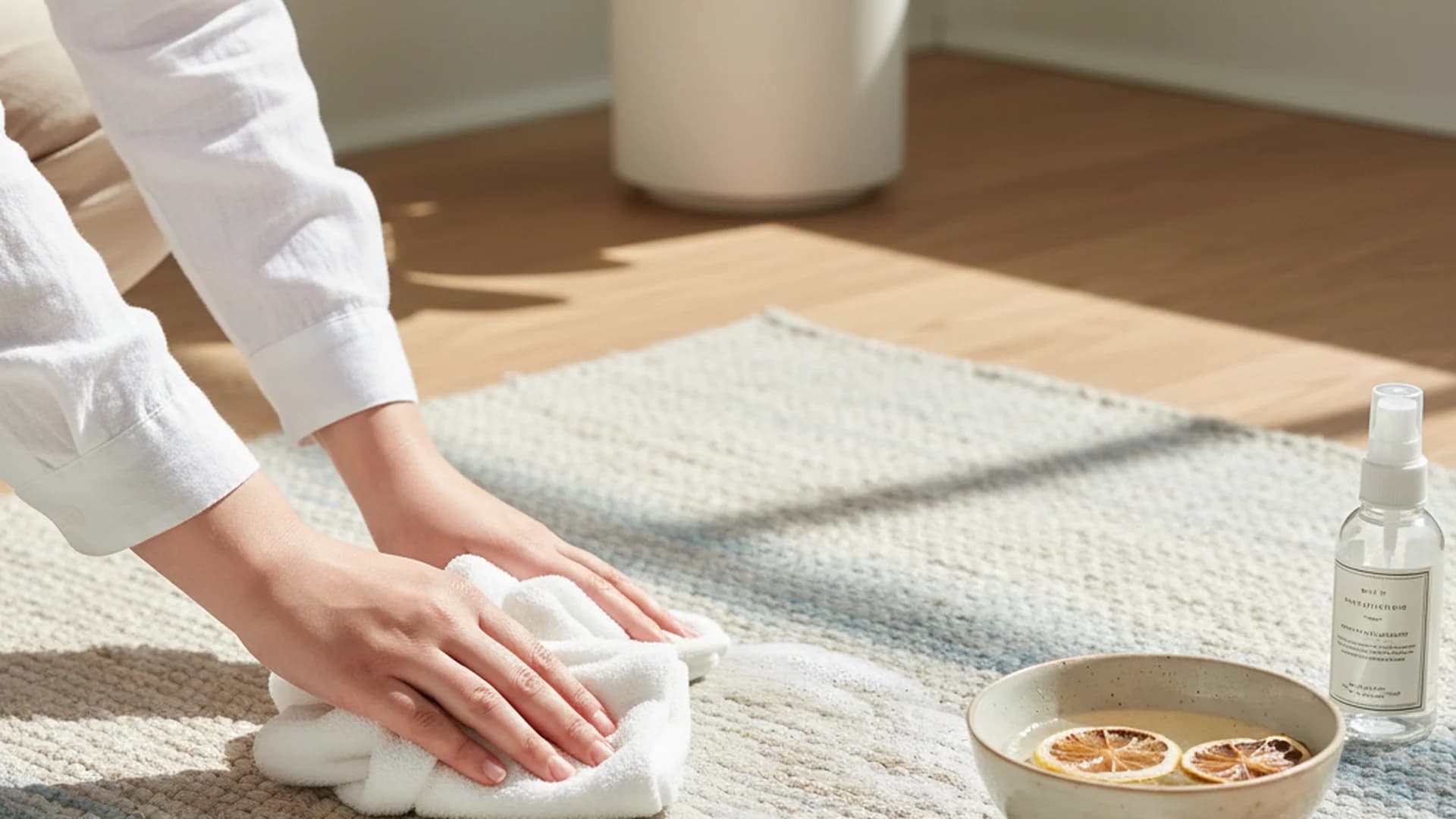
- Immediate Blotting: Use a clean, white cotton cloth or a thick stack of paper towels. Press firmly straight down into the spill.
- Draw Upward: The goal is to pull the liquid out of the rug into the towel.
- Avoid Rubbing: Never rub or scrub in a circular motion. This pushes the liquid deeper into the core of the agave fibers and frays the delicate surface.
- The "Hair Dryer Hack": Once you have blotted as much as possible, use a hair dryer on a cool/low-heat setting to dry the area quickly. This prevents the moisture from sitting long enough to cause browning or rings.
Real-World Example: The Red Wine Crisis
A client in a high-traffic London flat recently spilled red wine on a large sisal area rug. Instead of reaching for a chemical spray, she immediately used a white towel to blot the liquid. After removing the bulk of the wine, she applied a tiny amount of club soda to a cloth, blotted again, and used a hair dryer to finish. Because she avoided saturation and dried it instantly, the rug remained stain-free.
How to Clean Sisal Rug Naturally
If your rug is looking dull or has developed an odor, you can clean sisal rug naturally using common household staples. These methods avoid harsh chemicals that can bleach natural plant fibers.
Baking Soda for Odor Removal
Sisal is highly absorbent, meaning it can trap smells from cooking, pets, or smoke.
- Sprinkle a generous layer of baking soda over the entire rug.
- Let it sit for 24 hours (this allows the powder to neutralize odors).
- Vacuum thoroughly using the suction-only setting.
White Vinegar for Stubborn Spots
For spots that haven't responded to blotting, a 50/50 mix of white vinegar and water can work—if used sparingly.
- Dampen a cloth with the mixture (it should be damp, not dripping).
- Dab the spot gently.
- The acidity of the vinegar helps neutralize the alkaline nature of the fibers, which can prevent browning.
- Success: Immediately dry the area with a fan or hair dryer.
Cornstarch for Oil and Grease
If you drop food on your rug, cornstarch or cornflour is your best friend.
- Cover the grease spot with the powder.
- Leave it for 2-4 hours to draw the oil out of the fibers.
- Brush it away gently and vacuum.
| Stain Type | Treatment | Tool |
|---|---|---|
| Mud/Dirt | Let dry, then scrape | Dull knife/Vacuum |
| Grease/Oil | Cornstarch | Soft Brush |
| Red Wine | Club Soda (Minimal) | White Cloth |
| Pet Odor | Baking Soda | Suction Vacuum |
2025-2026 Innovations in Sisal Care
The flooring industry has evolved significantly for the 2025/2026 season. We are seeing a major shift toward "SynSisal®"—a high-end synthetic alternative made from ECONYL® (regenerated nylon from ocean waste). If you have a high-spill household (pets and kids), these 2026 versions offer the organic look of sisal but are fully bleach-safe and wet-cleanable.
For those who prefer the 100% natural EarthSISAL™, the latest recommendation is the application of a Sisal-Guard protector. This is a specialized fluoropolymer coating applied at the factory or immediately after purchase. It creates a molecular barrier that slows down liquid absorption, giving you minutes rather than seconds to react to a spill.
Note: Professional "encapsulation" cleaning is the 2026 gold standard for deep cleaning natural fibers. It uses low-moisture polymers that crystallize dirt, which are then vacuumed away without ever soaking the rug.
Common Mistakes to Avoid
Even well-intentioned cleaning can ruin a sisal rug. Avoid these common pitfalls:
- Scrubbing the Binding: Most sisal rugs have a cotton or leather border. If you scrub this border with water, the dyes from the fabric can bleed into the sisal, creating a permanent multi-colored stain.
- Using Supermarket Carpet Cleaners: Most "Oxi" or "High-Traffic" cleaners are designed for synthetic nylons. They are far too alkaline for plant fibers and will cause permanent yellowing or bleaching.
- Neglecting the Backing: Many sisal rugs have a latex or felt backing. If these get wet and stay damp, they can trap mold and mildew against your hardwood floors.
- Folding the Rug: Never fold a sisal rug for storage; it will create permanent "bruises" or creases in the agave fibers. Always roll it with the pile facing outward.
Frequently Asked Questions
Can I steam clean my sisal rug?
How do I fix curled corners on my rug?
Is sisal pet-friendly?
My rug has a "grass" smell. How do I get rid of it?
Conclusion
Cleaning a sisal rug requires a "dry-first" philosophy. By focusing on frequent suction-only vacuuming, immediate blotting of spills, and the use of natural powders like baking soda, you can maintain the beauty of these sustainable fibers for over a decade. As we move into 2026, the focus on "Earth-First Luxury" makes sisal a premier choice, provided you respect its hydrophilic nature.
Success: By following these low-moisture protocols, you will preserve the structural integrity and organic beauty of your rug, ensuring it remains a centerpiece of your home for years to come.
Cleaning that keeps score
Every task earns points, every streak multiplies them, and Premium adds a household leaderboard plus a monthly Dustagorgon to beat.
- Free forever
- 30 badges to earn
- Up to 6 in a household
No card needed. Set up your rooms in a couple of minutes.