In this article
What you’ll learn
- Machine wash plastic liners with towels to "scrub" away grime.
- Never mix bleach and vinegar as it creates toxic chlorine gas.
- Close your curtain fully after every shower to prevent mold incubation.
Did you know that your bathroom’s greatest hygiene threat isn’t the toilet seat? Recent research from 2025 reveals a startling reality: a neglected shower curtain can harbor up to 60 times more bacteria than a toilet seat. We often step into the shower to get clean, but if you don't know the best way to clean shower curtain liners and fabrics, you might be bathing in a breeding ground for microbes.
As a Domestic Efficiency Specialist, I see homeowners overlook this essential task constantly. Whether it’s the unsightly "pink mold" creeping up from the hem or the stiff, white mineral deposits clouding your liner, learning how to clean shower curtain easily is vital for both your health and your home's aesthetic. This guide will walk you through the latest 2025-2026 cleaning standards to ensure your bathroom remains a true sanctuary.
Why Your Shower Curtain Gets So Dirty
Before we dive into the cleaning methods, it is important to understand what we are fighting. The most common culprit is a pink or orange slime found at the bottom of the curtain. This isn't actually mold; it is Serratia marcescens, a bacterium that thrives on the phosphorus found in soap residue and fatty acids in body oils.
While Serratia marcescens is common, it’s not harmless. It can cause urinary tract or respiratory infections in vulnerable individuals. When you combine this bacteria with mineral deposits from hard water and the high-humidity environment of a bathroom, you get a "biofilm" that is notoriously difficult to rinse away with water alone.
Note: Modern trends for 2026 show a massive shift toward antimicrobial materials like hemp and linen, which naturally resist this bacterial growth better than traditional polyester.
The Best Way to Clean Shower Curtain Liners (Plastic, Vinyl, and PEVA)
Many people assume that once a plastic liner looks "crusty," it is time to throw it away. These are designed to be cleaned, not tossed.
The Famous "Towel Trick"
This is the gold standard for cleaning plastic or vinyl liners in a washing machine. Because plastic doesn't have the "grit" to scrub itself, it often comes out of the wash still smelling like mildew if you wash it alone.
- Remove the curtain: Take the liner off the rings.
- The Towel Buffer: Place the liner in the washing machine along with two large, white cotton towels.
- The Agitation: The towels act as mechanical "scrubbers," rubbing against the plastic to physically break down soap scum and mineral deposits.
- The Settings: Use a warm cycle (approx. 90-100°F).
- Detergent and Boosters: Use your standard detergent and add half a cup of baking soda to the drum. This neutralizes odors and helps lift stains.
Warning: Never put a plastic or vinyl liner in the dryer. Even on the lowest heat setting, the plastic can melt, potentially ruining your appliance and releasing toxic fumes. Always hang it back on the rod to air dry.
Cleaning While Hanging
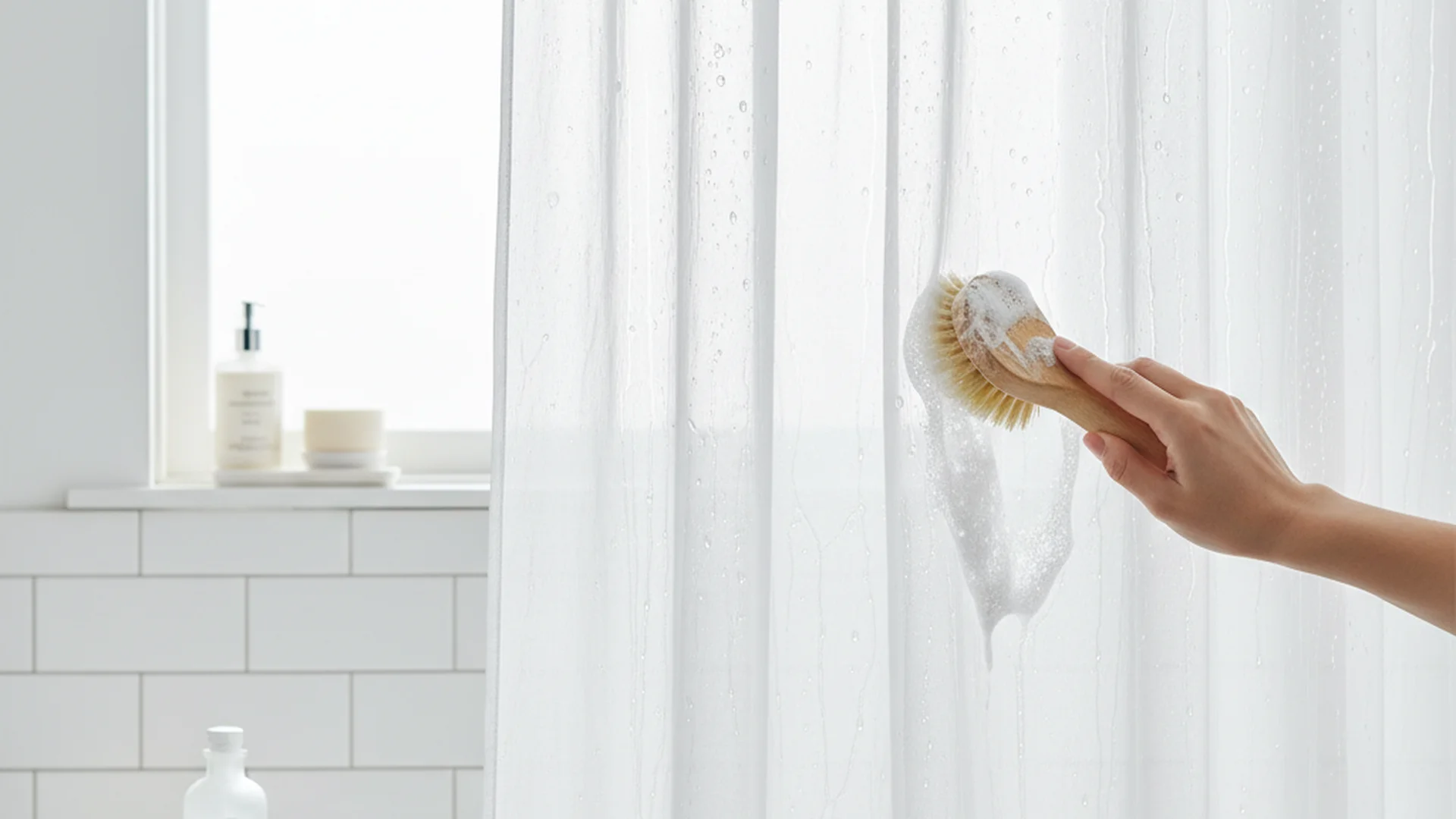
If you don't have a washing machine or need a quick touch-up, you can clean shower curtain easily without taking it down.
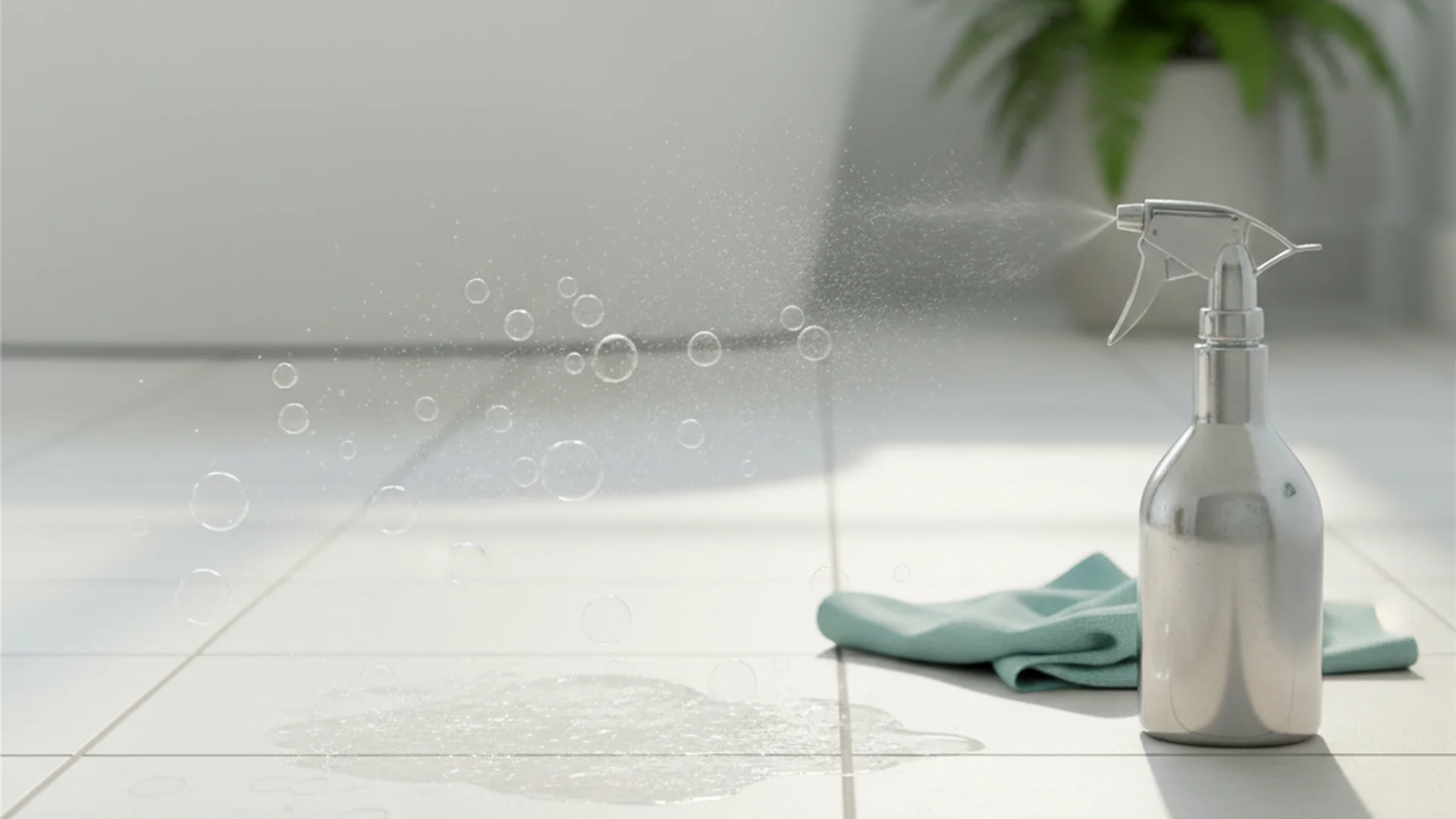
- Fill a spray bottle with a 50/50 mix of white vinegar and water.
- Spray the bottom third of the curtain (where 90% of bacteria live).
- Let it sit for 10 minutes.
- Scrub with a microfiber cloth and rinse with the showerhead.
How to Clean Fabric Shower Curtains
Fabric curtains (cotton, polyester, or the trending linen/hemp) require a slightly different approach. These materials are porous, meaning they absorb odors and bacteria deep into the fibers.
Deep Cleaning Fabric
For high-traffic bathrooms, a fabric curtain should be laundered at least once a month.
- Wash in Hot Water: Unlike plastic, fabric can usually handle higher temperatures which are better for killing bacteria.
- Oxygen Bleach: Instead of traditional chlorine bleach, which can weaken fibers over time, use an "oxygen bleach" (like OxiClean). This keeps whites bright and colors vivid while sanitizing.
- The Rinse: Ensure a double rinse cycle to remove all soap residue, as leftover soap becomes "food" for the next round of bacteria.
Tip: If you use a high-quality hemp or linen curtain—a major trend for 2026—avoid high heat in the dryer to prevent shrinking. Air drying is best to maintain the material's integrity.
Material Maintenance Comparison
| Material Type | Cleaning Method | Best Sanitizer | Life Expectancy |
|---|---|---|---|
| Vinyl/PVC | Machine (Towel Trick) | Baking Soda | 3-6 Months |
| PEVA/EVA | Machine (Towel Trick) | Vinegar | 1-2 Years |
| Polyester | Machine (Hot) | Oxygen Bleach | 2-3 Years |
| Cotton | Machine (Hot) | Oxygen Bleach | 3-5 Years |
| Hemp/Linen | Machine (Warm) | UV-C Light/Vinegar | 10-20 Years |
Common Mistakes to Avoid
In my years as a Domestic Efficiency Specialist, I have seen many well-intentioned cleaning sessions end in disaster. Avoid these common pitfalls:
1. The Bleach + Vinegar Danger
This is the most critical safety rule in the bathroom. Many DIY guides suggest using vinegar to remove lime and bleach to kill mold. Never mix them. Combining bleach and vinegar creates toxic chlorine gas, which can be fatal in enclosed spaces like a bathroom. If you must use both, rinse the curtain and the tub thoroughly between applications.
2. Ignoring the Bottom Hem
Most people focus on the middle of the curtain because that is what they see at eye level. However, the weighted bottom hem is the "mold incubator." This area traps water and soap, providing the perfect environment for Serratia marcescens. Always spend extra time scrubbing the bottom two inches.
3. Temperature Extremes
Using freezing cold water can make plastic liners brittle and prone to cracking, making them uncomfortable to use and more likely to trap grime in the cracks. Conversely, boiling water can warp the shape of vinyl. Stick to the "warm" sweet spot for the best results.
Success: Regularly cleaning your curtain can extend the life of a standard PEVA liner from 3 months to over 2 years, saving money and reducing plastic waste.
2025-2026 Trends in Bathroom Hygiene
The way we clean shower curtain surfaces is evolving with technology. Here are three trends currently taking over the industry:
- UV-C Sanitizing Wands: Many homeowners are now using handheld UV-C wands to quickly sterilize their shower curtains between deep cleans. This kills 99.9% of surface bacteria without chemicals.
- "No-Hook" Evolution: We are seeing a move toward grommet-free, hookless designs. These eliminate the "nooks and crannies" on traditional rings where mold often starts.
- Biophilic Materials: Sustainable fabrics like hemp are trending because they are naturally antimicrobial and much more breathable than synthetic polyester, which significantly slows mold growth.
Frequently Asked Questions
Can you put a plastic shower curtain in the washing machine?
How do I get rid of the yellow/orange stains at the bottom?
How often should I clean my shower curtain?
Do I need to take the curtain down to clean it?
Why is my shower curtain turning pink?
Conclusion: Maintenance is Key
Learning the best way clean shower curtain liners isn't just about aesthetics; it's about maintaining a healthy home environment. By using the "Towel Trick," avoiding dangerous chemical mixtures, and staying consistent with a monthly cleaning schedule, you can keep your bathroom sparkling and bacteria-free.
Remember, the simplest habit to prevent mold growth is the "Post-Shower Stretch": always pull your curtain fully across the rod after every use. If left bunched up, moisture remains trapped in the folds, creating a perfect incubator for the very bacteria we want to avoid.
Success: By following these specialist-approved steps, you'll ensure your shower remains a hygienic space for years to come.
Cleaning that keeps score
Every task earns points, every streak multiplies them, and Premium adds a household leaderboard plus a monthly Dustagorgon to beat.
- Free forever
- 30 badges to earn
- Up to 6 in a household
No card needed. Set up your rooms in a couple of minutes.