In this article
What you’ll learn
- Use dry methods for real wood to prevent warping and finish damage.
- Microfiber cloths and vacuum brush attachments are your best tools.
- Never take shutters down to clean them; it risks hardware damage.
Plantation shutters are more than just window coverings; they are a timeless architectural feature that can increase your home's resale value by 2% to 5%. However, because they are a permanent fixture, keeping them pristine is essential for maintaining both their aesthetic appeal and their functional lifespan. If you are wondering how to clean plantation shutters efficiently without damaging the delicate louvers or the finish, you have come to the right place.
In this guide, we will explore the most effective techniques for 2025, from quick weekly dusting to deep-cleaning methods that handle grease and grime. Whether you have classic basswood, modern composite, or high-tech motorized shutters, these professional-grade tips will ensure your windows remain a highlight of your home.
Understanding Your Shutter Material
Before you grab a bucket of water, you must identify what your shutters are made of. The "best way to clean plantation shutters" depends entirely on the material, as using the wrong cleaning agent can lead to permanent damage.
| Material Type | Average Lifespan | Water Resistance | Best Cleaning Tool |
|---|---|---|---|
| Real Wood | 10–20 Years | Low (Avoid Water) | Microfiber & Polish |
| Composite | 15–25 Years | Moderate | Damp Microfiber |
| PVC / Vinyl | Up to 30 Years | High | Mild Soap Solution |
Real Wood Shutters
Real wood (often Basswood or Poplar) is susceptible to moisture. When cleaning real wood, the goal is to remove dust while preserving the wood's natural oils and finish.
Faux Wood and Composite
These are made from a mix of wood fibers and plastic resins. They are more durable than real wood but still require care to ensure the "Eco-Shades" (a 2025 trend) do not lose their structural integrity due to harsh chemicals.
PVC and Vinyl Shutters
Common in bathrooms and kitchens, these are the most moisture-resistant. However, low-quality vinyl can yellow over time if exposed to heavy smoke or improper cleaners like bleach.
How to Clean Plantation Shutters Without Taking Them Down
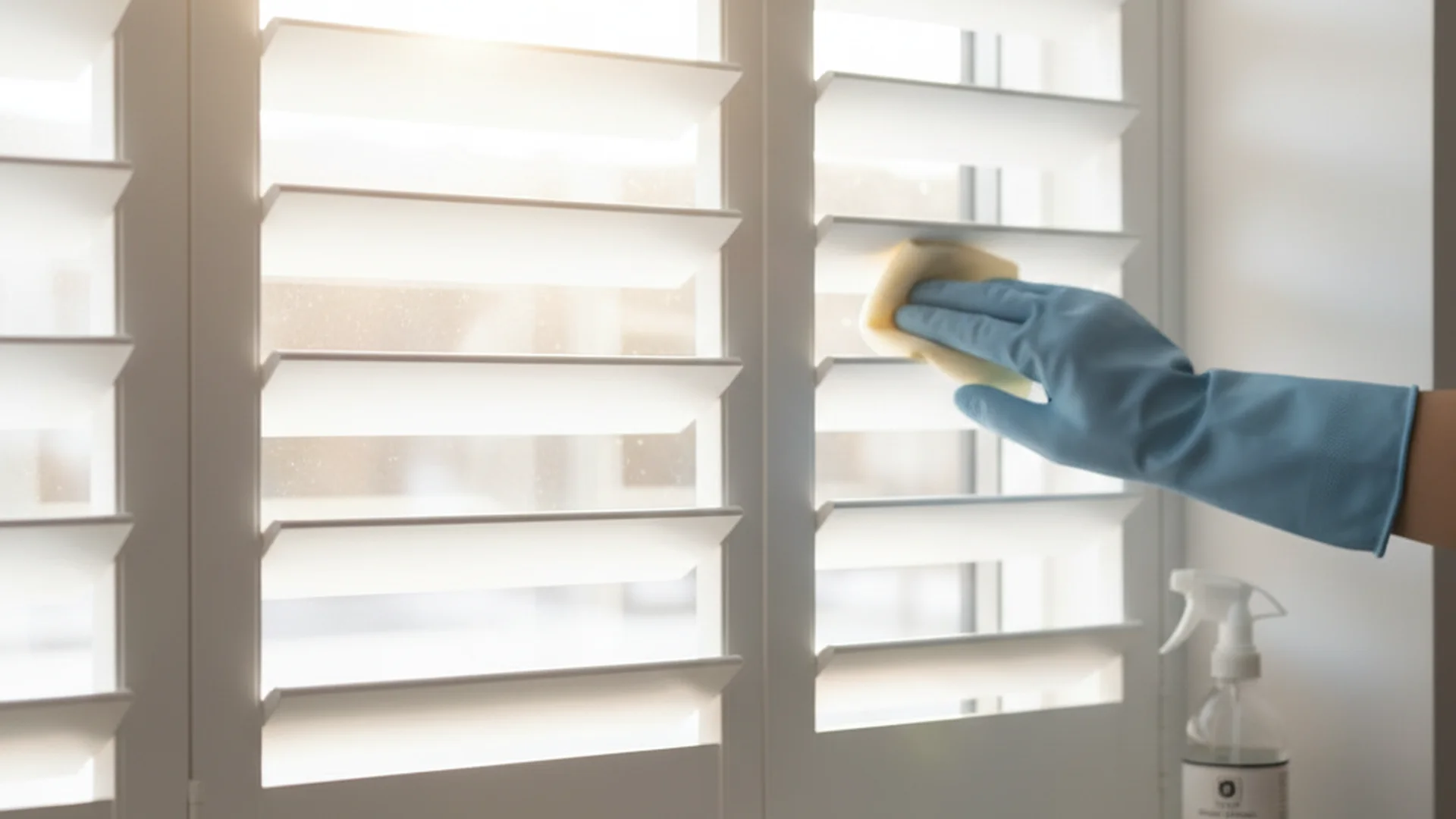
A common misconception among new homeowners is that you need to remove the shutters from their hinges to get them truly clean. In reality, the clean plantation shutters without taking down method is the professional standard. Removing them frequently can loosen the hinges, strip the screw holes in your window frame, and lead to misalignment.
The Weekly Maintenance Routine
For most homes, a quick weekly pass is all that is needed to prevent allergens and dust from settling.
- The Vacuum Phase: Use a handheld vacuum with a soft brush attachment. Close the louvers flat and vacuum in a downward motion. Flip the louvers and repeat on the back.
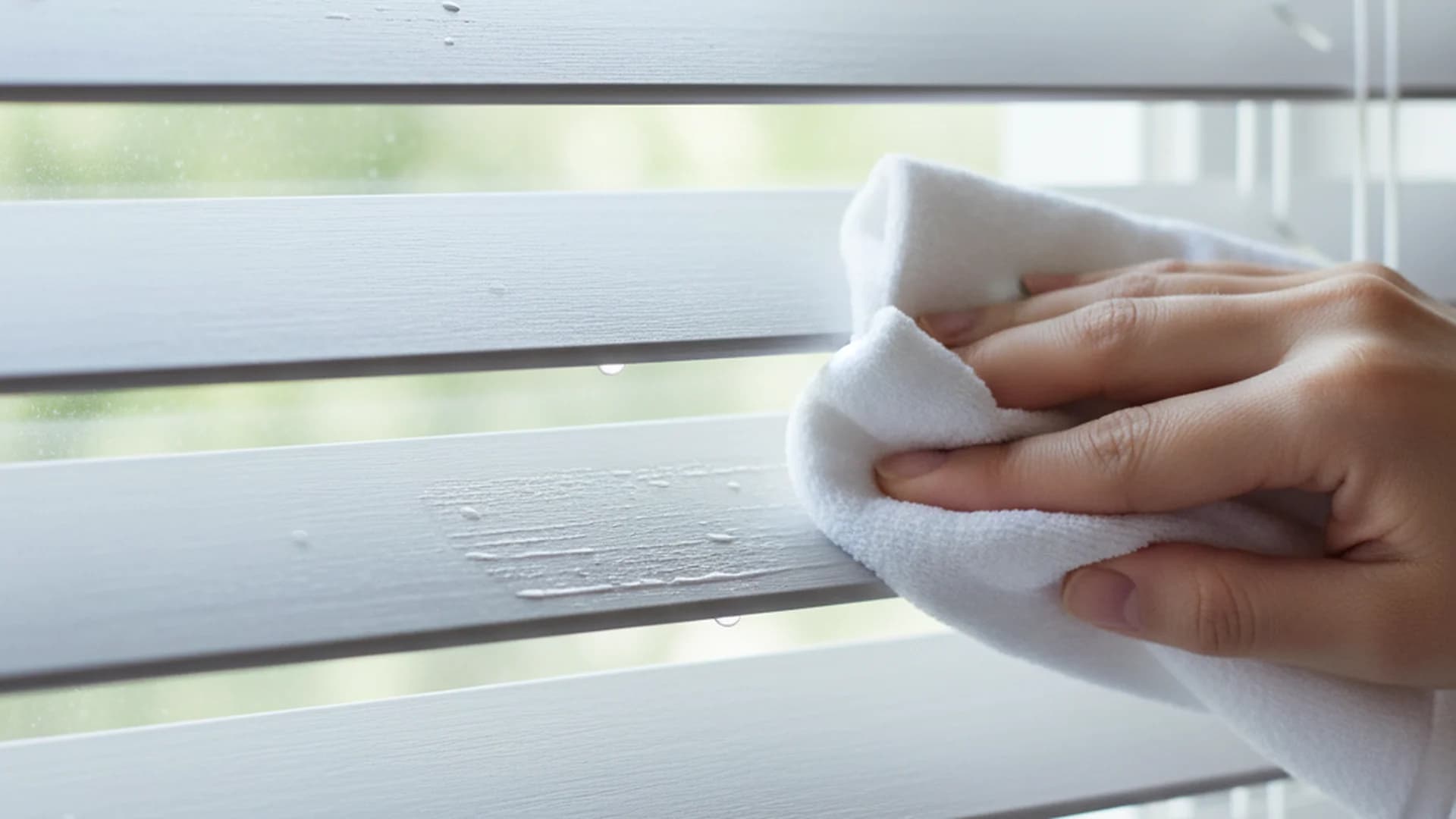
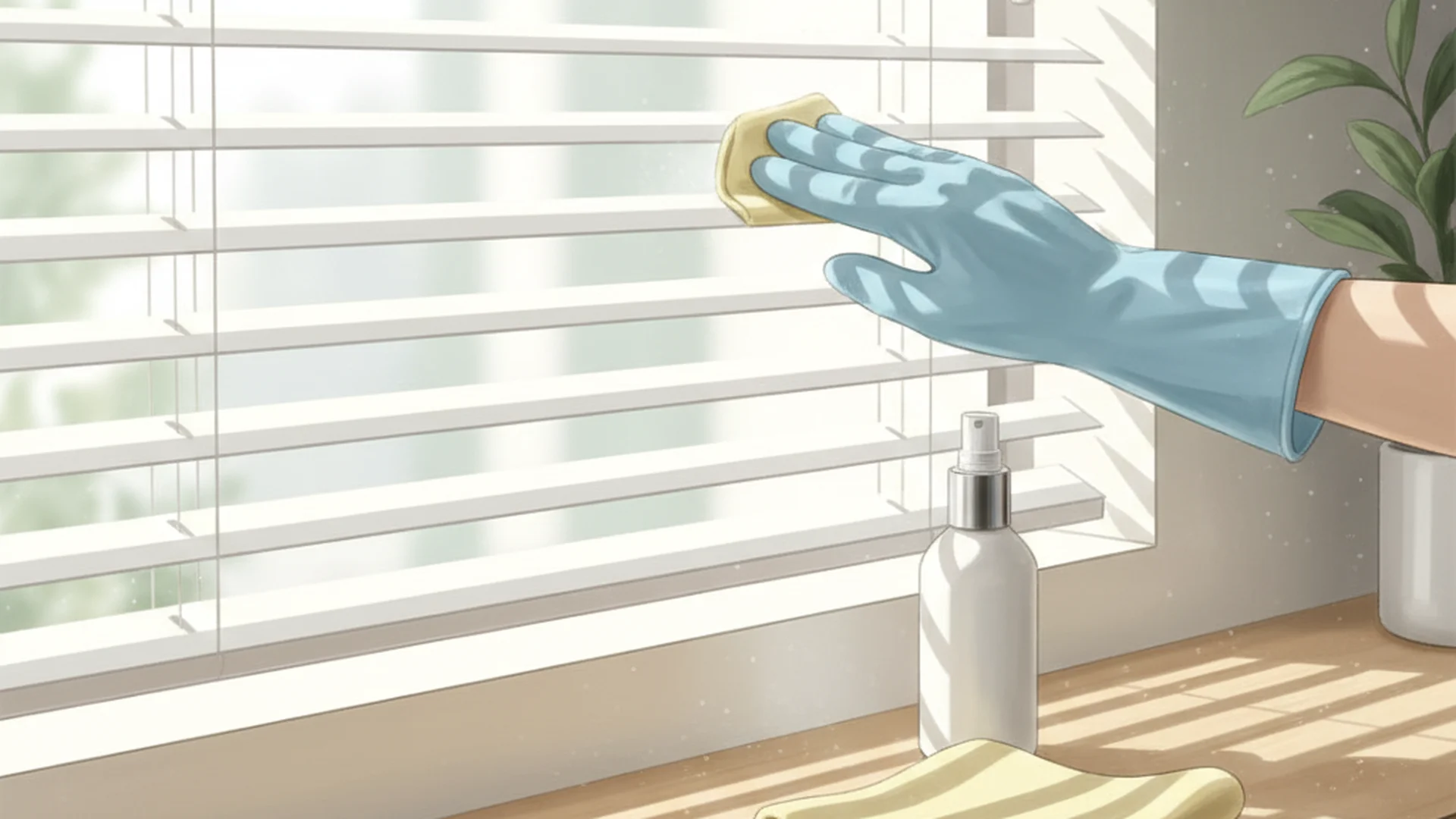
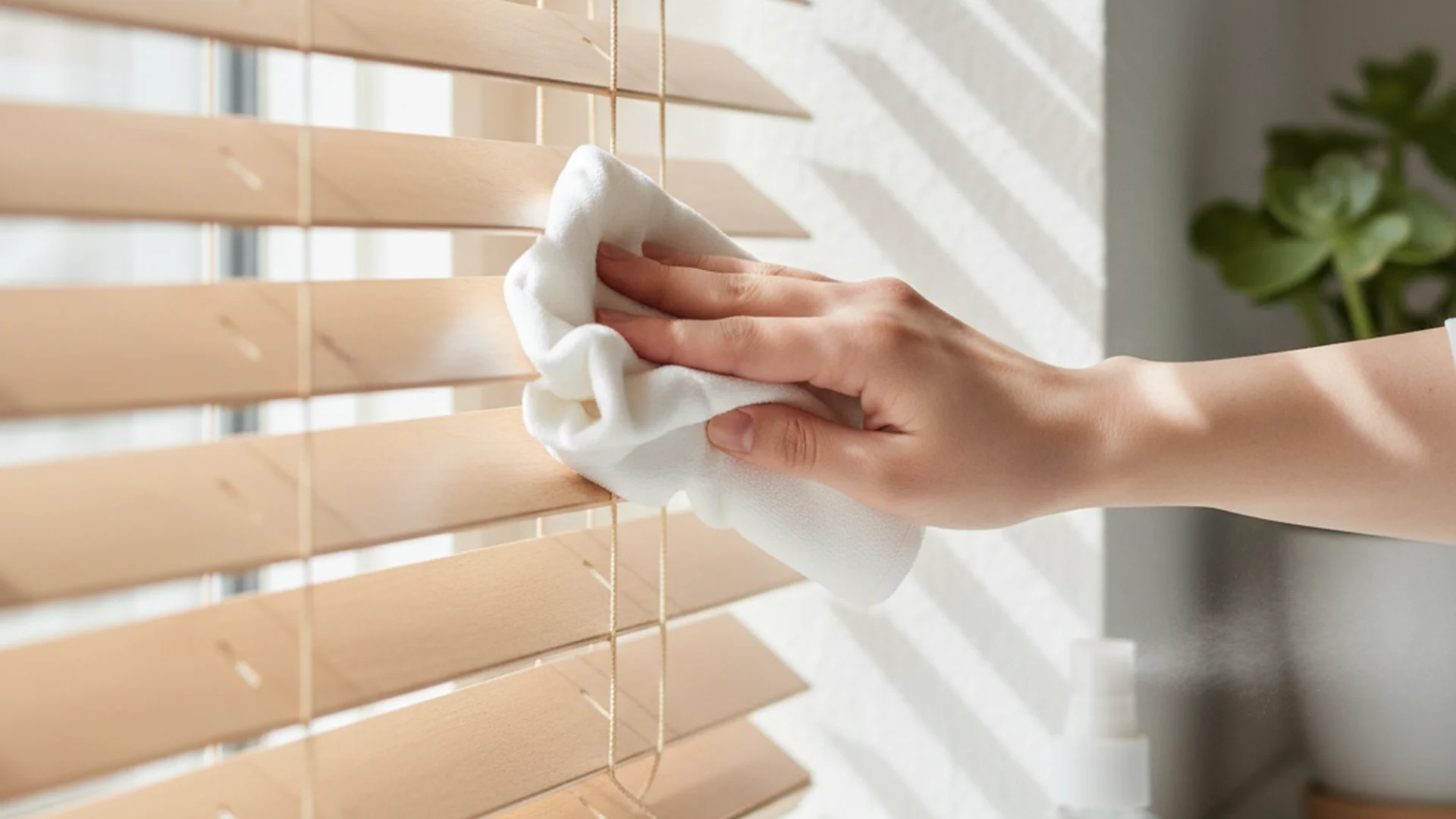
- The Microfiber Swipe: For any remaining particles, use a dry microfiber cloth. Start at the top and work your way down.
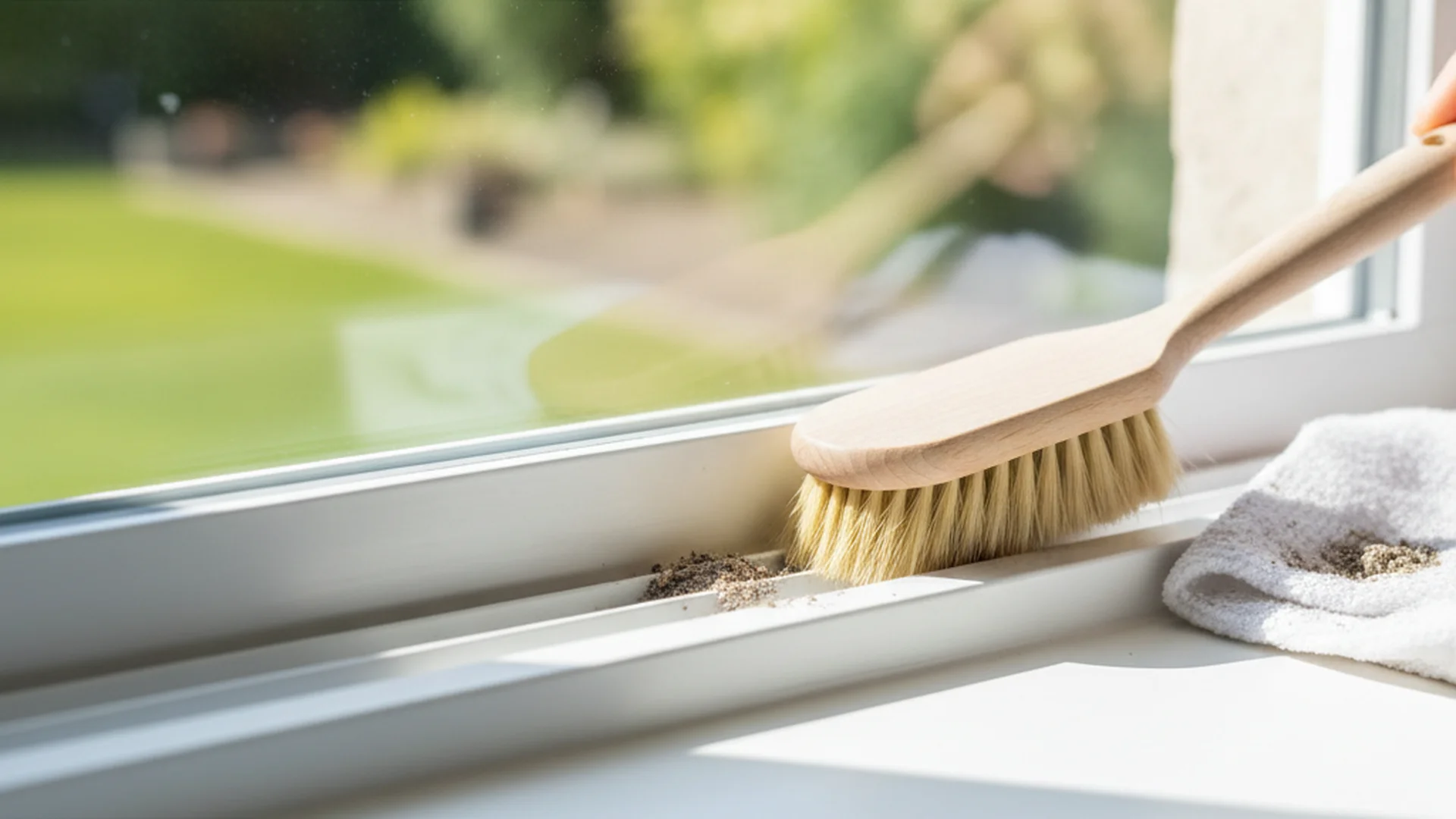
Tip: Use a clean, dry paintbrush to reach the "nooks and crannies" where the louvers meet the frame. The bristles can flick out dust that a cloth might just push deeper into the corner.
The Deep Cleaning Process (Monthly)
Once a month, or if you notice visible grime, a deeper clean is necessary.
- For Vinyl/Faux Wood: Mix a few drops of mild dish soap into a bowl of warm water. Dampen your cloth—it should be damp, not dripping—and wipe each slat individually.
- For Real Wood: Use a high-quality wood polish. Apply the polish to your cloth first, never directly to the shutter slats. This prevents "drip marks" that can stain the finish.
Warning: Never use "Magic Erasers" on plantation shutters. While they are great for walls, they are micro-abrasives that can strip the UV-protective coating off your shutters, leading to faster fading and discoloration.
Real-World Cleaning Scenarios
Example 1: The Modern Minimalist Living Room
Consider a home featuring the 2025 trend of 4.5-inch wide louvers. Because there are fewer slats per window, cleaning is significantly faster. Homeowners in this scenario often use AI-assisted maintenance apps that track local air quality. If the app signals high pollen levels, the homeowner knows to perform a vacuum sweep twice that week to keep indoor air quality high.
Example 2: The High-Traffic Kitchen
In a kitchen, white vinyl shutters often face a hidden enemy: airborne grease. Over time, this grease traps dust, creating a sticky yellow film.
- The Fix: A solution of one part white vinegar to two parts water is effective for cutting through kitchen grease on vinyl shutters without using harsh chemicals that cause yellowing.
Example 3: Luxury Motorized Shutters
With the rise of smart home integration, many 2026 builds feature motorized tilt mechanisms.
- The Fix: When cleaning these, avoid spraying any liquids near the side frames where the hidden motors and battery compartments are located. A dry microfiber cloth is the safest bet for the motorized components.
Common Mistakes to Avoid
To keep your shutters looking brand new for decades, avoid these frequent pitfalls:
- Spraying Directly on the Slats: This is the fastest way to ruin your shutters. Liquid can seep into the louver joints, leading to internal rot in wood or warping in composites.
- Using Bleach or Ammonia: These chemicals are too harsh. They can turn white vinyl shutters yellow almost instantly and will make the material brittle over time.
- Ignoring the Frame and T-Posts: Most people focus only on the louvers. However, the side frames and vertical T-posts are where the heaviest dust often settles.
- Using Too Much Water: Even on "waterproof" vinyl, excess moisture can sit in the hinges, leading to rust or "stiff" movement.
Note: If your louvers become "stiff" or hard to tilt, it’s usually due to dust buildup in the hinges. A single drop of non-silicone lubricant (like 3-in-1 oil) after a thorough dusting will usually restore smooth movement.
Frequently Asked Questions
Can I use water to clean wood shutters?
How do I clean the "nooks and crannies"?
Do I need to take the shutters down to clean them?
Why are my white shutters turning yellow?
What is the "Scented Secret" for repelling dust?
Conclusion
Mastering how to clean plantation shutters doesn't just keep your home looking beautiful; it protects a significant financial investment. By following a tiered approach—weekly vacuuming and monthly material-specific deep cleaning—you ensure that your shutters remain functional and vibrant for their entire 20-to-30-year lifespan. Remember to stay away from harsh abrasives and always treat your shutter material with the specific care it requires.
Success: Regular maintenance not only keeps your shutters looking new but also maintains your home's energy efficiency by ensuring the louvers close tightly to prevent heat loss.
Cleaning that keeps score
Every task earns points, every streak multiplies them, and Premium adds a household leaderboard plus a monthly Dustagorgon to beat.
- Free forever
- 30 badges to earn
- Up to 6 in a household
No card needed. Set up your rooms in a couple of minutes.