In this article
What you’ll learn
- Never use steam cleaners or ammonia-based products on pet urine.
- Enzymatic cleaners are the only way to break down uric acid crystals.
- Modern UV-C and AI-integrated tools are revolutionizing home pet care.
With most U.S. households now owning a pet, the challenge of maintaining a pristine home environment has never been more prevalent. Dealing with pet stains carpet issues is a near-universal experience for dog and cat owners alike. Whether you are house-training a new puppy or managing an aging senior pet, understanding the science of stain removal is the difference between a fresh-smelling home and a permanent odor problem.
The difficulty lies in the fact that pet urine is far more complex than a simple spill. It is a biological cocktail that evolves over time, changing its chemical composition and bonding to carpet fibers in ways that traditional soaps cannot address. In this guide, we will explore the best way pet stains carpet can be treated, incorporating the latest 2025 technological trends and expert-backed methodologies to ensure your floors remain spotless and sanitary.
The Science Behind the Smell: Why Pet Stains Persist
To effectively tackle pet stains carpet problems, you must understand what you are fighting. Pet urine is not just a liquid; it contains uric acid crystals. Unlike the liquid components that can be blotted away, these crystals do not dissolve in water.
When urine is fresh, it has an acidic pH of about 5 or 6. However, as it begins to dry and bacteria begin to break down the urea, it undergoes a chemical shift, turning into an alkaline substance with a pH as high as 10 to 12. This shift is what causes permanent "burns" or dye loss in your carpet fibers.
Note: This chemical transition usually occurs within 24 to 48 hours. Acting quickly is the most important factor in preventing permanent damage to your carpet’s structural integrity.
Furthermore, uric acid crystals are hygroscopic. This means they actually attract moisture from the air. This explains a common phenomenon many pet owners experience: the "ghost odor." You might think you have cleaned a spot, but the moment a humid summer day arrives or it rains outside, the smell of ammonia returns. The moisture in the air reactivates the crystals, which then release ammonia gas.
The Professional Protocol: A Step-by-Step Guide
As a professional cleaning consultant, I always advise homeowners to follow a strict protocol. Using the wrong method can "set" a stain, making it nearly impossible to remove even for professional-grade machinery.
Step 1: The "Blot, Don't Scrub" Rule
The most common mistake people make is reaching for a brush and scrubbing vigorously. Scrubbing does two things: it frays the delicate carpet fibers (creating a "fuzzy" patch) and it pushes the liquid deeper into the carpet backing and the foam padding underneath.
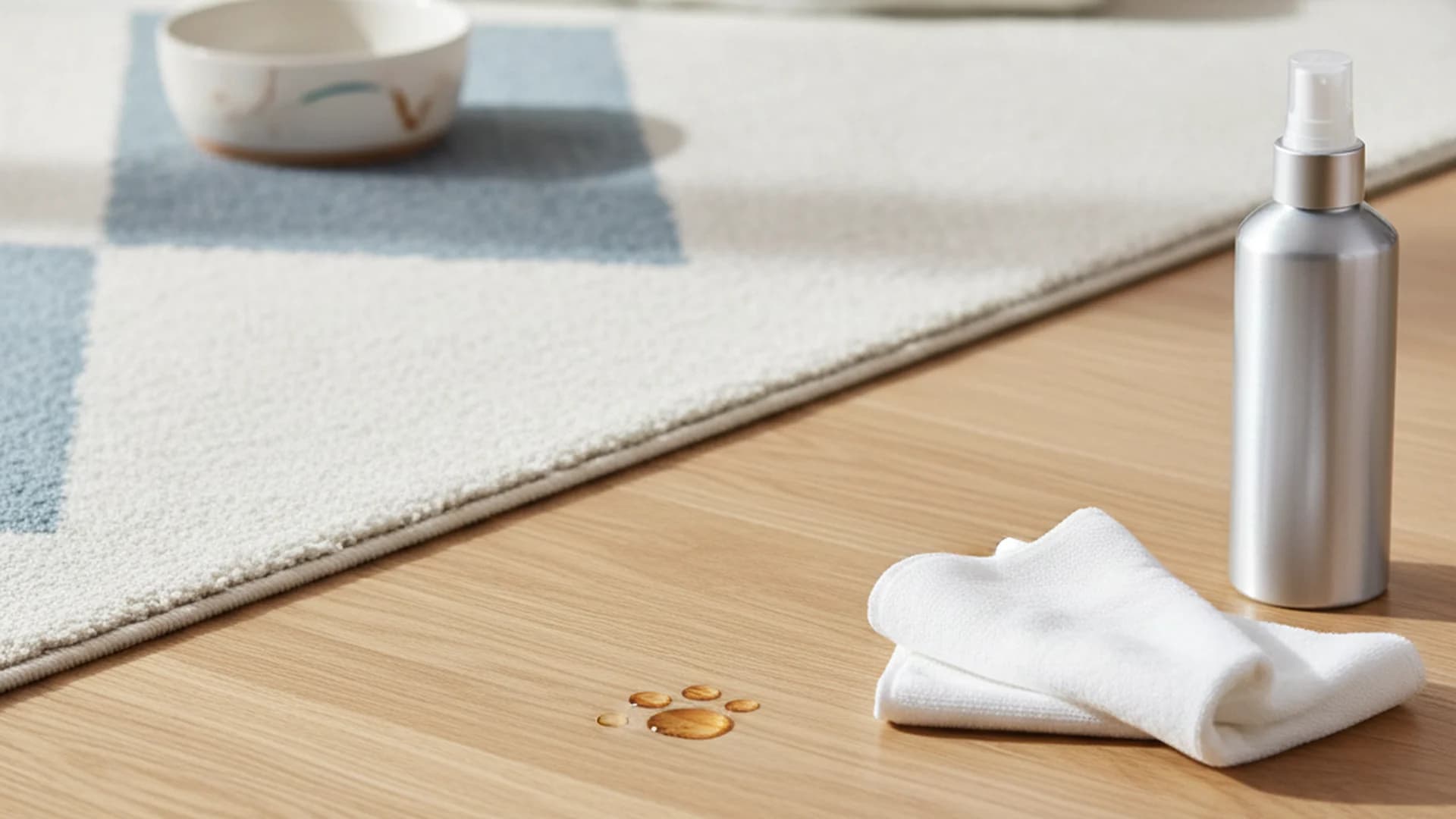
The Method: Use a clean, white microfiber cloth or a stack of plain white paper towels. Press down firmly with the heel of your hand or stand on the towels to absorb as much liquid as possible. Work from the outside of the stain toward the center to prevent the liquid from spreading outward.
Step 2: Use Enzymatic or Probiotic Cleaners
Standard dish soap or carpet shampoo will not work on the uric acid crystals mentioned earlier. You must use an enzymatic cleaner, such as Nature’s Miracle or Bissell Pet Pro formulas. These products contain live bacteria that produce enzymes specifically designed to "eat" the organic matter causing the odor.
Tip: When applying the cleaner, use a volume of liquid equal to what you believe the original accident was. If your pet urinated enough to soak the padding, your cleaner must also reach that depth to be effective.
Step 3: The Weighting Method
Once you have applied your enzymatic cleaner and let it sit for the manufacturer-recommended time (usually 10–15 minutes), you need to extract the moisture from the deep layers of the carpet.
The Method: Place a fresh stack of white paper towels over the treated area. Place a heavy, non-bleeding object (like a heavy glass bowl or a plastic-wrapped book) on top. Leave this for 6 to 12 hours. This creates a "wicking" effect, drawing the liquid up from the padding and into the towels.
Success: Using the weighting method can reduce the chance of "wicking" (where the stain reappears days later) by up to 90%.
2025-2026 Trends in Pet Cleaning Technology
If you are looking for the best way pet stains carpet can be handled with modern tools, consider these recent advancements:
AI-Integrated Robotic Spot Cleaners
New for 2025, robotic vacuum and mop combos (like the latest Roborock S8+ series) now feature moisture sensors and "puddle detection." When the AI identifies a high-moisture zone that doesn't match standard floor mopping patterns, it can alert the homeowner or deploy a target-specific enzymatic mist to prevent the stain from setting while you are away at work.
UV-C Sanitization
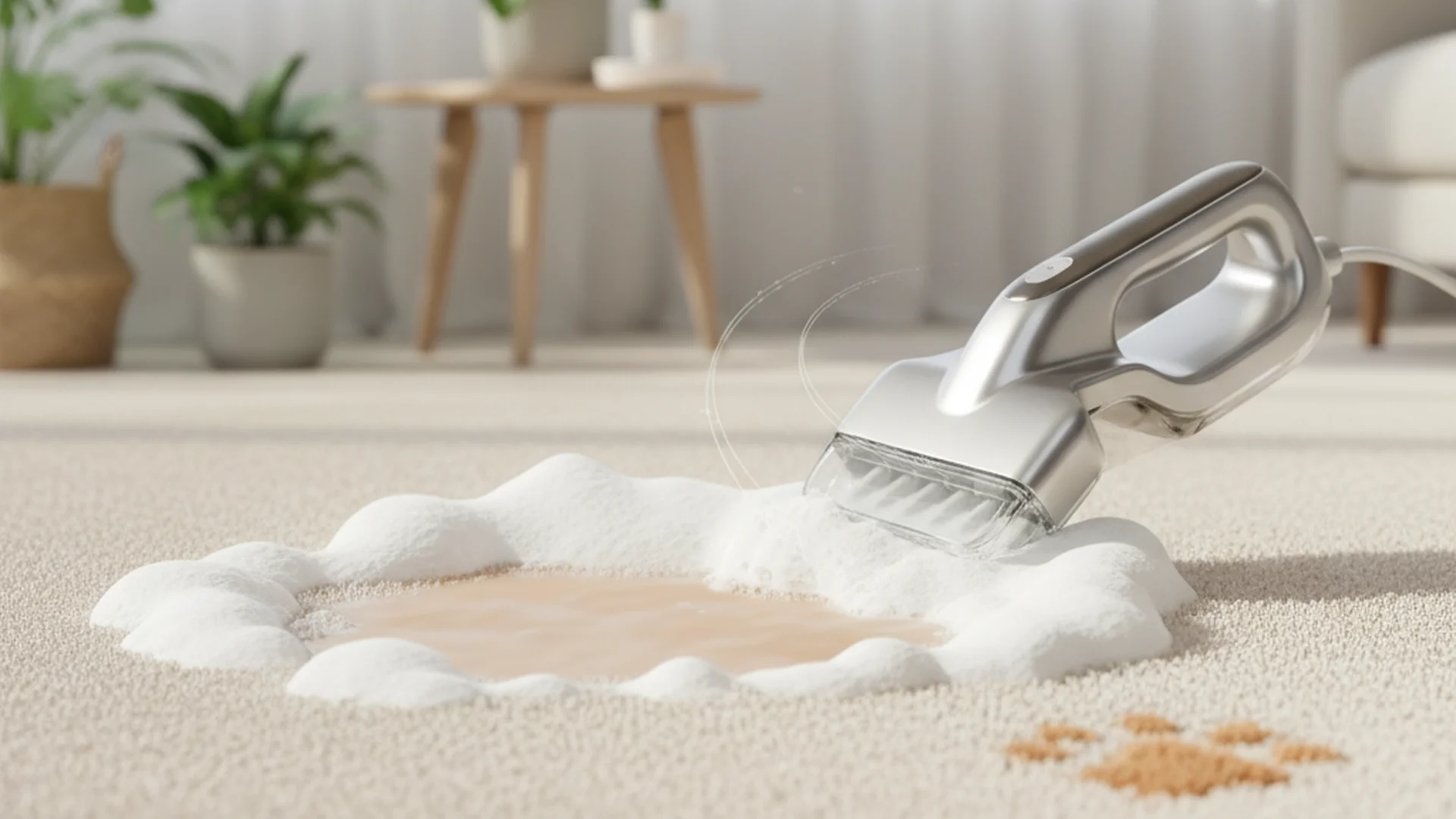
Bacteria left behind by pet accidents can linger long after the spot is dry. Portable handheld UV-C devices are becoming a household standard. These devices use specific wavelengths of light to disrupt the DNA of bacteria, effectively "killing" the organic causes of odors without the need for additional wet chemicals.
Probiotic "Long-Acting" Cleaners
While enzymes work quickly, new probiotic cleaners are gaining popularity. These cleaners leave behind beneficial bacteria that continue to work for up to 7 days after application. This creates a long-term barrier against odor-causing bacteria and is particularly useful for pets that tend to "re-mark" the same spot.
| Technology | Best For | Effectiveness |
|---|---|---|
| UV Blacklight (395nm) | Finding hidden/old spots | High |
| Enzymatic Sprays | Breaking down fresh uric acid | Essential |
| AI Robotic Cleaners | Maintenance and early detection | Medium-High |
| UV-C Handhelds | Sanitizing and killing bacteria | High |
Real-World Examples
To better understand how these pet stains carpet tips apply in daily life, let’s look at three common scenarios:
Case 1: The Hidden Guest Room Stain
A homeowner noticed a faint ammonia smell in a rarely used guest room. To the naked eye, the carpet looked clean. By using a 395nm UV blacklight in a dark room, they discovered a large "glow" in the corner where the cat had been sneaking off. Because the stain was old and dry, they had to "re-hydrate" the spot with an enzymatic cleaner and use the weighting method to pull the old salts out of the padding.
Case 2: The Rainy Day Odor
A family complained that their living room always smelled like a kennel whenever it was humid. This is a classic case of uric acid crystals reactivating. The solution involved a deep saturation of the area with a probiotic cleaner that worked over several days to finally neutralize the underlying salts that had been trapped in the subfloor.
Case 3: The Ammonia Mistake
A puppy owner used a standard household cleaner containing ammonia to clean a "mistake" in the hallway. Within an hour, the puppy returned to the exact same spot to urinate again. Because urine contains ammonia, cleaning with it sends a chemical signal to the pet that this is a designated bathroom area. Switching to an enzymatic cleaner that removes the scent entirely stopped the "re-marking" behavior.
Common Mistakes to Avoid
Even with the best intentions, many homeowners inadvertently damage their carpets. Avoid these frequent pitfalls:
- Using Steam Cleaners:
Warning: Never use a steam cleaner on a fresh urine stain. The intense heat "cooks" the proteins in the urine, permanently bonding the stain and the odor to the carpet fibers.
- Waiting for the Stain to Dry: The longer you wait, the more alkaline the spot becomes. This high pH can cause "delamination," where the carpet backing separates from the fibers.
- Over-Saturating with Water: If you use too much water without proper extraction (like a wet-vac), you risk creating a mold and mildew problem in the padding, which is far more expensive to fix than a pet stain.
- Assuming "If I can't see it, it's clean": Urine spreads horizontally as it hits the padding. A visible 2-inch circle on the surface often means a 6-inch circle of contamination in the pad.
Frequently Asked Questions
Can I use a steam cleaner for pet urine?
Why does the smell come back when it rains or gets humid?
How do I know if the stain reached the padding?
Are DIY remedies like vinegar and baking soda effective?
Conclusion
Managing pet stains carpet issues doesn't have to be a losing battle. By moving away from outdated methods like scrubbing and steam cleaning, and embracing the science of enzymatic breakdown and UV-C sanitization, you can maintain a home that is both pet-friendly and professionally clean. Remember that speed, the right chemical approach, and proper extraction are your three best tools in the fight against odors and stains.
Success: By following the saturation and weighting method, you ensure that you are treating the carpet padding—not just the surface—leading to a truly odor-free environment.
Cleaning that keeps score
Every task earns points, every streak multiplies them, and Premium adds a household leaderboard plus a monthly Dustagorgon to beat.
- Free forever
- 30 badges to earn
- Up to 6 in a household
No card needed. Set up your rooms in a couple of minutes.