In this article
What you’ll learn
- Always clean your mandoline immediately after use to prevent food from hardening.
- Use Level 5 cut-resistant gloves to protect your hands during the cleaning process.
- Natural solutions like white vinegar and baking soda are effective for chemical-free sanitization.
In the world of high-end kitchen gadgets, few tools provide the precision and speed of a mandoline. Whether you are prepping a mountain of paper-thin potatoes for a gratin or creating a vibrant julienned salad, the mandoline is an indispensable ally. However, its greatest strength—a razor-sharp, fixed blade—is also its greatest danger. Knowing how to clean mandoline slicers is more than just a routine kitchen chore; it is a high-stakes maintenance task where proper technique is the difference between a pristine tool and a trip to the emergency room.
In this guide, we will break down the essential steps to maintaining your slicer, focusing on safety, efficiency, and natural cleaning methods that keep your food prep chemical-free.
The High Stakes of Mandoline Maintenance
Before we dive into the scrubbing and sanitizing, it is vital to understand why we must treat this tool with such reverence. Recent safety data indicates that the mandoline is one of the most hazardous tools in the modern kitchen.
- Injury Risk: Nearly 50% of injuries sustained by food service workers involving a slicer or mandoline resulted in an amputation.
- Laceration Frequency: Lacerations to hands and fingers account for approximately 60% of all injuries associated with these tools.
- Professional Fear: In surveys of professional chefs, the mandoline is consistently cited as one of the most feared tools, with over half of industry workers reporting a significant cut at some point in their careers.
Despite these risks, the market for these tools is booming. As home cooks strive for "chef-quality" prep, the need for safe cleaning protocols has never been more urgent.
The Gold Standard: How to Clean Mandoline Slicers Safely
The secret to a long-lasting and safe mandoline is the "Immediate Rinse" rule. Starchy foods like potatoes or fibrous vegetables like celery contain natural "glues." If allowed to dry, these residues bond to the blade, requiring aggressive scrubbing later—which is exactly when most accidents happen.
Step 1: The Immediate Rinse
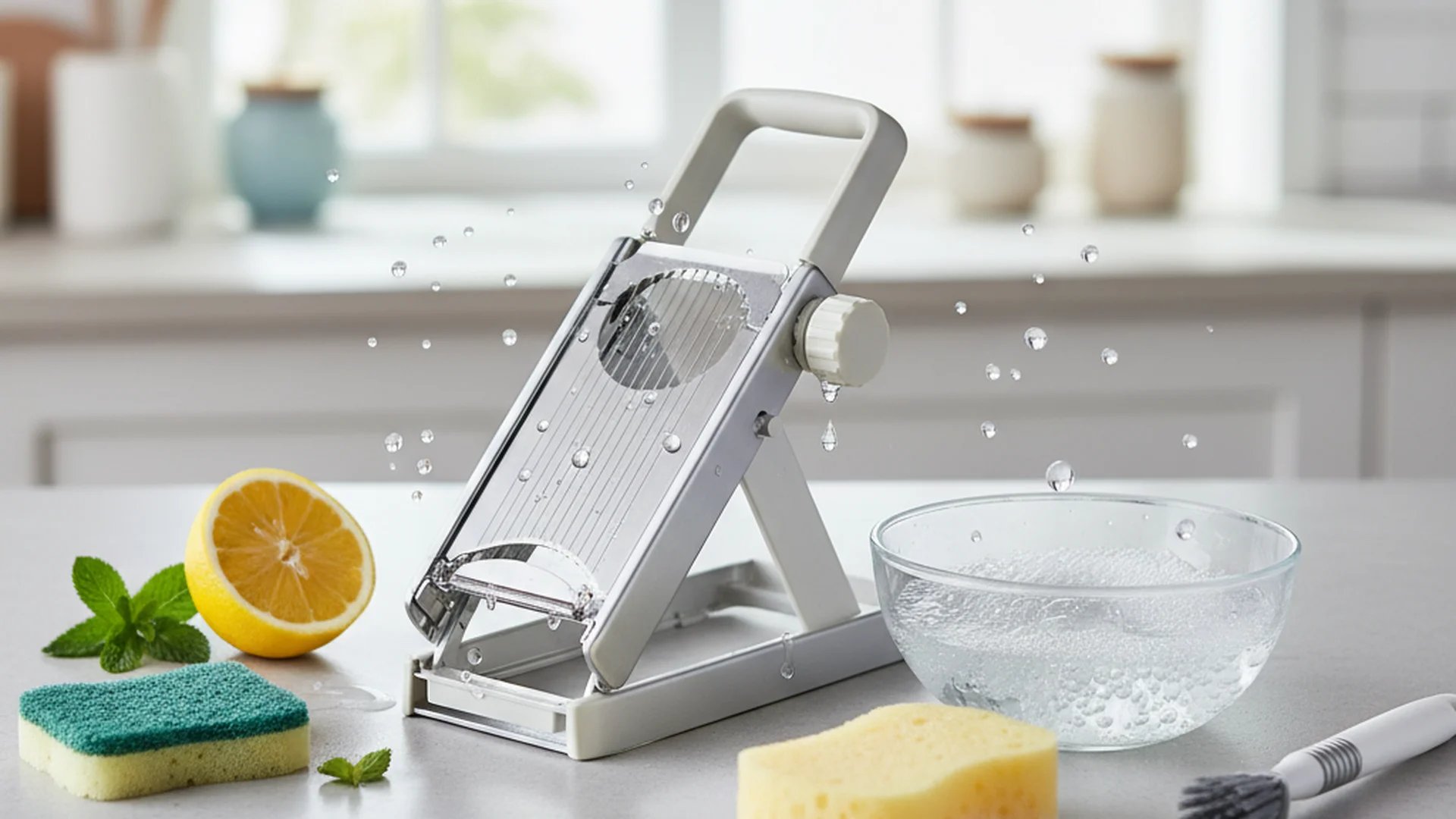
As soon as you finish your last slice, run the mandoline under hot water. This flushes away the majority of organic matter before it can harden.
Step 2: Mandatory Disassembly
Never attempt to clean a fully assembled mandoline. Most modern models allow you to remove the blade inserts, the thickness adjustment plate, and the food holder (safety guard). By breaking the tool down into its component parts, you reduce the risk of your hand slipping across the blade while trying to reach a tight corner.
Step 3: Directional Wiping
This is the most critical safety step. When cleaning the blade, always wipe in the opposite direction of the sharp edge.
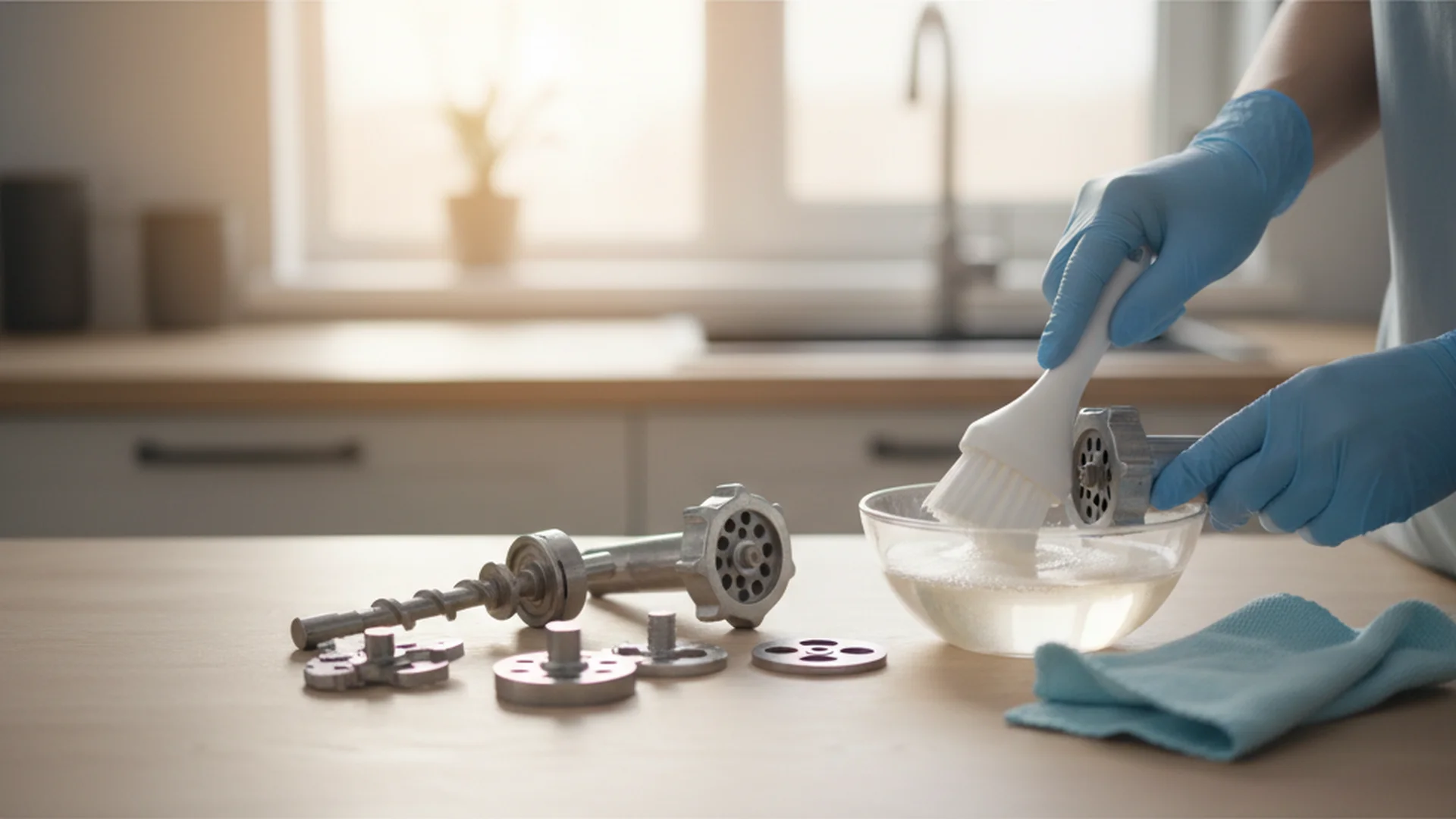
Warning: Never use your bare hands to wipe a mandoline blade. Even a light touch can result in a deep laceration. Use a long-handled dish brush or a thick, high-density sponge.
Step 4: The Role of Cut-Resistant Gloves
Expert chefs recommend wearing Level 5 cut-resistant gloves during both the slicing and the cleaning process. These gloves are woven with materials like glass fiber or stainless steel, providing a vital layer of defense should your hand slip.
| Component | Cleaning Tool | Safety Priority |
|---|---|---|
| Blade | Long-handled brush | Extremely High |
| Frame | Soft sponge | Moderate |
| Food Guard | Dishwasher/Sponge | Low |
Natural Methods: Clean Mandoline Without Chemicals
Many home cooks prefer to clean mandoline without chemicals to ensure no soapy residue or synthetic fragrances transfer to their fresh produce. You can achieve professional-level sanitation using common pantry staples.
Using a Vinegar Sanitizer
To effectively clean mandoline vinegar solutions are your best friend. Create a 1:1 ratio of white distilled vinegar and water. This 5% acetic acid solution acts as a natural disinfectant capable of killing common foodborne bacteria like E. coli and Listeria. Simply spray the solution onto the disassembled parts, let it sit for two minutes, and rinse with hot water.
Removing Stubborn Stains
If you have been slicing carrots, beets, or turmeric, you may notice orange or red staining on the plastic frame.
- The Oil Trick: Rub the stained area with a dash of regular salad oil or vegetable oil. The oil breaks down the fat-soluble pigments that cause the discoloration.
- Baking Soda Paste: For dried-on food bits, create a paste using 3 parts baking soda to 1 part water. Apply it to the frame (avoiding the blade edge) and let it sit for 10 minutes before rinsing.
Natural Degreasing
If your slicer feels greasy after prepping oily ingredients like cheese or marinated vegetables, use a lemon half dipped in coarse salt. The citric acid acts as a degreaser while the salt provides a gentle abrasive to lift residue without the need for harsh detergents.
Tip: If you see "micro-rust" forming on your stainless steel blade, soak it in undiluted white vinegar for 12 hours, then gently rub the spot with a crumpled ball of aluminum foil.
Real-World Cleaning Scenarios
Scenario 1: The Potato Starch Trap
The Situation: You’ve just made three trays of potato au gratin. The mandoline is covered in white, sticky starch. The Solution: Do not let it sit. The starch will act like cement. Use a soft-bristled toothbrush to reach into the crevices of the thickness adjuster while the unit is submerged in warm, plain water.
Scenario 2: The "Beetroot Blush"
The Situation: Your white plastic mandoline is now bright pink after slicing beets for a salad. The Solution: Apply vegetable oil immediately. The pigments in beets are highly reactive to plastic; the sooner the oil is applied, the more pigment it will "lift" out of the porous material.
Scenario 3: The Neglected Blade
The Situation: You find a mandoline in the back of the drawer with dried bits of cucumber from last month. The Solution: Use a dental water flosser or a high-pressure spray nozzle. This allows you to blast the debris out of the narrow gap between the blade and the frame without ever having to put your fingers near the edge.
Common Mistakes to Avoid
- The "Sink Soak": Never place a mandoline in a sink full of soapy water. It becomes an invisible "guillotine" for anyone reaching in to find a dish.
- Air-Drying Upside Down: Allowing water to pool in the blade’s mounting points leads to hidden corrosion. Always towel-dry the blade immediately after rinsing.
- Using Steel Wool: Abrasive scrubbers like steel wool create microscopic scratches where bacteria can hide and significantly dull the cutting edge.
- Treating it Like a Knife: People often forget that because the blade is fixed and the hand moves toward it, the physics of a "slip" are much more dangerous than with a standard kitchen knife.
Note: Even if your mandoline brand claims to be "dishwasher safe," hand-washing is always the better choice. High heat and harsh detergents can dull the blade’s microscopic "teeth" and cause plastic housings to warp over time.
Recent Trends & Updates (2025-2026)
As we move into 2026, the industry is responding to the high injury rates with innovative designs and materials.
- "Safe-Slice" Designs: The market is shifting toward "upright" or "chute-fed" mandolines. These designs keep hands entirely isolated from the blade during operation and cleaning, making them the safest choice for families.
- Antimicrobial Coatings: New models are integrating silver-ion or copper-infused plastics into the frame to inhibit bacterial growth between deep cleans.
- Ceramic Blade Growth: Ceramic blades now hold approximately 15% of the market. They are popular because they are completely rust-proof and non-reactive, making the cleaning process slightly less stressful regarding corrosion.
Frequently Asked Questions
Is it dishwasher safe?
How do I clean a non-removable blade?
What if I see rust on the blade?
How do I store a mandoline safely?
Conclusion
Mastering how to clean mandoline slicers is an essential skill for any home cook who values both efficiency and safety. By implementing the "Immediate Rinse" rule, utilizing natural sanitizers like vinegar, and always respecting the sharpness of the blade with cut-resistant gloves, you can keep this powerful tool in peak condition for years to reach.
Remember: the goal of a mandoline is to make your life easier, not to cause a kitchen emergency. Treat the blade with respect, clean it with care, and enjoy the perfect, uniform slices that only a well-maintained mandoline can provide.
Success: Consistent cleaning and proper storage will keep your mandoline blade sharp and your kitchen prep safe for years to come.
Cleaning that keeps score
Every task earns points, every streak multiplies them, and Premium adds a household leaderboard plus a monthly Dustagorgon to beat.
- Free forever
- 30 badges to earn
- Up to 6 in a household
No card needed. Set up your rooms in a couple of minutes.