In this article
What you’ll learn
- Clean your juicer immediately after use to prevent pulp from hardening like "natural concrete."
- White vinegar and baking soda are highly effective natural disinfectants for juicer components.
- Never use boiling water on modern juicer parts as it can warp silicone seals and magnetic sensors.
Juicing is one of the most rewarding habits you can adopt for your health, but the cleanup process often feels like a daunting chore. If you have ever stared at a mesh screen clogged with dried kale or wondered why your plastic housing looks perpetually cloudy, you are not alone. Knowing how to clean juicer components properly is about more than just aesthetics; it is essential for the longevity of your machine and your personal safety. In this guide, we will explore the most efficient ways to maintain your appliance, including how to clean juicer naturally to ensure every glass of juice is as fresh and hygienic as possible.
Why Juicer Hygiene is Non-Negotiable
It is easy to think that a quick rinse is enough, especially when you are in a rush. However, the FDA warns that bacteria from the exterior of unwashed produce can easily transfer into your juice. Once inside the machine, these microbes find a dark, moist, and nutrient-rich environment—the perfect breeding ground for pathogens.
Scientific data highlights the importance of using the right cleaning agents. For example, white vinegar has been shown to kill approximately 98.6% of microbes, including E. coli. If you want to clean juicer with vinegar, you aren't just removing stains; you are performing a deep sanitization. For even tougher jobs, baking soda provides a 99.99% kill rate against Staphylococcus aureus and Salmonella.
The Golden Rule: Clean Immediately
The most important secret to an easy cleanup is timing. Experts from industry leaders like Nama and Hurom all agree: you should clean your juicer before you sit down to drink your juice.
When pulp—especially fibrous materials like ginger, celery, or turmeric—is allowed to dry, it undergoes a process that makes it nearly as hard as concrete. By the time you finish your breakfast, those fibers have fused to the microscopic holes in your mesh screen.
Tip: If you absolutely cannot clean the machine immediately, submerge the removable parts in a sink filled with warm, soapy water. This prevents the pulp from hardening until you can get back to it.
How to Clean Juicer Parts Naturally
Many people prefer to avoid harsh chemical cleaners in an appliance that processes raw food. Fortunately, you can effectively clean juicer naturally using common household staples.
The Vinegar Soak for Mineral Buildup
Over time, you may notice a "cloudy" or white film on the clear plastic parts of your juicer. This isn't usually a sign of the plastic wearing down; rather, it is mineral buildup from hard water.
- Prepare the Solution: Create a 1:1 mixture of warm water and white distilled vinegar.
- Soak: Submerge all plastic housing and the auger in the solution for 30 minutes.
- Rinse: The acetic acid in the vinegar dissolves the calcium and magnesium deposits, leaving your parts crystal clear.
The Baking Soda Scrub for Stains
Carrots and leafy greens are notorious for leaving orange or green pigments behind.
- Example 1: After juicing 5 lbs of carrots for a weekly meal prep, you might find your juicer bowl has turned a vibrant shade of sunset orange.
- The Fix: Make a paste of baking soda and a small amount of water. Apply it to the stained areas and let it sit for 15 minutes before scrubbing with a soft brush.
Note: For stubborn beta-carotene stains from carrots, try wiping the plastic with a paper towel dipped in a small amount of vegetable oil before washing with soap. The oil helps "lift" the pigments.
Step-by-Step Deep Cleaning Process
To maintain a high-performance machine, follow this structured routine at least once a week or whenever you notice a decline in juice yield.
1. Complete Disassembly
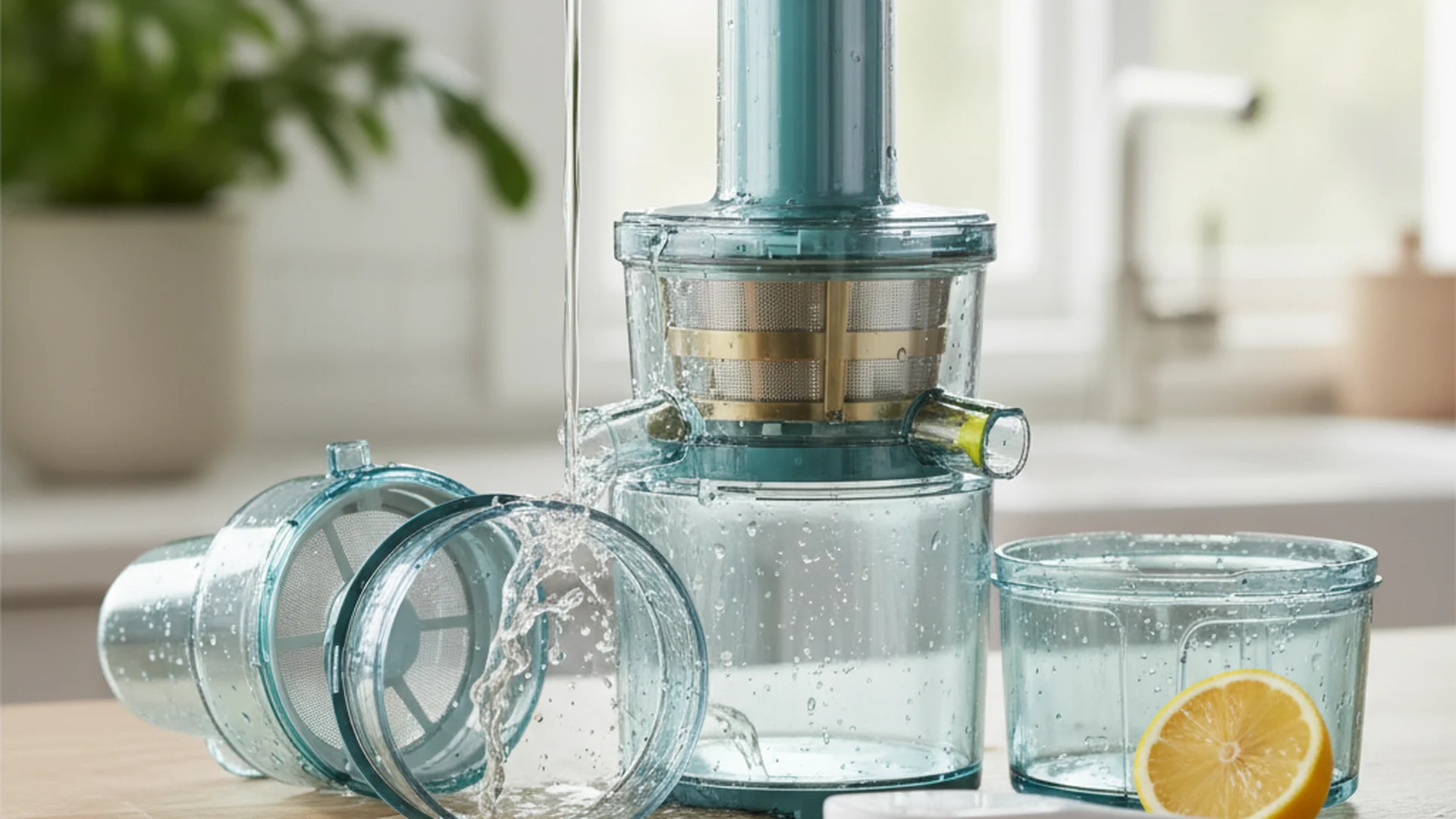
Unplug the machine and take apart every removable component. This includes the pusher, hopper, juicing bowl, auger (the screw), and the pulp/juice containers.
2. The Mesh Screen Focus
The mesh screen is the "heart" of your juicer and the most difficult part to clean. Dishwashers often fail here because the high heat of the drying cycle can bake fine fibers into the screen.
- Example 2: A user who exclusively uses a dishwasher may find that after six months, their juice yield has dropped by 20% because the mesh holes are 50% clogged with invisible residue.
- The Fix: Use a dedicated nylon brush (most juicers come with one) to scrub the screen under running water immediately after use.
3. Sanitizing the Silicone Seals
Don't forget the small silicone parts! Most juicers have a "pulp plug" or gasket at the bottom of the juicing bowl.
Warning: Neglecting the underside of the silicone pulp plug is a primary cause of mold growth. Always pull the plug out and scrub the cavity with a small brush.
2025-2026 Juicer Trends: Easier Maintenance
The market for juicers is evolving toward "user-centric cleaning." With the "Smart Juicer" market projected to grow at a 6% CAGR through 2033, manufacturers are focusing on making the cleanup process obsolete.
- Mesh-Free Technology: Modern models, like the Hurom Easy Clean series, have replaced traditional metal mesh with grooved plastic filters. These can be rinsed clean in seconds without any scrubbing.
- Self-Cleaning Cycles: High-end 2025 models now feature "Pre-Clean" sensors. These machines blast water through the internal chambers while the motor is running, dislodging up to 90% of debris before you even open the lid.
- Plant-Based Enzyme Cleaners: We are seeing a shift toward sustainable cleaning agents. These enzyme-based powders break down fruit sugars more effectively than standard dish soap and are safer for the environment.
Common Mistakes to Avoid
Even seasoned juicers make mistakes that can shorten the lifespan of their expensive appliances.
- Using Boiling Water: Never use boiling water to clean your juicer. Modern cold-press juicers contain magnetic sensors and delicate silicone seals that can warp at temperatures above 80°C (176°F). This can lead to leaks or a machine that refuses to turn on.
- The Motor Soak: It sounds obvious, but many beginners accidentally get water into the motor base.
- Example 3: A user might spray the base with a high-pressure kitchen sprayer to remove a spill. This can force water into the vents, causing a short circuit.
- The Fix: Only use a damp microfiber cloth with a bit of vinegar to wipe the base.
- Improper Pushers: If you lose your plastic pusher, never substitute it with a wooden spoon or knife. This can damage the auger and leave shards of material in your juice.
| Cleaning Method | Best For | Effectiveness |
|---|---|---|
| White Vinegar | Mineral Buildup / Bacteria | 98.6% Kill Rate |
| Baking Soda | Pathogens / Heavy Stains | 99.99% Kill Rate |
| Vegetable Oil | Beta-carotene (Carrot) Stains | High Pigment Lift |
| Enzyme Cleaner | Dried Fruit Sugars | High Dissolution |
Frequently Asked Questions
Is my juicer dishwasher-safe?
How do I get rid of the "cloudy" look on plastic parts?
Can I just run water through the juicer to clean it?
How often should I deep clean with vinegar?
Conclusion
Mastering the art of how to clean juicer equipment is the best way to protect your investment and your health. By choosing to clean juicer naturally with staples like vinegar and baking soda, you avoid chemical residues while achieving a pharmaceutical-grade clean. Remember the golden rule: clean as soon as you are done, and your juicer will provide you with delicious, nutrient-dense juice for years to come.
Success: Regular maintenance not only keeps your juice tasting better but also ensures your motor doesn't have to work overtime against clogged filters.
Cleaning that keeps score
Every task earns points, every streak multiplies them, and Premium adds a household leaderboard plus a monthly Dustagorgon to beat.
- Free forever
- 30 badges to earn
- Up to 6 in a household
No card needed. Set up your rooms in a couple of minutes.