In this article
What you’ll learn
- Regular cleaning can double the lifespan of your iron.
- Vinegar and baking soda are the best natural tools for descaling and soleplate care.
- Using distilled water prevents 90% of common mineral buildup issues.
Nothing ruins a crisp, white shirt faster than a steam iron that suddenly "spits" brown water or snags on delicate fibers. Whether you are dealing with sticky residue on the soleplate or internal limescale buildup, knowing how to clean iron appliances is a fundamental skill for any well-maintained home. As a home organization expert, I have seen many high-end irons discarded prematurely simply because of mineral clogs. By following a regular maintenance schedule, you can ensure your iron glides smoothly and delivers clean, powerful steam every time.
The Science of a Dirty Iron: Why Cleaning Matters
Most of the issues we face with irons stem from the water we put into them. Most households in the U.S. and UK deal with "hard water," which is rich in calcium and magnesium. When this water is heated to create steam, the minerals stay behind, forming a hard, crusty substance known as limescale.
Limescale doesn't just block the steam vents; it acts as an insulator. A scale-ridden iron can take up to 20% longer to reach its target temperature. This leads to higher energy bills and uneven heat distribution, which increases the risk of scorching your favorite fabrics. While the average modern iron lasts 3 to 5 years, proper cleaning can extend that lifespan to a full decade.
How to Clean Iron Internally: Descaling the Tank
The most common reason for "brown spitting" is internal mineral buildup. To fix this, you need to perform a deep descale. One of the most effective ways to clean iron with vinegar involves a simple dilution that breaks down calcium carbonate without damaging the appliance's internal components.
The Vinegar Flush Method
- Prepare the Solution: Mix a 1:1 ratio of white vinegar and distilled water.
- Fill and Heat: Fill the water reservoir about one-third full with this mixture. Turn the iron to its highest steam setting and let it heat up.
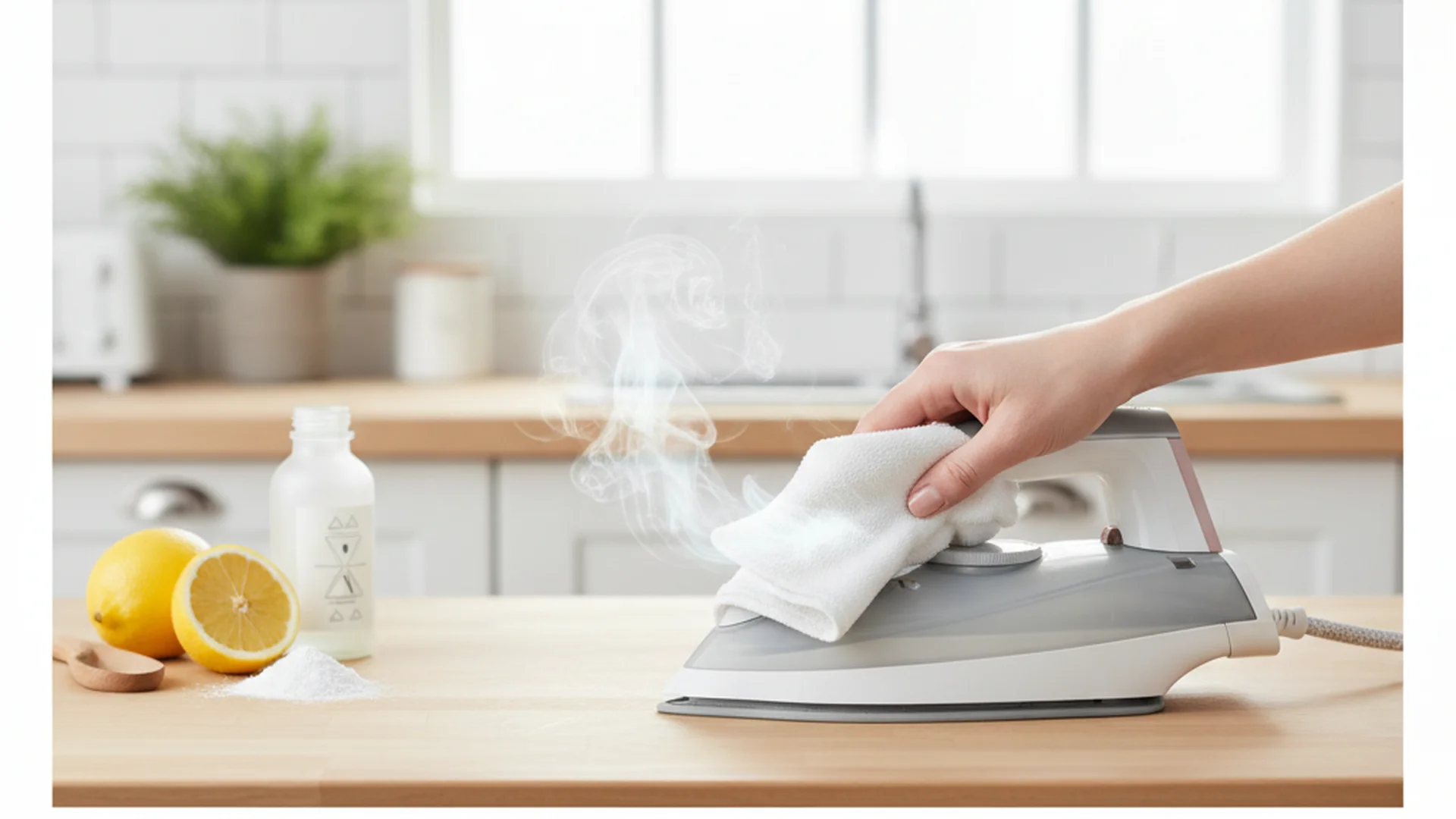
- Steam it Out: Use an old, clean towel and "iron" it while continuously pressing the steam button. The vinegar will work through the internal channels, dissolving scale as it goes.
- The Rinse: Once the tank is empty, fill it again with plain distilled water and repeat the process to flush out any remaining vinegar scent.
Warning: Always check your manufacturer’s manual before using vinegar. While highly effective, some specific non-stick coatings or internal rubber seals are sensitive to acidic cleaners.
How to Clean Iron Naturally: Soleplate Care
The soleplate (the bottom metal part of the iron) often accumulates burnt-on starch, melted synthetic fibers, or sticky residue from ironing transfers. To clean iron naturally, you don't need harsh chemicals; your pantry already holds the solution.
The Baking Soda Paste
For general grime and light scorching, a baking soda paste is the gold standard.
- Mix: Combine 2 parts baking soda with 1 part water to create a thick paste.
- Apply: Ensure the iron is completely cool. Spread the paste over the soleplate, focusing on the stained areas.
- Rest: Let it sit for 2-3 minutes.
- Wipe: Use a damp microfiber cloth to wipe away the paste.
| Method | Best For | Materials Needed |
|---|---|---|
| Baking Soda Paste | Starch & Grime | Baking soda, Microfiber cloth |
| Salt & Foil | Melted Polyester | Aluminum foil, Table salt |
| Vinegar Swabs | Clogged Vents | White vinegar, Cotton swabs |
Tip: If you have melted synthetic fabric (like polyester) on your iron, try ironing over a piece of aluminum foil sprinkled with salt. The salt acts as a gentle abrasive to lift the plastic without scratching the metal.
Real-World Examples: Success Stories
Example 1: The Wedding Dress Rescue
A client once contacted me in a panic because her iron started spitting brown residue onto her silk wedding veil. By performing a double vinegar flush and manually cleaning each steam vent with a cotton swab dipped in vinegar, we cleared the "stagnant water syndrome" just in time for the big day.
Example 2: The Melted Gym Leggings
A DIY enthusiast accidentally touched a hot iron to her spandex leggings, leaving a black, gooey mess on the ceramic soleplate. Instead of scraping it with a knife (which would have ruined the iron), she used the "salt on foil" method. Within five minutes of "ironing" the salt, the residue peeled away cleanly.
Example 3: The Energy-Saving Audit
One of my readers noticed her iron was taking nearly four minutes to heat up. After a thorough descaling of the internal tank, the heat-up time dropped to under 90 seconds, proving how much mineral buildup affects thermal efficiency.
2025-2026 Trends in Iron Technology
As we move into 2025 and 2026, appliance manufacturers are making it easier to skip the manual scrubbing.
- Smart Descale Sensors: Brands like Philips and Rowenta are now integrating AI-driven sensors that monitor steam flow and send a notification to your smartphone when it’s time to descale.
- Anti-Calc Collectors: Newer high-end models feature removable "calc-collectors"—small drawers that trap scale before it reaches the vents. You simply pull out the drawer and rinse it under the tap.
- Nanoceramic Soleplates: The 2026 product lines are introducing self-cleaning nanocoatings designed to repel starch and synthetic fibers, making "burnt-on" messes almost impossible.
Note: Even with "self-cleaning" features, manual inspection is still recommended every six months to ensure the sensors are functioning correctly.
Common Mistakes to Avoid
When learning how to clean iron surfaces, what you don't do is just as important as what you do.
- Using Abrasive Scrubbers: Never use steel wool or "magic erasers" on the soleplate. This destroys the glide-finish, which will cause the iron to snag on delicate fabrics like silk or rayon.
- Cleaning While Hot: It is tempting to wipe a spill immediately, but cleaning a hot iron with a cold, damp cloth can cause "thermal shock." This can lead to cracks in ceramic soleplates or cause severe steam burns.
- Using "Ironing Water": Many scented ironing waters contain perfumes and organic compounds. Under high heat, these compounds "caramelize," creating a sticky, brown residue that is much harder to clean than simple mineral scale.
- Neglecting the Cord: Over time, oils from your hands and dust from the laundry room can make the cord brittle or sticky. Periodically wipe the cord with a damp (not wet) microfiber cloth to keep the protective casing flexible.
Frequently Asked Questions
Can I use vinegar in my iron's water tank?
How do I get burnt fabric off the bottom of the iron?
Is distilled water actually necessary?
Why is my iron spitting brown water?
Conclusion
Taking the time to understand how to clean iron components is an investment in your wardrobe and your home's efficiency. By implementing a "post-ironing routine"—emptying the water reservoir after every use and performing a monthly descale—you can ensure your appliance remains a reliable tool for years to come. Remember to stick to natural cleaning agents like vinegar and baking soda to protect the delicate coatings of modern soleplates.
Success: Regular maintenance ensures a smooth glide, prevents fabric damage, and keeps your iron's steam power at peak performance for up to 10 years.
Cleaning that keeps score
Every task earns points, every streak multiplies them, and Premium adds a household leaderboard plus a monthly Dustagorgon to beat.
- Free forever
- 30 badges to earn
- Up to 6 in a household
No card needed. Set up your rooms in a couple of minutes.