In this article
What you’ll learn
- Never use cold water to soak a hot ceramic crock to avoid thermal shock.
- Natural solutions like vinegar and baking soda are more effective than harsh scrubbing.
- Deep cleaning the lid handle and exterior is essential for long-term hygiene.
Few things are more satisfying than coming home to the aroma of a slow-cooked meal, but the enthusiasm often fades when it’s time to tackle the crusty, burnt-on residue left behind. Knowing how to clean crockpot inserts effectively is about more than just aesthetics; it is essential for food safety and the longevity of your favorite kitchen appliance. Whether you are dealing with stubborn chili stains or white mineral deposits, the right techniques can make your ceramic stoneware look brand new without the need for hours of scrubbing.
As we move into 2025, cleaning standards have shifted toward more sustainable, chemical-free methods that protect the integrity of modern non-stick and lead-free ceramic glazes. In this guide, we will explore everything from the famous "self-cleaning" vinegar hack to maintenance tips for the latest smart slow cookers hitting the market.
Why Proper Maintenance Matters
Your slow cooker is a workhorse. It operates by heating a ceramic or metal insert to temperatures between 165°F and 210°F. This range is specifically designed to keep food well above the USDA "danger zone" of 140°F, where bacteria thrive. However, if the pot isn't cleaned properly, old food particles and bacterial films can accumulate in the microscopic scratches of the glaze.
Furthermore, slow cookers are incredibly energy-efficient. They typically use about the same amount of electricity as a standard 75-watt lightbulb. To keep that efficiency high, the heating base must stay free of debris and the stoneware must fit snugly within it. A build-up of grease or burnt-on spills can interfere with heat distribution, leading to unevenly cooked meals.
The Standard Cleaning Method
For daily use, a gentle hand-wash is the gold standard. While many manufacturers claim their inserts are dishwasher-safe, the high-pressure jets and harsh detergents of modern dishwashers can dull the glaze over time.
Step-by-Step Daily Clean
- Cool Down: Allow the stoneware to reach room temperature.
- Scrape: Use a silicone spatula to remove large food particles.
- Soak: Fill with warm, soapy water.
- Scrub: Use a non-abrasive sponge, such as a Scrub Daddy, which stays firm in cold water but softens in warm water to protect the ceramic.
Warning: Never pour cold water into a hot crock. A temperature difference of roughly 100°F or more can cause "thermal shock," leading to immediate cracking of the ceramic stoneware.
How to Clean Crockpot Without Chemicals
Many homeowners are looking for ways to clean crockpot without chemicals to ensure no soapy residues or synthetic fragrances leach into their next meal. The most effective way to do this is by leveraging the power of natural acids and abrasives found in your pantry.
The "Self-Cleaning" Heat Hack
If you have "petrified" food stuck to the sides, don't reach for the steel wool. Instead, use this hands-off method:
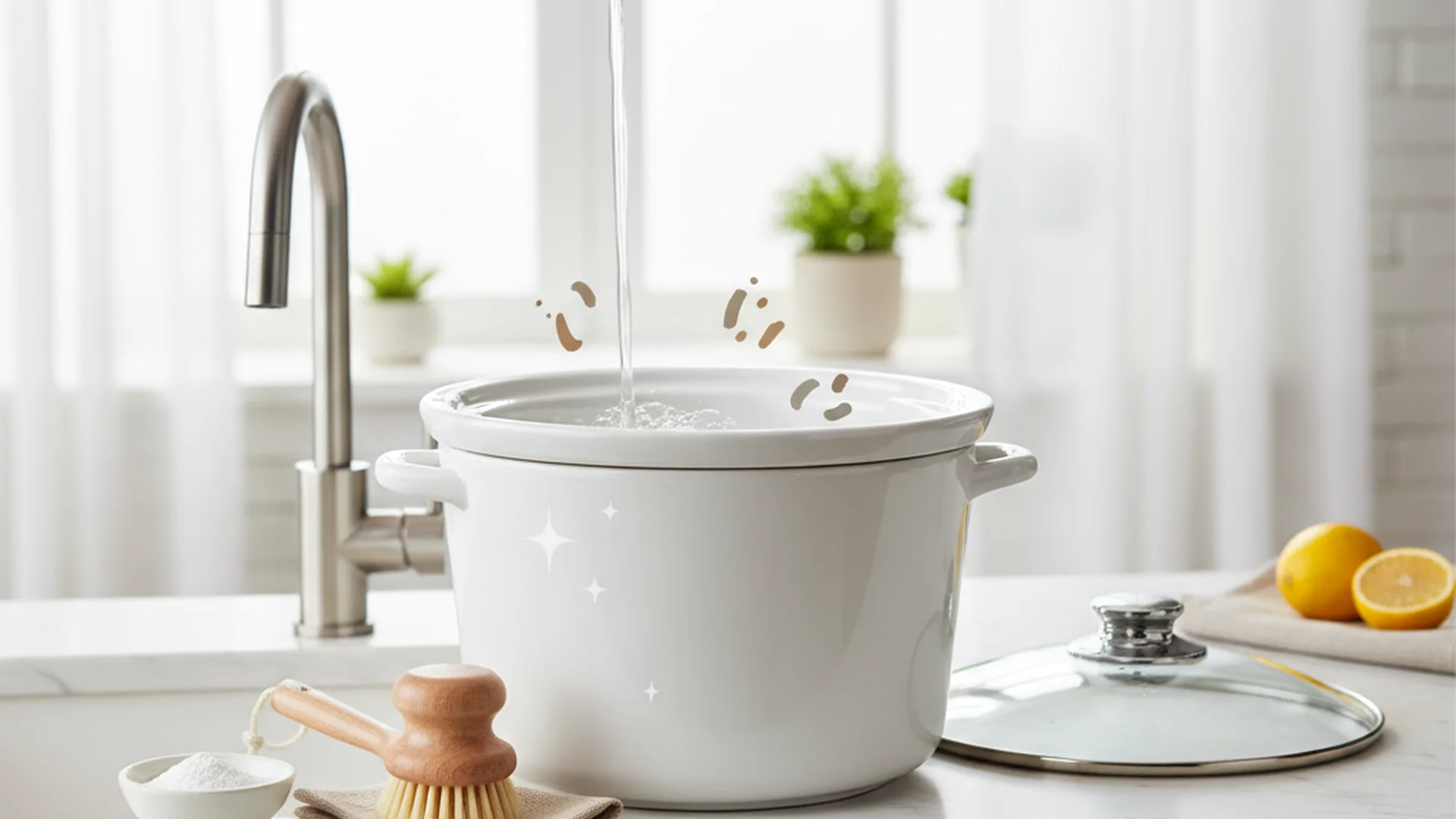
- Fill the crock with water past the line of the stuck food.
- Add 1 cup of distilled white vinegar.
- Slowly pour in 1 cup of baking soda (it will bubble).
- Cover and set the slow cooker to LOW for 1 hour.
The gentle heat facilitates a chemical reaction that softens the proteins and starches "glued" to the pot. After an hour, the residue should wipe away with a simple cloth. This method is the ultimate way to clean crockpot vinegar solutions for a sparkling finish.
Note: This method is also excellent for removing those hazy white mineral spots caused by hard water. The acetic acid in the vinegar dissolves calcium deposits instantly.
Deep Cleaning the Hidden Areas
We often focus on the pot, but the lid and the base require attention too.
The Lid Handle
One of the most overlooked areas is the space between the glass lid and the handle. Over time, steam forces food particles and grease into the interface where the handle is screwed on.
- The Fix: Once every few months, use a screwdriver to remove the handle. Clean the glass and the handle separately in hot soapy water, dry thoroughly, and reassemble.
The Heating Base
The internal heating element is the heart of the machine. If you experience a boil-over, it can bake onto the metal interior.
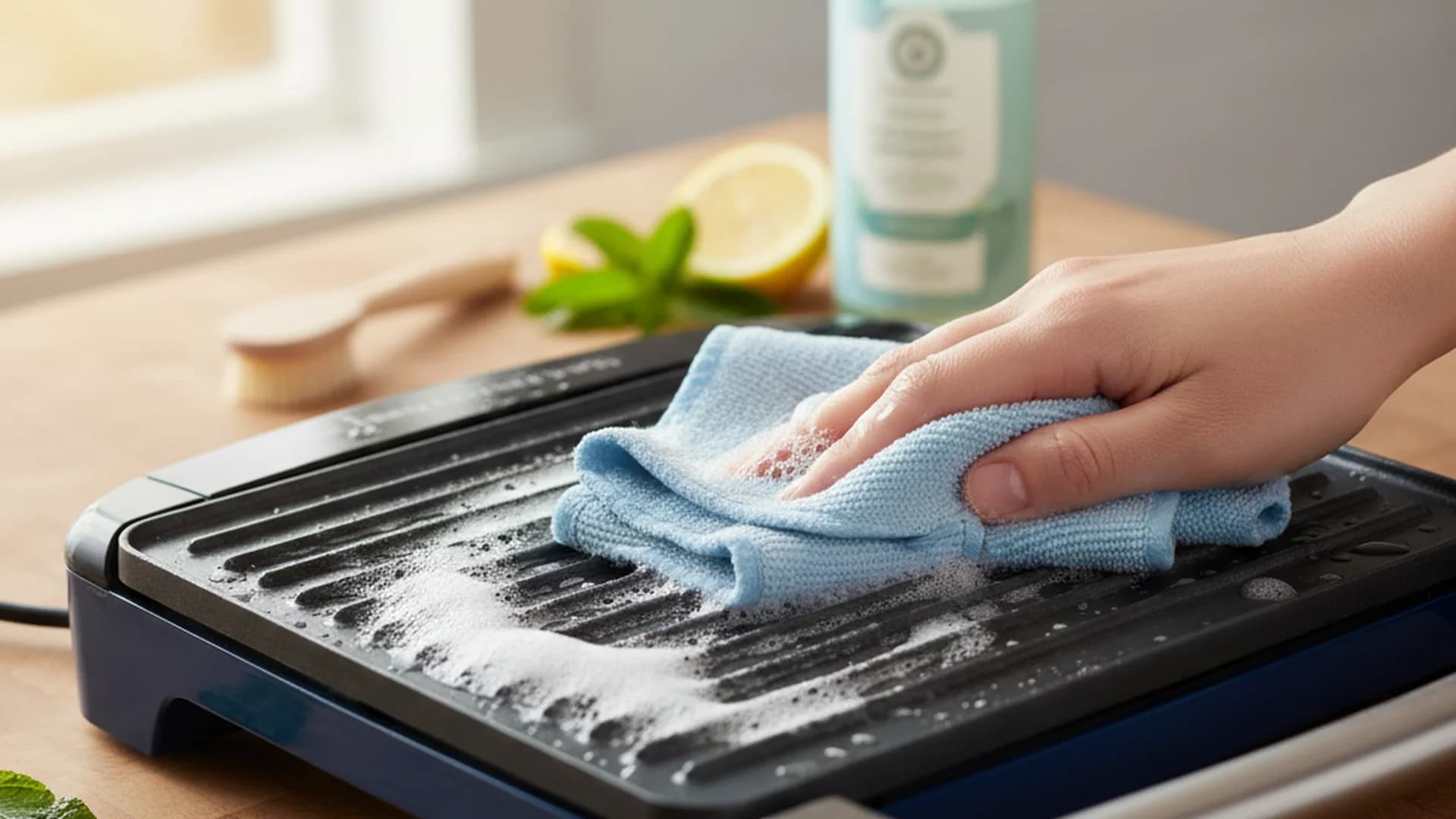
- The Fix: Unplug the unit. Use a damp microfiber cloth with a drop of dish soap to wipe the interior. For stubborn grease, Bar Keepers Friend Soft Cleanser is the 2025 gold standard for removing oily residue from the metal base without damaging the heating elements.
| Cleaning Tool | Best Used For | Why Experts Recommend It |
|---|---|---|
| Silicone Spatula | Initial Scraping | Won't scratch delicate glazes |
| Vinegar & Baking Soda | Burnt-on Food | Natural, chemical-free deep clean |
| Microfiber Cloth | Exterior Stainless Steel | Prevents streaks and fingerprints |
| Bar Keepers Friend | Metal Heating Base | Cuts through baked-on grease |
2025–2026 Trends in Slow Cooker Maintenance
The appliance landscape is changing rapidly. As we look into 2025 and 2026, new technologies are making cleaning even easier.
- Non-Toxic Ceramic Coatings: Brands like GreenPan and VitaClay are leading the move toward PFAS-free and lead-free unglazed clay. These materials are safer for your health but require even gentler care—avoiding metal utensils is mandatory.
- Smart Maintenance Notifications: 2026 "Smart" Crockpots (like the latest Ninja Foodi models) now sync with smartphone apps. They can send notifications if the unit detects a boil-over or remind you to perform a deep-clean cycle after every 50 hours of usage.
- Automated Cleaning Cycles: Premium multi-cookers like the ChefRobot UltraCook Max now feature a dedicated "Clean" button. This uses high-speed pulses of hot water to pre-wash the pot before you even take it to the sink.
Success: Using modern ceramic-coated inserts can reduce your cleaning time by up to 50% compared to traditional glazed stoneware.
Common Mistakes to Avoid
Even experienced cooks make mistakes that can ruin their appliance. Here are the top errors to avoid:
- Using Frozen Meat: Putting frozen meat directly into the crock keeps food in the bacterial "danger zone" too long. Furthermore, as the proteins thaw and cook simultaneously, they tend to "glue" to the ceramic, making the pot much harder to clean.
- The "Steel Wool" Trap: While it’s tempting to use a metal scourer on a burnt pot, this creates micro-scratches. These scratches act like velcro for food, making future cleanups increasingly difficult.
- Overfilling: The #1 cause of messy boil-overs is exceeding the 1/2 to 3/4 full rule. A boil-over can seep into the electrical components of the base, potentially shortening the life of your cooker.
- Dishwasher Heat: Even if your insert is labeled "dishwasher safe," the extreme drying heat of a dishwasher can cause the glaze to develop "crazing" (tiny cracks), which eventually leads to the stoneware breaking.
Frequently Asked Questions
Can I put the base in the dishwasher?
Is it okay to use plastic liners every time?
How do I remove the smell of onions or garlic from the ceramic?
Can I soak my stoneware overnight?
Conclusion
Mastering how to clean crockpot inserts is a small investment of time that yields a massive return in appliance longevity and food quality. By using natural solutions like vinegar and baking soda and avoiding common pitfalls like thermal shock and abrasive scrubbing, you can keep your slow cooker in pristine condition for years to come. Whether you’re using a traditional ceramic model or a high-tech 2026 smart cooker, these maintenance habits ensure that your only focus remains on the delicious meals you create.
Success: A well-maintained slow cooker can last over a decade, providing thousands of hours of energy-efficient cooking.
Cleaning that keeps score
Every task earns points, every streak multiplies them, and Premium adds a household leaderboard plus a monthly Dustagorgon to beat.
- Free forever
- 30 badges to earn
- Up to 6 in a household
No card needed. Set up your rooms in a couple of minutes.