In this article
What you’ll learn
- Clean your humidifier every three days to prevent biofilm and "pink slime."
- Use the two-step method: descale with vinegar and then disinfect with hydrogen peroxide.
- Switch to distilled water to eliminate "white dust" and harmful mineral aerosolization.
As the air turns crisp and indoor heating kicks into high gear, many of us reach for our trusty humidifiers to soothe dry skin and parched sinuses. However, what starts as a health aid can quickly become a health hazard if you don’t know how to clean humidifier units properly. Many owners are unknowingly breathing in a cocktail of bacteria and minerals because of neglected maintenance.
In this guide, we will walk you through the essential steps to clean humidifier naturally, using proven methods that ensure your air remains pure and your machine runs efficiently. Whether you are dealing with stubborn mineral buildup or that dreaded "pink slime," we have the 2025 standards for keeping your home’s air quality at its peak.
Why Humidifier Maintenance is Non-Negotiable
While a humidifier adds much-needed moisture to the air, it also creates the perfect environment for unwanted guests. Plenty of owners clean their device only once a month, if that. This is a dangerous habit.
Bacteria and mold can begin to colonize a stagnant water tank in as little as 24 to 48 hours. If you leave water sitting in your reservoir over a long weekend, you are likely coming back to a microbial playground. Breathing in contaminated mist can lead to "Humidifier Fever"—a flu-like condition also known as hypersensitivity pneumonitis.
Warning: Improperly cleaned units can aerosolize toxins and microorganisms, triggering respiratory issues and allergic reactions even in healthy individuals.
The Two-Step Cleaning Method: 2025 Standards
To ensure your machine is truly safe, you need a two-step process. Many people think they can just clean humidifier with vinegar and call it a day, but vinegar is only half the battle.
Step 1: Descale with Vinegar (The Natural Way)
The first step is focused on "descaling." Over time, minerals from your water (calcium and magnesium) create a hard crust called "scale." This scale isn't just ugly; it provides a porous surface where bacteria can hide and thrive.
- Unplug and Disassemble: Always start by turning off and unplugging the unit. Empty any standing water from the tank and base.
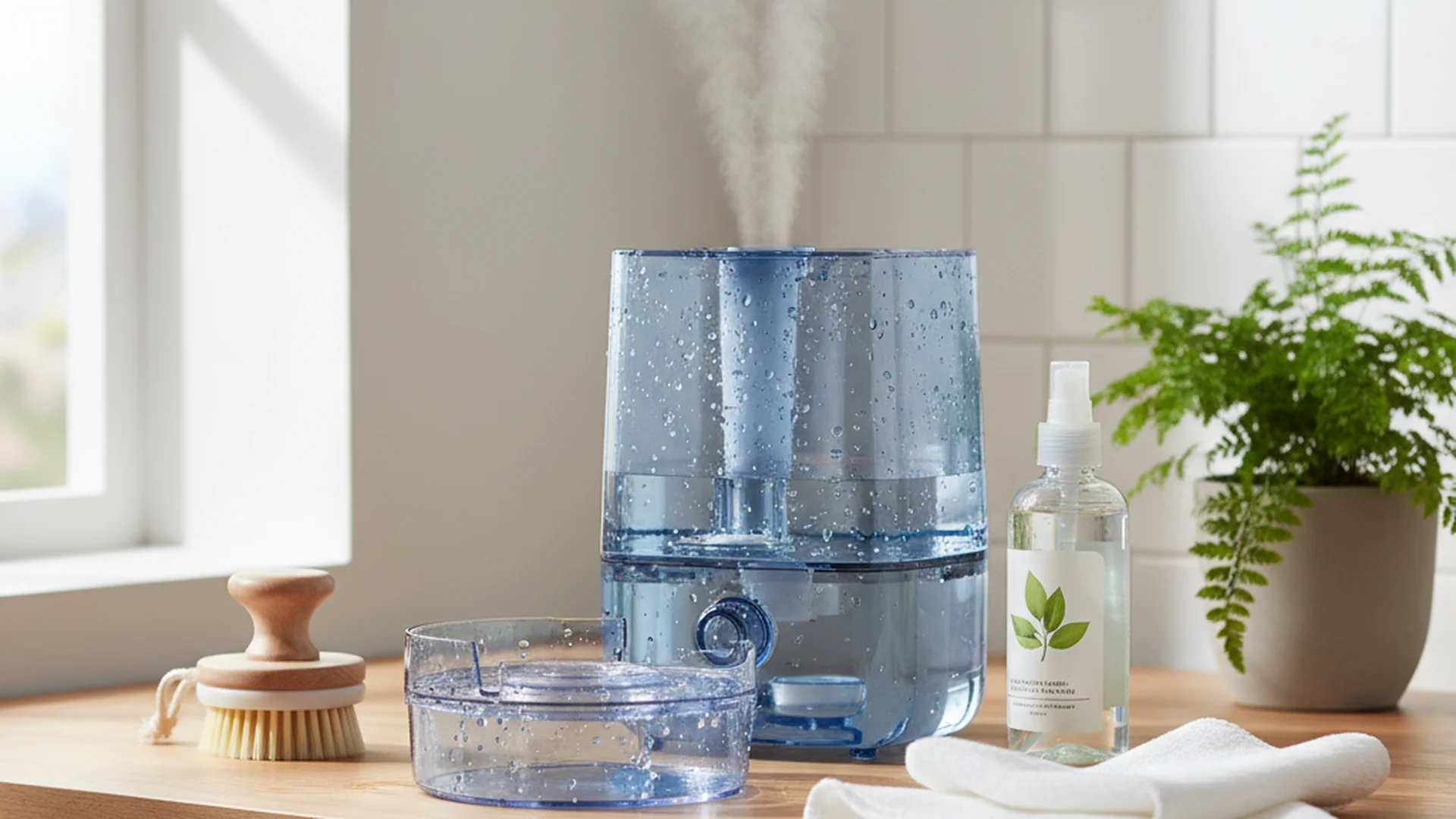
- Vinegar Soak: Fill the water tank and the base with undiluted white distilled vinegar.
- Wait: Let the vinegar sit for at least 30 minutes. This allows the acetic acid to break down the mineral bonds.
- Scrub: Use a soft-bristled toothbrush to gently scrub the internal components, focusing on the ultrasonic nebulizer (the small vibrating disk at the bottom).
Tip: If your humidifier has a narrow neck tank that you can't reach inside, add some uncooked rice with the vinegar and shake vigorously to act as a natural abrasive.
Step 2: Disinfect with Peroxide or Bleach
While vinegar is an excellent descaler, it is not a registered disinfectant. To kill the pathogens that cause "Humidifier Fever," you need a stronger agent.
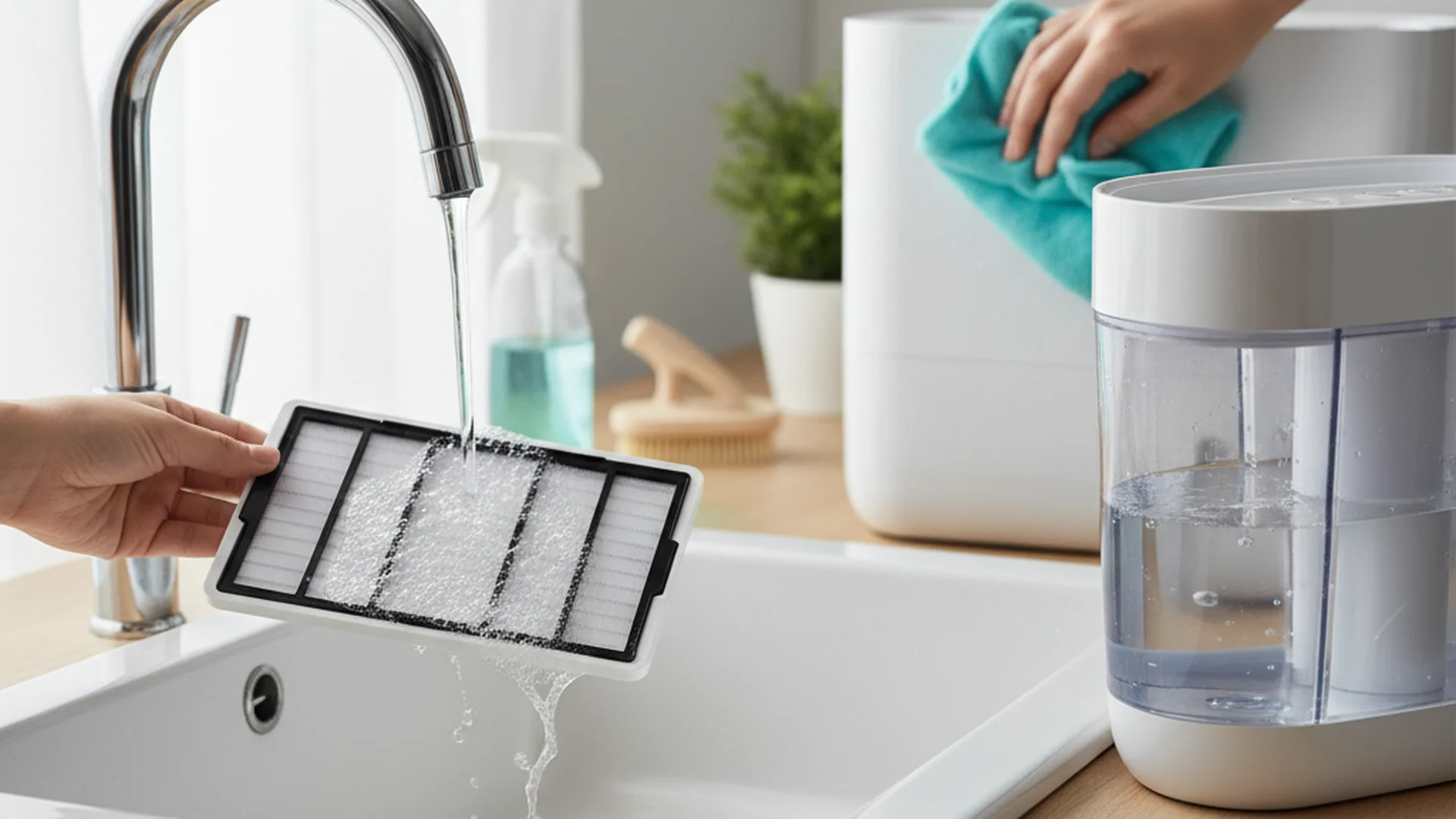
- Rinse: After the vinegar soak, rinse all parts thoroughly with plain water.
- Disinfecting Solution: Fill the tank with a solution of 3% hydrogen peroxide OR a mix of 1 teaspoon of liquid bleach per gallon of water.
- Wait: Let the solution sit for 20 minutes.
- Final Rinse: This is the most critical part. Rinse the tank and base repeatedly until all chemical odors have vanished.
Note: Never mix vinegar and bleach. This is a common but dangerous mistake that creates toxic chlorine gas.
The Problem with Tap Water and "White Dust"
The "white dust" many people see settling on their furniture is worth understanding. That dust is mineral residue. While it may seem like a mere nuisance, ultrasonic humidifiers can aerosolize heavy metals like lead or manganese present in tap water.
To prevent this, use distilled or demineralized water.
| Water Type | Mineral Content | Cleaning Frequency | Risk Level |
|---|---|---|---|
| Tap Water | High | Every 2 days | Moderate |
| Filtered | Medium | Every 3 days | Low |
| Distilled | Zero | Weekly | Minimal |
Real-World Examples of Humidifier Hazards
Example 1: The "Pink Slime" Scenario
Sarah, a homeowner in Chicago, noticed a pinkish film in her humidifier reservoir. She assumed it was just a stain from her well water. In reality, it was Serratia marcescens, a bacterium that thrives on the phosphorus and fatty substances found in stagnant water. After experiencing a persistent cough, she realized her "quick rinse" routine wasn't enough to kill the biofilm.
Example 2: The Seasonal Storage Mistake
David packed his humidifier away in April without a deep clean. When he pulled it out in November, the internal wick was black with mold. Storing a humidifier "wet" is the leading cause of permanent damage to the unit’s internal seals and filter systems.
Example 3: The Ultrasonic White Dust
A family in Virginia noticed a fine white powder coating their electronics. They were using a high-output ultrasonic humidifier with hard tap water. By switching to distilled water, they eliminated the dust and improved the indoor air quality scores on their smart home monitor by 40%.
2025 Trends in Humidifier Technology
As we move into 2026, humidifier technology is evolving to make the "how to clean humidifier" question easier to answer.
- Smart-Drying Technology: New models now feature "Smart Persistent Airflow." After the water runs out, the fan continues to run for an hour to ensure the internal wick and tank are bone-dry.
- UV-C Disinfection: High-end units are integrating medical-grade UV-C lights that neutralize 99.9% of bacteria in the water before it is ever misted into the room.
- IoT-Connected Alerts: Modern humidifiers now track water hardness and usage hours, sending a notification to your smartphone when a deep clean is required.
Common Mistakes to Avoid
- Running Vinegar Through the Machine: Never turn the humidifier on while it contains vinegar. Inhaling atomized vinegar can severely irritate your lungs and throat.
- Using Dish Soap: Avoid dish soap and scented cleaners entirely. These residues are hard to rinse away and will be aerosolized into your lungs.
- Neglecting the Wick: If you have an evaporative humidifier, the wick acts as a "biological sponge." It must be replaced every 30 to 60 days. A dirty wick will blow mold spores directly into your living space.
- Over-Humidifying: Keeping your humidity levels above 50% can lead to mold growth in carpets and curtains. Use a hygrometer to maintain a healthy range of 30% to 50%.
Success: Using a hygrometer to keep your home between 30% and 50% humidity prevents both dry skin and mold growth.
Frequently Asked Questions
Is the "pink mold" in my humidifier dangerous?
Can I just use soap and water to clean the tank?
Can I clean humidifier naturally without using bleach?
How often should I change the water?
Conclusion
Mastering how to clean humidifier units is about more than just maintaining an appliance; it’s about protecting your respiratory health. By following the "Three-Day Benchmark" and using the two-step vinegar and peroxide method, you can enjoy the benefits of humidified air without the risks of mold and bacteria. Remember: if you can see a film or smell an odor, you're already breathing in contaminants. Stay proactive, use distilled water, and let your components air dry completely before reassembly.
Success: Regular maintenance not only protects your health but can also double the lifespan of your humidifier by preventing motor strain and mineral corrosion.
Cleaning that keeps score
Every task earns points, every streak multiplies them, and Premium adds a household leaderboard plus a monthly Dustagorgon to beat.
- Free forever
- 30 badges to earn
- Up to 6 in a household
No card needed. Set up your rooms in a couple of minutes.