In this article
What you’ll learn
- Use the 20-second Vortex Method immediately after every use.
- Never submerge the motor housing in water to avoid electrical failure.
- Deep clean monthly with vinegar to prevent bacterial buildup and odors.
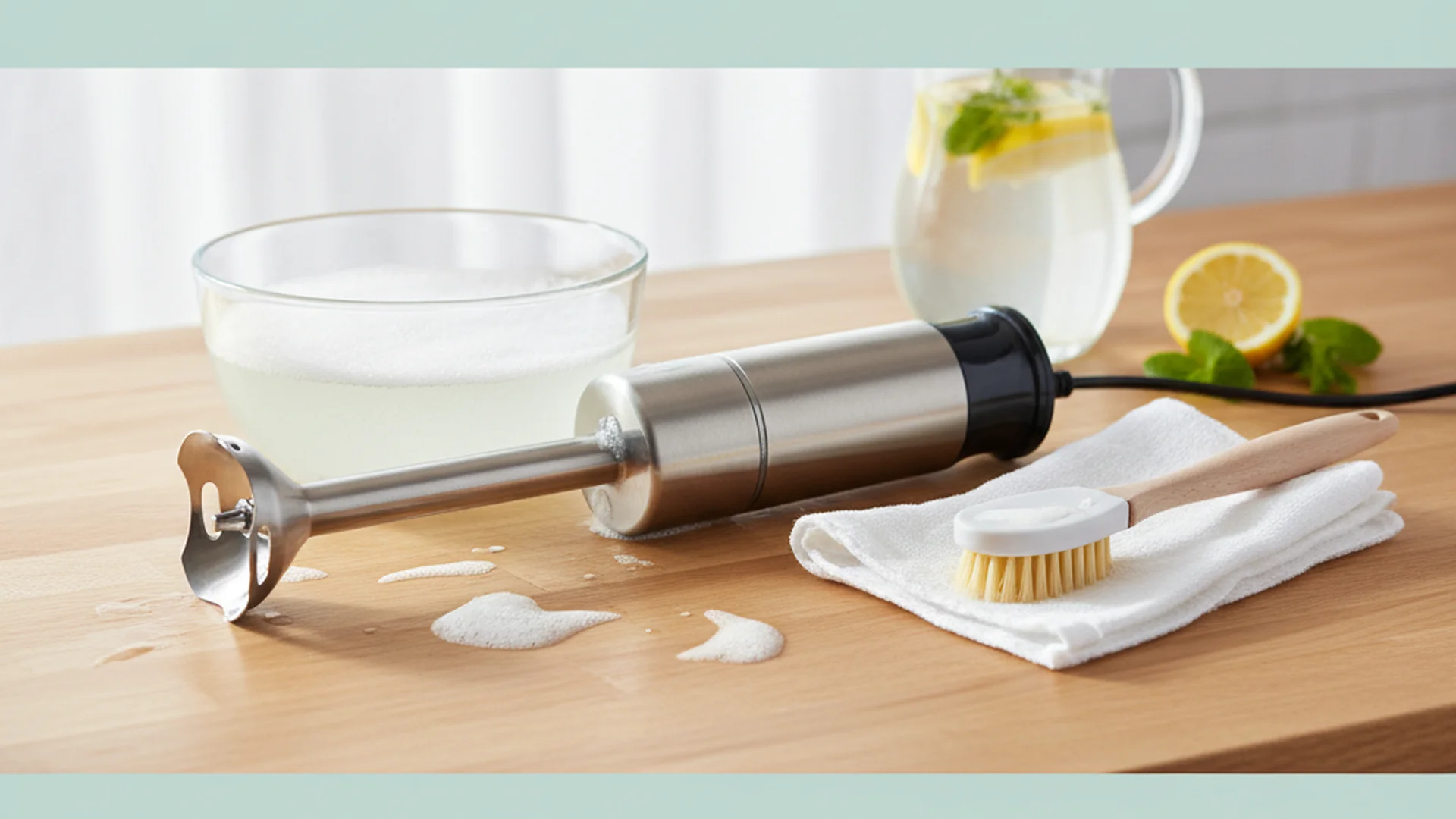
The immersion blender is a kitchen workhorse, transforming chunky soups into velvet and whipping up homemade mayonnaise in seconds. However, because it deals with raw ingredients and complex blade geometries, learning how to clean immersion blender attachments properly is vital for food safety. Many home cooks make the mistake of a quick rinse under the tap, but these tools are a prime site for cross-contamination.
Pathogens like Salmonella and Listeria can thrive in the small crevices of the blade housing if not sanitized correctly. This guide will walk you through the most efficient, chemical-free methods to keep your appliance in top shape.
The 20-Second "Vortex Method"
The most effective way to clean your blender is to do it immediately—ideally within 60 seconds of use. This prevents starches, proteins, and sugars from "gluing" the blade to the housing, which can eventually lead to motor strain or mechanical failure.
The "Vortex Method" is the gold standard for daily maintenance. It uses the blender's own centrifugal force to dislodge food particles from the hard-to-reach areas under the bell housing.
How to Perform the Vortex Method
- Prepare the Jar: Fill a tall jar or the blending beaker 3/4 full with warm water.
- Add Detergent: Add two small drops of mild dish soap.
- Submerge: Place the blending wand into the water, ensuring the blades are fully covered.
- Pulse: Turn the blender on high for 15–20 seconds. This creates a powerful vortex that flushes out the blade seals.
- Rinse: Remove the wand and rinse it under clean, running water.
Success: This method can remove up to 95% of loose food debris in under 20 seconds, making it the most efficient immediate cleaning technique available.
Deep Cleaning Without Chemicals
If you have forgotten to clean your blender immediately, or if you are dealing with pungent odors from garlic and onions, you need a more intensive approach. Many users prefer to clean immersion blender without chemicals to ensure no soapy residue ends up in their next meal.
The Power of Vinegar and Baking Soda
To clean immersion blender vinegar solutions are your best friend. Vinegar is a natural acetic acid that cuts through grease and neutralizes organic odors.
- For Stains: If you have been blending turmeric-heavy curries or berry smoothies, the plastic or stainless steel might stain. Create a thick paste of baking soda and a little water. Apply it to the blades and the inside of the bell housing. Let it sit for 15 minutes, then use the Vortex Method with a water-vinegar mix.
- For Mineral Buildup: If you live in a hard-water area, white crust can form around the blade shaft. Soaking the wand (metal part only) in a 50/50 water and white vinegar solution for 30 minutes will dissolve these deposits.
Tip: Use a cotton swab dipped in white vinegar to clean around the power buttons and the attachment point where the motor meets the wand. These are "blind spots" where grease accumulates but are often missed during a standard wash.
Safety First: The Golden Rule of Maintenance
Before you even think about touching the blades, you must disconnect the power source. Serious injuries, including the loss of fingertips, happen when a button is pressed accidentally while someone is clearing food from the blades.
Warning: Never attempt to clean the blades or housing while the blender is plugged in. Even a momentary slip can result in permanent injury.
Handling Modern Cordless Models
With the rise of 2025/2026 models like the KitchenAid Go and Vitamix Immersion, battery safety has become a priority.
- Remove the Battery: If your model has a detachable battery, remove it before cleaning the wand.
- Lock Features: Many newer models have a "safety lock" switch. Ensure this is engaged if the battery is built-in.
- Charging Ports: Be extremely careful not to get water into the USB-C or proprietary charging ports located on the motor housing.
Common Mistakes to Avoid
Even seasoned home cooks make errors that can shorten the lifespan of their appliances. Here are the most frequent blunders:
- Submerging the Motor Base: This is the most common way to "kill" an immersion blender. The top half, which contains the motor and electronics, should only ever be wiped with a damp, microfiber cloth.
- Using Abrasive Sponges: Using steel wool or harsh scrubbers can create micro-scratches in the plastic or stainless steel. These scratches become "hiding spots" for future bacterial growth.
- Storing While Wet: Reassembling the motor and wand while the shaft is still damp can lead to internal rust and "stinky blender" syndrome caused by mildew. Always air-dry the wand vertically with the blade-end down on a drying rack.
- Neglecting the "Bell" Housing: People often focus on the blades but forget the underside of the bell (the guard around the blades). Food trapped here can rot and contaminate your next meal.
Real-World Cleaning Scenarios
Example 1: The "Mayo Disaster"
Homemade mayonnaise is delicious but creates a greasy, emulsified mess. To clean this, the Vortex Method requires very hot water and a grease-cutting detergent. A simple rinse will leave a film of oil that can go rancid over time.
Example 2: The Turmeric Stain
Turmeric is notorious for staining plastic. If you use a blender with a plastic housing for a golden milk latte, immediate application of a baking soda paste is the only way to prevent permanent yellowing.
Example 3: The "Brown Liquid" Leak
If you see brown liquid leaking from your blender shaft, it usually means water has been trapped inside the seals and is mixing with old food residue or breaking down lubricants. This requires a deep soak in a vinegar solution and a long drying period in a warm, dry place.
| Feature | Dishwasher Safe? | Cleaning Frequency | Best Tool |
|---|---|---|---|
| Stainless Steel Wand | Usually (Top Rack) | After every use | Vortex Method |
| Motor Housing | Never | Wipe as needed | Microfiber cloth |
| Plastic Attachments | Check Manual | After every use | Warm soapy water |
| Blade Seals | No | Monthly Deep Clean | Cotton Swab/Vinegar |
2026 Kitchen Tech: The Future of Cleaning
The latest trends in 2026 show a shift toward "Bio-Based" and probiotic cleaners. Brands like Cif Probiotic are becoming popular because they use "good bacteria" to continue breaking down food proteins in the micro-crevices of the blender long after you’ve finished washing it.
Additionally, modular "Easy-Clean" designs are trending. Newer models now feature completely sealed shafts or "click-and-remove" blade assemblies. This allows users to sanitize the actual blades in the dishwasher or a pot of boiling water without the bulk of the entire wand.
Frequently Asked Questions
Is the wand dishwasher safe?
Why is brown liquid leaking from my blender?
How do I remove the smell of garlic or onions?
Can I clean the blender while it is still plugged in?
Conclusion
Maintaining a clean immersion blender is about more than just aesthetics; it is a critical component of kitchen hygiene. By mastering the 20-second Vortex Method and performing a monthly deep clean with vinegar and baking soda, you can ensure your tool remains a safe and efficient part of your culinary arsenal. Remember to always prioritize safety by unplugging the unit, and avoid the common mistake of submerging the motor housing.
Success: Following this routine will not only keep your kitchen sanitary but can extend the life of your immersion blender by years.
Cleaning that keeps score
Every task earns points, every streak multiplies them, and Premium adds a household leaderboard plus a monthly Dustagorgon to beat.
- Free forever
- 30 badges to earn
- Up to 6 in a household
No card needed. Set up your rooms in a couple of minutes.