In this article
What you’ll learn
- Bacteria can double every 20 minutes in untreated water; consistent sanitization is vital.
- Use a plumbing flush before draining to remove hidden biofilm from internal jets.
- Avoid household cleaners like dish soap or bleach to protect the acrylic shell.
Owning a hot tub is one of the most rewarding investments you can make for your home and health, but it comes with a significant responsibility: hygiene. With over 7.3 million hot tubs in the United States alone, the demand for clear, safe water has never been higher. Knowing how to clean hot tub components correctly doesn't just ensure a pleasant soak; it protects your health and extends the lifespan of an asset that typically lasts about 7.5 years. In this guide, we will break down the latest 2025 standards for maintenance, from AI-integrated water testing to traditional deep-cleaning methods.
The Science of a Clean Spa
Before diving into the "how-to," it is essential to understand why maintenance is non-negotiable. Hot tub water usually hovers between 100°F and 104°F. While this is perfect for muscle relaxation, it is also the optimal environment for bacterial growth. In fact, untreated water can double its bacterial count every 20 minutes.
Furthermore, the "biofilm" that accumulates in the plumbing is a complex colony of bacteria shielded by a protective slime. If you don't use the best way clean hot tub owners recommend—incorporating a line flush—this biofilm will continue to contaminate fresh water even after a refill.
The 3-Step Filter Routine
The filter is the heart of your hot tub's cleanliness. In 2025, experts are moving away from "set it and forget it" mentalities toward a proactive 3-step routine.
- Weekly Rinse: Remove the filter and spray it thoroughly with a high-pressure garden hose to remove hair, skin cells, and large debris.
- Monthly Spray: Apply a spa-specific spray-on filter cleaner to break down body oils and lotions that water alone cannot move.
- Quarterly Soak: Every three to four months, soak your filters overnight in a deep-cleaning chemical solution.
| Cleaning Stage | Frequency | Product Used |
|---|---|---|
| Basic Rinse | Weekly | Fresh Water |
| Chemical Spray | Monthly | Filter Degreaser |
| Deep Soak | Quarterly | Filter Restore Solution |
Tip: Keep a second set of filters on hand. This allows you to rotate them, ensuring your hot tub is never running without a filter while one set is soaking overnight.
How to Clean Hot Tub Shells and Plumbing
When it is time for a full drain and refill (usually every 3–4 months for standard systems), follow these steps to ensure a professional-grade clean.
Step 1: The Plumbing Flush
Before you turn off the power or drain the water, add a plumbing flush or "line cleaner" to the old water. Run the jets on high for 20–30 minutes.
Example: The Case of the "Cloudy Mystery" Consider a homeowner in Colorado who faithfully changed their water every three months but still suffered from cloudy water within days of refilling. After using a plumbing flush for the first time, they discovered chunks of green biofilm exiting the jets. By skipping the line flush, they had been refilling a clean tub with "dirty" pipes.
Step 2: Draining the Unit
Turn off the circuit breaker. Use a submersible pump (Sump pump) to drain the water quickly, or use the built-in drain valve. A pump is often the best way clean hot tub owners save time, as it can empty a 400-gallon tub in under 20 minutes.
Step 3: Cleaning the Acrylic Shell
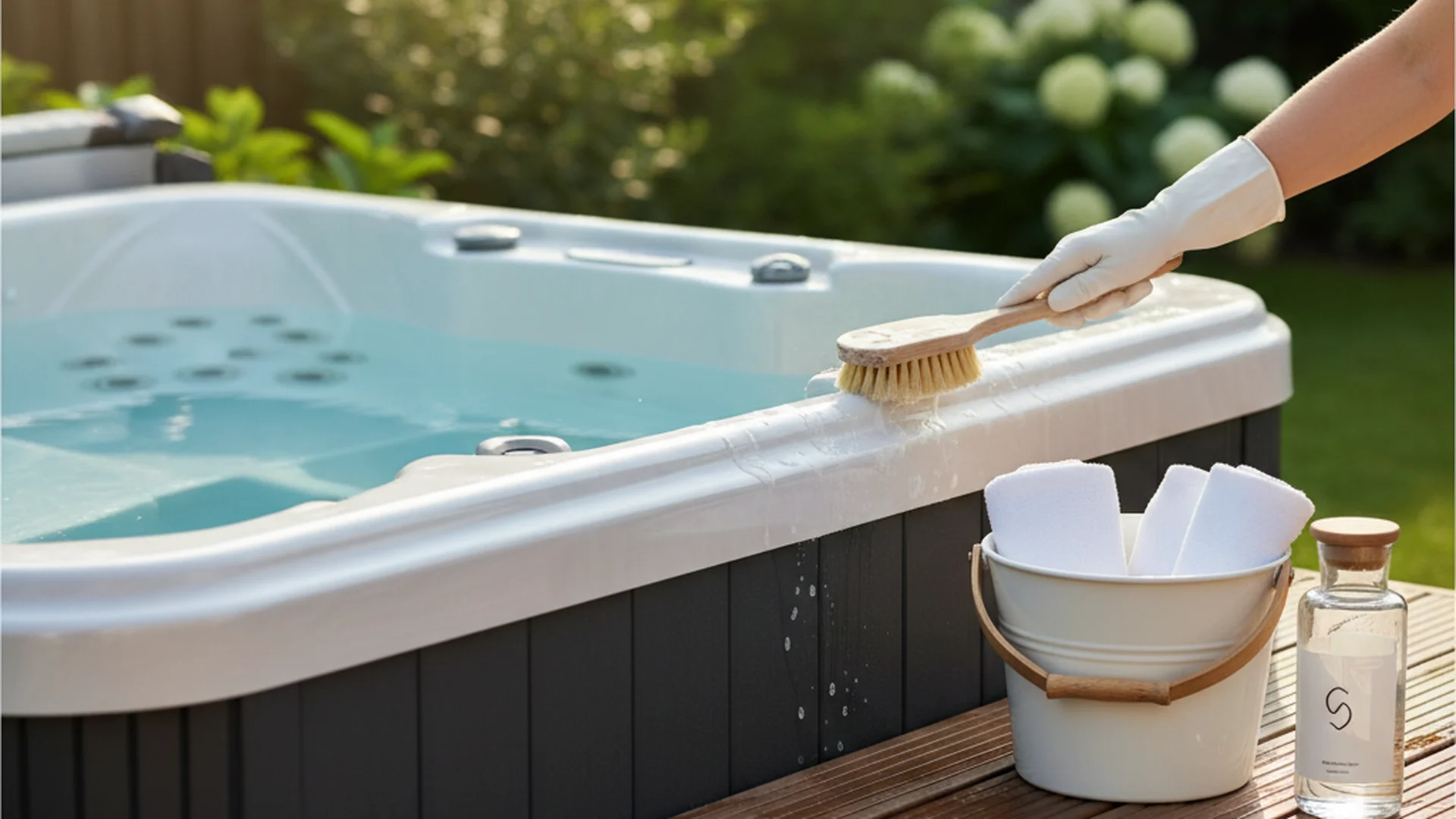
Once empty, use a pH-neutral, spa-specific cleaner and a microfiber cloth.
Warning: Never use dish soap or household glass cleaners. These products contain phosphates and ammonia that cause massive foaming issues and can permanently damage the acrylic finish.
Step 4: Don't Forget the Headrests and Cover
Remove the headrests. Bacteria and mold frequently grow in the damp, dark space behind them. Wipe the underside of the hot tub cover with a mild bleach-free disinfectant and apply a UV protectant to the top side to prevent cracking.
Maintaining Chemical Balance
A clean tub is a balanced tub. If your chemistry is off, your sanitizer won't work, and your equipment will corrode.
- pH Levels: Aim for 7.2 – 7.6. This is the "sweet spot" where water is comfortable for skin and eyes while allowing chlorine or bromine to work effectively.
- Total Alkalinity: Keep this between 80 – 120 ppm to prevent pH "bounce."
- Sanitizer: Chlorine should stay between 3–5 ppm, while bromine should be 4–6 ppm.
Note: With the rise of eco-friendly enzymes in 2025, many owners are now able to maintain lower chlorine levels while still achieving a pharmaceutical-grade clean. Enzymes naturally break down organic matter, leaving less work for the chemicals.
2025-2026 Trends: Smart Cleaning and New Tech
The industry is currently undergoing a massive shift toward automation and energy efficiency.
AI & IoT Integration
The newest 2026 models are equipped with embedded sensors. These "Smart Spas" monitor water quality in real-time and send notifications to your smartphone when it is time to add chemicals. This technology removes the guesswork of manual test strips and can even detect leaks before they cause structural damage.
The Shift to Heat Pumps
Due to new environmental regulations, such as California’s 2026 gas-heater ban, many owners are retrofitting their tubs with heat pump technology. From a cleaning perspective, these units require clear airflow. Ensure the area around your heat pump is free of leaves and debris to maintain efficiency.
Example: The Proactive Vacationer An owner using an IoT-enabled system was on vacation when their app alerted them to a "pH Drop." Because they had an automated chemical dispenser linked to the app, they were able to adjust the levels remotely, preventing a bacterial bloom that would have required a full drain-and-scrub upon their return.
Common Mistakes to Avoid
Even seasoned owners can fall into bad habits. Avoid these common pitfalls to keep your spa in top shape:
- Closing the Lid After Shocking: This is a major error. When you "shock" the water, corrosive gases are released. If you close the lid immediately, these gases are trapped and will bleach your cover and degrade your headrests. Leave the lid open for at least 20 minutes.
- Using Pool Chemicals: Hot tubs have a much smaller water volume and much higher temperatures than pools. Pool chemicals are too concentrated and can lead to skin rashes or component damage.
- Ignoring the "Pre-Soak" Rule: The primary cause of "gunk" in a hot tub is the bathers. Lotions, hair products, and laundry detergent residue on swimsuits are the enemies of clear water.
- Example: The Soap Bubble Disaster: One owner hosted a party where guests wore swimsuits straight from the laundry. Within an hour, the hot tub was overflowing with "laundry foam." A simple pre-rinse for guests could have prevented a full water change.
Success: By showering for just 60 seconds before entering, you remove 90% of the organic pollutants that cause cloudy water.
Frequently Asked Questions
How often should I drain and refill my hot tub?
Can I use bleach to clean the hot tub shell?
Why is my hot tub water cloudy?
How long should I wait to soak after adding chemicals?
Conclusion
Learning how to clean hot tub units properly is the difference between a stressful chore and a seamless lifestyle. By following the "Daily, Weekly, Quarterly" framework and staying updated on the latest trends like AI monitoring and enzyme cleaners, you ensure your spa remains a sanctuary. Remember, the best way clean hot tub enthusiasts maintain their investment is through consistency. Don't wait for the water to turn green to take action; a little preventative care today saves hundreds of dollars in repairs tomorrow.
Success: Following this structured maintenance routine will keep your water crystal clear, your skin healthy, and your equipment running for years to come.
Cleaning that keeps score
Every task earns points, every streak multiplies them, and Premium adds a household leaderboard plus a monthly Dustagorgon to beat.
- Free forever
- 30 badges to earn
- Up to 6 in a household
No card needed. Set up your rooms in a couple of minutes.