In this article
What you’ll learn
- Modern gold fixtures use PVD technology which requires non-abrasive care.
- A daily dry-wipe is the single most effective way to prevent mineral buildup.
- Avoid acidic cleaners like lemon juice and vinegar in high concentrations to protect the finish.
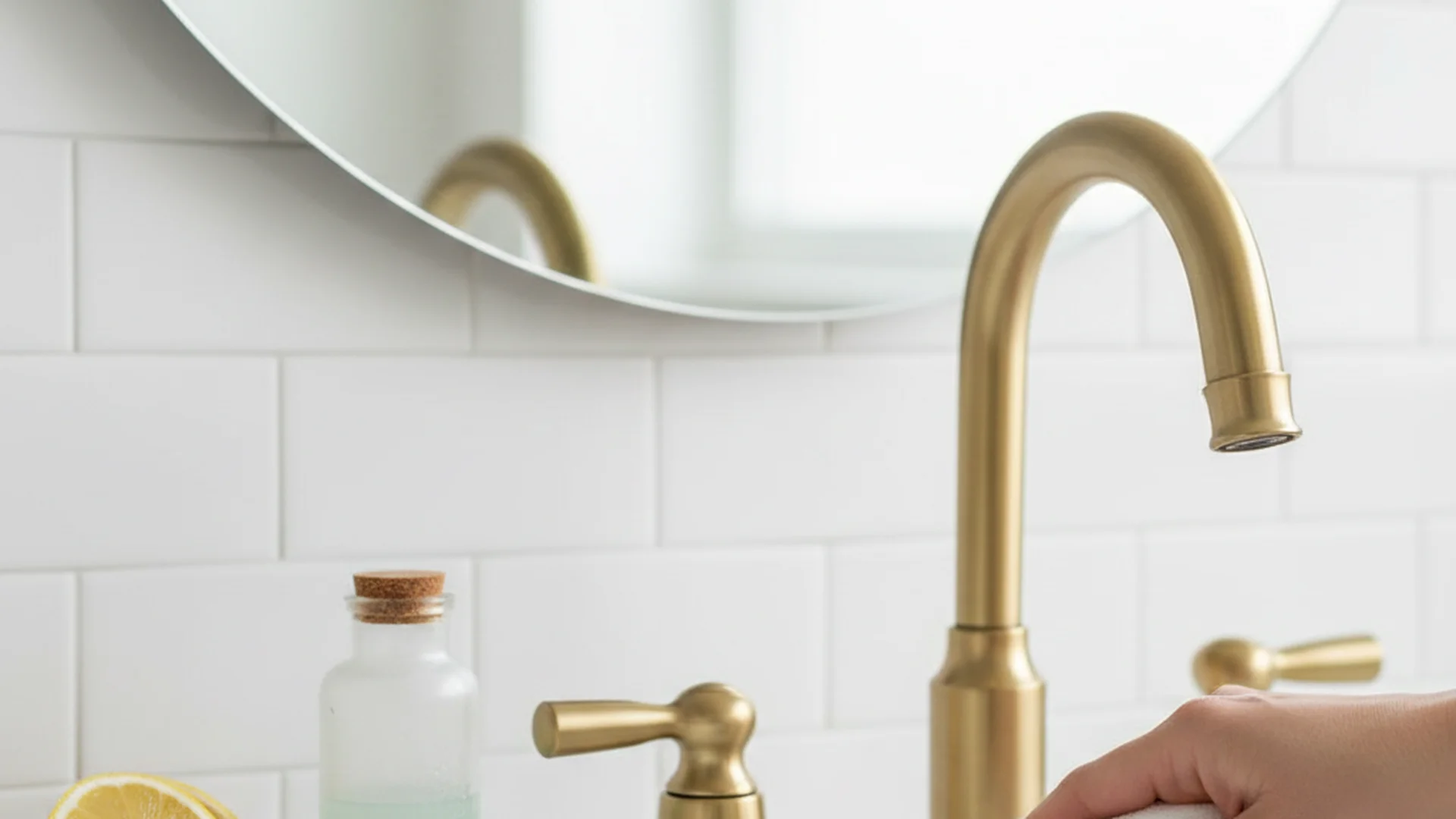
Gold fixtures have reclaimed their throne as the ultimate statement of luxury in modern interior design. Whether you have opted for the brilliant glow of polished gold or the understated elegance of "champagne bronze," knowing how to clean gold fixtures is essential for protecting your investment. In 2026, the technology behind these finishes has evolved significantly, shifting from delicate electroplating to durable vacuum-sealed coatings. However, even the most advanced hardware requires a specific touch to maintain its luster without causing permanent damage.
Understanding Modern Gold: PVD vs. Lacquer
Before you grab your cleaning supplies, it is vital to understand what you are actually cleaning. In the past, gold fixtures were often "flash-plated" with a thin layer of real gold or coated in a yellow lacquer that was prone to chipping.
Today, the industry standard is PVD (Physical Vapor Deposition). This is a vacuum coating process that creates a molecular bond with the fixture. It makes modern gold hardware ten times more scratch-resistant than traditional methods. While this technology makes your faucet more durable, it is not indestructible. The "gold" you see is often a combination of zirconium and titanium nitrides designed to mimic the look of precious metal. Understanding this material science is the first step in finding the best way clean gold fixtures without stripping the finish.
Note: PVD-coated fixtures are rated to last 10–15 years without tarnishing, provided you avoid harsh chemical strippers that can break the molecular bond.
The Daily Ritual: Preventing Mineral Etching
The most effective way to keep gold fixtures looking brand new isn't a deep scrub—it is a five-second habit.
The Power of the Dry-Wipe
In 2026, water quality remains a challenge for many homeowners. When water droplets sit on a gold surface and evaporate, they leave behind calcium and magnesium deposits. Over time, these minerals "etch" into the surface, creating white spots that are incredibly difficult to remove without abrasives.
Real-World Example: In high-mineral areas like Phoenix or London, a homeowner who performs a "dry-wipe" after the last use of the day can keep their fixtures looking pristine for a decade. Conversely, a homeowner who lets water air-dry will notice "clouding" on their polished gold faucet within just six months.
Tip: Keep a dedicated microfiber cloth in your vanity drawer. A quick wipe-down after your evening routine prevents 90% of all cleaning headaches.
The Weekly Deep Clean: Step-by-Step
When life gets busy and the dry-wipe isn't enough, follow this tiered cleaning approach to restore the shine.
Step 1: The Soap and Water Method
Mix a few drops of pH-neutral dish soap with warm water. Avoid "extra-strength" degreasers, as these often contain chemicals that are too aggressive for gold-toned coatings.
- Dip a soft microfiber cloth into the soapy solution.
- Wring it out until it is damp, not dripping.
- Gently wipe the entire surface of the fixture.
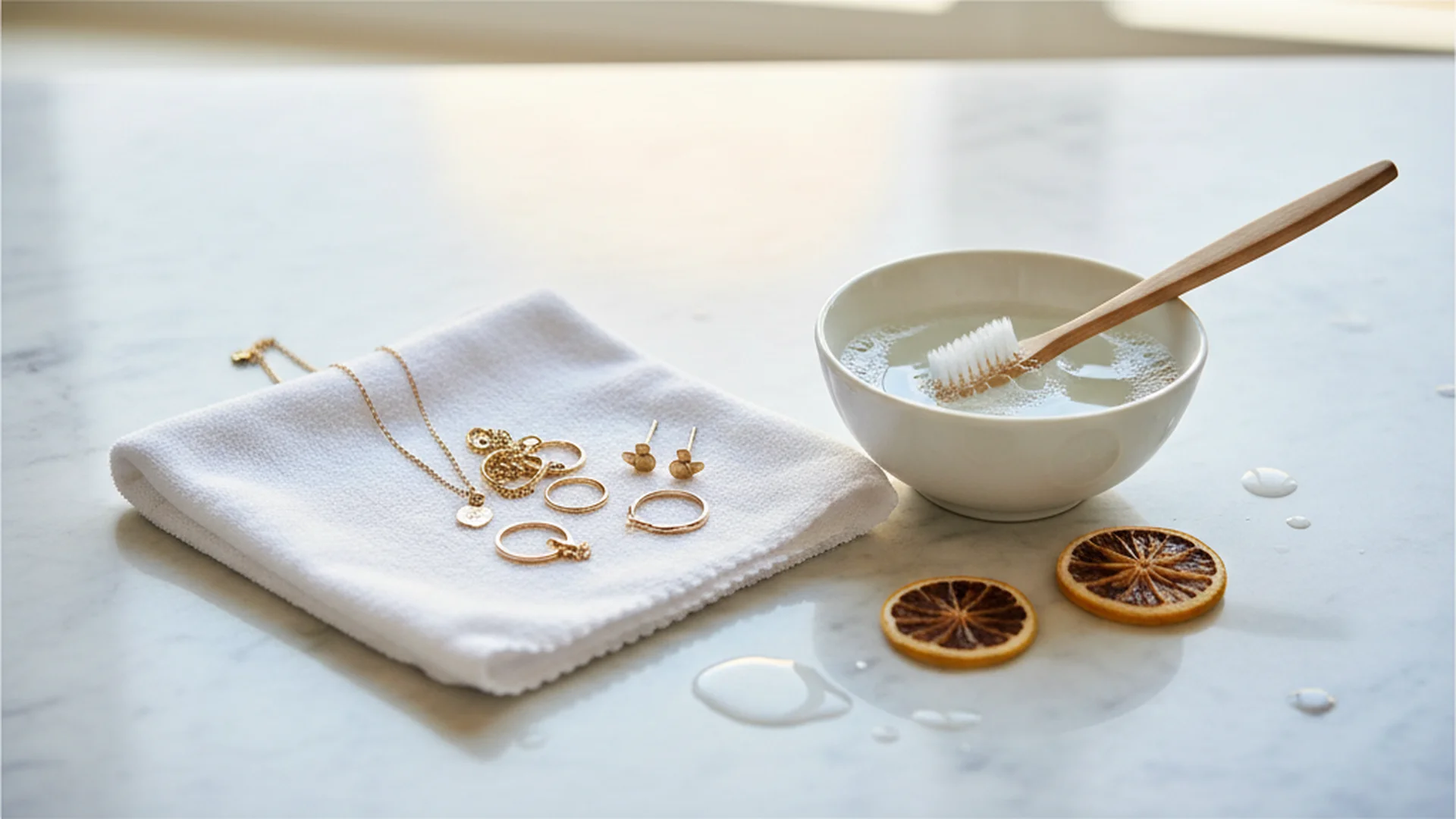
- Use a soft-bristled toothbrush for the crevices around the base and the aerator.
Step 2: The Rinse and Buff
Soap film is the enemy of shine. If you don't rinse thoroughly, the soap leaves a microscopic layer that attracts dust and fingerprints.
- Rinse with plain, lukewarm water.
- In areas with extremely hard water, use a final splash of distilled water.
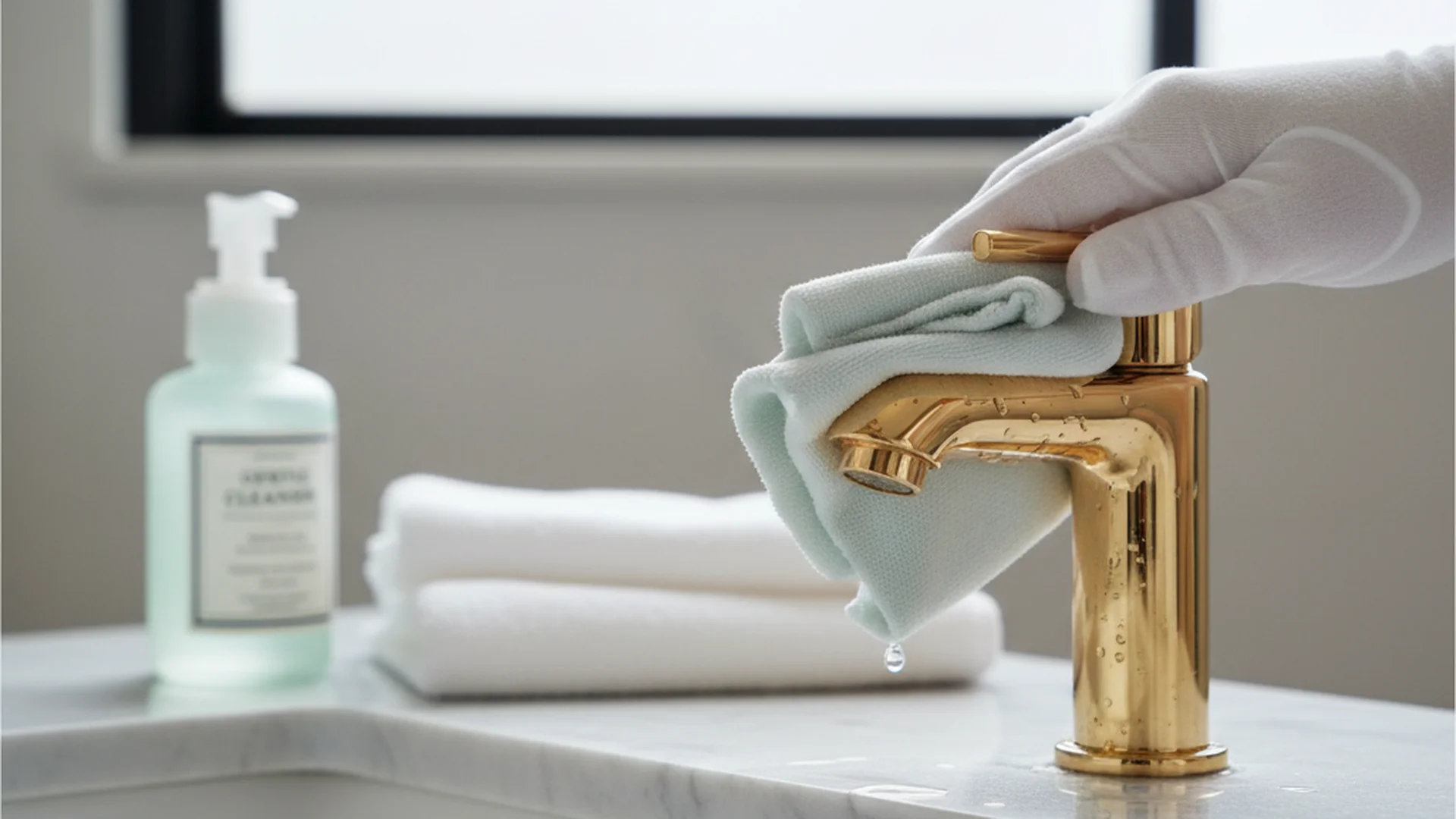
- Immediately buff the fixture dry with a fresh, dry microfiber cloth using circular motions.
Success: This method safely removes skin oils, toothpaste splatter, and light soap scum without risking the integrity of the PVD coating.
| Tool | Purpose | Frequency |
|---|---|---|
| Microfiber Cloth | Daily wiping and final buffing | Daily |
| Soft Toothbrush | Cleaning base and aerator threads | Weekly |
| pH-Neutral Soap | Removing oils and grime | Weekly |
| Carnauba Wax | Creating a hydrophobic barrier | Every 6 Months |
The Pro Detailer’s Secret: Carnauba Wax
If you want your fixtures to have a "showroom" look where water beads off like a freshly waxed car, apply a thin layer of non-abrasive carnauba wax every six months. This creates a microscopic, hydrophobic barrier.
Real-World Example: Many luxury hotels use this method to maintain their "Satin Gold" bathroom suites. By applying a wax barrier, the staff only needs to use water to clean the fixtures, significantly reducing the labor required to keep the rooms guest-ready.
Warning: Ensure the wax is "non-abrasive." Many automotive waxes contain "cleaners" (polishing agents) that can act like sandpaper on your gold finish. Always test a small, inconspicuous spot first.
Recent Trends: Soft Gold and Touchless Tech
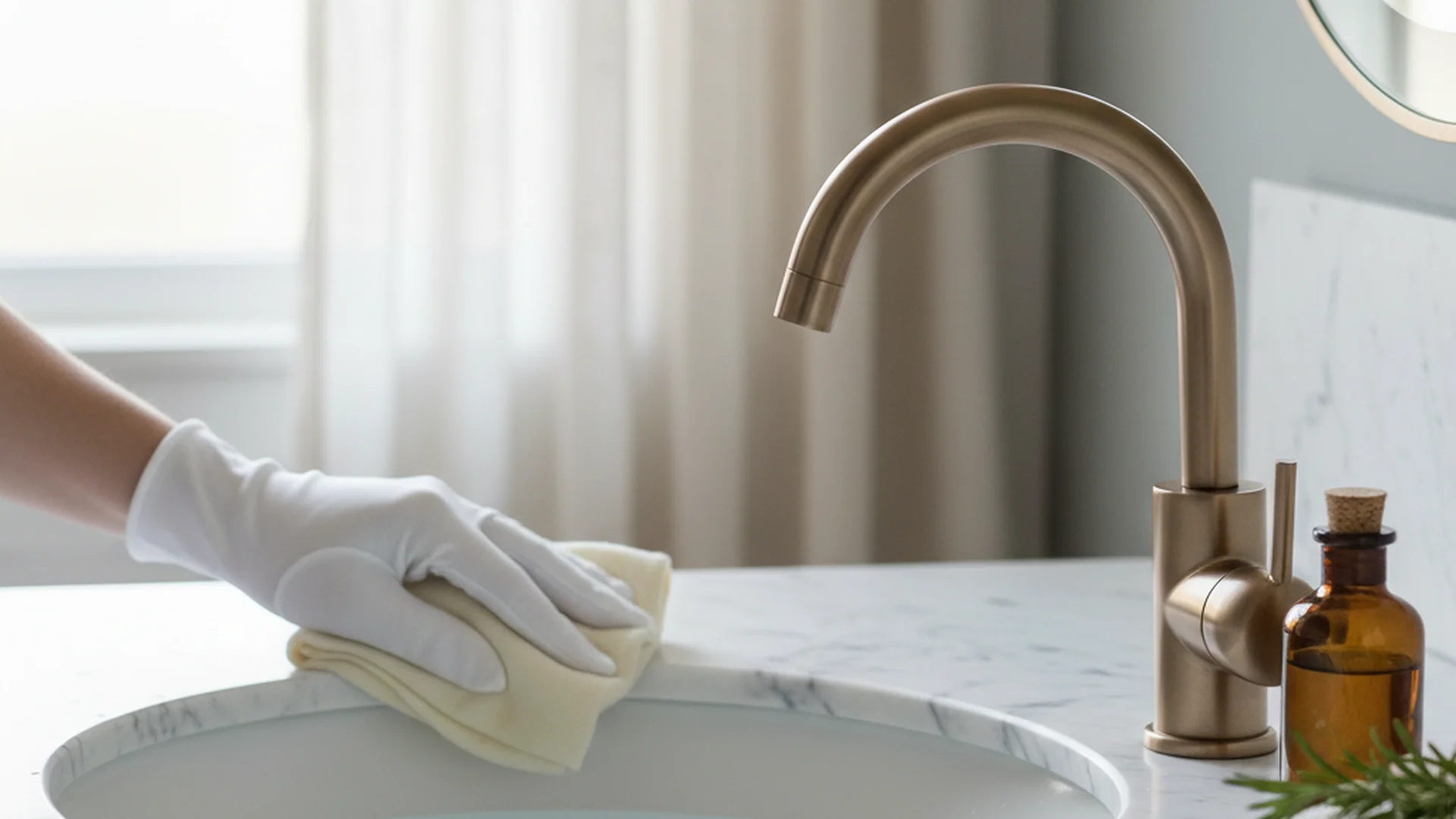
As we move through 2026, we are seeing a shift from high-gloss "yellow" gold to "Soft Gold" and "Champagne Bronze." These finishes are brushed or matte, which are much better at hiding fingerprints than their polished counterparts.
However, modern fixtures are also becoming "smarter." Many gold faucets now feature touchless sensors. When cleaning these, never spray liquid directly onto the sensor or the battery pack housing.
Tip: Always spray your cleaning cloth first, then wipe the sensor. Direct liquid ingress can cause the sensor to malfunction or "phantom trigger" in the middle of the night.
Common Mistakes to Avoid
Even with the best intentions, many homeowners accidentally ruin their gold hardware by using products that seem "natural" or "safe."
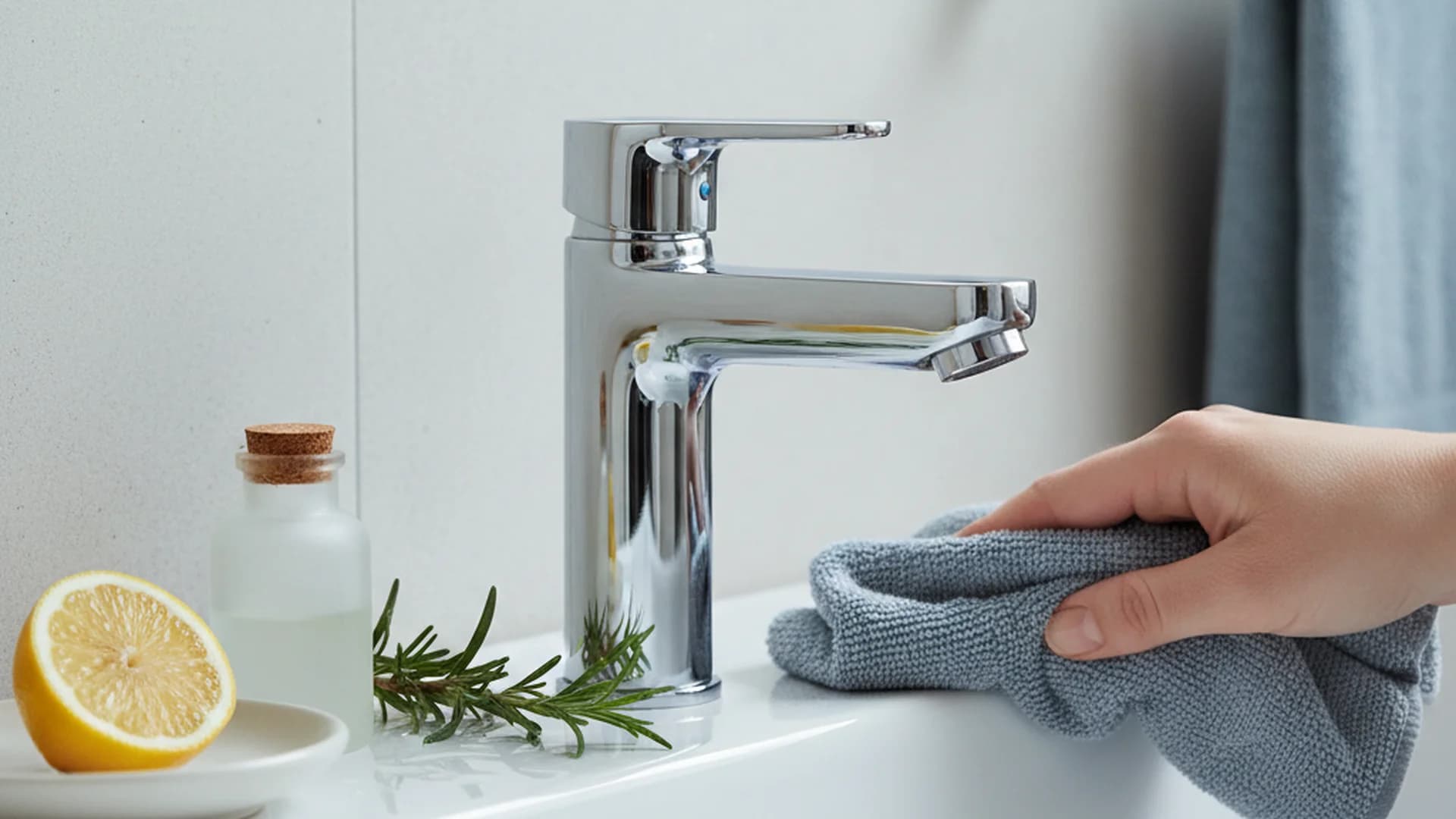
- Using Lemon Juice: While lemon is a natural degreaser, it is highly acidic. Repeated use on gold finishes can cause "pitting"—permanent tiny holes that expose the base metal.
- The "Blue Sponge" Trap: Never use the abrasive side of a sponge, even those labeled "non-scratch." On polished gold, these sponges leave micro-scratches that eventually make the fixture look dull and cloudy.
- Treating Gold Like Steel: Many people assume gold is as tough as stainless steel. It isn't. Steel can handle bleach and ammonia; these chemicals will strip the "gold" color right off a modern PVD faucet.
- Abrasive Powders: Products like Bar Keepers Friend are fantastic for stainless steel sinks but catastrophic for gold faucets. They will literally scrub the gold finish away.
Real-World Example: A homeowner in a renovation forum recently shared photos of their $800 brushed gold kitchen faucet turning "silver." The culprit? They were using a "natural" citric-acid-based spray daily, which slowly dissolved the protective topcoat.
Frequently Asked Questions
Can I use vinegar to remove limescale from gold fixtures?
Is "Brushed Gold" easier to clean than "Polished Gold"?
Can I use Bar Keepers Friend on my gold faucet?
How do I prevent water spots permanently?
Conclusion
Mastering how to clean gold fixtures doesn't require a cabinet full of expensive chemicals. In fact, the best way clean gold fixtures is often the simplest: a soft cloth, some mild soap, and a commitment to keeping the surface dry. By understanding the PVD technology of 2026 and avoiding the "natural" acid traps like lemon and vinegar, you can ensure your bathroom remains a golden sanctuary for years to come.
Cleaning that keeps score
Every task earns points, every streak multiplies them, and Premium adds a household leaderboard plus a monthly Dustagorgon to beat.
- Free forever
- 30 badges to earn
- Up to 6 in a household
No card needed. Set up your rooms in a couple of minutes.