In this article
What you’ll learn
- Use the baking soda towel method for safe, effective deep cleaning.
- Avoid ammonia-based cleaners to prevent permanent pitting and blueing.
- Address sugar-based spills immediately to prevent glass-ceramic fusion.
A glass stove top is often the crown jewel of a modern kitchen. Whether you have a traditional electric radiant model or a high-tech induction surface, that sleek, reflective black expanse provides a minimalist aesthetic that’s hard to beat. However, as any home chef knows, it takes only one boiling pot of pasta water or a splattered stir-fry to turn that showroom shine into a crusty, cloudy mess. Learning how to clean glass stove top surfaces effectively is about more than just aesthetics; it is about preserving the structural integrity of your appliance.
In my years as a professional cleaning consultant, I have seen far too many homeowners ruin expensive cooktops by using the wrong chemicals or abrasive tools. As we head into 2026, the technology behind these surfaces—and the products we use to clean them—has evolved. This guide will walk you through the safest, most efficient ways to maintain your glass-ceramic surface, ensuring it remains the centerpiece of your kitchen for years to come.
Understanding Your Surface: Glass-Ceramic Science
Before we dive into the cleaning methods, it is vital to understand what you are actually cleaning. Most modern "glass" stove tops are actually a glass-ceramic blend, such as Schott Ceran or EuroKera. This material is an engineering marvel designed to withstand incredible thermal shock—up to 700°C (1,292°F).
However, this high thermal resistance comes with a trade-off: mechanical vulnerability. While the surface won't crack if you put an ice-cold pot on a hot burner, it is highly susceptible to scratches from minerals and metal. Most "burnt-on" stains happen for one simple reason: the spill was left to carbonize during the cool-down period. Because glass-ceramic holds heat longer than traditional coils, that spilled soup isn't just sitting there; it's actively baking into a hard, carbonized shell.
The Best Way to Clean Glass Stove Top Daily
The secret to a permanently clean stove isn't a magic chemical; it’s consistency. If you catch spills before they have a chance to undergo multiple heating cycles, you’ll rarely need to break out the heavy-duty tools.
The Vinegar Spritz
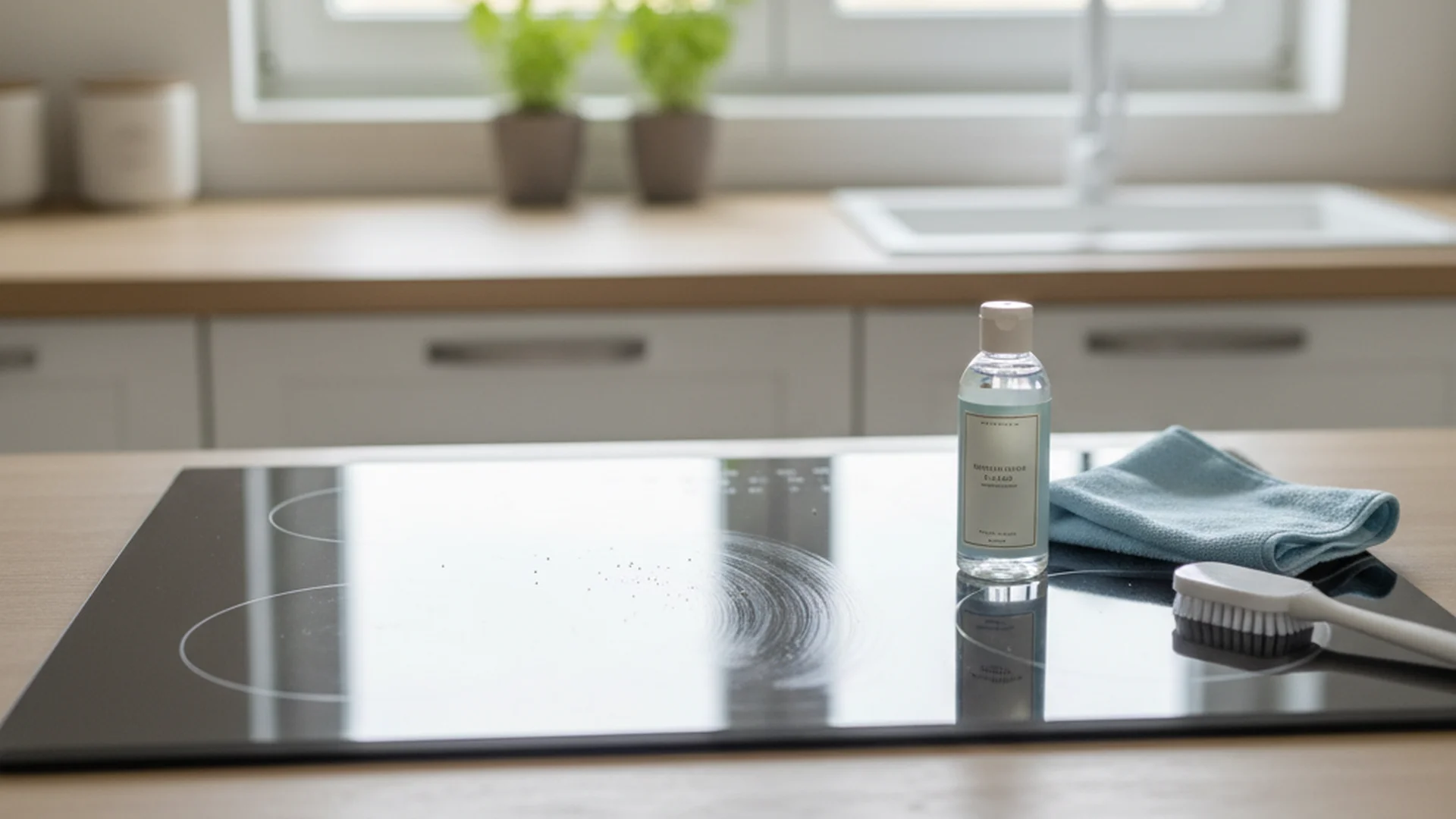
For daily maintenance, the best way clean glass stove top surfaces is with a simple 50/50 mixture of white vinegar and distilled water. Vinegar acts as a mild degreaser and helps neutralize mineral deposits from tap water.
- Wait for the "Hot Surface" indicator light to turn off.
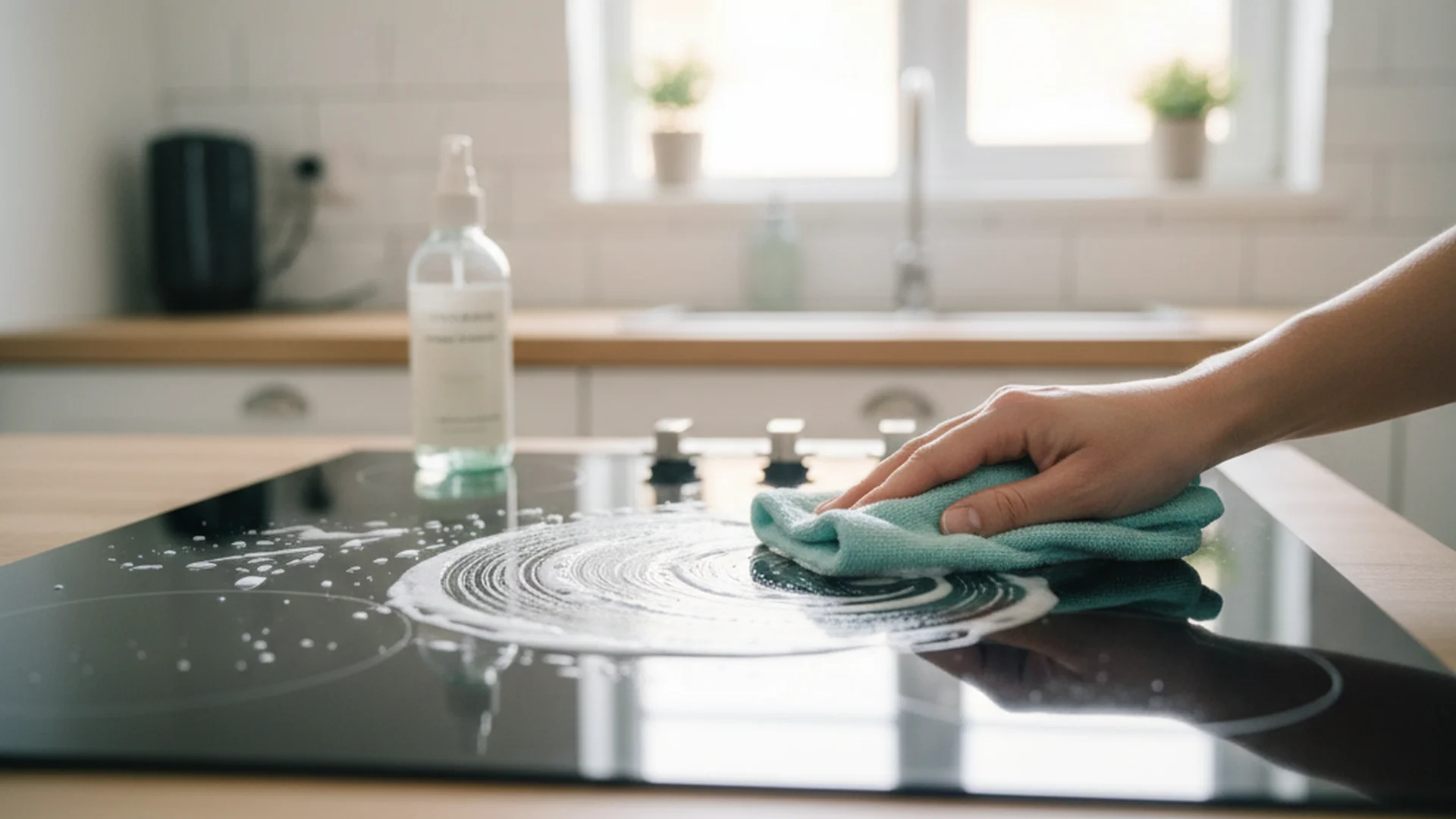
- Mist the entire surface with your vinegar solution.
- Wipe clean with a high-quality microfiber cloth.
Tip: Use distilled water in your spray bottle if you live in a hard-water area. This prevents the "cloudy film" often caused by calcium and magnesium deposits in tap water.
The Deep Clean: The Baking Soda Towel Trick
If you’ve neglected the stove for a week or had a major boil-over, a simple spray won't cut it. This is where the professional-grade "Baking Soda Towel Trick" comes in. This method uses steam and mild alkalinity to lift organic matter without scratching the glass.
Step-by-Step Instructions
- Clear the Debris: Wipe away any loose crumbs with a dry cloth.
- Apply the Buffer: Generously sprinkle baking soda over the entire cool stovetop. Focus more on the areas with visible rings or burnt-on food.
- The Hot Soak: Soak a large bath towel in very hot water mixed with a squirt of grease-cutting dish soap. Wring it out so it’s damp but not dripping.
- The Wait: Lay the hot towel flat over the baking soda. Let it sit for 20 to 30 minutes. The heat from the towel creates a mini-steam chamber that softens the carbonized food.
- The Scrub: Use the towel to scrub the baking soda in circular motions. The baking soda acts as a "soft abrasive"—it’s harder than the food but softer than the glass-ceramic.
- Buff: Wipe away the residue with a clean, damp cloth and buff dry with microfiber.
Success: This method is the "gold standard" for removing 90% of kitchen spills without the use of harsh industrial chemicals.
Dealing with "The Impossible": Burnt-on Gunk and Rings
Sometimes, you’ll encounter a white ring or a black, crusty mound that refuses to budge. This usually happens with sugary spills (like jam or soda) or starches (like potato water).
Using a Safety Scraper
Yes, you can use a razor blade on your stove, but you must follow the "Professional's Protocol" to avoid permanent gouging.
- Use a specialized glass scraper tool, not a loose utility blade.
- The 45-Degree Rule: Always hold the blade at a 45-degree angle. Holding it too vertical can catch the glass and cause a chip; holding it too flat won't get under the stain.
- Lubrication: Never scrape a dry stove. Apply a little bit of vinegar or specialized cream cleaner to the area first.
- Steady Pressure: Use a single, steady forward motion to "shave" the burnt food off the surface.
Warning: Never use the corner of the blade. One slip with a corner can leave a deep "V" scratch that is impossible to remove.
| Stain Type | Recommended Tool | Cleaning Agent |
|---|---|---|
| Light Grease | Microfiber Cloth | Vinegar/Water |
| Cloudy Film | Non-abrasive Pad | Citric Acid/Cream Cleaner |
| Burnt-on Sugar | Safety Scraper | Warm Water (Immediate) |
| Metal Marks | Microfiber Cloth | Specialist Polishing Cream |
2025-2026 Trends in Glass Cooktop Care
As we move further into 2026, cleaning technology has shifted toward "biotech" and "nanotech" solutions. Here is what is currently trending in the world of professional appliance maintenance:
Eco-Enzymatic Cleaners
Traditional synthetic polymers are being replaced by enzyme-based cleaners. These products contain lab-grown proteins that specifically target fats and proteins. Instead of scrubbing, you spray the enzyme foam on a spill and let it "digest" the organic matter for 15 minutes. It’s highly effective for induction tops where the "burn" is less severe.
Nano-Coating Protection
Just as car enthusiasts use ceramic coatings to protect paint, homeowners are now applying after-market nano-coatings to glass stove tops. These coatings create a hydrophobic (water-repelling) layer. When you spill something, the liquid beads up and stays "perched" on the coating rather than bonding to the glass-ceramic, making cleanup 50% faster.
Precision Steam Cleaning
Handheld steam cleaners have become a favorite for 2026. The high-pressure steam can blast out the grease that gets trapped in the tiny crevice where the glass meet the metal frame—a spot that is notoriously difficult to clean with a cloth.
Common Mistakes to Avoid
Even with the best intentions, it is easy to damage a glass-ceramic surface. Avoid these "Stove Top Killers" at all costs:
- The "Windex Mistake": Many people assume that because it’s glass, Windex is the answer. However, the ammonia in many glass cleaners can cause "blueing" or iridescent staining if the stove is even slightly warm.
- Steel Wool and Green Pads: The green side of a standard kitchen sponge contains minerals (like aluminum oxide) that are harder than your stove top. Using them will result in permanent swirl marks.
- Sliding Heavy Pots: You can use cast iron on glass, but you must lift it. Sliding a heavy, textured pot across the surface creates micro-scratches that act like "dirt magnets," trapping grease and making the stove look perpetually dull.
- Ignoring Sugar: This is the most critical rule. Sugar can actually "pit" glass-ceramic. As sugar cools, it fuses with the glass. If you spill something sugary, scrape it away immediately while the stove is still warm using your safety scraper.
Note: If you see "silver" streaks on your stove, these are usually not scratches but metal transfers from aluminum or copper-bottomed pans. These can typically be removed with a specialized cream cleaner like Weiman or Cerama Bryte.
Frequently Asked Questions
Can I use a razor blade to scrape off burnt food?
Why is there a cloudy white film on my stove?
Is baking soda safe for glass stove tops?
Can I clean the stove while it’s still hot?
Conclusion
Maintaining a glass stove top doesn't require an arsenal of expensive chemicals—it requires the right technique and a bit of scientific understanding. By employing the baking soda towel trick for deep cleans and staying away from abrasive pads and ammonia, you can keep your kitchen looking brand new. Remember, the 2026 trend is toward "less is more"—enzymatic cleaners and preventative nano-coatings are the future of easy kitchen maintenance.
Keep your scraper handy, your microfiber cloths clean, and your pots lifted, and your glass-ceramic surface will continue to shine for years to come.
Success: Consistent daily care with vinegar and a weekly deep clean with baking soda will prevent 99% of permanent cooktop damage.
Cleaning that keeps score
Every task earns points, every streak multiplies them, and Premium adds a household leaderboard plus a monthly Dustagorgon to beat.
- Free forever
- 30 badges to earn
- Up to 6 in a household
No card needed. Set up your rooms in a couple of minutes.