In this article
What you’ll learn
- Regular cleaning prevents the growth of Serratia marcescens (pink slime).
- Use vinegar instead of bleach to avoid damaging stainless steel racks.
- Modern stone-based (diatomaceous earth) mats are the top trend for 2025 hygiene.
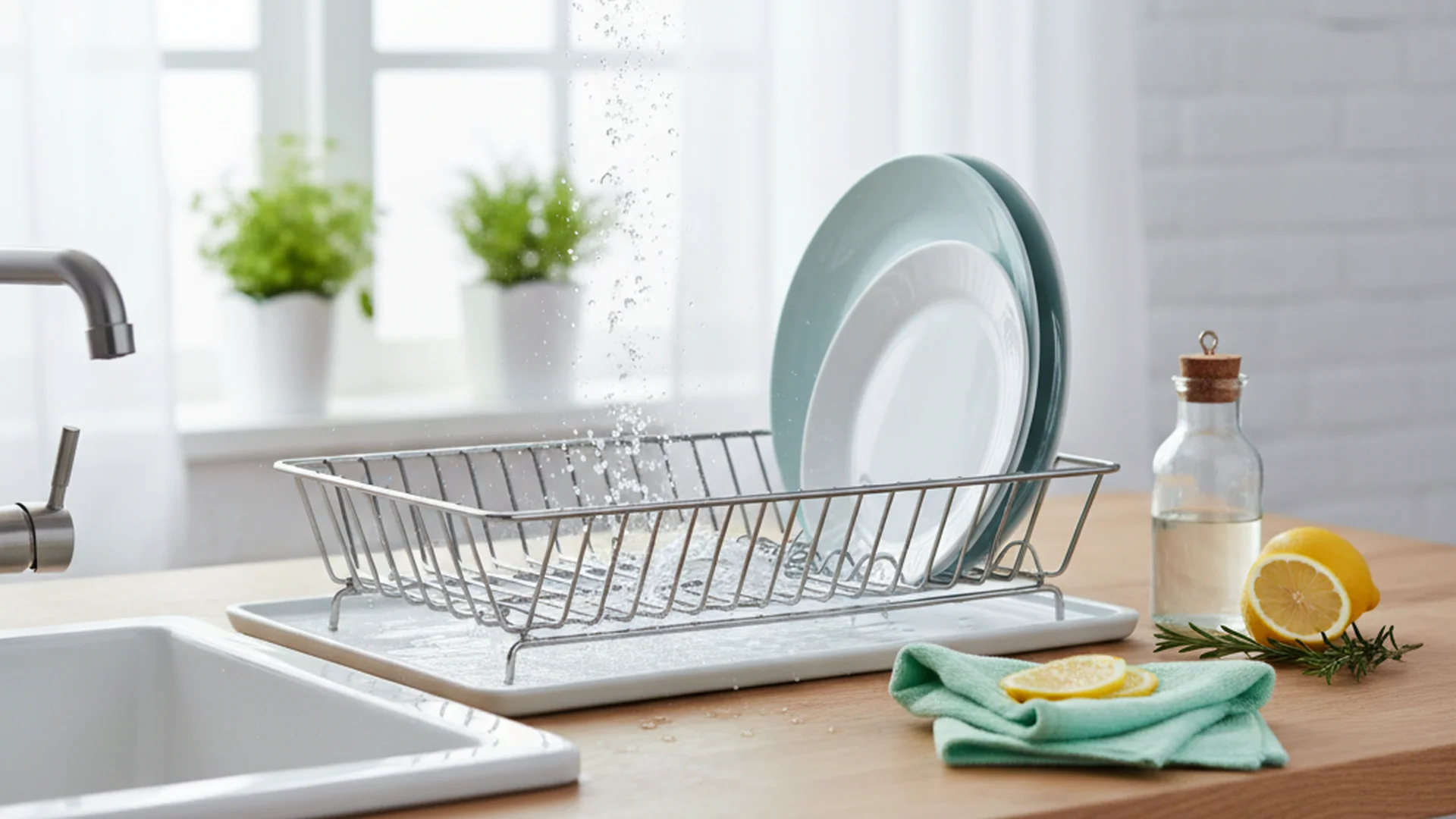
Your kitchen might look spotless, but a hidden bio-hazard could be lurking right next to your sink. Learning how to clean dish rack components is the secret to a truly hygienic home. While we scrub our plates and sanitize our counters, the very place where our "clean" dishes dry often becomes a breeding ground for bacteria and mold. In fact, your dish rack can harbor more germs than your kitchen drain if left neglected.
The constant cycle of moisture, warmth, and food residue creates a perfect ecosystem for microbial growth. Whether you are dealing with unsightly hard water stains, the dreaded "pink slime," or stubborn rust, this guide will walk you through the best way clean dish rack surfaces to ensure your dinnerware stays truly sanitary.
Why Your Dish Rack is Dirtier Than You Think
It is a common misconception that because only clean dishes touch the rack, the rack itself stays clean. This "clean water" myth is one of the biggest hurdles in kitchen maintenance. In reality, as water evaporates from your dishes, it leaves behind concentrated minerals (limescale) and traps airborne dust, pet dander, and cooking grease.
A neglected draining rack can easily carry a heavier bacterial load than the kitchen sink drain, including organisms such as Pseudomonas and Enterobacteriaceae (coliforms). These bacteria thrive in the biofilm that forms on the wires and plastic trays of your rack.
Among the permanently damp spots in a kitchen, about the only thing dirtier is the sponge. However, while you might replace a sponge weekly, a dirty dish rack can remain in use for years, potentially transferring germs back onto every piece of your "clean" dinnerware.
Note: The "Pink Slime" frequently found on dish racks is not actually mold. It is a bacterium called Serratia marcescens, which thrives on phosphorus and fatty substances found in dish soap and food residue.
The Best Way to Clean a Dish Rack: A Step-by-Step Deep Clean
For most standard plastic or metal racks, a weekly deep clean is essential. The most effective, eco-friendly method involves a simple vinegar soak.
Step 1: Dismantle and Prepare
Start by removing all detachable parts. This includes utensil holders, cup attachments, and the drip tray. If you have a modular 2025 model, such as those from Kitsure, ensure the rotating drainage spout is also detached if possible.
Step 2: The Vinegar Soak
Fill your sink (or a large plastic bin) with hot water and add one cup of white distilled vinegar. Submerge all parts of the rack.
Tip: If your rack is too large to submerge, wrap vinegar-soaked paper towels around the frames and let them sit for 20 minutes to dissolve mineral buildup.
Step 3: Scrub the Crevices
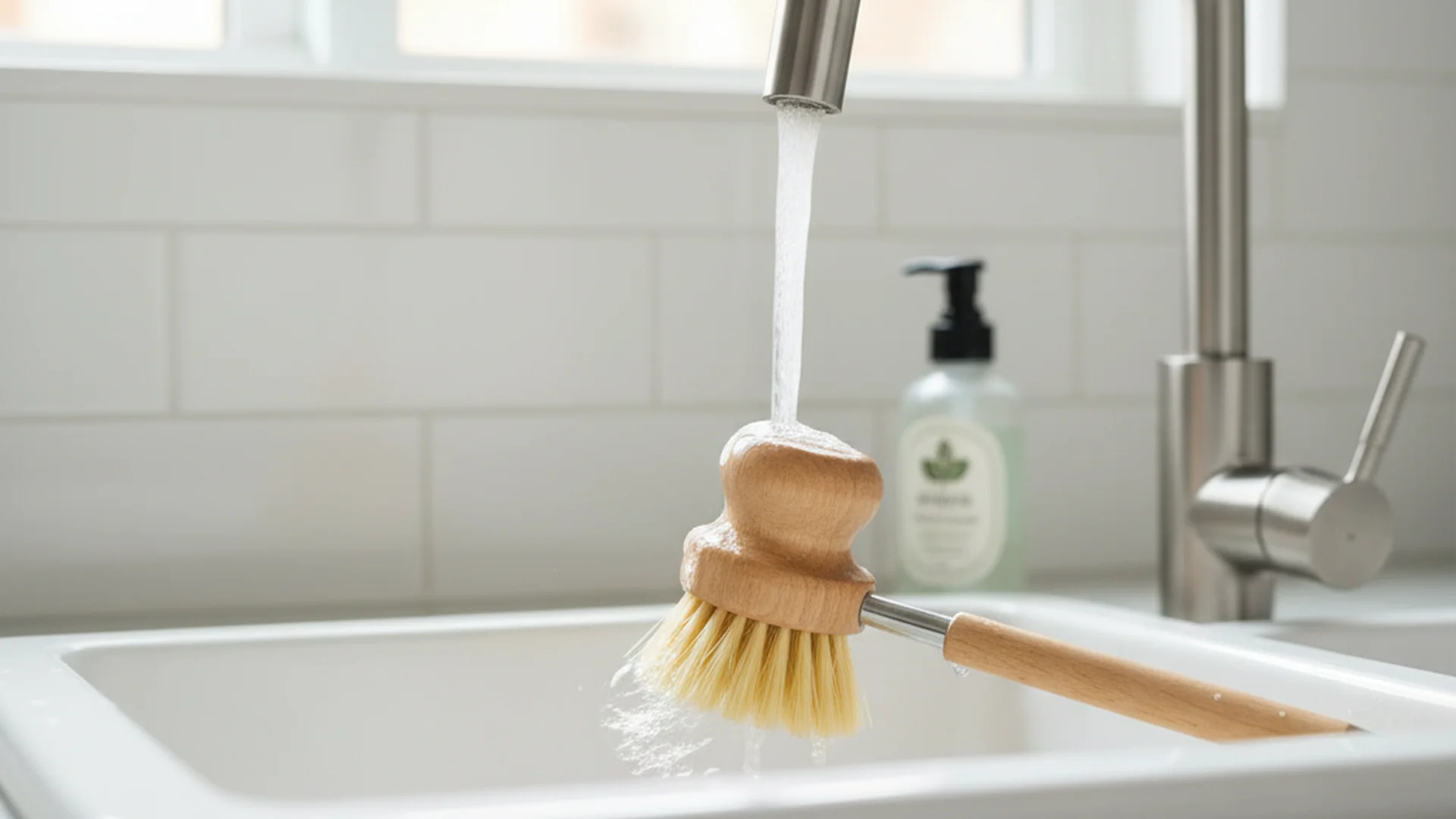
After soaking for 15–30 minutes, use a soft-bristled toothbrush or a dedicated kitchen scrub brush to clean the joints and corners. This is where biofilm and Serratia marcescens accumulate most.
Step 4: Rinse and Dry
Rinse everything thoroughly with fresh water. Use a clean microfiber cloth to dry the rack immediately, especially if it is stainless steel, to prevent water spots and limescale.
Success: Regular vinegar soaks not only disinfect the rack but also keep the surfaces smooth, making it harder for bacteria to latch on in the future.
| Material Type | Cleaning Agent | Dishwasher Safe? | Maintenance Frequency |
|---|---|---|---|
| Stainless Steel | Vinegar / Mild Soap | Yes | Weekly |
| Plastic | Vinegar / Baking Soda | Yes (Top Rack) | Weekly |
| Bamboo / Wood | Mild Soap Only | No | Daily Wipe |
| Stone (Diatomaceous) | Sandpaper / Water | No | Monthly |
Material-Specific Care: From Stainless Steel to Bamboo
Not all dish racks are created equal, and using the wrong cleaning agent can ruin your investment.
Stainless Steel Racks
Stainless steel is popular for its durability, but it is prone to pitting if you use harsh chemicals.
- Real-World Example: A homeowner in Seattle noticed small brown pits appearing on her high-end steel rack. She had been using bleach to "sanitize" it. The chlorine in bleach reacts with the chromium in stainless steel, leading to permanent corrosion.
- The Fix: Stick to white vinegar and water. For stubborn rust spots, make a paste of baking soda and water, apply for 30 minutes, and scrub gently.
Bamboo and Wood Racks
Bamboo is naturally antimicrobial, but it is not invincible.
- Warning: Never put a bamboo or wood dish rack in the dishwasher. The heat and prolonged moisture will cause the wood to warp, crack, and develop deep-seated mold.
- The Fix: Wipe with mild soap and dry upright in a well-ventilated area. If mold appears, a light sanding and a coat of food-grade mineral oil can restore it.
Plastic Racks
Plastic is the most likely to host the "pink slime" bacteria.
- The Fix: A 1:1 ratio of warm water and white vinegar is the best way clean dish rack plastic parts without using bleach, which can make the plastic brittle over time.
2025-2026 Trends: The Rise of Stone and Self-Draining Designs
Diatomaceous Earth (Stone) Mats
The shift from plastic trays to stone dish pads is the most significant change for 2025. Made from fossilized algae, these pads absorb water instantly and dry in seconds, naturally preventing mold growth.
- Maintenance Tip: These don't require traditional scrubbing. Instead, clean them monthly with fine-grit (400-grit) sandpaper to refresh the surface and maintain absorbency.
Self-Draining Modular Designs
New 2025 models feature 360-degree rotating drainage spouts. These systems channel water directly into the sink, eliminating the standing water that usually sits in a drip tray.
Warning: Even with self-draining models, the drainage spout can develop a "slime" buildup inside. Use a pipe cleaner or small brush to clean the internal channel monthly.
Common Mistakes to Avoid
Even seasoned cleaners often make mistakes when it comes to the dish rack.
- Neglecting the Utensil Holder: This is easily the "grossest" part of the rack. Because it is deep and poorly ventilated, it often has a layer of slime at the bottom. It should be scrubbed every time you do the dishes.
- Overloading the Rack: The trend now is toward "minimalist drying." Piling dishes too high prevents proper airflow. If air cannot circulate between every dish, the rack remains damp long enough for mold spores to settle.
- Ignoring the Drip Tray: Empty and wipe the drip tray daily. Standing water is the primary cause of both mold and bacterial blooms.
Frequently Asked Questions
How often should I clean my dish rack?
Can I put my dish rack in the dishwasher?
How do I remove rust from a metal rack?
Why does my dish rack smell bad?
Conclusion
Keeping a clean kitchen goes beyond just washing your plates; it requires maintaining the tools that hold them. By understanding the science behind the "pink slime" and implementing a weekly vinegar-based cleaning routine, you can ensure your kitchen remains a safe environment for food preparation. Whether you’re sticking with a classic stainless steel model or upgrading to a modern 2025 stone mat, consistency is key.
Cleaning that keeps score
Every task earns points, every streak multiplies them, and Premium adds a household leaderboard plus a monthly Dustagorgon to beat.
- Free forever
- 30 badges to earn
- Up to 6 in a household
No card needed. Set up your rooms in a couple of minutes.