In this article
What you’ll learn
- Disassemble immediately after use to prevent bacterial growth.
- Never submerge the motor base in water to avoid electrical failure.
- Use vinegar and baking soda to neutralize odors and remove cloudy buildup.
Your food processor is likely the workhorse of your kitchen, handling everything from tough root vegetables to delicate nut butters. However, knowing how to clean food processor components correctly is about more than just aesthetics; it is a matter of food safety. The gasket and blade assembly of a small kitchen appliance are among the germiest spots in any home. If not cleaned properly, these crevices can harbor E. coli, Salmonella, and mold.
In this guide, we will walk through the professional standards for maintaining your appliance, including how to clean food processor naturally to ensure your family’s meals remain safe and your machine lasts for a decade or more.
Why Proper Cleaning is Essential
A well-maintained food processor can last between 8 and 10 years. In contrast, a neglected unit often requires replacement in just 5 to 6 years. This shortened lifespan is usually due to motor strain caused by dried food buildup or seal failure from improper washing techniques.
Beyond the mechanical benefits, hygiene is the primary concern. Food particles trapped in the blade assembly can quickly become breeding grounds for bacteria. By mastering the right cleaning routine, you protect both your investment and your health.
The Immediate "Quick Pulse" Method
The secret to an easy deep clean is never letting the food dry. Starchy or sugary residues, such as bread dough or fruit purees, act like cement once they harden.
Tip: If you cannot deep clean your processor immediately, fill the bowl 1/3 full with warm water to prevent residue from hardening.
The Self-Cleaning Hack
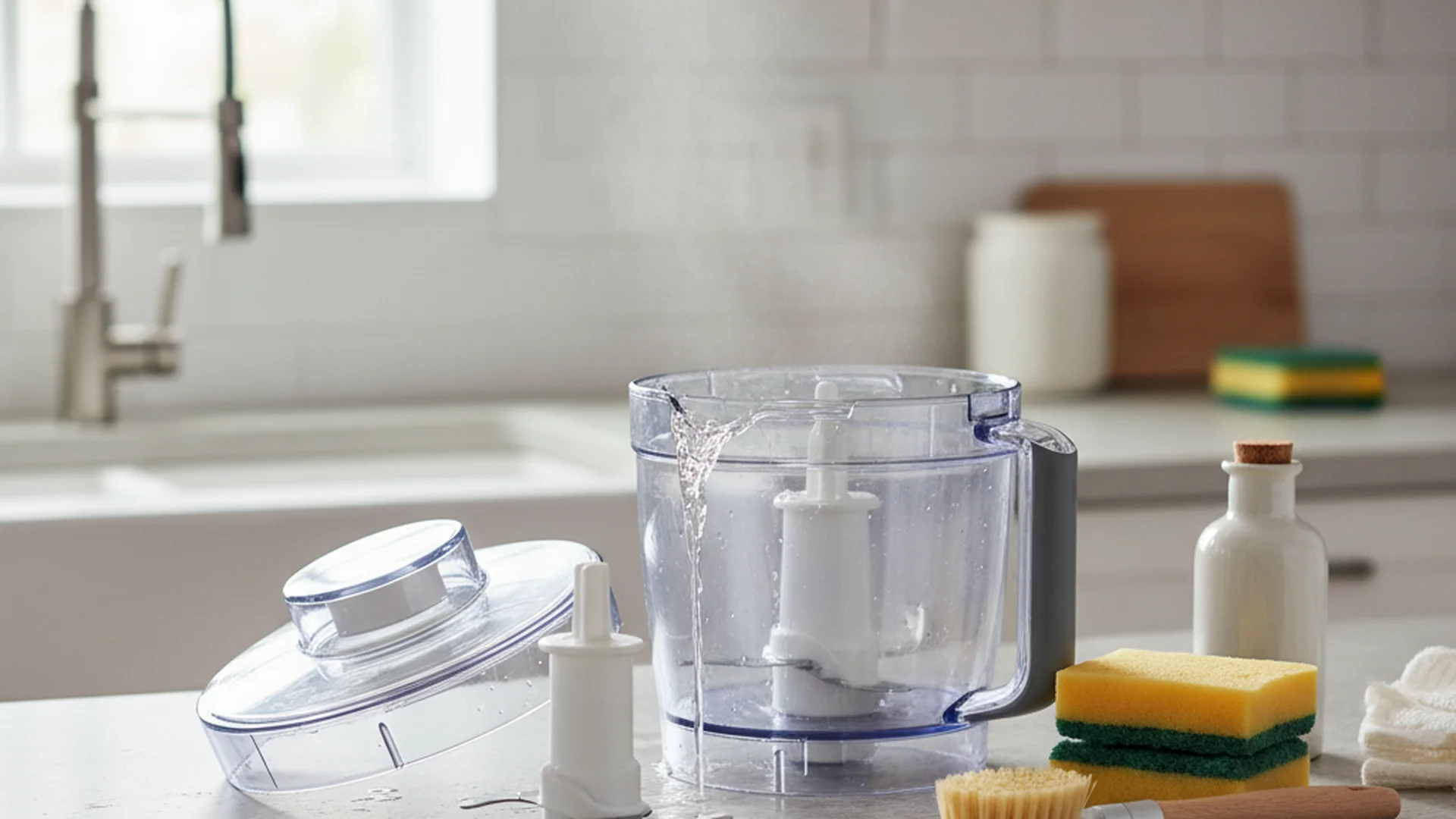
One of the most effective ways to dislodge food from the underside of the blades—the hardest part to reach—is a quick self-clean cycle.
- Fill the bowl 1/3 full with warm water.
- Add two drops of mild dish soap.
- Pulse the machine for 30 seconds.
- Rinse thoroughly.
This simple step removes up to 90% of surface residue, making the subsequent hand-washing process much faster.
How to Clean Food Processor Naturally
Many homeowners prefer to avoid harsh chemicals when cleaning surfaces that touch food. You can easily clean food processor naturally using staples already found in your pantry.
Using Vinegar for Sanitization
White vinegar is a powerhouse for kitchen hygiene. Its acidity breaks down grease and kills many common household bacteria. To clean food processor with vinegar, create a 50/50 mixture of white vinegar and warm water. Use this solution to wipe down the exterior of the base and to soak the lid and small attachments.
Removing Stains with Baking Soda
Have you noticed orange stains after processing carrots or yellow tints from turmeric?
- Create a paste using 1 part baking soda and 1 part water.
- Apply the paste directly to the stained plastic.
- Let it sit for 15 to 20 minutes.
- Scrub gently with a soft cloth and rinse.
Success: Using baking soda not only lifts stains but also acts as a gentle abrasive that won't scratch the BPA-free plastic of your bowl.
Step-by-Step Deep Cleaning Process
When it is time for a thorough teardown, follow the "Reverse Three B's" rule. For safety, always assemble in the order of Base → Bowl → Blade, and disassemble in the exact opposite order.
Step 1: Disassemble and Rinse
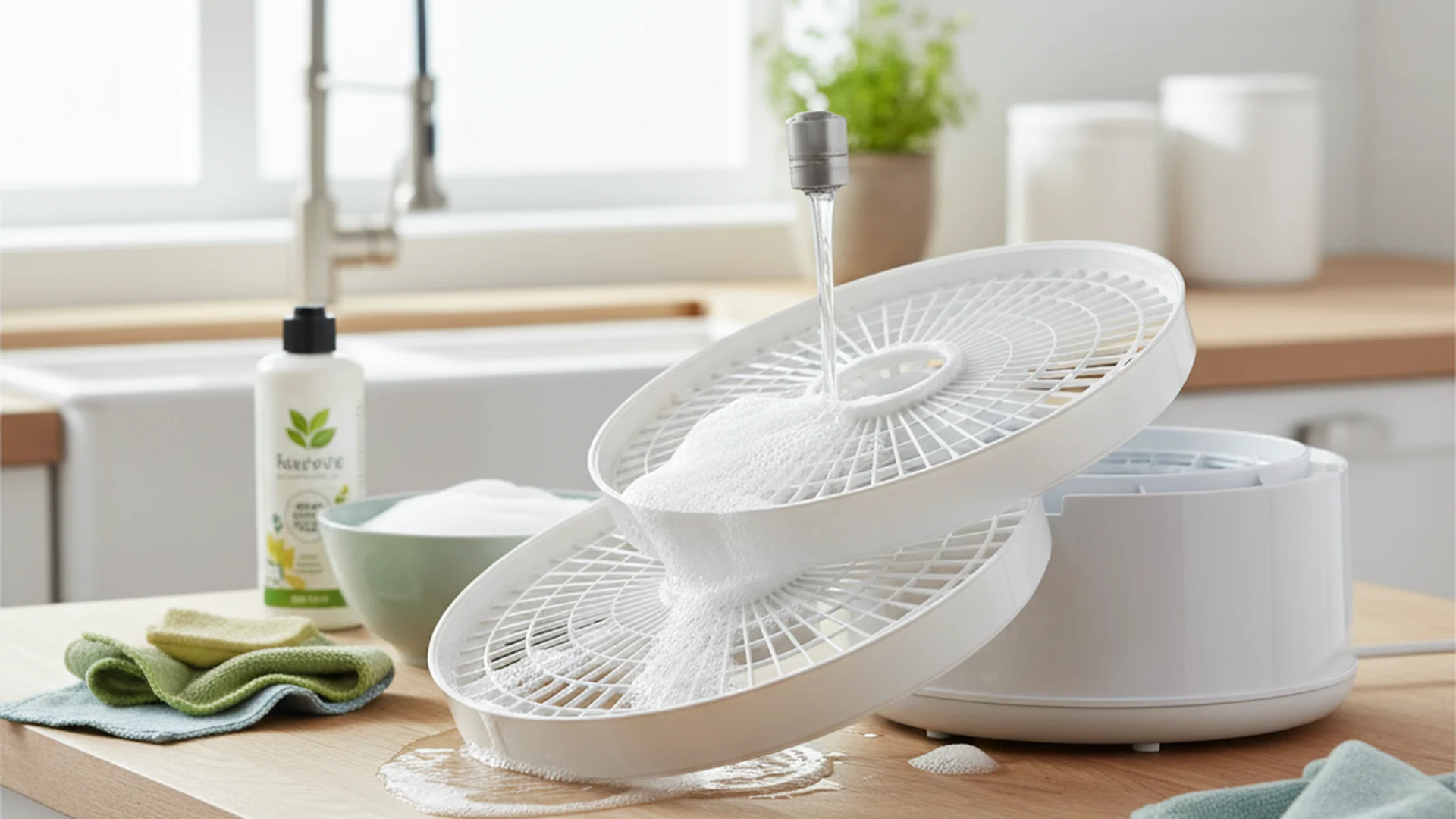
Remove the blade, then the bowl, from the motor base. Rinse all removable parts under warm running water to remove loose debris.
Warning: Never submerge the motor base in water. This causes "catastrophic failure" and poses a significant electrocution risk.
Step 2: Hand-Wash the Blades
While many brands like KitchenAid and Cuisinart claim their parts are dishwasher safe, it is still worth hand-washing the blades. High-heat cycles in dishwashers (often exceeding 150°F) dull the stainless-steel edges noticeably faster than hand-washing does.
Step 3: Clean the Cloudy Bowl
If your bowl has become cloudy or foggy, it is likely due to mineral buildup from hard water. To restore clarity, soak the bowl in pure white vinegar for 15 minutes before rinsing.
Step 4: Detail the Handle and Seals
Many food processor bowls have hollow handles. If liquid seeps inside, mold can grow undetected.
- Use a small bottle brush to reach into the handle.
- Ensure the bowl is dried upside down to allow any trapped water to drain.
- Every 6 months, apply a tiny amount of food-grade mineral oil to the motor shaft seal to keep it supple.
Common Mistakes to Avoid
Even seasoned home cooks make errors that can damage their appliances or lead to hygiene issues.
| Mistake | Consequence | Professional Fix |
|---|---|---|
| Submerging the Base | Internal rust/Short circuit | Wipe with a damp cloth only |
| Using Steel Wool | Micro-scratches for bacteria | Use microfiber or bamboo brushes |
| Dishwasher Heat | "Crazing" (tiny cracks) in plastic | Use the top rack or hand-wash |
| Ignoring the Handle | Internal mold growth | Dry upside down and use pipe cleaners |
Note: "Crazing" refers to the network of tiny cracks that appear in plastic over time. This is often accelerated by the high-pressure water and abrasive detergents used in dishwashers.
Future Trends in Appliance Maintenance (2025-2026)
As we move into 2025 and 2026, the way we clean our appliances is becoming more high-tech and sustainable.
- AI-Driven Alerts: New high-end models now feature sensors that detect motor strain caused by residue buildup. These units send a notification to your smartphone via a dedicated app to suggest a deep clean.
- Antimicrobial Coatings: A major trend for 2026 is the integration of silver-based Agion coatings within the plastic bowls. These materials naturally inhibit the growth of biofilms in hard-to-reach areas.
- UV-C Sanitizing: Some users are now adopting third-party UV-C light boxes. Placing blades and discs into these stations kills 99.9% of bacteria without using water or chemicals.
- Sustainable Kits: There is a massive shift toward "solid dish soaps" and bamboo scrub brushes designed specifically for the unique curves of food processor bowls.
Frequently Asked Questions
Can I put my food processor in the dishwasher?
How do I get rid of the smell of garlic or onions?
How do I clean a cloudy food processor bowl?
Is it safe to use bleach on the plastic parts?
Conclusion
Mastering how to clean food processor components is the best way to ensure your kitchen remains a healthy environment. By choosing to clean food processor naturally with vinegar and baking soda, you avoid chemical residues while effectively tackling stains and odors. Remember to avoid the common mistakes of submerging the base or neglecting the hollow handles, and your appliance will serve you faithfully for years to come.
Success: Consistent maintenance not only keeps your food tasting fresh but also saves you money by extending the life of your kitchen's most versatile tool.
Cleaning that keeps score
Every task earns points, every streak multiplies them, and Premium adds a household leaderboard plus a monthly Dustagorgon to beat.
- Free forever
- 30 badges to earn
- Up to 6 in a household
No card needed. Set up your rooms in a couple of minutes.