In this article
What you’ll learn
- Limescale causes up to 80% of machine failures; regular descaling is non-negotiable.
- Avoid using vinegar as it can corrode internal components and ruin the flavor profile.
- Daily maintenance habits like purging the steam wand can prevent 90% of common clogs.
For many coffee enthusiasts, the morning ritual begins with the hiss of steam and the rich aroma of a freshly pulled shot. However, if your coffee has started tasting bitter, or if your machine’s pressure seems lower than usual, the culprit is likely a lack of maintenance. Learning how to clean espresso machine components properly is not just about aesthetics; it is about preserving the life of a precision instrument and ensuring every shot tastes like a professional barista pulled it.
As we move into 2025 and 2026, espresso technology is becoming more advanced, but the fundamentals of cleanliness remain the primary factor in machine longevity. Neglected machines are prone to mineral buildup and rancid oil accumulation that can turn a high-end investment into a countertop paperweight.
Why Regular Cleaning is Non-Negotiable
Maintaining an espresso machine is a game of chemistry and mechanics. Based on recent technician reports from 2025, approximately 70-80% of all espresso machine repairs are caused by mineral buildup (limescale) from hard water. Furthermore, regular backflushing with professional powders removes up to 92% more coffee oil residue than water alone.
Since espresso is roughly 90% water, any impurity in your water tank or any old residue in the group head directly affects the extraction pressure and the final flavor. Machines maintained on a strict schedule have been shown to last 5–7 years longer than those that are ignored.
Note: On machines like the Breville Barista Express, the "Clean Me" light is often ignored by home users. This light tracks pump cycles; ignoring it forces the pump to work harder against oil clogs, leading to premature pump failure.
The Tiered Maintenance Plan
To keep your machine in peak condition without feeling overwhelmed, it is best to follow a tiered approach. This ensures you are doing the small things daily and the big things only when necessary.
Daily: The "1-Minute Habit"
Daily cleaning is about preventing the "bake-on" effect where milk and coffee oils harden under heat.
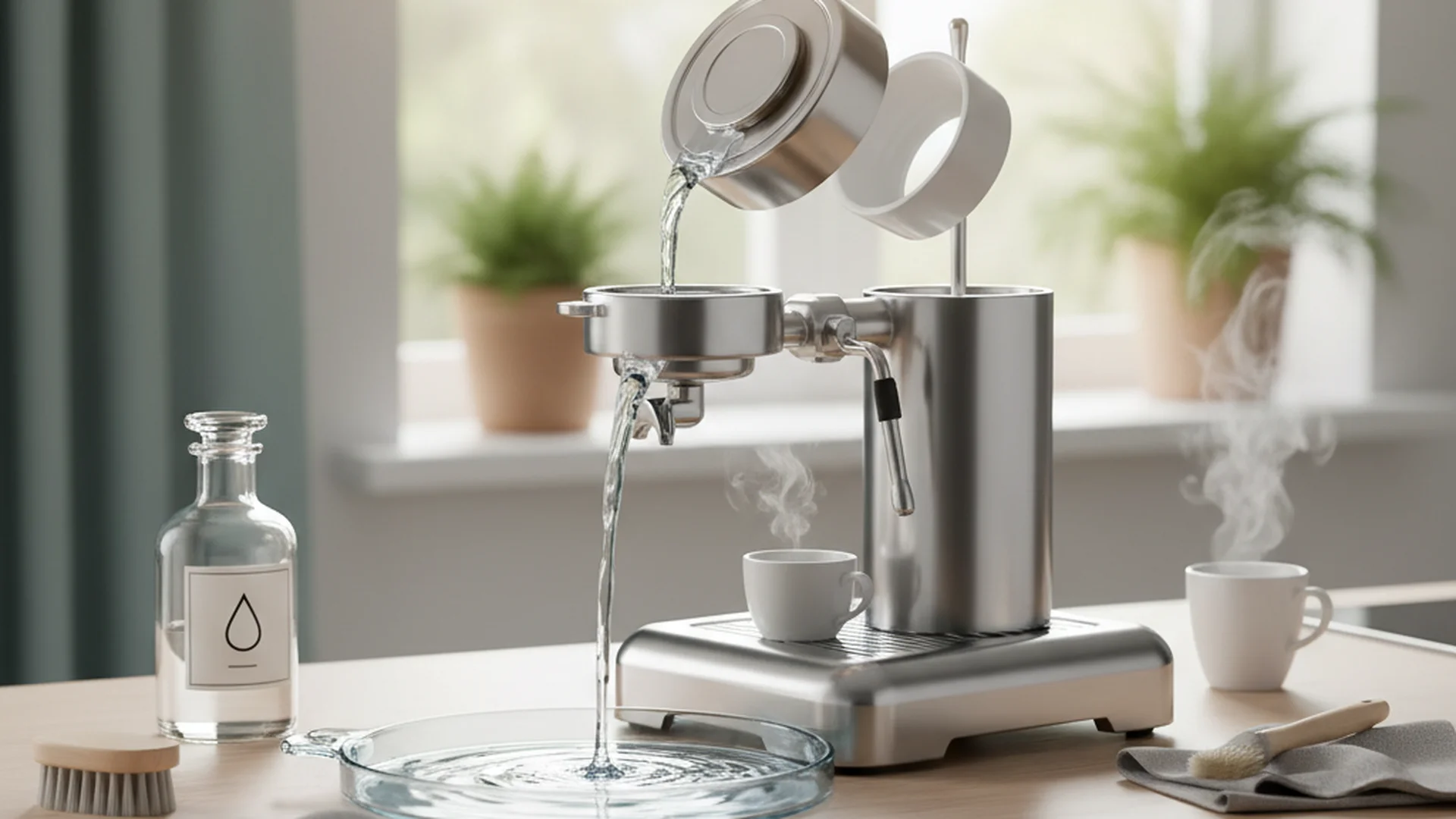
- Purge and Wipe: Always purge the steam wand before and after frothing. Wipe it immediately with a damp microfiber cloth to prevent milk proteins from baking onto the metal.
- The "Blank Shot": Run a 5-second water-only shot through the group head after every session. This flushes out stray grounds that would otherwise stick to the shower screen.
- Portafilter Rinse: Knock out the puck and rinse the basket immediately. This simple step prevents the 92% of coffee oils we mentioned earlier from turning rancid overnight.
Tip: Keep a dedicated "coffee only" microfiber cloth nearby. Using the same cloth you use for counters can introduce unwanted bacteria to your steam wand.
Weekly: The Deep Clean (Backflushing)
If you use your machine daily, a weekly chemical backflush is essential. Backflushing involves using a "blind" filter (a basket with no holes) and an espresso-specific detergent like Cafiza.
- The Process: Place a small amount of detergent in the blind filter, engage the pump for 10 seconds, then release. Repeat this five times.
- The Rinse: Follow up with ten more cycles of plain water to ensure no detergent remains in the three-way solenoid valve.
- Component Soak: While backflushing, soak your portafilters and baskets in a mixture of warm water and detergent for 15 minutes.
Warning: Never soak the handles of your portafilters if they are made of wood or certain plastics, as the chemicals and heat can cause them to crack or degrade.
How to Clean Espresso Machine Without Chemicals
Many users prefer to clean espresso machine without chemicals to ensure a completely natural brewing environment. While professional detergents are the gold standard for oil removal, you can maintain a clean machine using bio-based alternatives.
- Citric Acid: This is a fantastic, food-safe alternative for descaling. It breaks down calcium deposits effectively without the harsh fumes of industrial cleaners.
- Baking Soda Paste: For external stains or cleaning the drip tray, a paste of baking soda and water acts as a gentle abrasive that won't scratch the stainless steel.
- Steam Power: Use the machine's own steam wand to blast out crevices in the drip tray or the portafilter (carefully!) to loosen debris.
Success: Users who switch to plant-based, phosphate-free descalers (like De'Longhi EcoDecalk) report the same potency as traditional chemicals without any lingering "chemical taste."
The "Vinegar Trap": Why to Avoid It
A common question is whether you can clean espresso machine vinegar solutions. While vinegar is a staple for cleaning coffee pots, it is generally not recommended for espresso machines.
- Corrosion: The high acidity of white vinegar can corrode copper boilers and degrade sensitive rubber gaskets.
- The Scent: Vinegar's pungent odor is notoriously difficult to flush out of a boiler. It often takes 10+ cycles before the smell disappears, ruining any coffee you make in the meantime.
- Warranty Issues: Many high-end manufacturers, such as La Marzocco or Rocket, explicitly state that using vinegar can void your warranty.
| Cleaning Agent | Effectiveness | Safety for Boiler | Aftertaste Risk |
|---|---|---|---|
| Professional Descaler | High | High | Low |
| Citric Acid | Medium-High | High | Low |
| White Vinegar | Medium | Low | High |
Common Mistakes to Avoid
Even with the best intentions, certain habits can damage your machine.
1. Using Distilled Water
It is a common misconception that distilled water is best because it lacks minerals. In fact, most espresso machines require some mineral content for the sensors to detect water levels. Furthermore, "hungry" distilled water can actually leach metals directly from your boiler.
2. Neglecting the Steam Wand Tip
Most people wipe the outside but forget to unscrew the tip. Over several months, milk can rot inside the screw threads, creating a bacterial hazard.
Example: A 2025 study of home espresso machines found that 40% of unscrewed steam tips contained trace amounts of mold, simply because the tip was never removed during cleaning.
3. Ignoring the Water Filter
If your machine uses an internal filter (like the Breville/Sage ClaroSwiss), it must be changed every 2-3 months. An old filter doesn't just stop working; it can eventually start leaking the minerals it collected back into the system in concentrated bursts.
2025-2026 Trends in Machine Maintenance
The world of espresso is getting smarter. Here is what is changing in the current market:
- AI-Integrated Maintenance: 2025 prosumer models now feature built-in water quality sensors. These sensors automatically adjust descaling alerts based on real-time mineral detection rather than simple shot counts.
- Sustainable "Green" Cleaners: There is a massive shift toward plant-based descalers that offer high efficacy with zero environmental impact.
- Tubeless Milk Systems: Mid-range automatic machines, like the newer Philips LatteGo series, have moved toward tubeless milk systems. These are dishwasher-safe and eliminate the need for complex internal line cleaning.
Frequently Asked Questions
Can I use vinegar to clean my espresso machine?
How often should I descale my machine?
Do I need to backflush every single day?
Is it okay to leave water in the tank for a week?
Conclusion
Mastering the process of how to clean espresso machine components is the single most important skill a home barista can develop. By following a tiered maintenance plan—daily purges, weekly backflushes, and quarterly descaling—you ensure that your machine remains a reliable source of caffeine for years to come. Remember to avoid the "vinegar trap" and keep an eye on those modern AI alerts if you have a newer model. Your taste buds, and your wallet, will thank you.
Success: Following this maintenance schedule can extend your machine's life by up to 7 years and improve shot consistency by 40%.
Cleaning that keeps score
Every task earns points, every streak multiplies them, and Premium adds a household leaderboard plus a monthly Dustagorgon to beat.
- Free forever
- 30 badges to earn
- Up to 6 in a household
No card needed. Set up your rooms in a couple of minutes.