In this article
What you’ll learn
- Always perform the magnet test to distinguish solid brass from plated metal.
- PVD-coated brass requires only microfiber and water, never abrasive cleaners.
- Natural cleaners like ketchup or lemon-salt paste are highly effective for unlacquered brass.
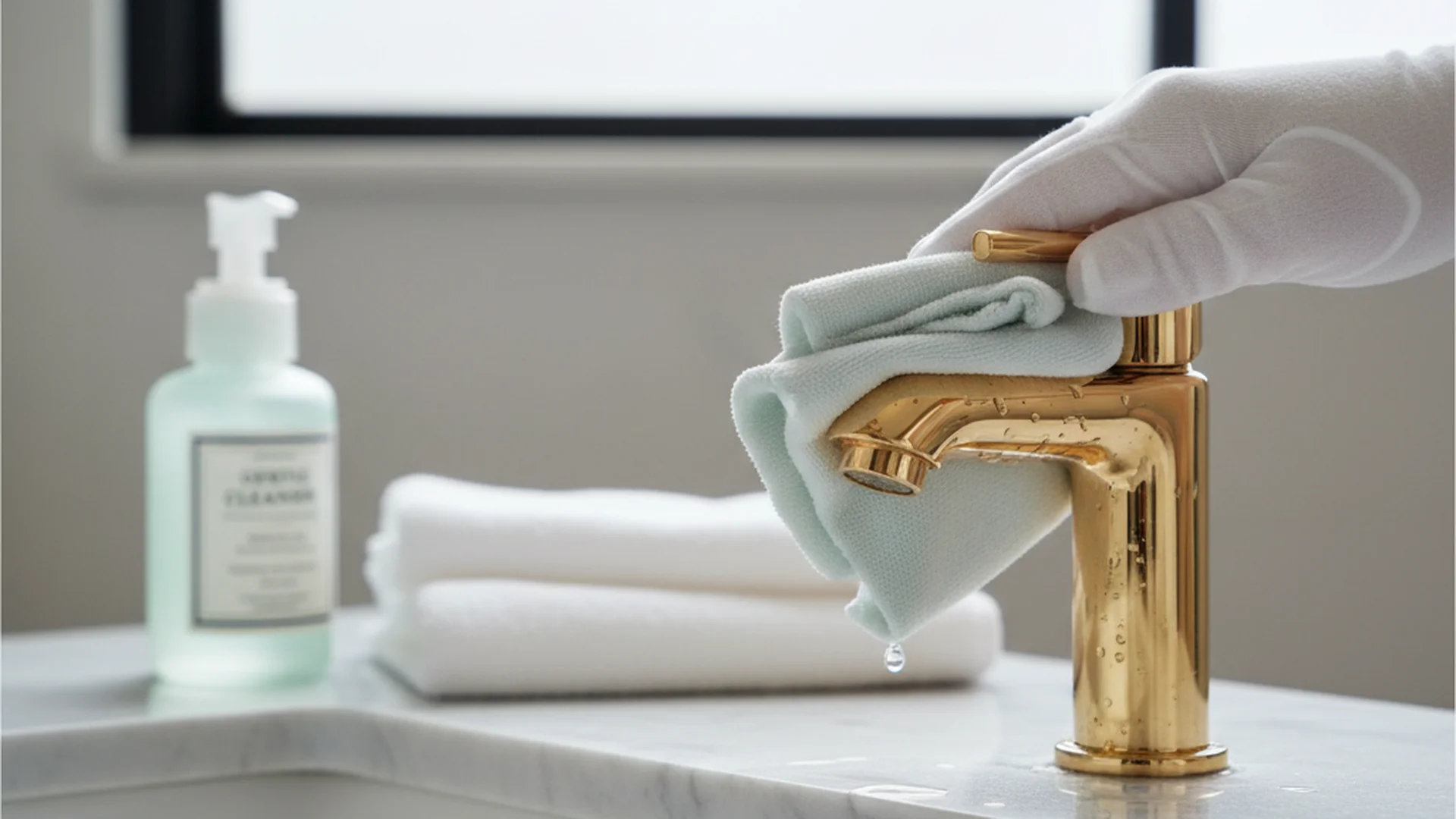
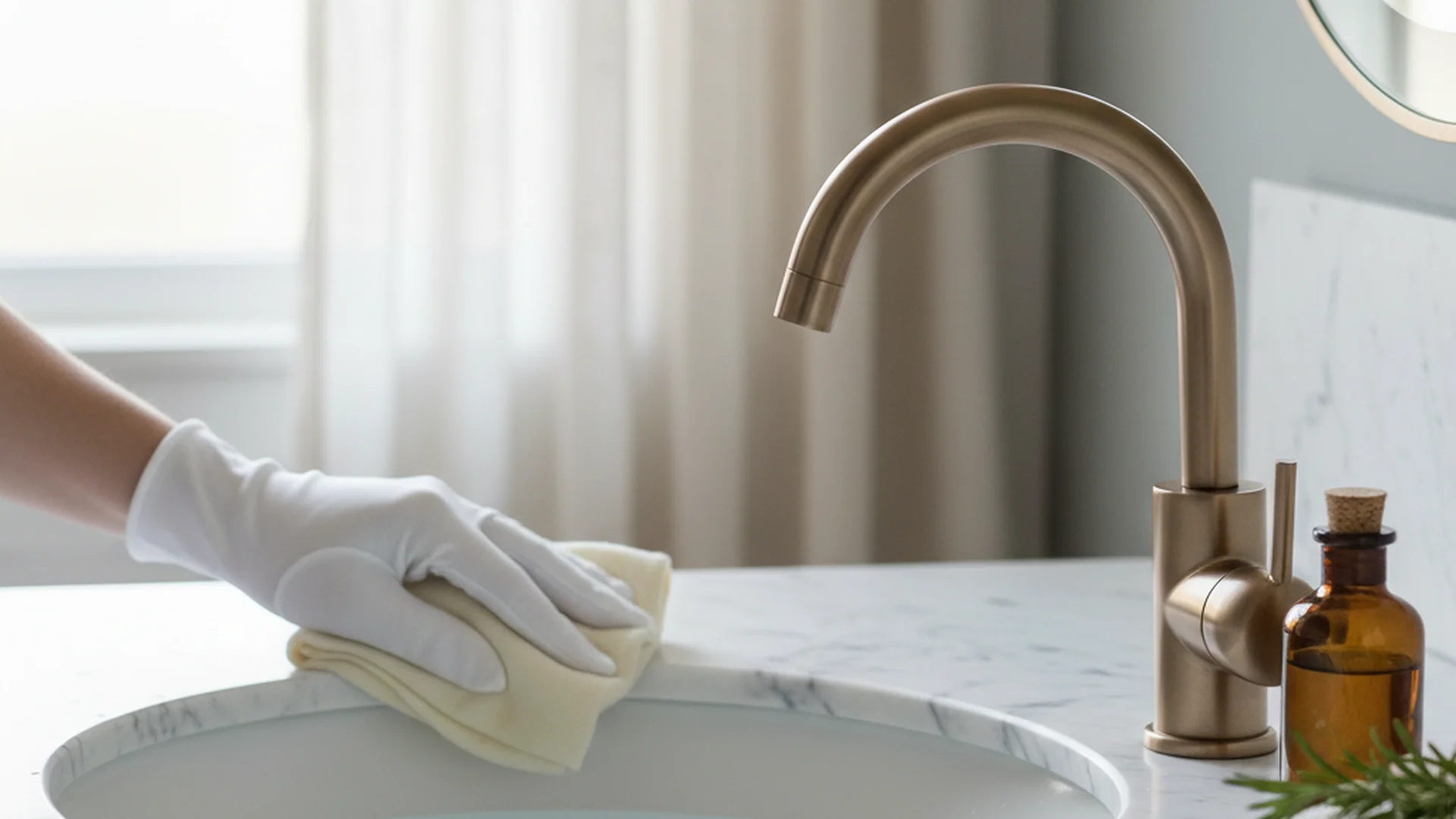
Brass is officially the "it" metal of the mid-2020s. From the warm, honey-toned accents of Japandi-style bathrooms to the bold, brushed finishes in luxury kitchens, brass has reclaimed its throne as a core design element. However, as any homeowner knows, maintaining that golden glow requires more than a quick wipe-down.
Whether you are dealing with a century-old antique patina or a cutting-edge Physical Vapor Deposition (PVD) coating, the approach you take will determine if your fixture shines for decades or sustains permanent damage. In this guide, we will explore the nuances of material science and the latest cleaning trends to ensure your home remains a sanctuary of style.
Understanding Your Brass: The Magnet Test
Before you reach for the polish, you must identify exactly what material you are handling. In 2025, many "brass" fixtures are actually other metals with a thin brass plating. Using a heavy-duty cleaner on plated metal can strip the finish entirely, exposing the dull steel or zinc beneath.
To identify your fixture, use a simple magnet. If the magnet sticks, your fixture is brass-plated. If it does not stick, it is likely solid brass. This distinction is vital because solid brass can handle more aggressive polishing, while plated items require a much gentler touch.
Tip: Always test any cleaning solution—even natural ones—on a small, inconspicuous area (like the underside of a faucet) before applying it to the entire fixture.
The Three Modern Brass Finishes
By 2026, the industry has branched into three distinct finish categories. Each requires a unique maintenance protocol to stay in peak condition.
1. Lacquered Brass
Lacquered brass is sealed with a clear, hard protective coat to prevent tarnishing and keep the metal shiny. This was the standard for decades, but it is sensitive to chemicals.
- Cleaning Method: Use only mild dish soap and warm water.
- What to Avoid: Never use commercial brass polishes or acidic cleaners (like vinegar) on lacquered brass. If the lacquer has a tiny crack, the acid will seep underneath, causing the brass to turn green and the lacquer to peel.
2. Unlacquered (Living) Brass
This is the "living finish" beloved by fans of the Wabi-Sabi aesthetic. It is raw brass that reacts with the environment to develop a unique patina over time.
- Cleaning Method: For a high-shine look, use a 50/50 vinegar and salt paste. For a natural aged look, simply wipe with a damp cloth.
- Current Trend: The "Aged Beauty" trend of 2026 encourages homeowners to let their unlacquered brass tarnish naturally, creating a "collected over time" look that pairs beautifully with polished nickel.
3. PVD Coated Brass
PVD (Physical Vapor Deposition) is the new gold standard for high-end bathrooms. This molecularly bonded finish ranks as a 9 on the Mohs hardness scale—nearly as hard as a sapphire.
- Cleaning Method: Use a clean, dry microfiber cloth and nothing else.
- Success: PVD finishes are designed to be "forever finishes," meaning they won't tarnish or corrode under normal conditions.
| Finish Type | Best Cleaning Agent | Durability (Mohs Scale) | Trend Status |
|---|---|---|---|
| Lacquered | Mild Soap/Water | Low (Vulnerable to chips) | Classic |
| Unlacquered | Lemon/Salt Paste | 3 (Relatively Soft) | High Growth |
| PVD Coated | Microfiber/Water | 9 (Diamond-adjacent) | Industry Std |
The Best Way to Clean Brass Fixtures Naturally
With 45% of consumers now prioritizing non-toxic cleaning agents, natural DIY methods are more popular than ever. If you have solid, unlacquered brass, the best way clean brass fixtures often involves items already in your pantry.
The Ketchup Method
It sounds like a myth, but the acetic acid in ketchup reacts with the copper oxide (tarnish) on brass to dissolve it without the need for harsh scrubbing.
- Example 1: Applying a thin layer of ketchup to a tarnished 1920s-style bridge faucet. After sitting for 30 minutes, the tarnish wipes away with minimal effort, revealing the original luster.
The Lemon and Salt Duo
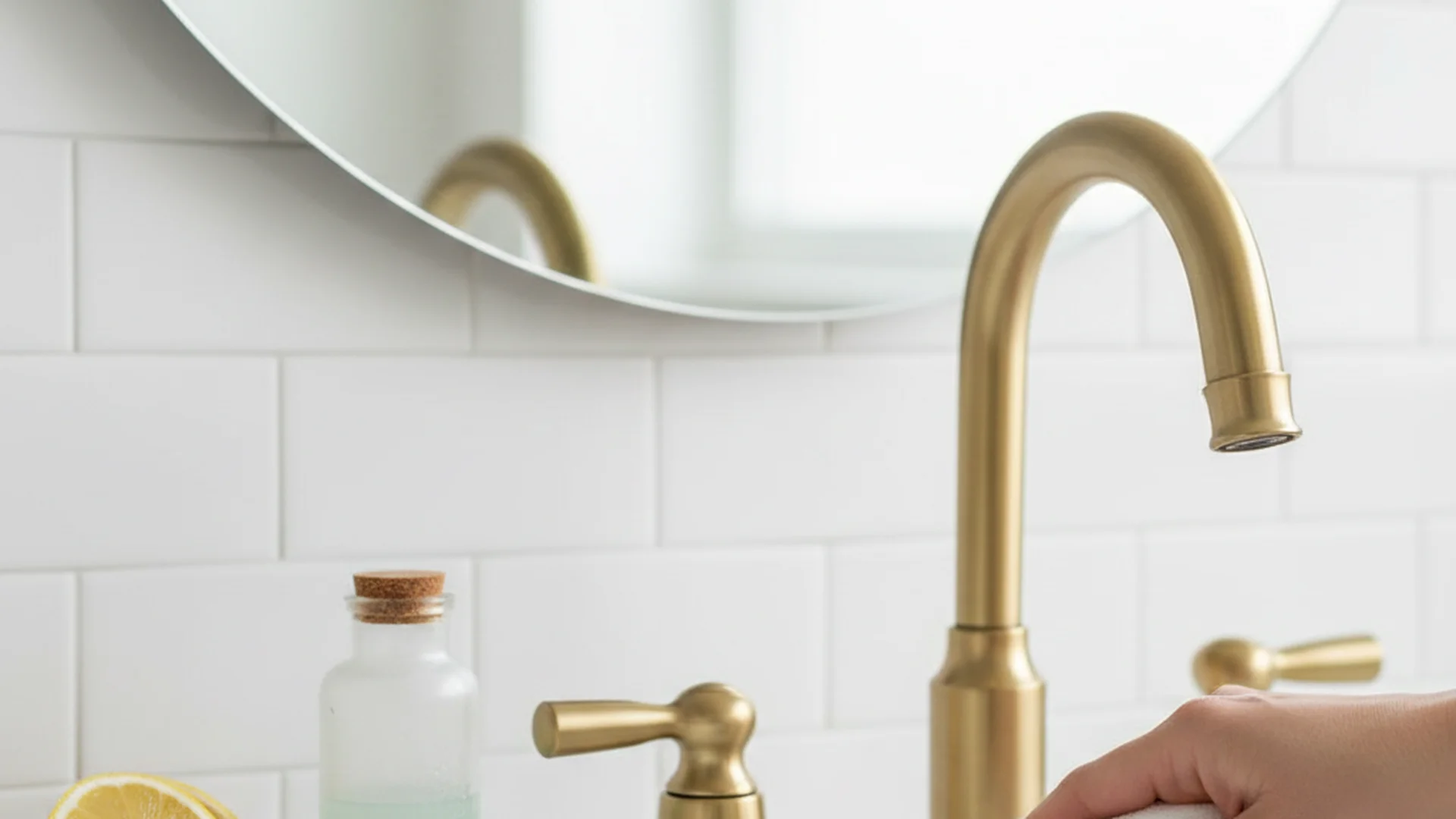
For heavy mineral buildup or stubborn spots, the citric acid in a lemon combined with the gentle abrasion of table salt creates a powerful scouring paste.
- Example 2: A bathroom sink handle in a hard-water area. Cutting a lemon in half, dipping it in salt, and "scrubbing" the handle can dissolve limescale that traditional cleaners might miss.
Warning: Never use steel wool, even "fine" grades, on brass. It creates permanent swirl marks that can only be removed by professional buffing.
Modern Innovations: 2026 Cleaning Tech
As we move into 2026, technology is changing how we maintain our bathrooms. Two major shifts are redefining the "clean" standard:
Bio-Enzymatic Cleaners
A major 2025 trend is the shift toward bio-enzymatic cleaners. Unlike acids that eat away at tarnish (and potentially the metal), these cleaners use enzymes to "eat" through mineral buildup and organic residue. They are safer for the environment and much gentler on the delicate copper-zinc alloy of the brass.
Smart Faucet Precautions
Over 35% of new brass models now feature touchless sensors. When cleaning these high-tech fixtures, extra care must be taken.
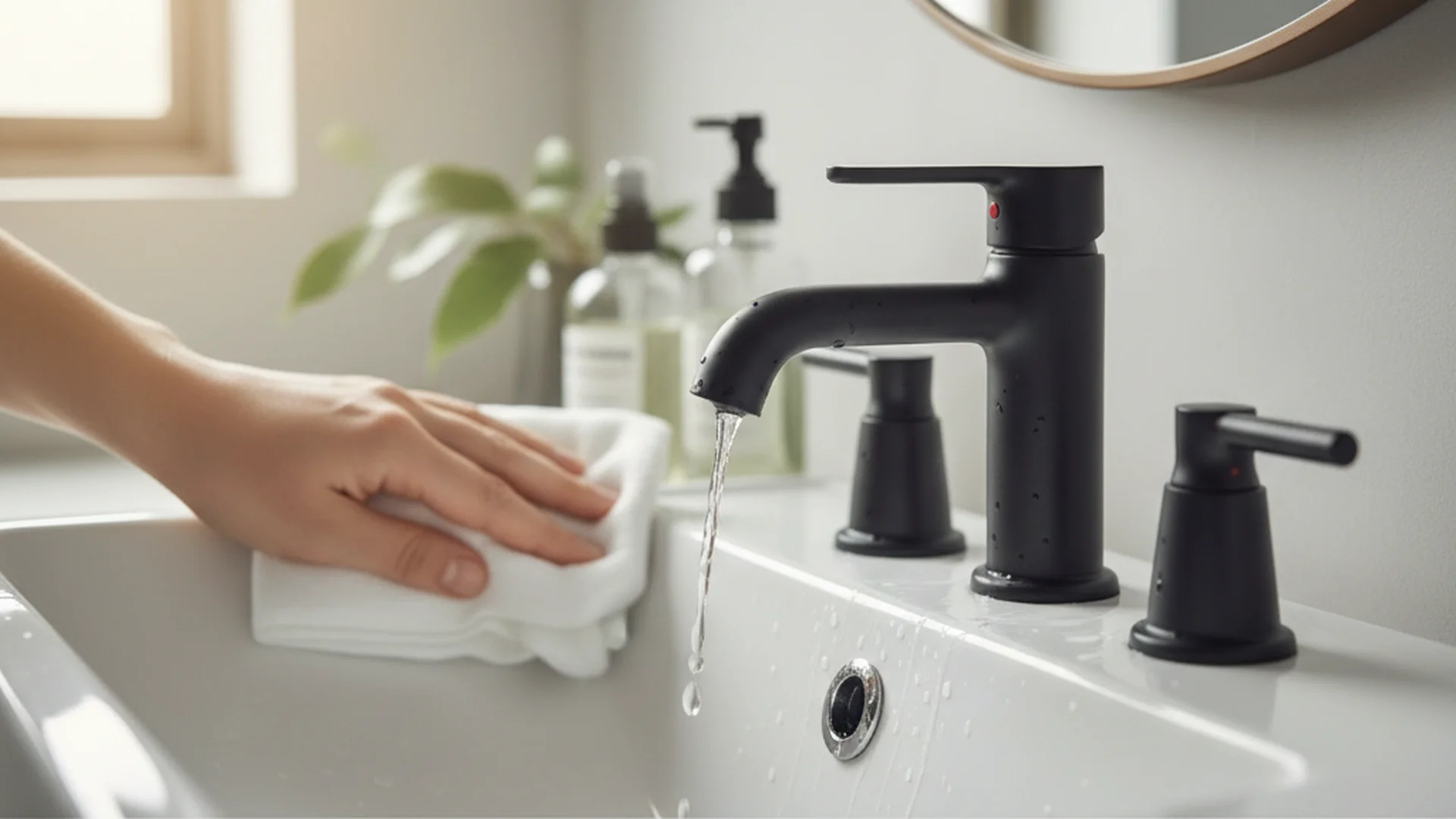
- Example 3: A touchless PVD brass kitchen faucet. If you spray liquid directly onto the sensor housing, it can seep into the electronics, causing electrical failure. Always spray your cloth first, then wipe.
Note: The "Dry-Immediately" Rule is the #1 recommendation for 2025. Residual moisture is the primary cause of "black spots" and uneven corrosion on brass.
Common Mistakes to Avoid
- Using Ammonia or Bleach: These chemicals are found in many all-purpose sprays but can cause permanent "pitting"—tiny, irreversible holes in the surface of your fixtures.
- Neglecting the Nooks: Tarnish often builds up around the base of the faucet or in decorative grooves. Use an extra-soft toothbrush to reach these areas without scratching the metal.
- Misinterpreting Patina as Damage: For many modern styles, the darkening of unlacquered brass is a sought-after feature. Don't rush to "clean" away what is actually a valuable antique finish.
- Air-Drying: Letting your brass air-dry after a cleaning session is a recipe for water spots. Always buff the surface dry with a clean microfiber towel.
Frequently Asked Questions
How do I tell if my fixture is solid brass or plated?
Can I clean brass without removing the patina?
Is ketchup really a good brass cleaner?
Will WD-40 clean brass?
Conclusion
Mastering how to clean brass fixtures is a blend of understanding historical materials and embracing modern technology. Whether you choose the "Aged Beauty" of a natural patina or the "Forever Shine" of a PVD coating, the key is consistency and the right tools. By avoiding harsh abrasives, utilizing the magnet test, and always drying your hardware immediately, you ensure that your brass remains the centerpiece of your home’s design for years to come.
Success: Consistent, gentle maintenance will preserve the value of your fixtures and keep your bathroom looking like a high-end spa.
Cleaning that keeps score
Every task earns points, every streak multiplies them, and Premium adds a household leaderboard plus a monthly Dustagorgon to beat.
- Free forever
- 30 badges to earn
- Up to 6 in a household
No card needed. Set up your rooms in a couple of minutes.