In this article
What you’ll learn
- Always dust and tidy before vacuuming to utilize the gravity principle.
- Wait 10-15 minutes after dusting to allow particles to settle on the floor.
- Vacuuming should always precede mopping to prevent "mud streaks."
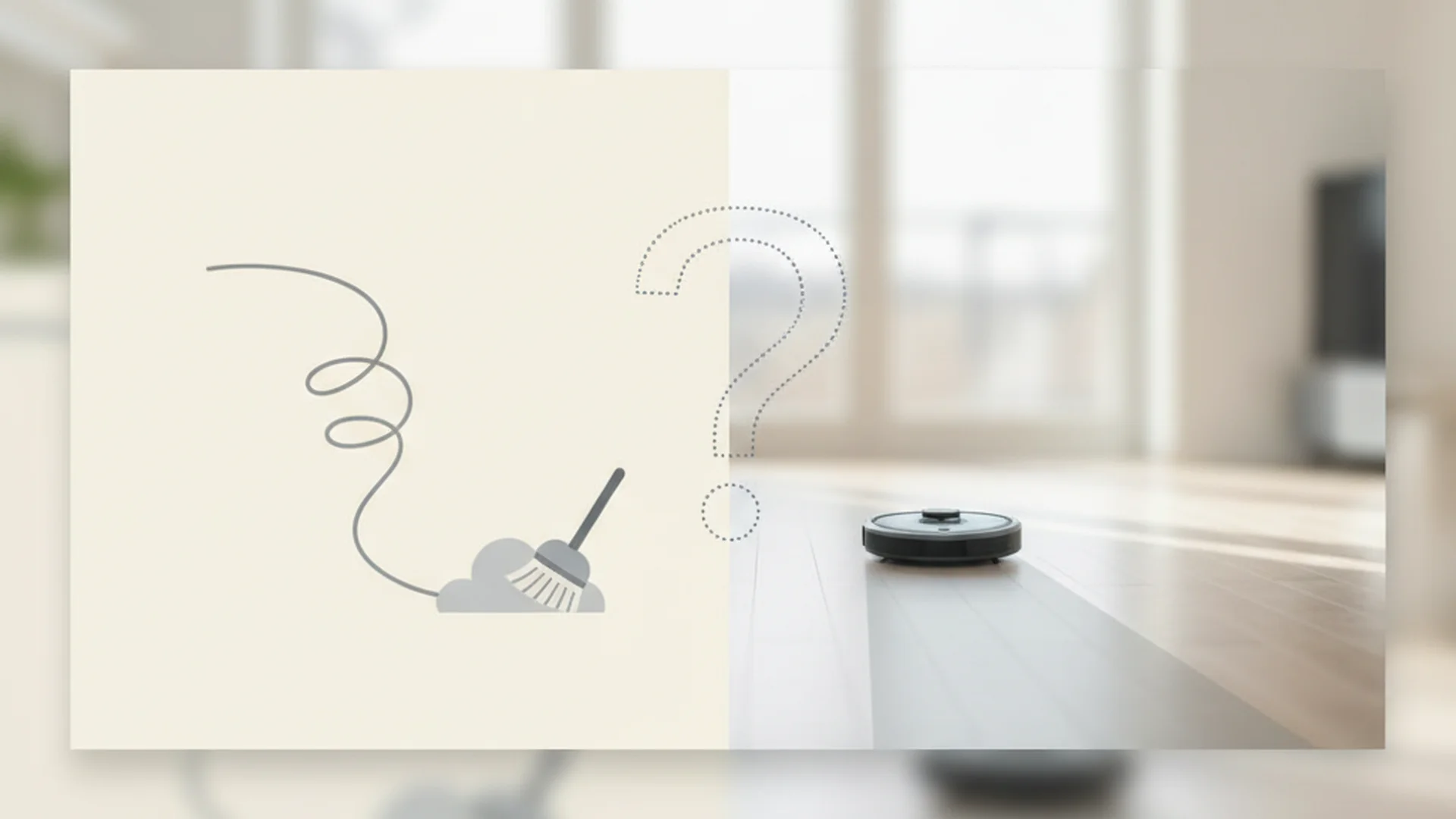
The age-old debate in household maintenance often boils down to a single question: should you clean before vacuuming, or does it make more sense to get the floor done first? While it might seem like a "chicken or the egg" scenario, there is a clear answer used by industry professionals to ensure maximum efficiency. If you have ever spent an hour vacuuming only to notice a layer of dust settling on your carpets immediately after you wipe down a bookshelf, you have experienced the frustration of an incorrect cleaning order.
In this guide, we will dive deep into the mechanics of household dust, the physics of cleaning, and the step-by-step workflow that will save you time and energy. As a professional cleaning consultant, I can tell you that the clean before vacuuming answer is a resounding "yes"—but the how and when are just as important as the why.
The Science of Cleaning: The Gravity Principle
The most fundamental rule in professional cleaning is known as the "Gravity Principle." It is exactly what it sounds like: everything that goes up must come down. Household dust is surprisingly complex, composed of 20% to 50% dead skin cells, mixed with fabric fibers, pollen, and pet dander. These particles are incredibly light and easily disturbed.
When you dust a ceiling fan, a bookshelf, or a countertop, you aren't just removing dust; you are dislodging a portion of it into the air. If you vacuum first and then clean these surfaces, the dislodged particles will drift down and settle on your freshly cleaned floor. To avoid doing the work twice, you must work with gravity rather than against it.
Tip: Always start your cleaning session at the highest point in the room—think crown molding and ceiling fans—and work your way down to the floor.
The Professional 5-Step Workflow
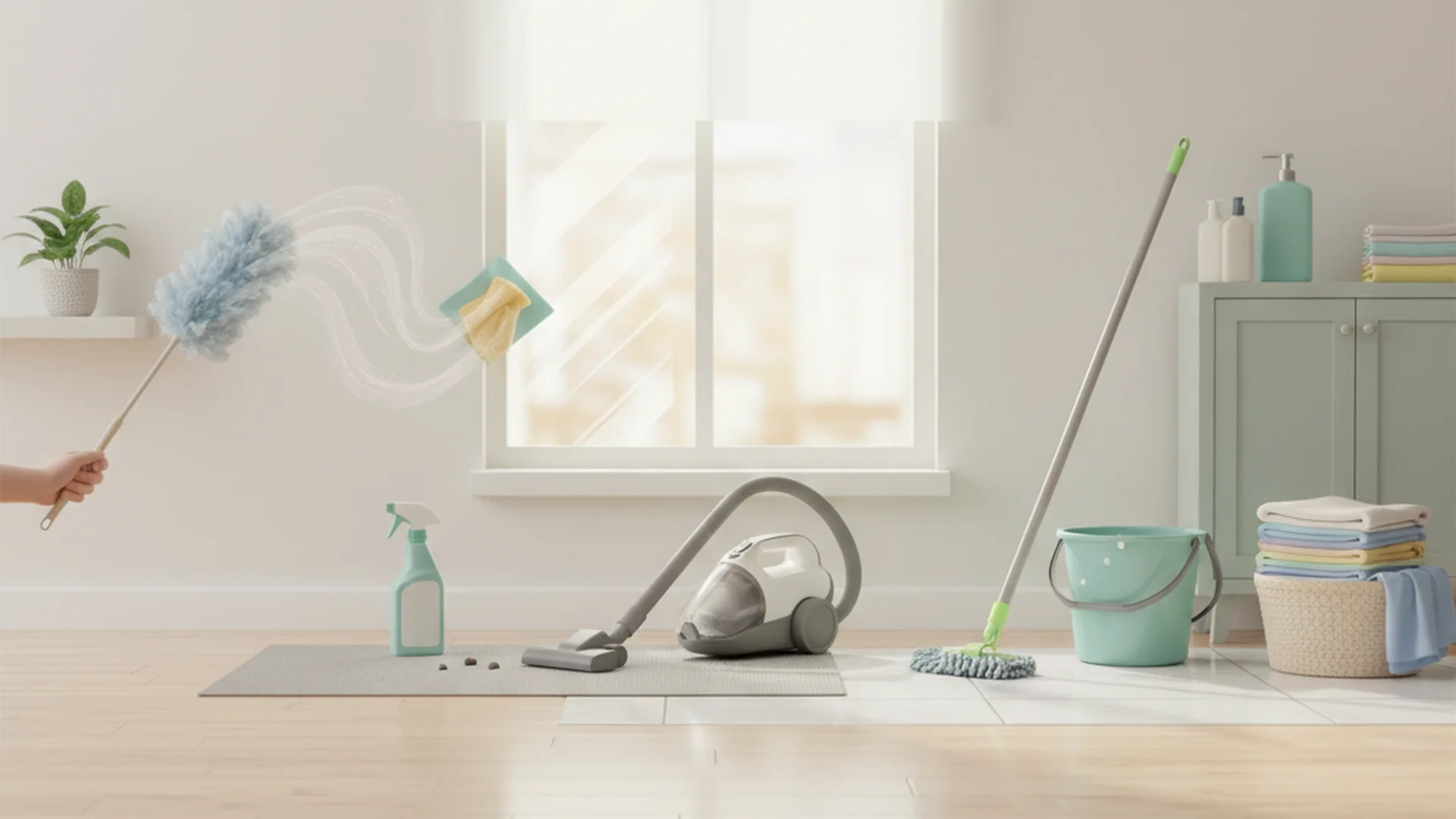
To achieve a truly clean home, following a specific sequence is vital. Here is the professional "top-to-bottom" workflow that ensures your vacuuming is the final, effective touch.
Step 1: Tidy and Declutter
Before you even touch a duster, you must clear the path. Picking up toys, shoes, and loose papers prevents damage to your vacuum’s brush roll. More importantly, it ensures you are cleaning the actual carpet fibers rather than just the "path of least resistance" around the clutter.
Step 2: High-Level Dusting
Start with the "skyline" of your room. This includes:
- Ceiling fan blades
- The tops of window frames
- Light fixtures
- The corners of the ceiling (where cobwebs hide)
Step 3: Mid-Level Surfaces and Electronics
Once the high-altitude dust has been knocked down, move to your furniture, electronics, and countertops. Use a damp microfiber cloth for this stage. Unlike a traditional feather duster which often just moves dust around, a damp cloth traps the particles.
Success: Using a damp microfiber cloth can reduce the amount of airborne dust by up to 50% compared to dry dusting methods.
Step 4: The 10-Minute Wait
This is the "secret sauce" of professional cleaners. After you finish dusting your surfaces, stop. Wait 10 to 15 minutes. This allows any particles that were stirred into the air to finally settle onto the floor. If you vacuum immediately, you'll miss the dust that is still floating mid-air.
Step 5: The Final Vacuum
Now that the dust has settled, it’s time for the vacuum. This should be the final "dry" step of your cleaning process. By waiting until the end, you ensure that every particle you knocked off the shelves is sucked up and removed from the environment.
Real-World Examples of Why Order Matters
To better understand the clean before vacuuming answer, let's look at three common household scenarios where the order of operations makes a massive difference:
- The Ceiling Fan Disaster: Imagine you vacuum your living room rug to perfection. You then realize the ceiling fan is covered in thick grey "dust bunnies." You turn on the fan or wipe it down. Those heavy clumps fall directly into the carpet fibers you just cleaned. Because they are now ground into the rug, a second vacuuming is required.
- The Pet Hair Migration: If you have long-haired pets, their dander clings to upholstery. If you vacuum the floor first and then use an attachment to clean the sofa, the agitation of the sofa cushions releases a cloud of dander and hair that settles right back onto the floor.
- The "Mud Streak" Mop Mistake: Many people wonder if they should vacuum or mop first. Always vacuum first! If you mop a floor that still has loose dust and dirt on it, the water turns that dirt into a thin layer of mud. You'll end up with streaks and potentially scratch your hardwood surfaces with the grit you didn't vacuum up.
Warning: Never mop a floor before vacuuming. The moisture traps dirt and makes it significantly harder to remove, often resulting in "mud streaks" that are difficult to buff out.
Modern Cleaning Trends: AI and HEPA in 2026
As we move into 2025 and 2026, technology is changing how we approach the "clean before vacuuming" rule. New models from brands like Dyson and Roborock are now equipped with AI-enhanced surface detection. These sensors can actually detect the volume of dust on a surface and adjust suction power automatically.
However, even with "smart" vacuums, the human element of "pre-cleaning" remains essential. For example, if you have a robot vacuum, you still need to dust your furniture first. In fact, it's more important than ever because these robots are designed to maintain a floor's cleanliness. If you knock a week's worth of shelf-dust onto the floor after the robot has finished its cycle, it may not trigger another run until the next day, leaving allergens in your home for longer.
Furthermore, HEPA (High-Efficiency Particulate Air) filtration has become the industry standard. As of 2026, almost all mid-to-high-range vacuums include sealed HEPA systems. This is crucial because vacuums without HEPA filters can actually increase the amount of dust in the air by blowing fine particles back out through the exhaust.
| Feature | Standard Vacuum (Pre-2025) | Modern HEPA/AI Vacuum (2026) |
|---|---|---|
| Dust Retention | 70-80% | 99.97% |
| Surface Detection | Manual | AI-Powered Real Time |
| Filtration | Foam/Paper | Multi-stage HEPA |
| Best Use Case | General Debris | Allergen & Fine Particle Removal |
Common Mistakes to Avoid
Even if you know you should clean before vacuuming, there are several traps that can derail your progress.
- Forgetting the Baseboards: Most people vacuum the floor but ignore the baseboards. Dust clings to the tiny ledge of the baseboard. If you don't wipe these down before you vacuum, the vibrations from the vacuum itself can shake that dust onto your clean floor later.
- Using a Dirty Filter: A clogged vacuum filter can reduce suction by up to 50%. If your filter is dirty, you are just pushing air (and dust) around the room without actually removing it.
- Vacuuming in One Direction Only: To truly clean, you should vacuum in a "grid" pattern. Move North-to-South, then go back over the area East-to-West. This agitates the carpet fibers from all angles, ensuring you catch the dust that fell from the furniture earlier.
- Dry Dusting: Avoid using dry feather dusters. They are essentially "dust movers" rather than "dust removers." They flick particles into the air, increasing the time you have to wait for the dust to settle.
Note: For the best results, wash your microfiber cloths after every major cleaning session to prevent cross-contamination between rooms.
Frequently Asked Questions
Does it really matter if I vacuum first?
Should I tidy the floor before vacuuming?
What if I have a robot vacuum?
Do I need to mop before or after vacuuming?
How long should I wait between dusting and vacuuming?
Conclusion
The secret to a truly clean home isn't just about the tools you use, but the order in which you use them. By following the "Gravity Principle" and ensuring you clean before vacuuming, you create a more hygienic environment with less effort. Remember the professional mantra: Top-to-Bottom, Left-to-Right, and always finish with the floor.
Success: Mastering this cleaning order can reduce your total cleaning time by up to 20% by eliminating the need for "re-cleaning" surfaces.
Cleaning that keeps score
Every task earns points, every streak multiplies them, and Premium adds a household leaderboard plus a monthly Dustagorgon to beat.
- Free forever
- 30 badges to earn
- Up to 6 in a household
No card needed. Set up your rooms in a couple of minutes.