In this article
What you’ll learn
- Always clean top-to-bottom and dry-to-wet for maximum efficiency.
- Tackle high-germ rooms like the kitchen and bathroom first while energy is high.
- Dusting must always precede vacuuming to avoid re-dirtying floors.
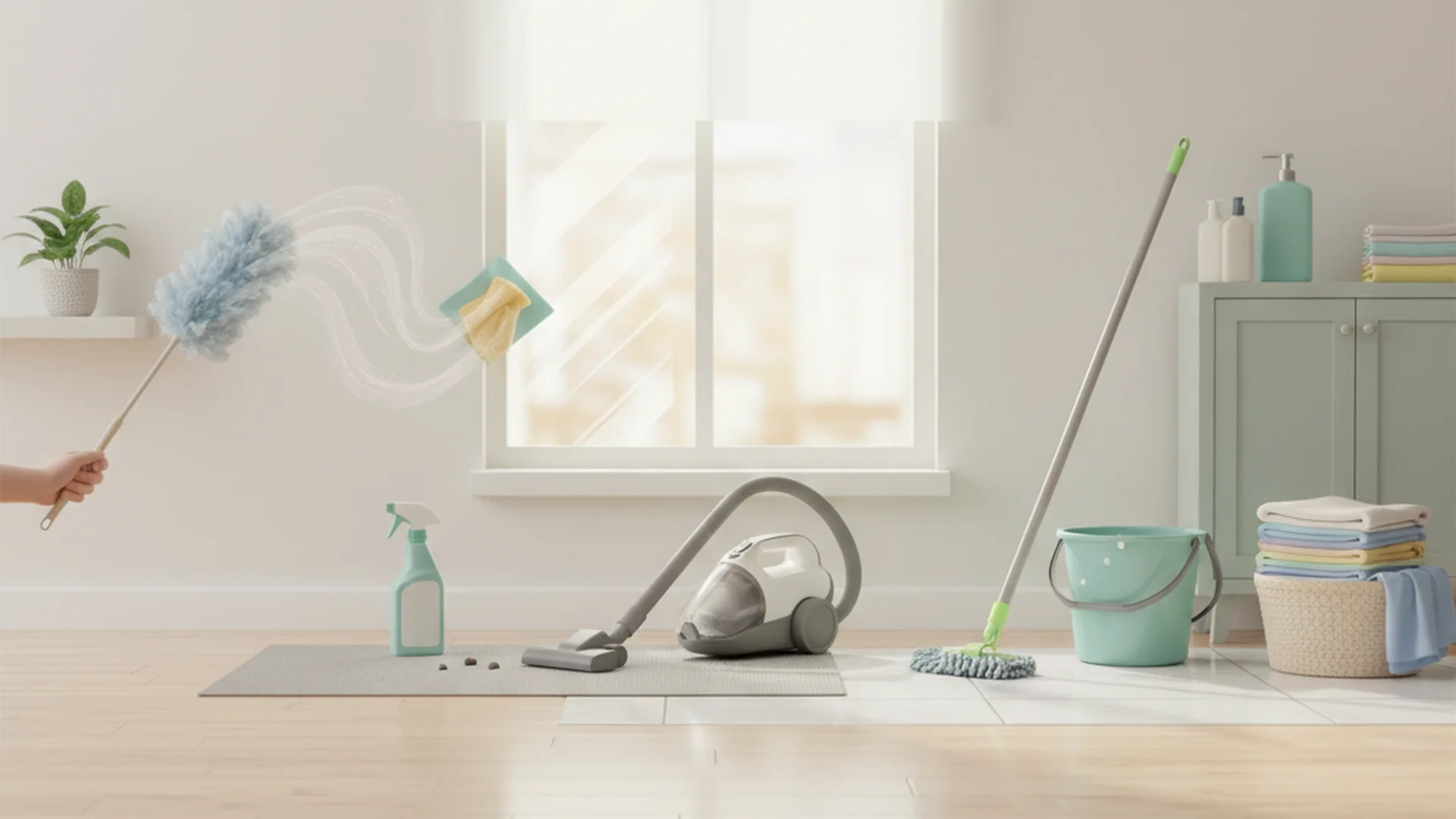
Walking into a messy home can feel overwhelming. You look at the stack of dishes, the dusty bookshelves, and the crumbs on the carpet, and the same question inevitably arises: what to clean first? This isn't just a matter of personal preference; it is a fundamental pillar of domestic efficiency. Most households pour hours into cleaning every week, yet much of that time is wasted through backtracking and inefficient habits.
Understanding the correct order of operations cuts your cleaning time substantially, allowing you to reclaim your weekends. Whether you are prepping for guests or performing your weekly reset, finding the right what to clean first answer will transform your household maintenance from a chaotic chore into a streamlined routine.
The Golden Rules of Cleaning Order
Before we dive into specific rooms, we must establish the "laws of physics" for cleaning. Professional cleaners follow these rules to ensure they never have to clean the same surface twice.
The Top-Down Rule
Gravity is the cleaner's greatest enemy and best friend. When you clean, dust and debris naturally fall. If you clean your coffee table and then decide to wipe down the ceiling fan above it, you have just doubled your workload. Always start with ceiling fans, light fixtures, and the tops of bookshelves. By the time you reach the floor, all the fallen dust is ready to be swept away.
Dry Before Wet
One of the most common mistakes homeowners make is reaching for the spray bottle too soon. Always remove loose debris, hair, and dust with a microfiber cloth or vacuum before applying liquid cleaners. Mixing water with heavy dust creates a "muddy" residue that smears across surfaces, making it significantly harder to remove.
High-Germ Rooms First
Tackle the "high-effort" rooms first. The kitchen and bathroom require the most physical energy and chemical intervention. By starting here, you utilize your peak energy levels for the hardest tasks, leaving lower-effort areas like the bedroom or living room for when you're starting to tire.
Tip: Use the "Dwell Time" strategy in bathrooms. Apply your cleaning solutions to the shower, toilet, and sink first. Let them sit for 10 minutes to break down grime while you tackle dry tasks like emptying the trash or dusting the mirror.
The Definitive Room-by-Room Strategy
When deciding what to clean first, it helps to have a roadmap. Following a consistent path prevents you from "cleaning yourself into a corner."
1. The Kitchen: The Heart of the Home
The kitchen is the most frequently cleaned area in the house, and the one most prone to cross-contamination.
- Step 1: Clear all clutter from the countertops.
- Step 2: Apply degreaser to the stovetop and let it "dwell."
- Step 3: Dust high cabinets and the top of the refrigerator.
- Step 4: Wipe down appliances and counters.
- Step 5: Scrub the sink last, as it is your "workstation" for the rest of the room.
2. The Bathroom: Disinfection Focus
In the bathroom, the focus shifts from aesthetic cleanliness to hygiene.
Warning: Never mix bleach with ammonia-based cleaners. This can create toxic chloramine gas. Always ensure the room is well-ventilated when using disinfectants.
3. Living Areas and Bedrooms
Once the high-moisture rooms are complete, move to the dry zones. Use the "Left-to-Right" method: start at the door and move clockwise around the room. This ensures no bookshelf or picture frame is overlooked.
| Task | Category | Order |
|---|---|---|
| Dusting High Surfaces | Dry | 1 |
| Wiping Mid-Level Surfaces | Dry/Wet | 2 |
| Vacuuming Upholstery | Dry | 3 |
| Mopping/Vacuuming Floors | Floor | 4 |
2025-2026 Trends: The Future of Cleaning
The way we clean is shifting. Robotic vacuums are now a fixture in a great many homes, and their numbers keep climbing. This has led to the rise of "Hybrid Cleaning."
Robotic Integration
In a modern efficient home, humans handle "high-surface" tasks (dusting, countertops, glass) while AI-driven robots handle the continuous maintenance of the floors. To optimize this, the human should clean all surfaces first, intentionally pushing dust toward the floor for the robot to collect later.
Low-Tox and Bio-Based Cleaning
Demand for eco-friendly services has grown sharply in recent years. 2026 trends show a move toward "probiotic" cleaners. These products use live enzymes that stay on the surface after you've finished wiping, continuing to "eat" away at organic matter for several days.
Cleaning as Mindfulness
A great many people clean primarily to take the edge off their stress. This has turned cleaning into a self-care ritual. Using ergonomic tools and high-end scents like sandalwood or eucalyptus can turn a boring chore into a meditative practice.
Note: Improving your Indoor Air Quality (IAQ) is just as important as surface cleaning. Ensure your vacuum has a HEPA filter to prevent microscopic allergens from being blown back into the air as you clean.
Common Mistakes to Avoid
Even with the best intentions, certain habits can sabotage your progress. Avoid these common pitfalls to keep your home truly clean.
- Cleaning Floors First: This is the ultimate efficiency sin. Any dusting or counter-wiping done later will just redirty the floor. Floors should always be the final step.
- Using One Cloth for Everything: This causes "cross-contamination," moving bathroom germs to the kitchen. Use a color-coded system: Red for bathrooms, Yellow for kitchens, and Blue for glass.
- Spraying Directly on Surfaces: This often leads to product buildup and a sticky residue that attracts more dust. Instead, spray the cleaner onto your microfiber cloth first, then wipe.
- Neglecting the Tools: A dirty vacuum filter or a bacteria-laden sponge won't clean your home; it will just redistribute filth. Sponges should be replaced every 1–2 weeks.
Success: Adopting a "Kitchen to Bed" routine—where the kitchen is fully reset every night—takes the stress out of your mornings and keeps the most used room in your house perpetually clean.
Frequently Asked Questions
Dust or vacuum first?
Dry or wet clean first?
Which room should I clean first?
Disinfect or clean first?
How often should I perform a deep clean?
Conclusion
Mastering the order of cleaning is the secret to a well-maintained home that doesn't consume all of your free time. By following the top-down, dry-to-wet, and high-to-low energy strategies, you ensure that every minute spent cleaning is as effective as possible. Remember, the goal isn't just a clean house—it’s a healthier living environment and a clearer mind.
Cleaning that keeps score
Every task earns points, every streak multiplies them, and Premium adds a household leaderboard plus a monthly Dustagorgon to beat.
- Free forever
- 30 badges to earn
- Up to 6 in a household
No card needed. Set up your rooms in a couple of minutes.