In this article
What you’ll learn
- Always dry-dust shelves before applying liquid cleaners to avoid creating "mud."
- Different materials (glass, wood, stone) require specific cleaning agents to prevent damage.
- Cleaning from the top shelf down prevents re-contaminating lower levels.
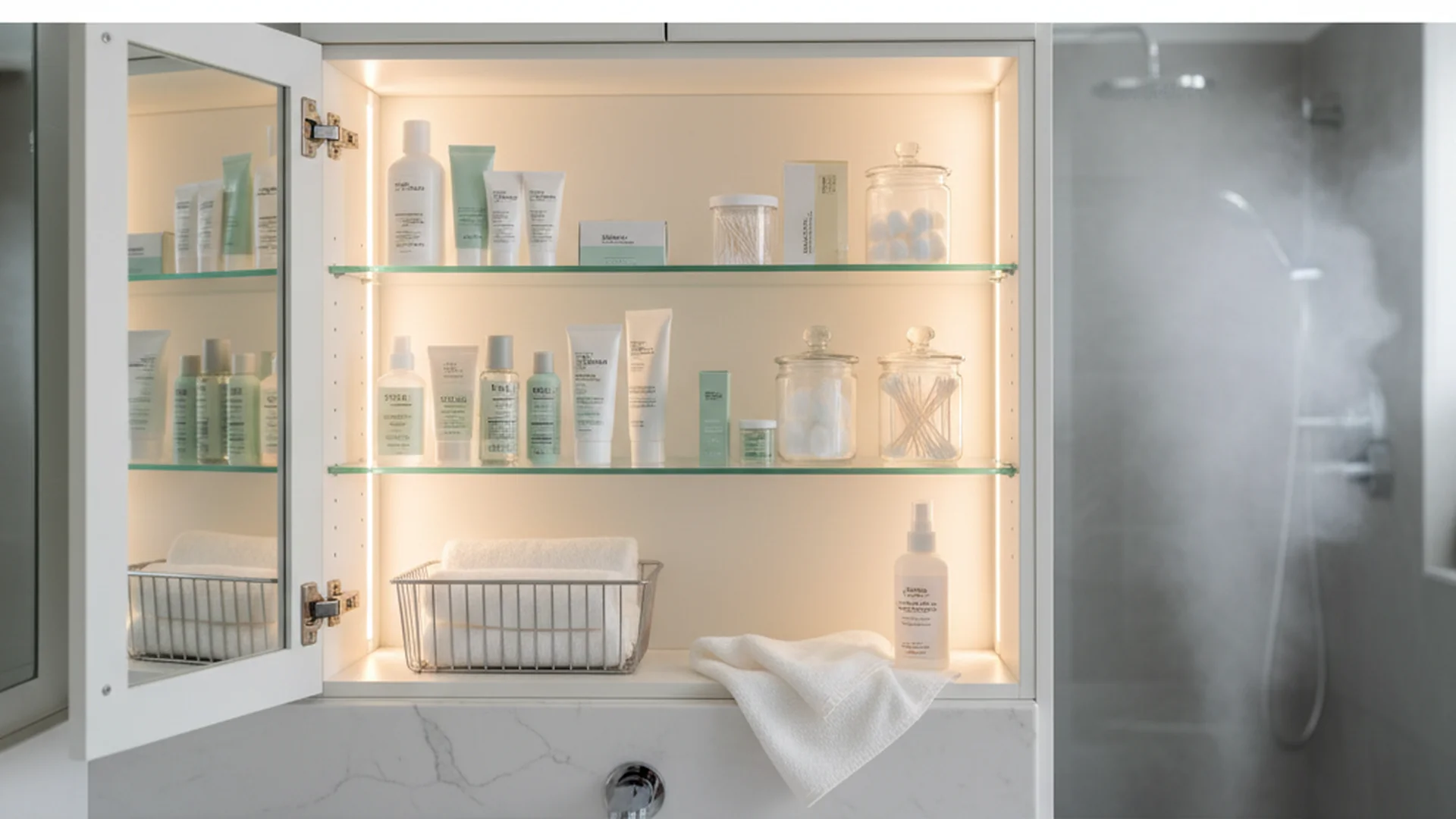
The bathroom is often considered a personal sanctuary—a place for rejuvenation and self-care. However, it is also the most humid room in the house, making it a prime breeding ground for bacteria and dust. Learning how to clean bathroom shelves effectively is more than just an aesthetic choice; it is a vital part of maintaining a hygienic home.
Whether you are dealing with glass tiers, wooden floating shelves, or metal wire racks, the best way clean bathroom shelves involves a strategic approach that addresses the unique challenges of the bathroom environment. From "toilet plume" particles to soap scum buildup, your shelves are working overtime to hold your essentials. This guide will walk you through professional techniques to keep them sparkling and germ-free.
Why Bathroom Shelf Hygiene Matters
Most people overlook their shelves during a quick bathroom wipe-down, focusing instead on the sink or toilet. However, open bathroom shelves collect far more dust and airborne bacteria than closed cabinets. This is largely due to high humidity levels and exposure to the "toilet plume"—the microscopic spray released when a toilet is flushed without the lid down.
Furthermore, as we move into 2026, more and more households are choosing eco-friendly, non-toxic cleaning solutions. This shift isn't just about the planet; it's about the air quality in the small, often poorly ventilated spaces where we perform our daily hygiene routines.
The Essential "Top-Down" Cleaning Strategy
Before you grab a spray bottle, you need a plan. Professional cleaners use the "Top-Down" rule. If you start cleaning the middle shelf first, dust and cleaning solution drips from the top shelf will inevitably fall onto your freshly cleaned surface, forcing you to do the work twice.
The Empty-First Protocol
One of the most common mistakes is cleaning around bottles and jars. To truly clean a shelf, you must remove every single item.
- Clear the Space: Move everything to the counter or into a temporary bin.
- Inspect Your Products: Check for "leaky" bottles or expired skincare products.
- Wipe the Items: Before putting items back, wipe the bottom of each bottle to ensure you aren't transferring grime back onto your clean shelf.
Tip: Use clear acrylic bins or "lazy Susans" to group items. This minimizes the number of objects touching the shelf directly, making future cleanups up to 70% faster.
Material-Specific Cleaning Guide
Not all shelves are created equal. Using the wrong cleaner on a specific material can lead to permanent damage, such as etching on stone or warping in wood.
| Shelf Material | Recommended Cleaner | Tools | Focus Area |
|---|---|---|---|
| Glass | Vinegar/Water (50/50) | Microfiber cloth | Hard water spots |
| Wood | pH-neutral wood soap | Damp (not wet) cloth | Moisture prevention |
| Metal/Wire | Dish soap/Warm water | Soft-bristled brush | Corners & joints |
| Natural Stone | Stone-specific spray | Soft cloth | Avoiding acidity |
Glass Shelves: Banishing the "Cloudy" Look
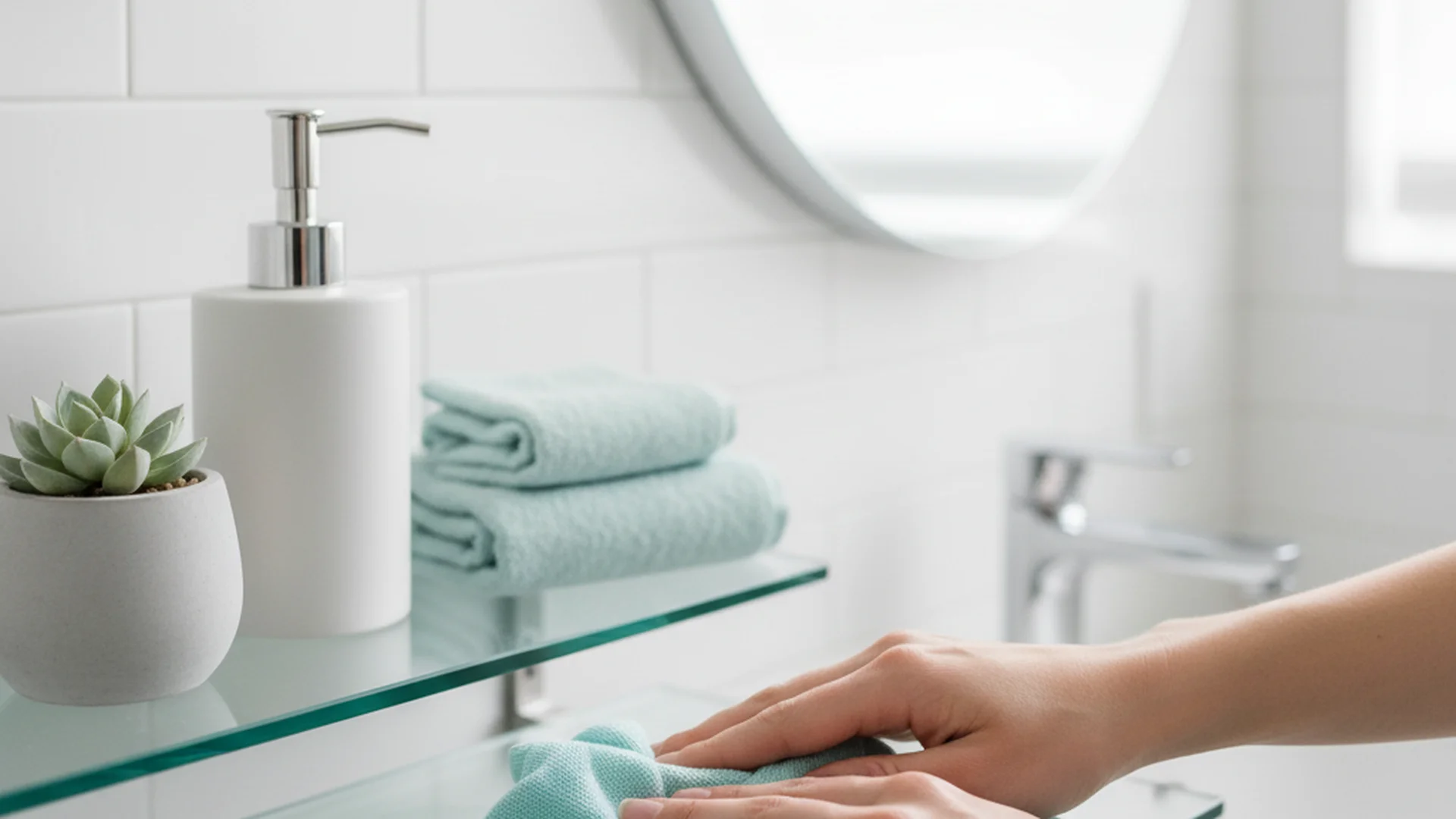
Glass shelves are elegant but prone to "cloudy" spots caused by hard water mineral deposits.
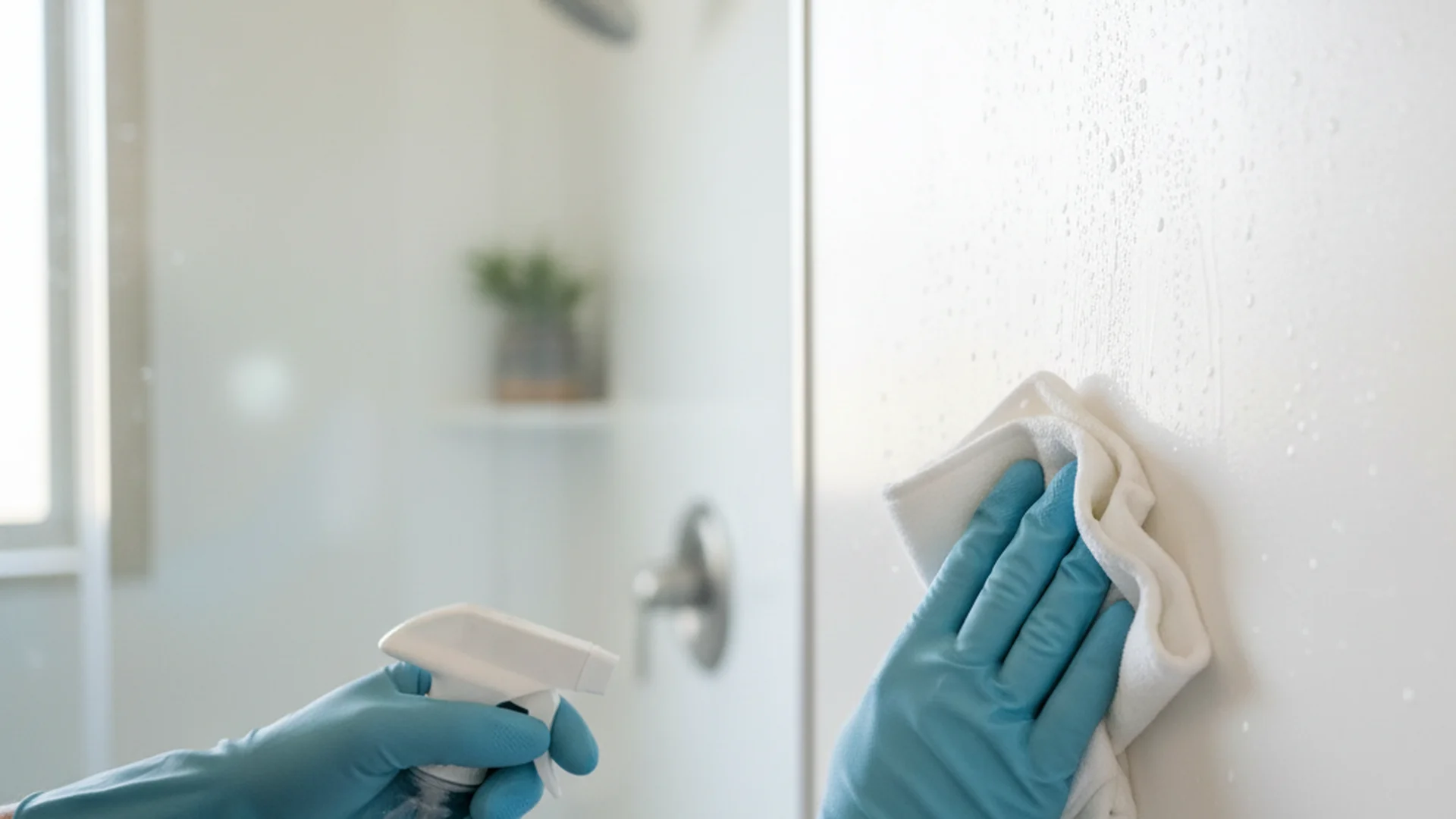
Example 1: The Sunlight Test. If your bathroom has a window, you’ve likely seen the streaks left behind by paper towels. To avoid this, always use a dedicated glass microfiber cloth. If you have stubborn mineral buildup, spray a 50/50 mixture of white vinegar and distilled water. Let it sit for one minute, wipe, and then "buff" the surface in a circular motion with a dry cloth for a streak-free finish.
Wood Shelves: Preventing Warp and Mold
Wood adds warmth to a bathroom, but it is highly susceptible to humidity.
Warning: Never use a soaking wet cloth on wood shelves. Excess water can seep into the grain, causing the wood to swell, warp, or develop mold.
Always use a damp, well-wrung cloth with a pH-neutral cleaner. Dry the surface immediately with a separate towel. For long-term maintenance, applying a protective wax once a year can create a barrier against the steam from your shower.
Metal and Wire Shelves: Rust Prevention
Metal shelves often suffer from soap scum buildup in the corners where the wires meet.
Example 2: The Toothbrush Technique. For wire racks, a standard cloth won't reach the crevices. Use an old, soft-bristled toothbrush dipped in warm, soapy water to scrub the joints. To prevent rust, which is common in chrome-plated materials, dry the shelves completely after every cleaning.
Success: Applying a thin coat of car wax to metal shower shelves every few months creates a hydrophobic barrier that prevents water from sitting on the surface and causing rust.
2025–2026 Trends in Bathroom Maintenance
Cleaning technology has advanced significantly in the last year. If you want to elevate your routine, consider these modern updates:
UV-C Sanitizing Wands
Portable UV-C light devices are becoming a staple in deep-cleaning routines. After wiping down your shelves, a 30-second pass with a UV-C wand can kill 99.9% of bacteria and viruses without the need for additional chemicals.
Hydrophobic "Self-Cleaning" Coatings
New micro-encapsulated sprays available in late 2025 create a surface that causes water and soap to bead off instantly. This is particularly effective for shelves located inside or near the shower area.
Ultrasonic Cleaning for Accessories
Many homeowners are now using small ultrasonic cleaners to deep-clean the items that sit on the shelves—like toothbrush holders and soap dishes—while they wipe the shelves manually. This ensures a 360-degree clean for the entire organization system.
Common Mistakes to Avoid
Even seasoned cleaners can fall into these traps. Avoiding these common errors will save you time and protect your bathroom fixtures.
- The "Mud" Mistake: Spraying a dusty shelf with liquid immediately. This creates a "gritty mud" that is harder to wipe away and can scratch delicate surfaces. Correction: Always dust or vacuum the shelf while dry first.
- The Bleach Myth: Many believe bleach is the only way to kill bathroom mold. While bleach kills surface spores, it doesn't always penetrate porous materials and can damage the finish of your shelves. Correction: Use hydrogen peroxide or specialized mold inhibitors.
- Ignoring the "Underside": Humidity causes dust and mold to cling to the bottom of shelves. If you only clean the top, these particles can eventually drop onto the items stored below.
- Chemical Mixing: Never mix bleach with vinegar or ammonia. This creates toxic chlorine gas, which is extremely dangerous in small, enclosed bathrooms.
Note: Brands like Blueland and Grove Collaborative now offer refillable glass-only spray systems, which are excellent for bathroom maintenance while reducing plastic waste.
Frequently Asked Questions
How often should I clean my bathroom shelves?
Can I use vinegar on all shelf materials?
How do I get rid of 'cloudy' spots on glass shelves?
What is the best way to prevent rust on metal shower shelves?
Conclusion
Mastering how to clean bathroom shelves is a simple yet effective way to improve your home's hygiene and aesthetic appeal. By following the "Top-Down" rule, using material-specific cleaners, and avoiding common pitfalls like the "mud mistake," you can maintain a sparkling bathroom with minimal effort. As we move into 2026, incorporating new technologies like hydrophobic coatings and UV-C sanitization can make this routine even more efficient.
Example 3: The Guest Preparation. Imagine a guest reaching for a towel and seeing a layer of dust on the shelf above. A quick, 10-minute dry-dust and wipe-down once a week ensures your bathroom is always guest-ready and clinically clean.
Success: By implementing a regular cleaning schedule and using organizational tools like acrylic bins, you can reduce your deep-cleaning time by half while extending the life of your bathroom furniture.
Cleaning that keeps score
Every task earns points, every streak multiplies them, and Premium adds a household leaderboard plus a monthly Dustagorgon to beat.
- Free forever
- 30 badges to earn
- Up to 6 in a household
No card needed. Set up your rooms in a couple of minutes.