In this article
What you’ll learn
- Avoid abrasive cleaners and tools to prevent permanent scratching.
- Mild dish soap and diluted vinegar are the most effective cleaning agents.
- Regular maintenance prevents yellowing and soap scum buildup.
An acrylic bathtub is often the centerpiece of a modern bathroom, offering a sleek, high-gloss finish that invites relaxation. Because acrylic is a versatile, lightweight, and heat-retentive material, it has become the gold standard for home renovations in 2025. However, if you don't know exactly how to clean acrylic tub surfaces properly, you risk dulling that beautiful finish or even causing structural damage.
Acrylic is a non-porous material made from vacuum-formed sheets of plastic, often reinforced with fiberglass. While this makes it resistant to bacteria and mildew, it also makes the surface sensitive to certain chemicals and abrasive scrubbing. Finding the best way clean acrylic tub fixtures involves a balance of gentle chemistry and consistent maintenance to ensure your investment lasts its full 15-year lifespan.
Why Acrylic Requires Special Care
Unlike heavy cast iron or natural stone, acrylic is essentially a specialized form of plastic. This material is popular because it is 30–50% lighter than traditional materials, making it easier to install and better for second-story bathrooms. It is also a natural insulator, meaning your bathwater stays warmer for significantly longer than it would in a metal tub.
However, the very thing that makes acrylic wonderful—its smooth, non-porous surface—also makes it vulnerable to "crazing" (fine cracks) and scratching. If you use the same abrasive powders you might use on a ceramic tile floor, you will create microscopic grooves in the acrylic. These grooves eventually trap dirt and bacteria, making the tub look permanently "dirty" even after a fresh scrub.
Note: Because acrylic is non-porous, you don't need harsh "deep-penetrating" acids. Most grime sits right on the surface, waiting to be wiped away with the right solution.
The Best Way Clean Acrylic Tub Surfaces
To keep your tub in showroom condition, you should follow a "Soft Rule." This means only using soft materials and mild liquid cleaners. Here is the professional step-by-step process for a standard deep clean.
Step 1: The Pre-Rinse
Start by rinsing the tub with warm water to remove any loose hair, debris, or bath salts. This prevents you from accidentally rubbing abrasive particles into the finish during the scrubbing phase.
Step 2: Apply the Cleaning Solution
The most effective DIY cleaner is a 50/50 mixture of white vinegar and warm water. For daily maintenance, mild dish soap (like Dawn) is even better because it is designed to cut through body oils and bath products.
Step 3: The Wait and Wipe
Spray the solution liberally over the surface. Wait 10 to 15 minutes. This is the secret to professional cleaning; it allows the acidity of the vinegar or the surfactants in the soap to break down the bond between the soap scum and the tub.
Step 4: Gentle Scrubbing
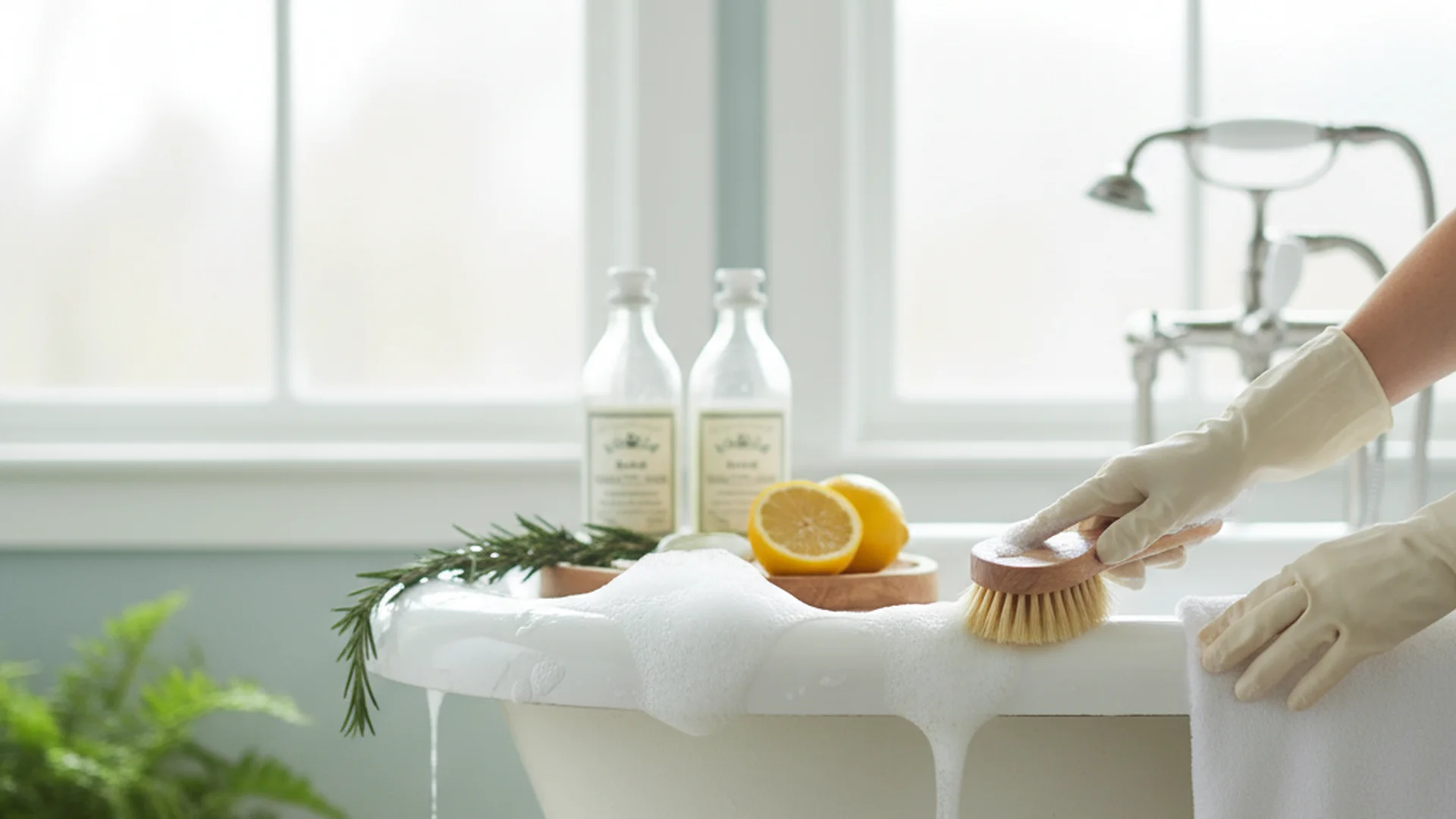
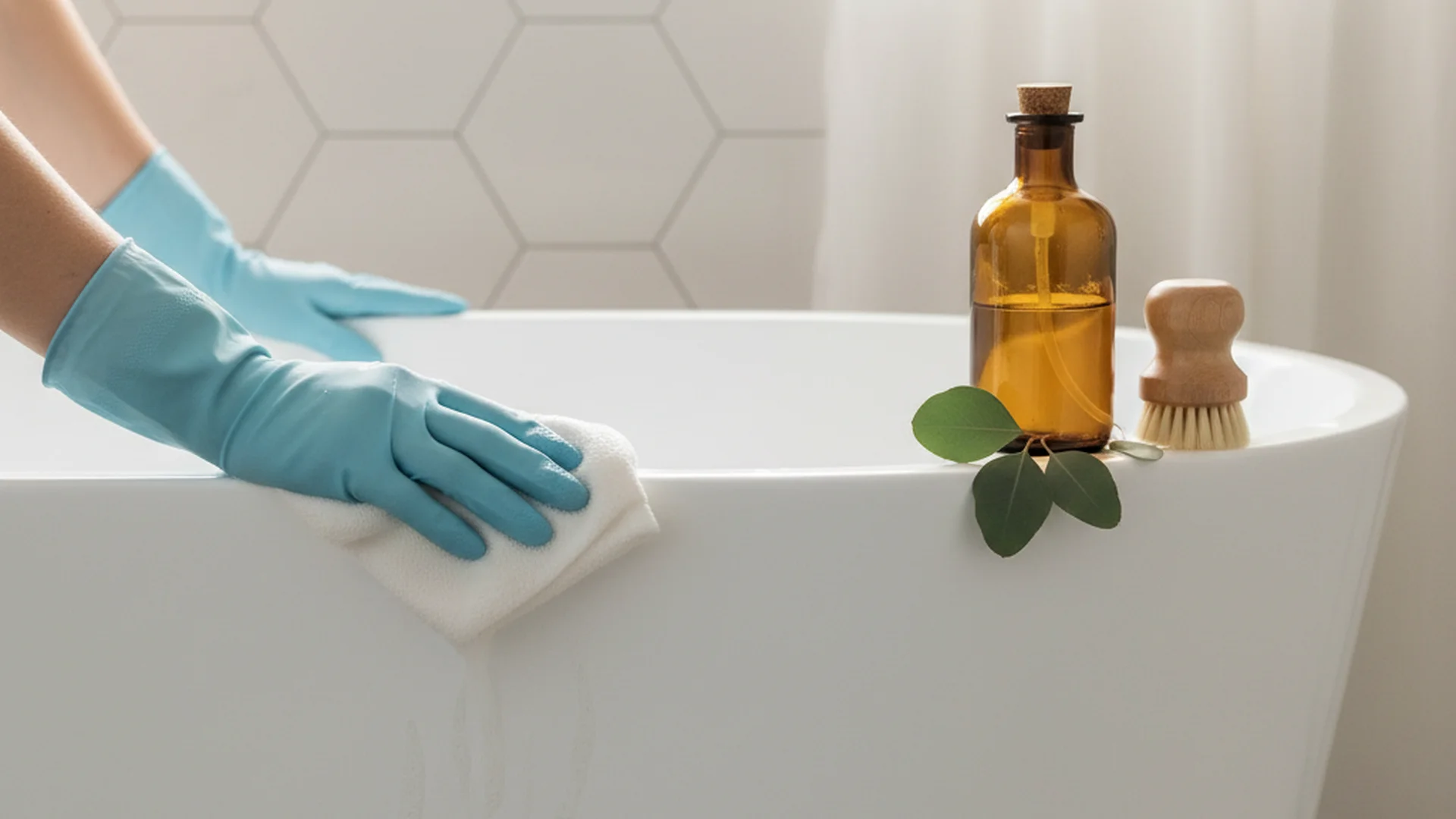
Using a microfiber cloth or a soft sponge, wipe the tub in circular motions. For stubborn spots, a soft-bristled nylon brush can be used, but ensure it is specifically labeled as safe for plastic or acrylic.
Step 5: Rinse and Buff
Rinse thoroughly with warm water. The final, most overlooked step is to buff the tub dry with a clean microfiber towel. This prevents water spots and mineral deposits from forming, especially if you live in an area with hard water.
Tip: If you have a matte finish acrylic tub, skip the buffing with waxes or oils. Matte surfaces require specialized cleaners that leave no residue to maintain their flat, contemporary look.
Real-World Cleaning Examples
To understand how these rules apply in real life, consider these three common scenarios:
- The Hard Water Crisis: Sarah noticed white, chalky spots on her new acrylic tub. Instead of reaching for a scouring pad, she soaked paper towels in a 1:1 vinegar-water solution and "plastered" them over the spots for 20 minutes. The minerals dissolved, and the spots wiped away effortlessly with a soft cloth.
- The Post-Spa Cleanup: After using heavy bath oils and charcoal salts, Michael found a dark, slippery ring around his tub. He used a concentrated squirt of grease-cutting dish soap and a microfiber mitt to lift the oils without having to use any abrasive chemicals.
- The Mystery Scuff: Emma found a dark mark on her tub after a bathroom repair. Rather than using bleach, she used a tiny amount of non-gel toothpaste and a soft cloth to gently polish the mark away, followed by a thorough rinse.
Common Mistakes to Avoid
Many homeowners accidentally ruin their acrylic tubs by using "traditional" bathroom cleaning methods. Avoid these pitfalls to protect your finish.
Using Abrasive Powders
Products like Comet, Ajax, or even some "soft" scouring creams contain grit. On acrylic, this grit acts like sandpaper, stripping the high-gloss protective layer and leaving the tub looking dull and gray.
The Magic Eraser Myth
While Magic Erasers are marketed as "gentle," they are actually made of melamine foam, which is a micro-abrasive. Using them on acrylic is like using extremely fine sandpaper; it will eventually remove the shine and make the surface more prone to staining.
Harsh Chemicals and Bleach
Never use bleach on an acrylic tub. Over time, bleach reacts with the acrylic polymers, causing them to turn yellow. This yellowing is often deep within the material and cannot be cleaned off. Similarly, avoid cleaners containing acetone, ammonia, or heavy acids.
Warning: Never pour boiling water into an acrylic tub. This can cause "thermal shock," which may lead to the fiberglass backing separating from the acrylic sheet (delamination) or even warping the shape of the tub.
2025-2026 Trends in Acrylic Maintenance
As we move into 2026, two major trends are changing how we care for our bathrooms: Eco-Friendly Green Chemistry and Smart Tubs.
- Plant-Based Surfactants: There is a shift toward using cleaners derived from coconut or soy. These "green" cleaners are naturally safer for acrylic because they lack the harsh solvents found in traditional sprays.
- Smart Features: Modern acrylic tubs now include self-warming surfaces and integrated jet systems. When cleaning these, you must ensure that no liquid enters the electronic control panels and that you use "jet-safe" cleaners to prevent biofilm buildup in the internal plumbing.
| Cleaner Type | Safe for Acrylic? | Recommended Use |
|---|---|---|
| Dish Soap | Yes | Daily Cleaning |
| White Vinegar | Yes (Diluted) | Hard Water / Soap Scum |
| Baking Soda | Yes (As Paste) | Localized Stains |
| Bleach | No | Never |
| Steel Wool | No | Never |
| Microfiber | Yes | All Surfaces |
Frequently Asked Questions
Can I use bleach on an acrylic tub?
How do I remove yellowing from my tub?
Is vinegar safe for acrylic?
How often should I clean my acrylic tub?
Can I use a Magic Eraser to get rid of a tough stain?
Conclusion
Mastering how to clean acrylic tub surfaces doesn't require expensive chemicals or intense labor. By sticking to the "Soft Rule" and using household staples like dish soap and vinegar, you can keep your bathroom looking like a luxury spa for years to come. Remember that consistency is key; a quick rinse today prevents a difficult scrub tomorrow.
Success: By following this gentle cleaning routine, you protect your tub’s gloss, maintain its heat-retention properties, and ensure it remains a beautiful, hygienic part of your home for its entire 15-year lifespan.
Cleaning that keeps score
Every task earns points, every streak multiplies them, and Premium adds a household leaderboard plus a monthly Dustagorgon to beat.
- Free forever
- 30 badges to earn
- Up to 6 in a household
No card needed. Set up your rooms in a couple of minutes.