In this article
What you’ll learn
- True HEPA (H13 or H14) filters are essential for capturing 99.97% of dust particles.
- Air purifiers should be sized 1.5x to 2x larger than the actual room for peak efficiency.
- Regular maintenance of the pre-filter is the most overlooked step in dust management.
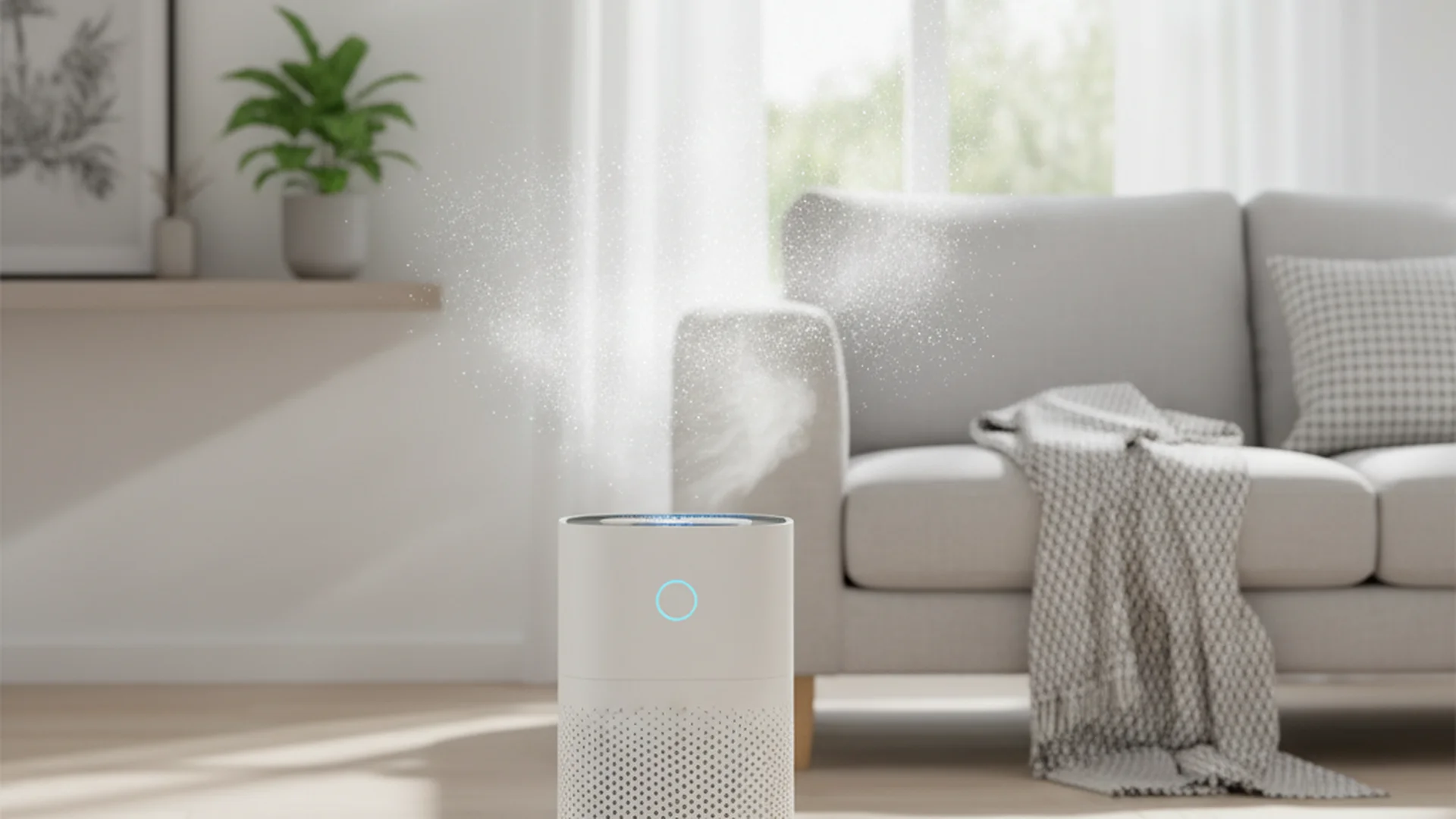
If you have ever felt like you are losing a never-ending battle against the thin gray film settling on your coffee table, you are not alone. Dust is a persistent intruder in every home, comprised of a complex cocktail of skin cells, pet dander, pollen, and microscopic PM2.5 particles. While traditional cleaning helps, the most effective way to stop the cycle is to capture these particles while they are still airborne. Choosing the right air purifier for dust is the single most effective step you can take toward a cleaner, healthier indoor environment.
The air inside a home is often more polluted than the air outside. As we move into 2025, the technology available to combat this pollution has reached a fever pitch. Modern air purifiers are no longer just fans with filters; they are smart, AI-driven machines designed to sense and destroy airborne debris before it ever touches your furniture. In this guide, we will break down the top-rated models, the science of HEPA filtration, and the common mistakes to avoid when setting up your clean air system.
The Science of Dust and HEPA Filtration
To understand why a specific air purifier for dust works, we have to look at the filtration standard. The industry gold standard remains the True HEPA filter (High-Efficiency Particulate Air). These filters are rated to capture at least 99.97% of particles as small as 0.3 microns. To put that in perspective, a human hair is about 70 microns wide.
In 2025, we are seeing a shift toward H13 and H14 "Medical Grade" HEPA filters. These utilize advanced nanofiber media to achieve even higher efficiency without requiring massive amounts of electricity to pull air through the dense material.
Note: Be wary of marketing terms like "HEPA-type" or "HEPA-like." These do not meet the strict 99.97% efficiency standard and often allow the finest, most irritating dust particles to pass right through the machine.
The Role of the Pre-Filter
While the HEPA filter does the heavy lifting, the pre-filter is the unsung hero of dust management. Most high-end units now feature a washable or vacuum-friendly mesh pre-filter. This stage catches large clumps of dust, lint, and pet hair. Without a functioning pre-filter, your expensive HEPA filter would clog within weeks, significantly reducing the lifespan and efficiency of the unit.
Best Air Purifier for Dust: 2025 Reviews
Here are the top performers for the 2025-2026 season.
1. Best Overall: Blueair Blue Pure 311i Max
The Blueair 311i Max has consistently topped the air purifier dust reviews due to its proprietary HEPASilent technology. It manages to move a massive volume of air while maintaining a noise level of just 34.8 dBA—roughly the volume of a whisper.
- Pros: Exceptional Clean Air Delivery Rate (CADR), low energy consumption, and a stylish fabric pre-filter that comes in various colors.
- Cons: Replacement filters can be more expensive than budget brands.
2. Best for Large Rooms: Coway Airmega 400S
For those dealing with heavy dust in open-concept living areas, the Coway Airmega 400S is a powerhouse. This unit can clear 90% of airborne particles in just 21 seconds on its highest setting. It features a dual-suction design, drawing air from two sides simultaneously to maximize coverage.
- Pros: Covers up to 1,560 square feet, smart app integration, and very durable build quality.
- Cons: Large physical footprint; requires significant floor space.
3. Best Smart Technology: Dyson Big+Quiet BP03
Dyson has redefined the high-end market with the Big+Quiet. This model is designed for long-range projection, meaning it can push purified air across a room up to 32 feet away. It also features advanced sensors that provide a real-time breakdown of dust levels on its LCD screen.
- Pros: Matter smart home compatible, ultra-quiet even at high speeds, and CO2 monitoring.
- Cons: Extremely high price point compared to traditional box-style purifiers.
4. Best Budget Option: Levoit Core 200S
If you need an air purifier for dust in a small bedroom or office, the Levoit Core 200S is unbeatable for the price. It offers True HEPA filtration and smart controls for under $100.
- Pros: Compact design, easy-to-find replacement filters, and Alexa/Google Home compatibility.
- Cons: Not powerful enough for large living rooms or kitchens.
| Model | Ideal Room Size | Noise Level | Key Feature |
|---|---|---|---|
| Blueair 311i Max | 387 sq. ft. | 34.8 dBA | HEPASilent Tech |
| Coway Airmega 400S | 1,560 sq. ft. | 43 dBA | Dual-Suction |
| Dyson Big+Quiet | 1,000+ sq. ft. | 56 dBA (Max) | 32ft Projection |
| Levoit Core 200S | 183 sq. ft. | 45 dBA | Budget Friendly |
Emerging Trends in Cleaning Tech (2025-2026)
Here are the trends defining the next generation of dust control:
- AI-Driven Sensing: Newer models are using machine learning to track your home's "dust patterns." For example, if you typically vacuum on Saturday mornings, the purifier will learn to ramp up its fan speed automatically during that window to catch the dust kicked up by the vacuum.
- Matter Integration: 2025 is the year of unified smart homes. Most new high-end purifiers now support the Matter standard, allowing you to control your Coway or Dyson seamlessly through Apple Home, Google Home, or Amazon Alexa without needing third-party bridges.
- Sustainable Materials: We are seeing a move away from virgin plastics. Brands like Blueair and Coway are incorporating recycled ocean plastics into their chassis and moving toward compostable filter frames to reduce environmental impact.
Success: A HEPA air purifier does more than reduce dust: it lowers the amount of fine particulate matter you inhale every day, which is better for your heart and lungs.
Common Mistakes to Avoid
Even the best air purifier for dust will fail if it is used incorrectly. Here are the most common pitfalls homeowners encounter:
1. Buying Based on Room Size Alone
One of the biggest mistakes is buying a unit that is rated exactly for your room's square footage. To keep dust levels low, you want 4 to 5 air changes per hour (ACH). To achieve this without the machine sounding like a jet engine, you should buy a unit rated for 1.5x to 2x your actual room size. This allows you to run the machine on a medium or "Auto" setting while still getting maximum filtration.
2. Tucking the Purifier in a Corner
Air purifiers need 360-degree airflow to work effectively. Many people hide them behind couches or in corners for aesthetic reasons. However, placing a unit too close to a wall restricts its "breath," creating dead zones where dust can still settle.
Tip: Keep your air purifier at least 2 to 3 feet away from walls and furniture. For maximum dust capture, consider elevating the unit on a side table; this helps it catch particles while they are still floating at chest height.
3. Relying on HVAC Filters
A common misconception is: "I have central AC, so I don't need a purifier." Standard HVAC filters are designed to protect the machinery from large debris; they are rarely fine enough to clean the air of the microscopic dust that affects your health.
Warning: Never use an air purifier as a total replacement for manual cleaning. Purifiers only catch airborne dust. Once a particle settles on a surface, it is "heavy" and beyond the reach of the purifier's suction.
Maintenance for Long-Term Dust Control
To keep your air purifier dust 2025 model running at peak performance, a strict maintenance schedule is required.
- Vacuum the Pre-Filter: Every 2-4 weeks, use a hand vacuum to clear the dust buildup from the outer mesh or fabric pre-filter.
- Wipe the Sensors: Most smart purifiers have a small laser sensor on the side. If this gets dusty, the "Auto" mode will provide inaccurate readings. Wipe it with a cotton swab every few months.
- Check the HEPA Filter: Don't just wait for the "change filter" light. If you live in a high-dust environment (near a construction site or with multiple pets), check the filter every 3 months. If it’s dark gray, it’s time for a replacement.
Frequently Asked Questions
Can an air purifier replace regular dusting?
Should I run my air purifier 24/7?
Will one air purifier cover my entire house?
Do I need a special filter for dust?
Is a washable HEPA filter as good as a replaceable one?
Conclusion
Investing in a high-quality air purifier for dust is one of the best upgrades you can make for your home's "efficiency" and your own health. By choosing a model with True HEPA filtration, a solid CADR rating, and smart sensing technology, you can drastically reduce the amount of time you spend cleaning and the amount of allergens you breathe in.
Whether you opt for the whisper-quiet performance of the Blueair 311i Max or the raw power of the Coway Airmega 400S, the key is consistency. Keep the unit running, maintain the pre-filters, and enjoy a home that finally feels—and stays—clean.
Success: Consistent use of an air purifier can reduce household dust accumulation by up to 50%, leading to better sleep and fewer allergy flare-ups.
Cleaning that keeps score
Every task earns points, every streak multiplies them, and Premium adds a household leaderboard plus a monthly Dustagorgon to beat.
- Free forever
- 30 badges to earn
- Up to 6 in a household
No card needed. Set up your rooms in a couple of minutes.