In this article
What you’ll learn
- Focus on functional cleaning rather than perfection to avoid burnout.
- Use the Five Things Method to reduce cognitive load and decision fatigue.
- Leverage body doubling and sensory rewards to maintain dopamine levels.
For many adults living with neurodivergence, Friday evening doesn't bring a sense of relief—it brings a sense of impending dread. You’ve spent the week holding it together at work, only to face a "Wall of Awful" at home. The piles of laundry, the sticky kitchen counters, and the mountain of mail seem to scream at you simultaneously. If you find yourself paralyzed by the prospect of adhd weekend cleaning, you aren't lazy, and you aren't failing. You are navigating a brain that is literally wired differently when it comes to task initiation and executive function.
In this guide, we will break down why the traditional "Saturday deep clean" fails for the ADHD brain and provide you with actionable, research-backed strategies to manage your home in a way that supports your mental health rather than draining it.
The Science of the ADHD "Weekend Wall"
To conquer the chaos, we must first understand the biology of why cleaning feels physically painful for those with ADHD. It isn't just about "not wanting to do it"; it's about how your brain processes information and rewards.
The Basal Ganglia and the Habit Gap
Research from the Radboud University Nijmegen Medical Centre has shown that five out of seven major command centers in the brain are smaller in individuals with ADHD. Most notably, the Basal Ganglia—the area responsible for habitual actions and motor control—shows significant differences.
In a neurotypical brain, cleaning can often happen on "autopilot." You see a dish, you put it in the dishwasher. For an ADHD brain, there is no autopilot. Every single action—picking up the dish, walking to the kitchen, opening the washer, deciding where the dish fits—requires a conscious, manual effort. This leads to rapid cognitive exhaustion.
The Cortisol-Clutter Loop
Recent 2025 research from WebMD and SpareFoot has highlighted the "Cortisol Connection." Cluttered environments act as a "silent to-do list," constantly pinging the brain with reminders of unfinished tasks. This keeps the body in a state of low-grade "fight or flight," raising cortisol levels. For the ADHD brain, this stress often leads to "ADHD Paralysis," where the sheer volume of sensory input from the mess makes it impossible to choose a starting point.
The Executive Function Deficit
Adults with ADHD typically score 10–15 points lower on measures of executive function (EF) than their peers. This impacts "set-shifting" (the ability to move from a resting state to a working state) and "working memory." When you stand in a messy living room, your brain struggles to filter out the noise and sequence the steps necessary to finish the job.
Note: Understanding that your struggle is biological can help remove the "moral weight" of cleaning. You aren't a bad person; you're a person with a specific brain architecture.
Proven Strategies for ADHD Weekend Cleaning Help
Traditional cleaning checklists often make things worse by providing too many options. To succeed, we need to limit the number of decisions your brain has to make.
The Five Things Method
Popularized by KC Davis, this method is a game-changer for reducing decision fatigue. Instead of looking at a "messy room," look for only five categories:
- Trash: Carry a bag and pick up everything that is garbage. Do not look at anything else.
- Dishes: Collect every dish and move them to the kitchen. Do not wash them yet; just move them.
- Laundry: Collect all clothes and put them in a basket.
- Things with a Place: Items that have a designated home but are out.
- Things without a Place: Items that are "homeless" and need a bin or a decision later.
June Bugging
Named after the way a June bug constantly returns to a screen door, this technique involves picking one "anchor point" (like the kitchen sink or the coffee table). You can wander off to put an item away in another room, but the rule is that you must always return immediately to your anchor point until that one spot is completely clear. This prevents the "ping-pong effect" where you end up with five half-finished tasks in five different rooms.
The "Shoes On" Hack
It sounds simple, but keeping your shoes on—specifically sturdy "work" shoes or sneakers—sends a powerful signal to the ADHD brain. It signifies that you are in "mode" and not yet in "relaxation mode." Many people find that the moment they kick off their shoes, their brain's "Zoomies" (cleaning energy) evaporate instantly.
| Strategy | Primary Benefit | Best For |
|---|---|---|
| Five Things Method | Reduces Decision Fatigue | Total room resets |
| June Bugging | Prevents Task-Switching | High-distraction days |
| Body Doubling | Provides External Accountability | Starting a difficult task |
| Pomodoro (20/10) | Prevents Burnout | Long-term maintenance |
Tip: If you struggle to start, try "Body Doubling." This can be as simple as having a friend sit in the room with you, or even putting on a "Clean with Me" video on YouTube to provide the feeling of shared activity.
Real-World Examples: ADHD Cleaning in Action
To better understand how these tools work, let's look at how they apply to common weekend scenarios.
Example 1: The Kitchen Overload
The Scenario: Sarah, a teacher with ADHD, enters her kitchen on Saturday morning. The counters are covered, the sink is full, and she feels the "Wall of Awful" rising. The Strategy: Sarah puts on her sneakers and starts a 20-minute timer. Instead of "cleaning the kitchen," she uses the Five Things Method. She ignores the dishes and only bags the trash. Once the trash is gone, the visual noise is reduced by 30%, making the dishes feel manageable.
Example 2: The Laundry Mountain
The Scenario: Mike has four baskets of clean laundry that have been sitting for a week. The thought of folding them is agonizing. The Strategy: Mike uses Body Doubling. He FaceTimes a friend who is also doing chores. While they chat about their week, Mike's "manual" brain is occupied by the conversation, allowing his hands to fold the laundry on "low-power" mode.
Example 3: The "Doom Pile" Reset
The Scenario: A corner of the living room has become a "Doom Pile" (Discarded Objects of Ordinary Importance). The Strategy: Mike uses June Bugging. His anchor is the coffee table. He takes one item from the pile, walks it to its home, and immediately returns to the table. If he gets distracted by the bookshelf while putting a book away, he reminds himself, "Back to the table," and returns.
Warning: Avoid "The Marathon Mistake." Trying to clean for 8 hours straight on a Saturday will almost always lead to an "ADHD Crash" on Sunday, leaving you unprepared for the work week.
2025-2026 Trends in ADHD Home Management
The world of home organization has shifted significantly heading into 2026, moving away from "minimalist aesthetics" and toward "functional neurodiversity."
AI Chores and Micro-Stepping
2025 has seen the rise of AI-powered chore managers. Tools like the evolved Goblin.tools can now take a vague prompt like "Clean the Bathroom" and break it into 30 micro-steps. This removes the cognitive burden of sequencing. Smart home integration now allows users to sync these steps to voice assistants, providing a literal "voice in your ear" to guide you through the next task.
Low-Demand Living
A major trend for 2026 is "Low-Demand Living" or "Underconsumption Core." For the ADHD brain, every object owned is a "cognitive tax." By intentionally owning fewer things, you reduce the amount of maintenance required during your weekend routine. This isn't about the "look" of minimalism; it's about reducing the volume of decisions you have to make every day.
Point of Performance Storage
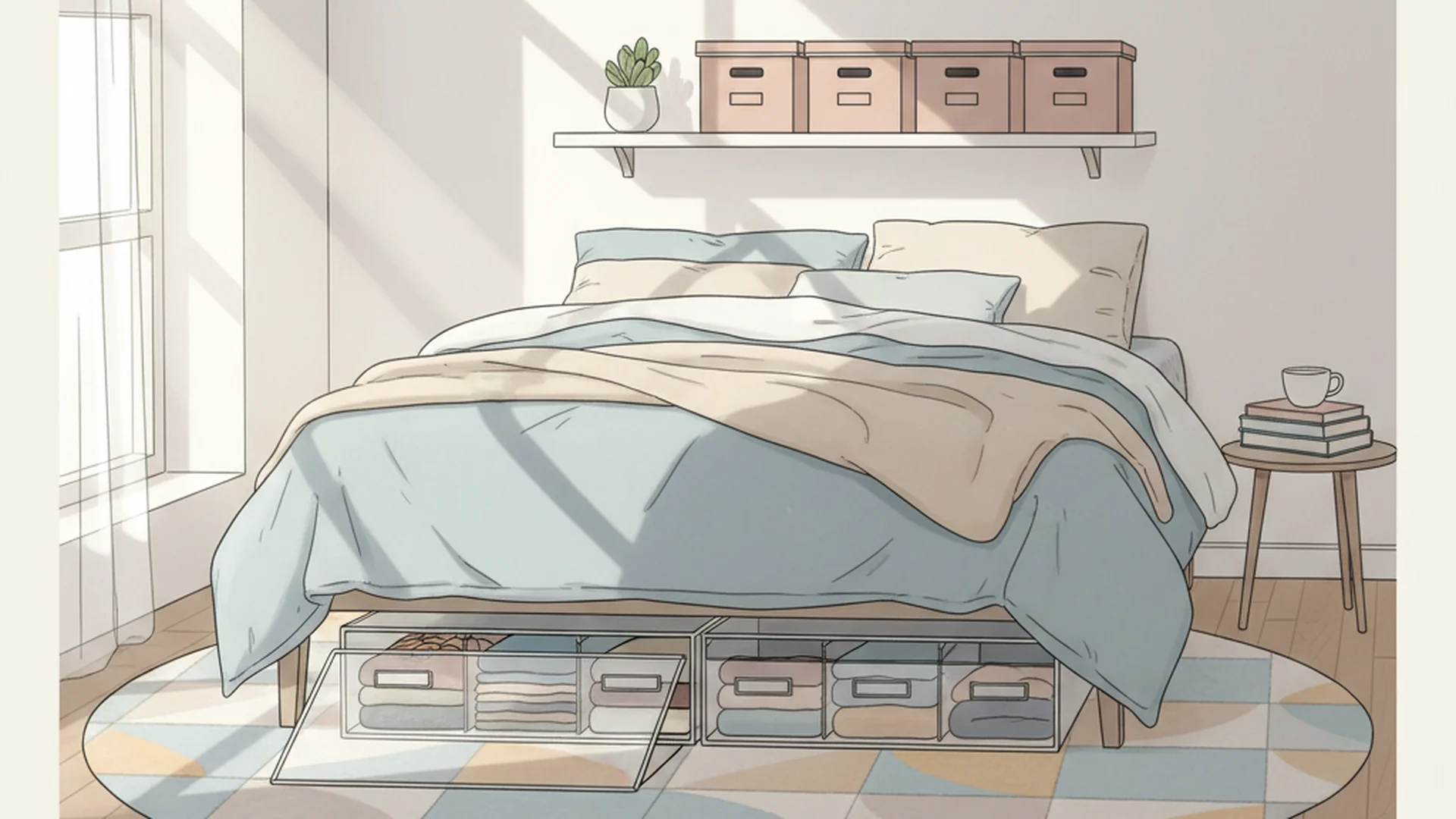
The old rule was "a place for everything." The new 2026 ADHD rule is "put it where you use it." If you always open mail at the kitchen island, put the trash can and the letter opener at the kitchen island. Don't force yourself to walk to a "home office" you never use. Having multiple pairs of scissors in every room is now considered a functional necessity rather than a clutter problem.
Success: Transitioning to "Well-being Cleaning" means you are cleaning to create a sanctuary for your brain, not to meet the expectations of guests.
Common Mistakes to Avoid
Even with the best intentions, certain habits can sabotage your adhd weekend cleaning tips and lead to burnout.
The Perfectionism Trap
Many people with ADHD struggle with "All or Nothing" thinking. If they can't scrub the baseboards, they feel there's no point in vacuuming. In 2026, we advocate for the "Half-Assed Rule": A sink with five dirty dishes is objectively better than a sink with fifty. Doing a task poorly is still better than not doing it at all.
Putting it "Away" vs. Putting it "Where I'll See It"
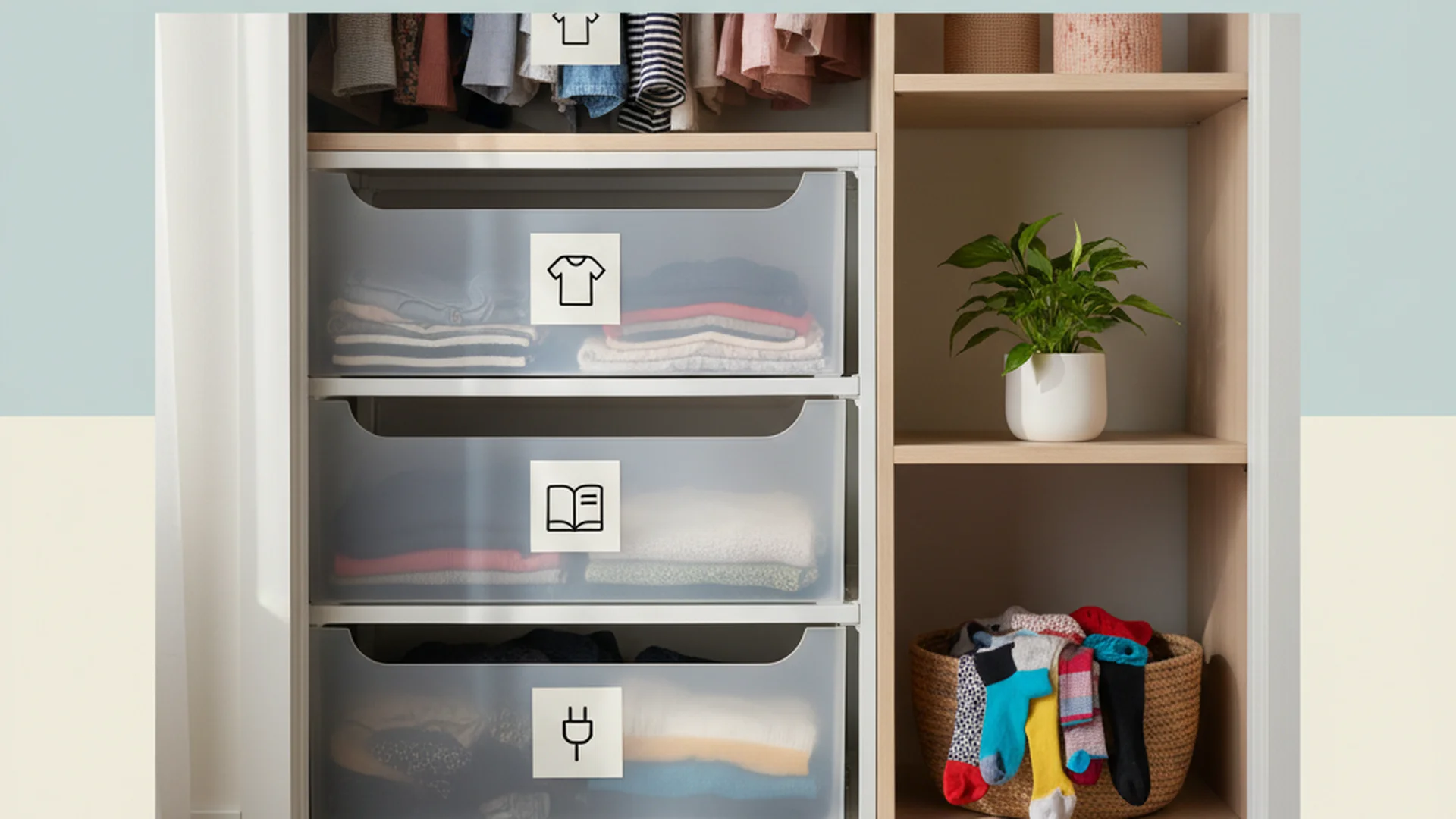
The ADHD "Out of Sight, Out of Mind" (Object Permanence) struggle is real. Putting things into opaque bins or deep drawers often means they are gone forever.
- The Fix: Use clear bins and open shelving. If you can't see your cleaning supplies, you won't use them.
Ignoring the "Wall of Awful"
The "Wall of Awful" is the emotional barrier of shame, failure, and anxiety that builds up around a task. If you are staring at a pile of laundry and feeling like you're about to cry, that's not laziness—it's an emotional blockage.
- The Fix: Lower the barrier to entry. Tell yourself you will only pick up one sock. Often, the hardest part is the transition; once you've picked up the sock, the wall starts to crumble.
Note: Sensory rewards are vital. Use a specific "clean house" scent (like citrus or eucalyptus) only when you finish a session. This signals to your brain that the dopamine-heavy "reward phase" has begun.
Frequently Asked Questions
Why am I productive at work but a mess at home?
Should I clean by room or by task?
How do I handle the "Sunday Scaries" and cleaning?
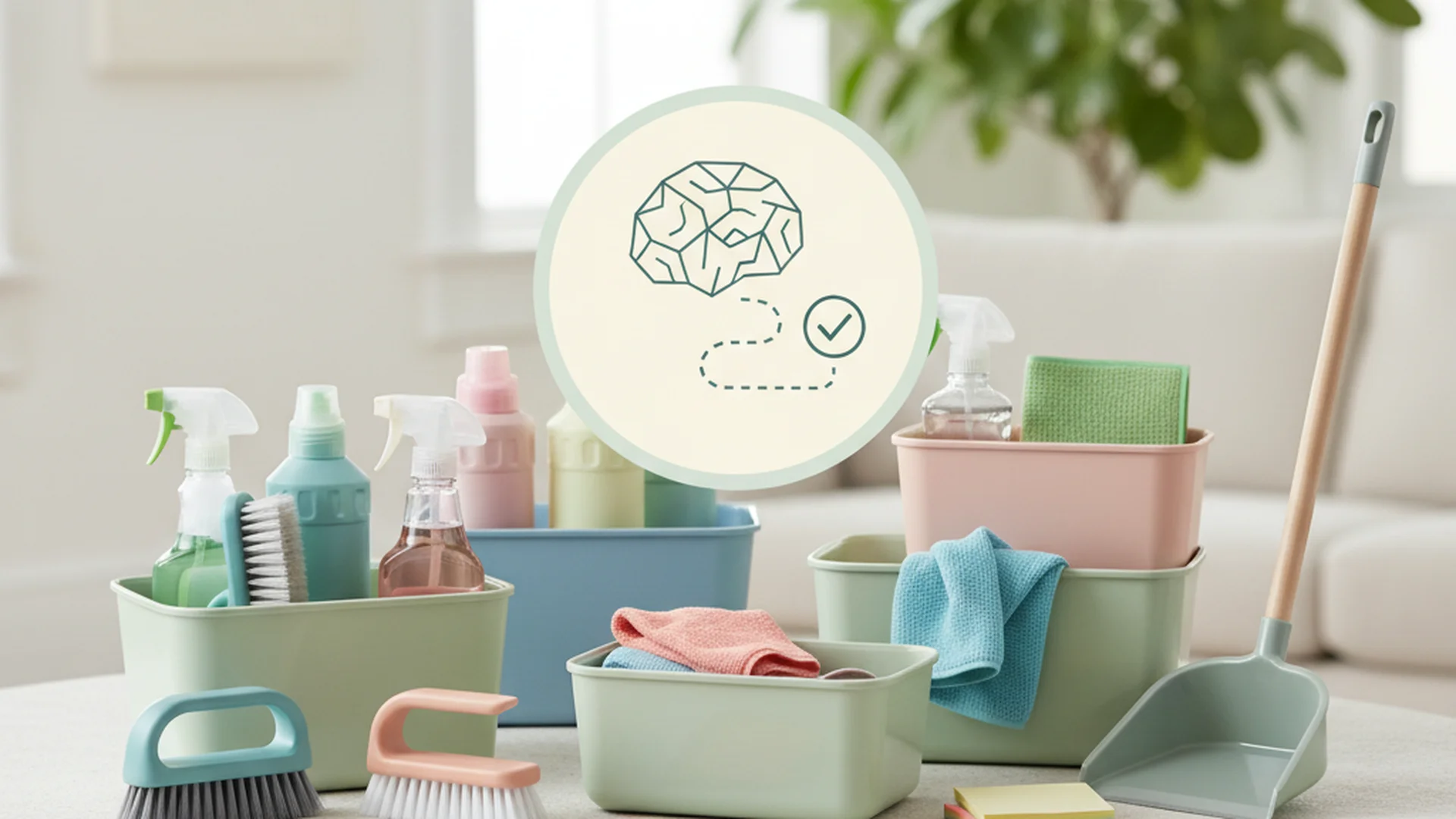
What are the best ADHD-friendly cleaning tools in 2026?
Conclusion
Mastering an adhd weekend cleaning routine isn't about finding the "perfect" checklist; it's about building a system that works with your brain's unique chemistry. By understanding the executive function gap, using strategies like the Five Things Method, and embracing the "Low-Demand" lifestyle of 2026, you can maintain a functional home without sacrificing your entire weekend to stress.
Remember, your home is meant to serve you—you are not meant to serve your home. If your "functional clean" means the laundry is clean but living in a basket, and that allows you to rest and enjoy your Sunday, then you have succeeded.
Success: By implementing just one of these strategies—like the "Shoes On" hack—you are already miles ahead in managing your neurodivergent home.
Cleaning that keeps score
Every task earns points, every streak multiplies them, and Premium adds a household leaderboard plus a monthly Dustagorgon to beat.
- Free forever
- 30 badges to earn
- Up to 6 in a household
No card needed. Set up your rooms in a couple of minutes.