In this article
What you’ll learn
- Laundry is a multi-step executive function challenge, not a single task.
- "Low-friction" systems like no-fold bins reduce the cognitive load.
- Smart home technology and AI can bridge the gap for object permanence issues.
If you have ADHD, the sight of a mountain of laundry likely triggers a specific kind of internal "freeze." You aren’t lazy, and you aren’t failing at being an adult. You are simply clashing with a domestic chore that is designed specifically to exploit every weakness of the ADHD brain. To find a solution that actually sticks, you need a customized adhd laundry system that works with your brain’s unique wiring rather than fighting against it.
Traditional laundry advice focuses on discipline and "folding as soon as the dryer beeps." For someone with ADHD, this is often impossible. The "Laundry Tax"—the cost of re-washing clothes for the third time because you forgot them in the machine—is a real financial and emotional burden. By shifting our focus from aesthetic perfection to functional access, we can dismantle the "Wall of Awful" surrounding the laundry room.
Why Laundry Feels Impossible
To build a successful adhd laundry system, we first have to understand the neurological hurdles. Laundry is not a single task; it is a complex sequence: sorting, washing, transferring, drying, folding, and putting away.
Executive Dysfunction and Sequencing
For neurotypical individuals, these steps flow into one another. For those with ADHD, each step requires "Task Switching," and keeping a long sequence of steps in order is exactly the kind of organisation the ADHD brain finds hardest. When you finish the "wash" step, your brain checks the box as "done," often completely deleting the "dry" and "fold" steps from your active memory queue.
Object Permanence (Object Constancy)
If you can’t see it, it doesn’t exist. Once the washing machine door closes, the clothes often vanish from your mental map. This is why so many people with ADHD find "sour" clothes in the washer three days later. It’s not a lack of caring; it’s a lack of visual "salience."
The Wall of Awful
Coined by Brendan Mahan, the "Wall of Awful" is the emotional barrier we build around tasks we have failed at repeatedly. Every time you forget the laundry, the wall gets higher. Eventually, just looking at a laundry basket triggers a shame response, leading to task paralysis.
The Low-Friction ADHD Laundry System
The goal of a neuro-affirming laundry system is to reduce "friction"—anything that makes a task harder to start or finish. Here is how to rebuild your process from the ground up.
The "No-Fold" Strategy
One of the most effective adhd laundry system tips is to stop folding. Folding is a high-effort, low-reward task. If your t-shirts, socks, and pajamas are going into a drawer where nobody sees them, does it really matter if they are folded into neat rectangles?
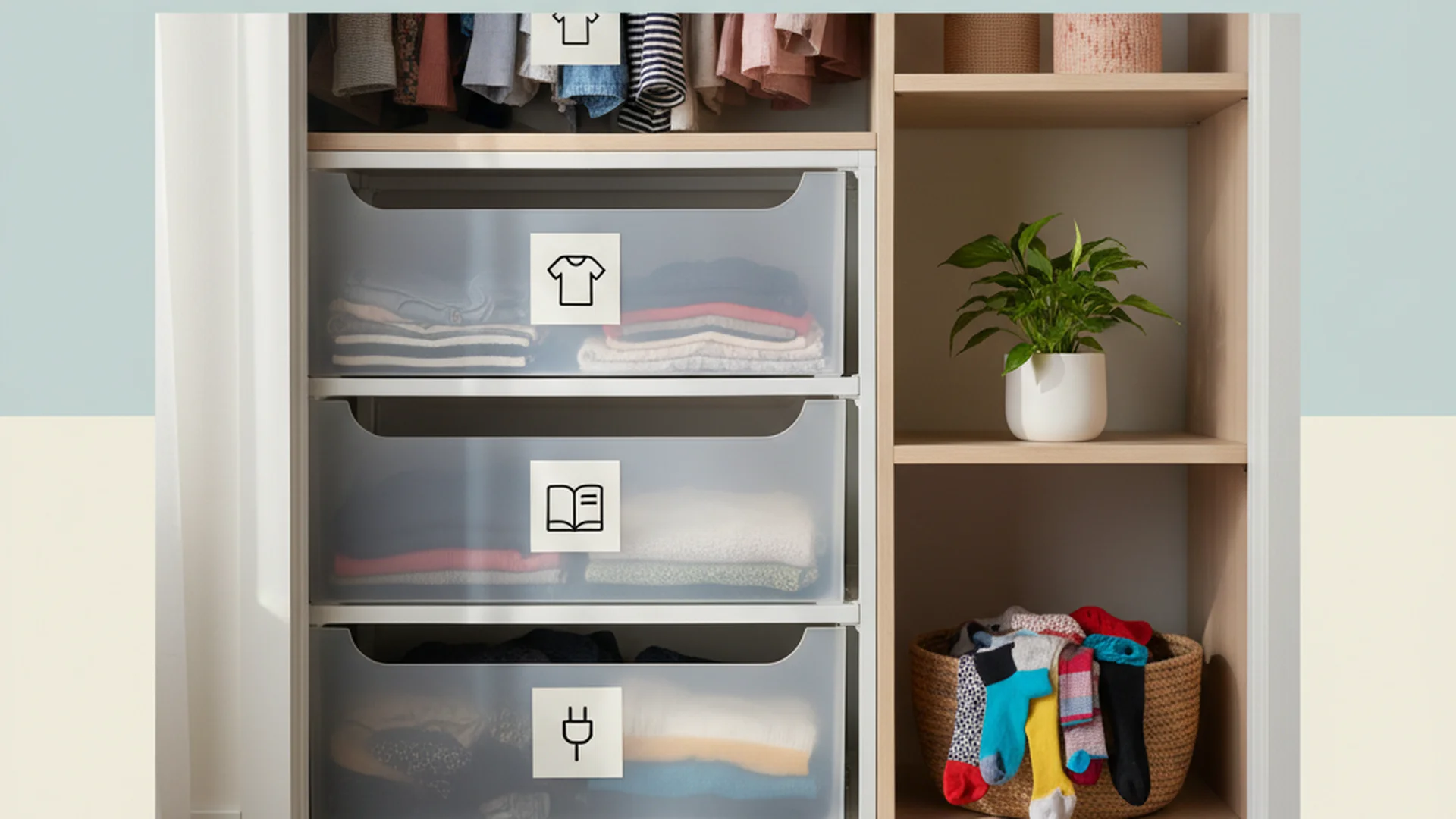
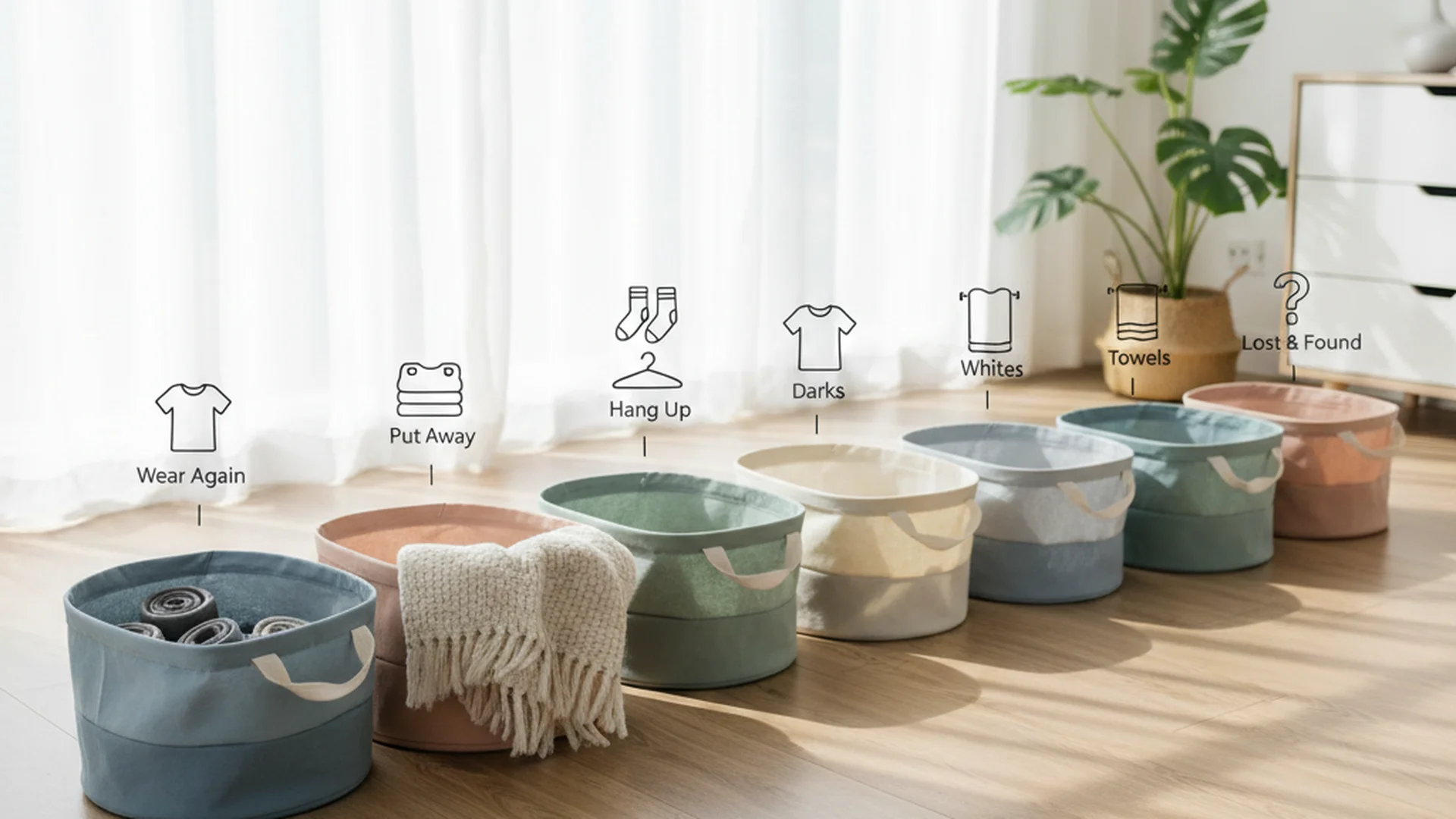
Instead, use open bins or baskets. Use one bin for socks, one for underwear, and one for athletic wear. When the laundry is dry, simply toss the items into their respective bins.
Tip: If you are worried about wrinkles, use a "hang vs. bin" rule. Only hang things that absolutely must be wrinkle-free. Everything else gets tossed into its designated spot.
Point-of-Performance Placement
We often put hampers in closets or laundry rooms because that’s where they "belong." However, if you naturally undress in the bathroom or next to your bed, that is where the hamper should be. An adhd laundry system fails when it requires you to walk across the house to put a dirty sock away.
The "One Load" Rule
Avoid "Marathon Laundry Day." For the ADHD brain, a 6-hour laundry session is under-stimulating and overwhelming. Instead, try to complete one full cycle (start to finish) every day or every other day.
Success: Completing one small load feels like a "win," providing the dopamine hit needed to stay consistent. It also prevents the "Doom Pile" from becoming a mountain you can't climb.
Tech and Tools for 2025 and Beyond
As a professional cleaning consultant, I’ve seen how 2025’s technological shifts are making adhd laundry system help more accessible than ever. We are moving away from paper checklists toward persistent, "annoying" digital reminders.
Smart Home Integration (IoT)
Modern smart washers can be programmed to send persistent notifications to your phone and smart watch. Unlike a simple timer, these notifications often won't stop until the machine door is physically opened. This directly counters the "out of sight, out of mind" problem.
AI-Driven Routine Builders
Apps like Goblin.tools use AI to break down "Do Laundry" into what they call "Magic To-Do" lists. If you feel paralyzed, the AI can break the task into:
- Walk to the bedroom.
- Pick up the blue hamper.
- Carry it to the washer.
- Add one pod. This reduces the "cognitive load" of planning the steps yourself.
The Closet-less Movement
A major 2025 trend in neuro-inclusive design is removing closet doors. By using open rolling racks and industrial shelving, you maintain visual contact with your wardrobe. This prevents you from "losing" clothes and helps you realize more quickly when you are running low on clean items.
Note: If you can't remove your closet doors, consider replacing the solid panels with mesh or glass to maintain visibility.
Real-World Examples of Functional Systems
To see how an adhd laundry system works in practice, let’s look at three different households.
Example 1: The "Basket-to-Body" Method
Sarah is a busy professional who realized she never actually put her clothes in her dresser. They stayed in the "clean" basket until she wore them. Instead of fighting this, she bought five identical, high-quality baskets. She labeled them: Tops, Bottoms, Undergarments, Gym, and Work. Now, her "putting away" process takes 45 seconds.
Example 2: The Visual Timer User
Mark struggled with forgetting clothes in the washer. He now uses a "puck" timer—a physical, visual countdown clock that he sticks to his refrigerator the moment he starts the wash. The bright red disappearing disc gives him a visual representation of how much time he has left, making the task "real" in his mind.
Example 3: The Sensory-Friendly Minimalist
Comorbid sensory issues often make laundry harder. Elena switched to unscented, neuro-inclusive laundry pods to avoid sensory overwhelm from heavy perfumes. She also uses a high-end fabric sanitizing spray in 2025 to refresh "clean-ish" clothes, reducing her total laundry volume by 30%.
Common Mistakes to Avoid
Even with the best intentions, certain "organizational" habits can actually sabotage an adhd laundry system.
- Buying Complex Sorters: Avoid hampers with three or four separate sections for whites, darks, and delicates. This adds a "decision-making" step to the beginning of the process, which can lead to task avoidance.
- Using Lids on Hampers: A lid is a physical and mental barrier. If you have to lift a lid, the clothes are far more likely to end up on the floor next to the hamper.
- Saving Everything for the Weekend: This creates a "mountain" that is impossible to start. Small, frequent wins are the key to ADHD management.
- Buying a Folding Board: While they look satisfying on TikTok, they add an extra step to the process. If you struggle with laundry, you need fewer steps, not more "tools."
Warning: Be wary of "organization porn." Just because a laundry room looks beautiful on Instagram doesn't mean it is functional for a neurodivergent brain. Prioritize ease over aesthetics.
| Traditional System | ADHD-Friendly System |
|---|---|
| Sorted by color | Sorted by "Machine Type" (All cold wash) |
| Folded in drawers | Tossed in open bins |
| Weekend marathon | Daily "One Load" rule |
| Hidden in closets | Visual shelving |
| Manual reminders | Persistent Smart IoT notifications |
Frequently Asked Questions
Why is laundry so hard for people with ADHD?
Should I stop folding my clothes?
How do I stop forgetting my clothes in the washer?
What is the best laundry schedule for ADHD?
How do I handle the "Clean-ish" pile of clothes?
Conclusion: Embracing Functional Imperfection
The most important part of an adhd laundry system isn't the baskets or the apps—it's the mindset shift. You must accept that "care tasks are morally neutral." Having a pile of laundry on the floor doesn't make you a bad person; it just means you have a backlog of a multi-step executive function task.
By removing lids, stopping the folding cycle, and using technology to bridge the gap in object permanence, you can lower the "Wall of Awful" and reclaim your space. Start small. Don't try to overhaul your entire house today.
Success: You have the permission to do laundry in a way that looks "messy" to others but works perfectly for you. If your clothes are clean and you can find them, the system is a success.
Cleaning that keeps score
Every task earns points, every streak multiplies them, and Premium adds a household leaderboard plus a monthly Dustagorgon to beat.
- Free forever
- 30 badges to earn
- Up to 6 in a household
No card needed. Set up your rooms in a couple of minutes.