In this article
What you’ll learn
- Music acts as a non-pharmacological stimulant to boost dopamine for task initiation.
- High BPM tracks (120+) are essential for physical momentum and preventing "scrolling traps."
- Using 8D audio and AI-curated mixes can minimize sensory overload and focus your attention.
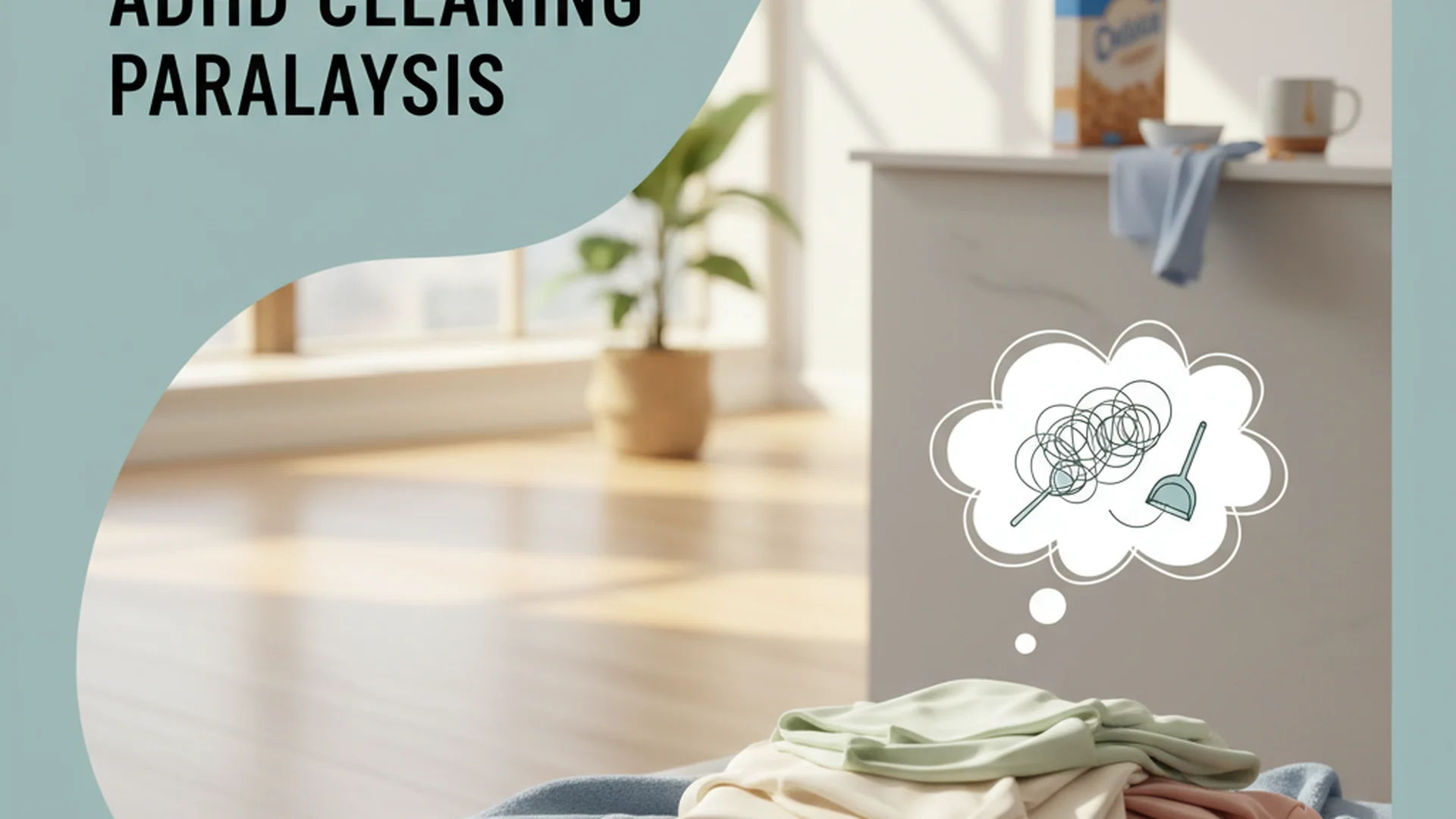
For many of us, the hardest part of keeping a home isn't the physical labor—it’s the mental hurdle of starting. If you have ADHD, that "wall of awful" between you and the dirty dishes is often caused by low dopamine levels. This is where a strategic adhd cleaning playlist becomes more than just background noise; it transforms into a vital executive function tool. By leveraging the right frequencies, beats per minute (BPM), and audio structures, you can actually hack your brain's reward center to make cleaning feel less like a chore and more like a high-energy mission.
In this guide, we will explore how music works as a tool for neurodivergent brains and provide actionable adhd cleaning playlist tips to help you reclaim your space. Whether you are struggling with "panic cleaning" before guests arrive or need adhd cleaning playlist help for your daily maintenance, understanding how sound shapes your focus is your secret weapon.
Why ADHD Brains Crave Rhythm
To understand why an adhd cleaning playlist works, we have to look at "Optimal Stimulation Theory." Most people with ADHD have a lower baseline level of dopamine. When faced with a boring, repetitive task like folding laundry, the brain effectively "falls asleep" or seeks out more stimulating distractions (like your phone).
Music is a non-pharmaceutical way of dialling your arousal level up or down: listening to something you enjoy lights up the brain's reward system and releases dopamine. That is why so many people with ADHD gravitate toward stimulating music almost constantly, whatever they happen to be doing.
Finding Your BPM Sweet Spot
Not all music is created equal when it comes to chores. The rhythm of the music serves as an external "metronome" for your body, helping to regulate your physical movement.
| BPM Range | Best Use Case | Mental Effect |
|---|---|---|
| 90–120 BPM | Task switching & Deep Decluttering | Steady rhythm; prevents sensory overload. |
| 120–140 BPM | Active Cleaning (Vacuuming, Mopping) | Maintains high physical momentum. |
| 140+ BPM | "Panic Cleaning" or Speed Runs | High-intensity bursts for rapid movement. |
Tip: If you feel yourself "zoning out," check the tempo. If the music is too slow, your brain will interpret it as "boring" and your momentum will stall.
Core ADHD Cleaning Playlist Tips for Maximum Focus
Building the perfect setlist requires more than just picking songs you like. You need to curate an experience that prevents "distraction portals" and keeps your hands moving.
The Five-Minute Fuel-Up
The most difficult part of ADHD cleaning is task initiation. To overcome this, always start your playlist with your absolute favorite, highest-energy "power song." This provides an immediate dopamine hit that helps you break through the initial paralysis.
Audio Body Doubling
If music alone isn't working, try "Audio Body Doubling." In the ADHD community, body doubling is the practice of having another person present while you work to keep you accountable. In 2025, this has evolved into "Clean With Me" podcasts. Listening to a narrator describe their own cleaning process acts as a virtual partner, reducing the feeling of isolation and paralysis.
The Sleep Timer Hack
Time blindness is a common ADHD trait. You might start cleaning the kitchen and realize three hours have passed, and you’ve only organized the spice rack.
Success: Set a sleep timer on Spotify or your music app for 20 minutes. When the music stops, it acts as a gentle, non-jarring "audio cue" to stop, take a break, or move to the next room.
Advanced Strategies: 8D Audio and Spatial Panning
One of the most exciting trends in 2025 is the mastery of 8D and Spatial Audio. Originally a TikTok gimmick, 8D audio uses spatial panning to make the sound feel like it is moving in a circle around your head.
For the ADHD brain, this creates a "cocoon effect." By spatializing the sound, it helps block out external environmental noises (like a humming fridge or traffic outside) that might otherwise trigger sensory overload. This immersive environment is highly grounding and helps many neurodivergent people stay "in the zone" for longer periods.
Note: Use high-quality headphones for 8D audio to get the full effect of the sound "moving" around you.
Real-World Example: The Kitchen Deep Clean
Imagine you have a mountain of dishes.
- The Setup: Place a dedicated Bluetooth speaker in the kitchen (Point of Performance audio).
- The Initiation: Start an 8D version of an upbeat electronic track.
- The Workflow: Use a 120 BPM playlist to keep your hands moving in time with the beat.
- The Transition: As the playlist ends, a "Clean With Me" podcast segment starts, guiding you to wipe down the counters.
Recent Trends and AI Integration (2025–2026)
Technology has caught up with the neurodivergent need for specific stimulation. If you need adhd cleaning playlist help, AI tools are now more capable than ever.
Spotify’s AI DJ and Voice Requests
Spotify’s 2025 updates allow for highly specific voice prompts. You can now tell your app: "Play a 120 BPM techno mix that helps me clean the kitchen." The AI will curate a mix in real-time based on your listening history and the specific task's required energy.
ChatGPT-to-Spotify Integration
A popular 2025 trend involves using AI to bypass the "decision fatigue" of choosing music. You can prompt an AI with your current state: "I'm feeling overstimulated but I need to do the laundry. Give me a low-lyric, high-rhythm playlist link." This generates a specialized link, removing the need for you to scroll through albums and potentially get distracted.
The "Snooze" Feature for Hyperfocus
We’ve all had that one song we’ve played 500 times until we can’t stand it anymore. Spotify’s new "Snooze" feature allows you to temporarily hide songs you’ve hyperfocused on. This prevents "dopamine burnout," ensuring your cleaning playlist remains effective and fresh.
Common Mistakes to Avoid
Even with the best intentions, a playlist can sometimes backfire if not managed correctly.
Choosing "Relaxing" Music
A common misconception is that calm music will help you focus. While this works for some, a dopamine-starved ADHD brain usually finds slow music under-stimulating. This leads to a loss of momentum and often results in a "scrolling trap" where you end up on your phone instead of cleaning.
The "Distraction Portal" (Manual Skipping)
Warning: The Golden Rule of ADHD cleaning is: If you touch your phone, you stop cleaning.
If you have to keep skipping songs, you are opening a "distraction portal." One notification can derail your entire afternoon. To avoid this, build a "skip-proof" playlist before you start. Use songs you know you love or repetitive genres like Video Game Soundtracks or Eurodance, which provide a steady external "clock."
Silence vs. Internal Distraction
Many people believe they need total silence to focus. While this may be true for reading or writing, physical tasks are different. In silence, the ADHD brain often generates its own "internal noise"—tangential thoughts, worries, or imaginary conversations—which are far more distracting than a steady beat.
Frequently Asked Questions
Should I use lyrics or instrumentals in my adhd cleaning playlist?
Why does 8D audio feel so different for ADHD?
Does the genre of music really matter?
How do I stop my playlist from becoming "boring" over time?
What is the best way to handle "task switching" using music?
Conclusion
An adhd cleaning playlist is more than just a collection of your favorite tunes—it is a sophisticated tool for cognitive regulation. By understanding the role of dopamine, utilizing the correct BPM, and embracing new technologies like 8D audio and AI curation, you can turn a daunting cleaning list into a manageable, even enjoyable, experience. Remember: the goal isn't just a clean house; it's a regulated, happy brain.
Success: By implementing these tips, you are not just cleaning your home—you are building a sustainable system that works with your neurodivergence rather than against it.
Cleaning that keeps score
Every task earns points, every streak multiplies them, and Premium adds a household leaderboard plus a monthly Dustagorgon to beat.
- Free forever
- 30 badges to earn
- Up to 6 in a household
No card needed. Set up your rooms in a couple of minutes.