In this article
What you’ll learn
- Zone cleaning focuses on consistency over intensity to prevent burnout.
- Dividing the home into five rotating zones ensures every area is deep-cleaned monthly.
- Modern tools like AI scheduling and green technology are revolutionizing the method in 2025.
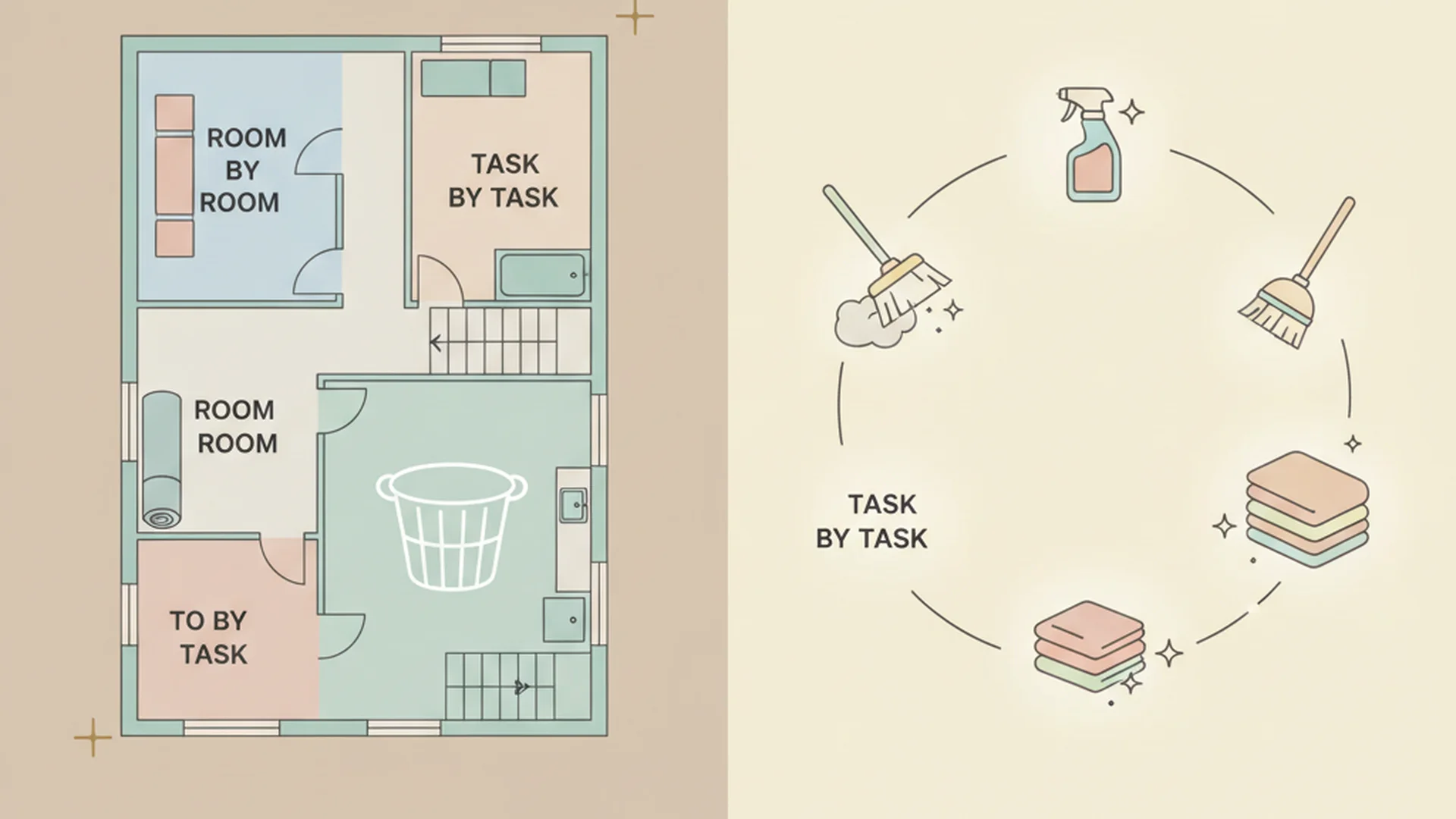
For many homeowners, the concept of cleaning feels like an "all-or-nothing" battle. You spend your entire Saturday scrubbing floors and dusting baseboards, only to feel exhausted and resentful of your living space by Sunday evening. This "marathon cleaning" cycle is not only draining but also unsustainable. Enter zone cleaning, a strategic approach to home maintenance that prioritizes consistency over intensity. By breaking your home down into manageable sections and tackling them on a rotating schedule, you can maintain a high standard of cleanliness without sacrificing your entire weekend.
As a Domestic Efficiency Specialist, I have seen firsthand how the zone cleaning method transforms chaotic households into streamlined, peaceful environments. In this comprehensive zone cleaning guide, we will explore how to implement this system, the psychological benefits of the "15-minute rule," and the latest 2025 trends that are making home maintenance smarter and more sustainable than ever before.
Zone Cleaning Explained: The Core Philosophy
At its heart, zone cleaning is the antidote to perfectionism. Popularized by Marla Cilley (known globally as The FlyLady), the method is built on the foundation that "your home didn't get dirty in a day, and it won't get clean in a day." Instead of trying to deep-clean the entire house at once, you divide your home into five distinct "zones." You focus on one zone per week, spending a small amount of focused time there each day.
The genius of the method lies in the distinction between "daily maintenance" and "zone work." Daily maintenance—like washing dishes, making the bed, and a quick floor sweep—keeps the house functional. Zone work is where the deep cleaning happens. This is when you finally wipe down the ceiling fans, vacuum under the sofa, or declutter that one "junk drawer" that has been bothering you for months.
Note: Zone cleaning is designed to be a cycle. If you miss a day or even a full week, you don't "catch up." You simply move to the next zone in the rotation. This removes the guilt cycle that often leads people to give up on cleaning routines entirely.
How to Divide Your Home into Zones
While every home is different, the standard approach involves five zones, typically corresponding to the weeks of the month. If a month has a partial week at the beginning or end, those days are usually assigned to Zone 1 and Zone 5.
The Standard 5-Zone Model
| Zone | Area of Focus | Typical Tasks |
|---|---|---|
| Zone 1 | Entrance, Front Porch, Dining Room | Dusting light fixtures, wiping the front door, polishing the table |
| Zone 2 | The Kitchen and Pantry | Cleaning the microwave, wiping cabinet faces, organizing the pantry |
| Zone 3 | Main Bathroom and Extra Bedroom | Scrubbing grout, cleaning mirrors, dusting guest furniture |
| Zone 4 | Master Bedroom and Bath | Changing linens, vacuuming under the bed, cleaning the shower |
| Zone 5 | Living Room and Den | Dusting electronics, fluffing cushions, cleaning baseboards |
Tip: You can customize these zones based on your floor plan. For example, if you live in a small apartment, you might only have three zones. If you have a large home, you might create "Micro-Zones" for home offices or finished basements.
The Expert Guide to Zone Cleaning Efficiency
To get the most out of your zone cleaning sessions, you need to work smarter, not harder. Professional cleaners use specific techniques to maximize their output while minimizing physical strain.
1. The Top-to-Bottom Rule
Gravity is a constant. If you clean your floors first and then dust your ceiling fan, dust will fall onto your clean floor, forcing you to do the work twice. Always start at the highest point in the room (crown molding, light fixtures) and work your way down to the furniture, then the baseboards, and finally the floors.
2. The "S-Pattern" Wipe
Many people naturally clean in a circular motion. However, circular buffing often just redistributes dirt and bacteria around the surface. Instead, use an "S-pattern." Start at the top left of a counter or mirror, move horizontally to the right, drop down slightly, and move back to the left. This ensures you are pulling the dirt off the surface entirely.
3. The 15-Minute Sprint
The "15-minute rule" is a psychological tool. Set a timer on your phone or oven. Knowing that there is a definitive end-point helps overcome the procrastination associated with "big" tasks. You will be surprised at how much you can accomplish when you are racing against a clock.
Warning: Do not attempt to deep-clean a zone if it is currently cluttered. You cannot clean clutter; you can only move it around. Always spend the first few minutes of your zone time decluttering (using the "Keep, Donate, Trash" method) before you pick up a spray bottle.
2025–2026 Trends in Home Maintenance
The world of domestic efficiency is evolving rapidly. We are moving away from rigid paper checklists and toward integrated, tech-driven solutions.
AI-Driven Scheduling
In 2025, smart home apps like Sweepy and Tody have integrated AI to move beyond fixed calendars. These apps analyze your household size, the presence of pets, and even local weather data to predict when a zone actually needs cleaning. For example, if the AI detects high foot traffic in the entryway during a rainy week, it might automatically bump Zone 1 up in the priority list.
Hybrid Work Adaptation
With more people working from home than ever before, the "Home Office" has become a critical zone. In 2025-2026, we are seeing a shift toward "Micro-Zones" specifically for workspaces. These require high-frequency sanitization of high-touch surfaces (keyboards, mice) and specialized cable management to prevent dust buildup in tech-heavy areas.
Sustainability and "Green Zones"
Modern zone cleaning focuses on using plant-based, biodegradable agents and water-saving technologies like dry steam cleaners, which can sanitize surfaces without the need for harsh chemicals.
Success: Transitioning to microfiber tools and high-quality all-purpose cleaners can reduce your chemical consumption by 60%, making your home safer for children and pets.
Real-World Examples of Zone Cleaning in Action
Example 1: The Busy Professional
Sarah, a software engineer, works 50 hours a week. She used to spend her entire Saturday cleaning. By adopting the zone cleaning guide, she now spends 15 minutes every morning before work in her designated zone. On Tuesday (Zone 2 - Kitchen), she wipes the backsplash and cleans the inside of the microwave. By Friday, her kitchen is sparkling, and her Saturdays are now completely free for hiking and hobbies.
Example 2: The Multi-Pet Household
Mark and James have three dogs. Their biggest challenge is fur and dander. Using zone cleaning, they focus heavily on air quality. During Zone 5 (Living Room) week, they don't just vacuum; they use a damp microfiber cloth on the walls and baseboards to trap dander. This targeted approach has improved their indoor air quality significantly, reducing their seasonal allergy symptoms.
Example 3: The Minimalist Apartment
Elena lives in a 600-square-foot studio. A 5-zone system was too much for her small space. She condensed her home into three zones: Wet (Bathroom/Kitchen), Dry (Living/Bedroom), and Entry. She spends just 10 minutes a day, three days a week. This "Micro-Zone" approach keeps her small space from ever feeling cramped or dusty.
Common Mistakes to Avoid
Even with a great system, it is easy to fall into old habits. Here are the most common pitfalls when starting the zone cleaning method:
- Cleaning Before Tidying: This is the number one time-waster. If you have to move a pile of mail to wipe a counter, you are losing momentum. Tidy the room first, then clean.
- The Perfectionist Trap: If your 15-minute timer goes off and you aren't "finished," stop anyway. The goal is progress. You will be back in this zone next month to do more.
- Using Dirty Tools: Cleaning with a saturated, gray microfiber cloth just spreads bacteria. Ensure you are starting each session with clean cloths and an empty vacuum bag/canister.
- Over-Complicating Supplies: You don't need a different chemical for every surface. A high-quality all-purpose cleaner, a glass cleaner, and a degreaser for the kitchen can handle 90% of your home.
- Skipping the Daily 5: Zone cleaning is for deep cleaning. If you don't do your daily dishes or laundry, the zone cleaning will feel like a drop in the bucket. Maintain your "Daily 5" habits to make the zone work effective.
Frequently Asked Questions
What is the best way to divide my home into zones?
How long should I spend in a zone?
Does zone cleaning include daily chores like dishes?
What if I miss a week or a zone?
Can I use zone cleaning if I have a very large house?
Conclusion
The zone cleaning method is more than just a schedule; it is a shift in mindset. By moving away from the "marathon" approach and embracing small, daily wins, you reclaim your time and your sanity. As we move into 2025 and 2026, the integration of AI scheduling and sustainable "green" practices only makes this method more powerful.
Whether you are a busy professional, a parent, or someone just looking to simplify their life, the zone cleaning guide provides a roadmap to a home that is always "guest-ready" without the stress of a traditional cleaning routine. Start with just 15 minutes today, and watch how your relationship with your home changes.
Success: By implementing these strategies, you can improve your cleaning efficiency by up to 30%, giving you back hours of your life every single month.
Cleaning that keeps score
Every task earns points, every streak multiplies them, and Premium adds a household leaderboard plus a monthly Dustagorgon to beat.
- Free forever
- 30 badges to earn
- Up to 6 in a household
No card needed. Set up your rooms in a couple of minutes.