In this article
What you’ll learn
- Completing one room entirely before moving on reduces cognitive load and cortisol levels.
- The Three-Wave system (Trash, Surfaces, Floors) creates a systematic, repeatable workflow.
- Modern tools like probiotic cleaners and visual timers enhance the method's effectiveness for all households.
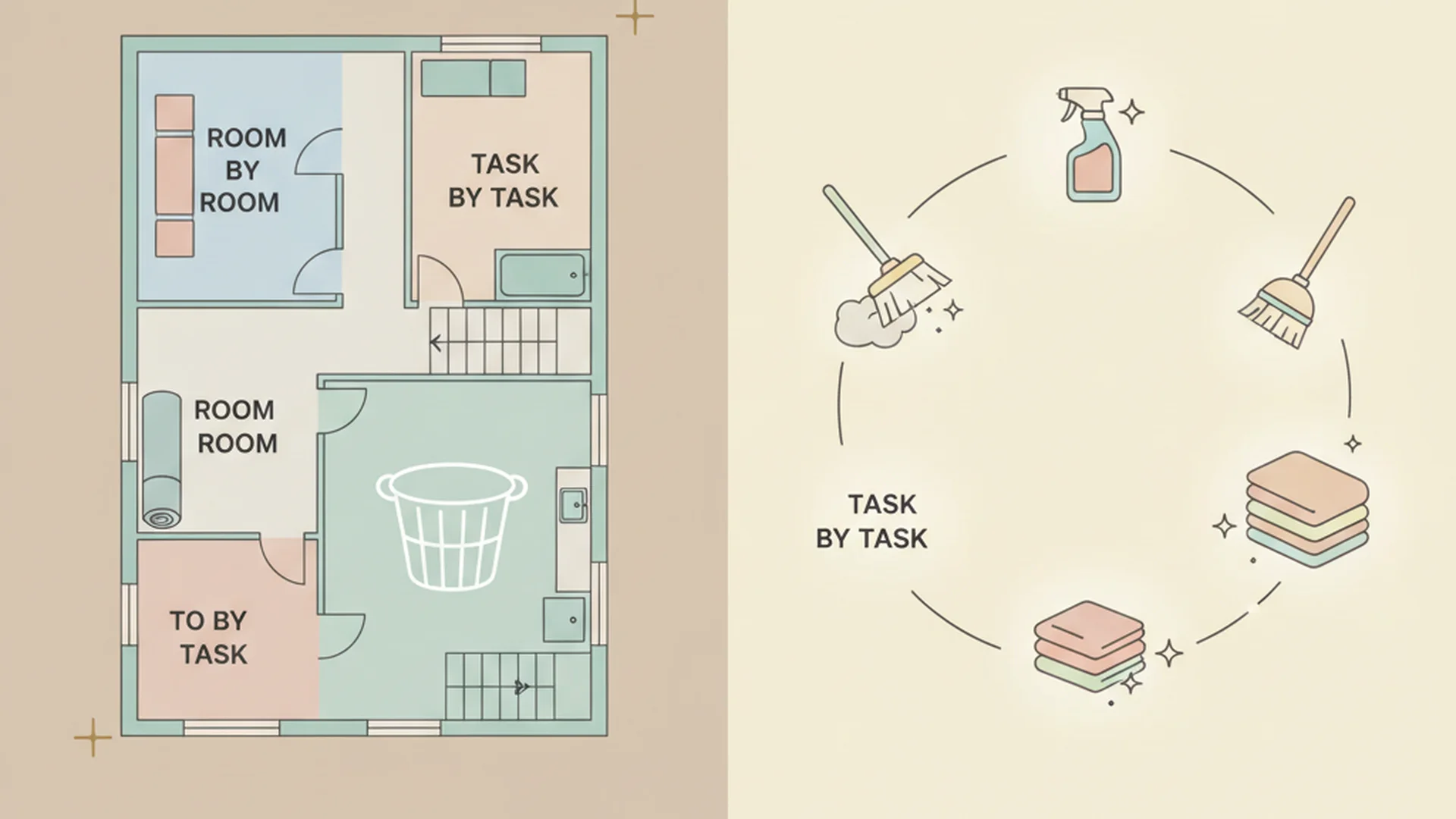
We have all been there: you start cleaning the kitchen, realize the mail needs to go to the office, see a stack of books in the office that belongs in the bedroom, and suddenly, two hours have passed with four rooms half-cleaned and nothing actually finished. This "butterfly effect" of cleaning is the primary cause of domestic burnout. To combat this, professional organizers and efficiency experts are turning to the focus room cleaning method. By prioritizing the completion of one physical space entirely before stepping foot in another, you can reclaim your time and your sanity.
As a Domestic Efficiency Specialist, I have seen how shifting from a "whole-house" mentality to a zoned approach can transform a home. The focus room cleaning method isn't just about tidying up; it is about psychological zoning and reducing the mental weight of unfinished tasks. In this guide, we will explore why this method is the gold standard for 2025 and how you can implement it in your own home.
The Science of Completion: Why One Room at a Time Works
The effectiveness of the focus room cleaning method explained through neuroscience reveals why we feel so exhausted after a day of "random" cleaning. Physical clutter in your visual field competes for your attention, and when you clean in patches across the house, your brain never receives the "signal" that a task is complete.
In contrast, finishing a single room triggers a significant release of dopamine. This "completion spike" provides the neurological fuel needed to tackle the next zone. A systematic, room-by-room routine also cuts your total cleaning time noticeably compared with wandering from job to job. By staying in one room, you eliminate the "transition time"—the minutes lost walking between rooms, getting distracted by the TV, or starting unrelated tasks.
Note: Transition time is the "silent killer" of productivity. Even 30 seconds of walking between rooms can lead to "task switching" that resets your mental focus.
How to Use Focus Room Cleaning Method: The Three-Wave System
To master the focus room cleaning method, you must move away from "tidying" and toward "processing." Professional cleaners use a systematic workflow known as the Three-Wave System. This ensures that no corner is missed and that you aren't cleaning the same surface twice.
Wave 1: The Trash and Clutter Sweep
Before you touch a spray bottle, you must clear the field. Walk the perimeter of the room with a trash bag in one hand and a "relocation basket" in the other.
- Trash: Anything that is garbage goes immediately into the bag.
- Relocation: Any item that belongs in a different room goes into the basket.
Warning: This is where most people fail. You might find a coffee mug that belongs in the kitchen. Do not take it to the kitchen. Place it in the basket and stay in your focus room. Your feet do not leave the zone until the wave is complete.
Wave 2: Surfaces and Dusting (Top-to-Bottom)
Once the clutter is gone, it’s time for the actual cleaning. The golden rule here is gravity. Always work from the highest point (ceiling fans, top shelves) to the lowest point (baseboards).
Professionals use the S-Shape Wipe. Instead of circular motions, which simply redistribute dirt and hair, wipe in a continuous "S" pattern from back to front. This ensures every square inch of the surface is touched and the debris is pulled toward you, rather than pushed back into the corner.
Wave 3: The Floor and the Exit
The final wave is the floor. Vacuum or mop your way out of the room. This prevents you from stepping on damp surfaces or tracking dust back onto a clean floor. Once the floor is done and you step over the threshold, that room is officially "closed."
Tip: Keep a standardized cleaning kit in a portable caddy. Walking to the pantry for a specific glass cleaner is the number one way focus is lost.
2025 Trends: Probiotics and Functional Fragrances
The focus room cleaning method is evolving with new technology and consumer preferences. A growing number of shoppers now prioritize non-toxic and "safe" cleaning over pure germ-killing power.
The Rise of Probiotic Cleaners
One of the most significant shifts in 2025 is the use of probiotic cleaners. Unlike traditional disinfectants that kill 99.9% of everything (including "good" bacteria), probiotic cleaners leave behind a layer of beneficial microbes. These microbes continue to "eat" away at pathogens and odors for up to 72 hours after your focus session is over. This means your "focus room" stays cleaner for longer with less effort.
Functional Fragrance for Focus
Moving into 2026, we are seeing the rise of "functional fragrance." This involves choosing scents that match the intent of the room.
- Eucalyptus and Mint: Used in home offices to maintain high cognitive focus during the cleaning process.
- Lavender and Sandalwood: Used in bedrooms to signal to the brain that the cleaning is done and the space is now a place for relaxation.
| Room Type | Recommended Scents | Benefit |
|---|---|---|
| Home Office | Lemon, Rosemary | Improved Clarity |
| Bathroom | Eucalyptus, Pine | Respiratory Freshness |
| Bedroom | Lavender, Chamomile | Stress Reduction |
Real-World Applications: Three Examples
Example 1: The "High-Impact" Kitchen
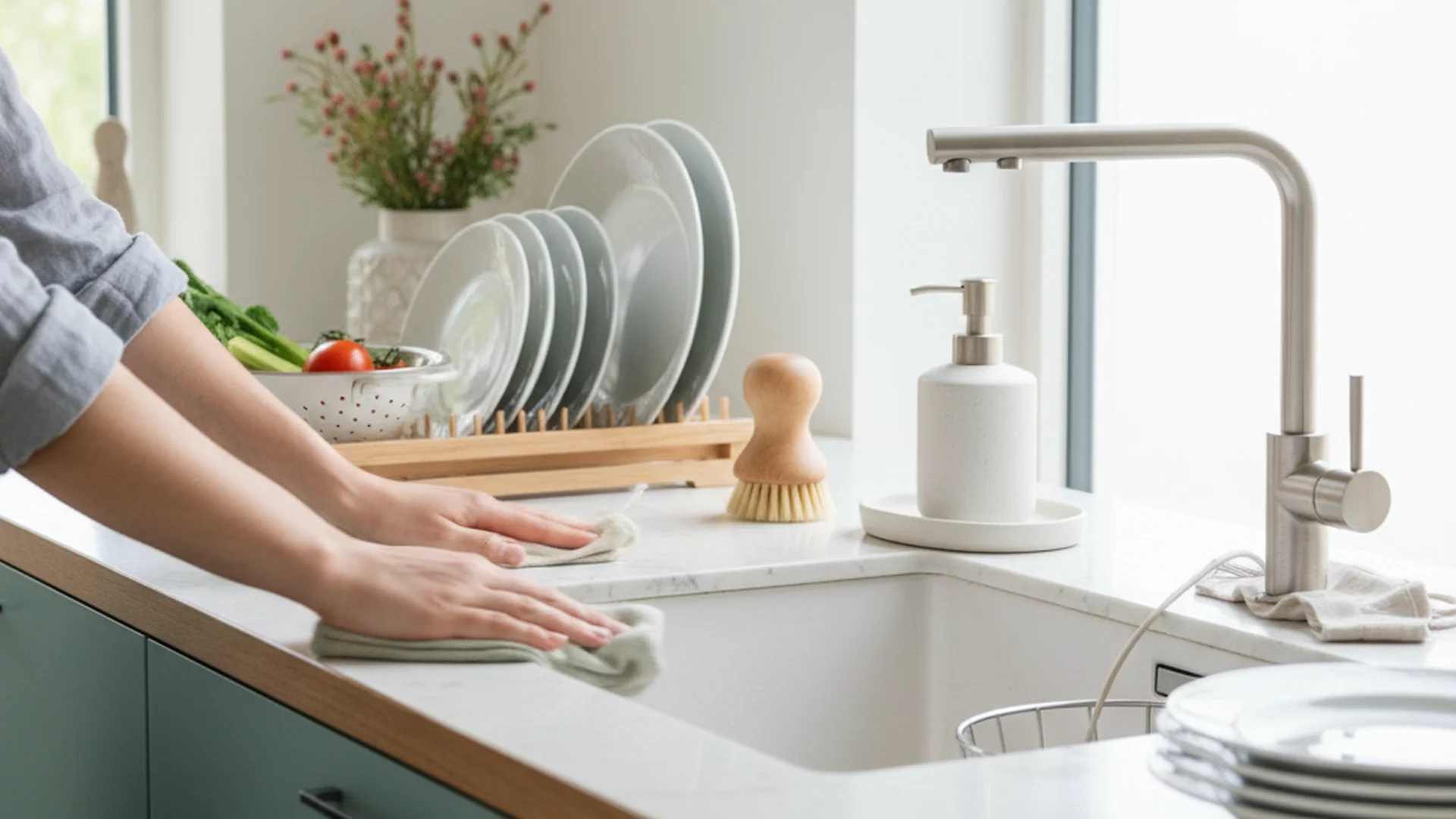
Sarah, a mother of three, felt overwhelmed by the state of her house. Using the focus room method, she spent 60 minutes exclusively in the kitchen. By using the "dwell time" technique—spraying the oven and counters and letting the product sit for 10 minutes while she decluttered the junk drawer—she achieved a level of clean she hadn't seen in months. Because the kitchen was "complete," her morning coffee the next day was a stress-free experience.
Example 2: The "Smallest Win" Bathroom
For those who feel paralyzed by a messy house, starting with a small bathroom is the best way to build momentum. It provides a quick completion cycle. By staying in the room and finishing the mirrors, toilet, and floor in 15 minutes, users get that immediate dopamine hit to move to the next zone.
Example 3: The ADHD-Friendly Living Room
James, who has ADHD, struggled with the "butterfly effect." By using a Visual Timer and the Focus Bear app, he committed to the "Sunday Butterfly" method. He focused on the living room for 20 minutes, using the relocation basket to hold his "distractions." When the timer beeped, he was allowed to take the basket to the next room, turning the transition into a rewarded movement.
Common Mistakes to Avoid
Even with a plan, it is easy to fall back into old habits. Here are the most common pitfalls that can ruin your focus room session.
- Cleaning "Bottom-to-Top": If you dust your baseboards and then clean your ceiling fan, you will have to clean your baseboards again. Always work against gravity.
- The "Traveling Trap": As soon as you leave the room to put a toy away, you have lost. Use the relocation basket and stay put.
- Dry Prep Neglect: Never wipe a dusty surface with a wet cloth immediately. This creates "mud," which is much harder to clean. Always dry-dust or vacuum surfaces before applying liquid cleaners.
- Over-Saturating with Product: "More soap" does not mean "more clean." Using too much product creates a sticky residue that actually attracts more dust over time.
- Ignoring Dwell Time: Most disinfectants require 1–10 minutes of "dwell time" to actually kill bacteria. Spray, move to a different task in the same room, and then come back to wipe.
Success: Following these rules will not only make your home cleaner but will also give you back hours of your weekend that were previously lost to inefficient "wandering" cleaning.
Frequently Asked Questions
What if I find an item that belongs in another room?
Where should I start if the whole house is a mess?
How long should a Focus Session take?
Is this method better for people with ADHD?
What is the "Sunday Butterfly" Method?
Conclusion: The 15-Minute Challenge
The focus room cleaning method is more than just a chores list; it is a strategy for a calmer, more organized life. By respecting the boundaries of your physical space and your mental energy, you can achieve a higher level of cleanliness in significantly less time. The efficiency you gain isn't an abstraction—it's an extra hour of your life returned to you every week.
Are you ready to stop "butterfly cleaning" and start seeing real results? I challenge you to pick one small room—perhaps a bathroom or your home office—and apply the Three-Wave system today. Set a timer for 15 minutes, grab your relocation basket, and don't leave until the room is done.
Cleaning that keeps score
Every task earns points, every streak multiplies them, and Premium adds a household leaderboard plus a monthly Dustagorgon to beat.
- Free forever
- 30 badges to earn
- Up to 6 in a household
No card needed. Set up your rooms in a couple of minutes.