In this article
What you’ll learn
- A structured schedule cuts down the time you spend cleaning.
- Cleaning has a direct impact on reducing cortisol and stress levels.
- Using a task-based approach (cleaning by category) is often more efficient than room-by-room.
Walking into a clean, organized home isn't just a luxury—it is a vital component of your mental well-being. However, for many of us, the path to a tidy house feels like an uphill battle against clutter and time. This is where a weekly cleaning schedule becomes your most powerful tool. By breaking down overwhelming chores into manageable, bite-sized tasks, you can transform your living space from a source of stress into a sanctuary of calm. In this guide, we will explore the most efficient ways to maintain your home in 2026, leveraging modern trends and practical techniques to save you time and energy.
Why Your Home Needs a Structured Weekly Cleaning Schedule
Most of us lose several hours every week to cleaning. While that sounds like a significant investment, households without a plan usually spend more time on reactive cleaning—scrubbing away stains that could have been prevented or searching for misplaced items. A structured weekly cleaning schedule trims that time considerably through simple efficiency gains.
Beyond the clock, there is a profound psychological benefit. Plenty of people notice their stress drop away once a structured cleaning routine is finished. In an era where "CleanTok" and "Body Doubling" have turned domestic chores into a form of self-care, a schedule is no longer just about hygiene; it’s about reclaiming your mental space.
Note: Efficiency isn't about working harder; it’s about working smarter. Using a weekly cleaning schedule template helps you maintain "flow," preventing the exhaustion that comes from deciding what to clean next.
The Framework: Day-Theming vs. Zoning
Before you download a weekly cleaning schedule printable, you need to decide which philosophy fits your lifestyle. There are two primary schools of thought in the professional organizing world for 2026: Day-Theming and Zoning.
Day-Theming: The Task-by-Task Approach
This method involves dedicating each day of the week to a specific type of cleaning across the whole house. For example, Monday might be "Floor Day," where you vacuum and mop every room. This approach is a favourite among professional cleaners because it maintains "flow." You don't have to switch tools or mindsets; you stay in "vacuum mode" until the job is done.
Zoning: The Room-by-Room Approach
Zoning focuses all your efforts on one specific room or area each day. Monday might be the kitchen, Tuesday the master bathroom, and so on. This is often more satisfying for those who like to see a "finished" result in one area before moving to the next.
| Feature | Day-Theming | Zoning |
|---|---|---|
| Best For | Large homes with many rooms | Small apartments or deep-cleaning focus |
| Tool Efficiency | High (use one tool for the whole house) | Lower (constantly switching supplies) |
| Mental Focus | Task-oriented | Space-oriented |
| Completion Feel | House feels "fresher" overall | One room is "perfect" |
Tip: If you have a busy household, Day-Theming usually works best because it prevents the "clean room, dirty room" contrast that happens when you only focus on one zone at a time.
The 2026 Ultimate Weekly Cleaning Schedule Template
To help you get started, here is a balanced day-by-day breakdown. This template combines the best of "Dopamine Cleaning" (making it fun) with high-efficiency professional techniques.
The "Daily 5" Non-Negotiables
Before diving into the weekly tasks, every successful home relies on these five daily habits. If you do nothing else, do these:
- Make the bed (the visual win).
- One load of laundry (start to finish).
- Wipe kitchen counters.
- A 10-minute "clutter grab" before bed.
- Run and empty the dishwasher.
Monday: The Foundation (Floors)
Start the week strong by tackling the largest surface area in your home.
- Vacuum all carpets and rugs.
- Mop hard floors (wood, tile, laminate).
- Shake out the doormats.
Tuesday: The Sanitation Station (Bathrooms)
Bathrooms are the primary "bacteria hotspots" in any home.
- Scrub toilets, tubs, and showers.
- Wipe down mirrors.
- Success: Focus on bathroom faucet handles. They are touched constantly with dirty hands and are easy to forget entirely.
Wednesday: The Heart of the Home (Kitchen)
Since you wipe counters daily, use Wednesday for the deeper grime.
- Wipe appliance exteriors (fridge, oven, microwave).
- Clean the inside of the microwave.
- Sanitize the sink and disposal.
- Dispose of expired items in the fridge.
Thursday: The Clarity Day (Dusting & Glass)
Dusting improves air quality and makes the whole house sparkle.
- Dust all flat surfaces (work top-to-bottom).
- Wipe down glass doors and windows.
- Clean high-touch points like light switches and remotes.
Warning: Never mix bleach with ammonia or vinegar. Many people accidentally create toxic gases while trying to "deep clean" on Thursdays. Stick to one cleaner per surface.
Friday: Comfort & Linens
Prepare for a relaxing weekend by focusing on the bedrooms.
- Change bed sheets and pillowcases.
- Wash towels and bath mats.
- Quick tidy of nightstands.
Saturday: The Flex/Outdoor Day
Use this for tasks that don't need to happen every single week or for outdoor maintenance.
- Sweep the porch or balcony.
- Water indoor plants.
- Tackle one "monthly" task (like cleaning the baseboards).
Sunday: Rest & Planning
The most important part of a weekly cleaning schedule is the reset.
- Review the calendar for the coming week.
- Print a fresh weekly cleaning schedule printable if you use a physical one.
- Rest!
Professional Techniques for 2026
To make your schedule stick, you should adopt the techniques used by professional cleaners. These aren't just tips; they are the gold standard for efficiency.
The "Top-to-Bottom" Rule
Always start cleaning from the highest point in the room—ceiling fans, tops of bookshelves, or crown molding. Gravity ensures that dust and debris fall downward. If you clean the floors first and then dust the shelves, you’ll have to clean the floors all over again.
The "S-Pattern" Technique
When wiping down a counter or a window, stop moving in circles. Circular motions simply redistribute the dirt you just picked up. Instead, move your cloth in a steady "S" shape from top to bottom. This ensures you are always moving the dirt toward an uncleaned area until it is wiped away.
Dopamine Cleaning (Gamification)
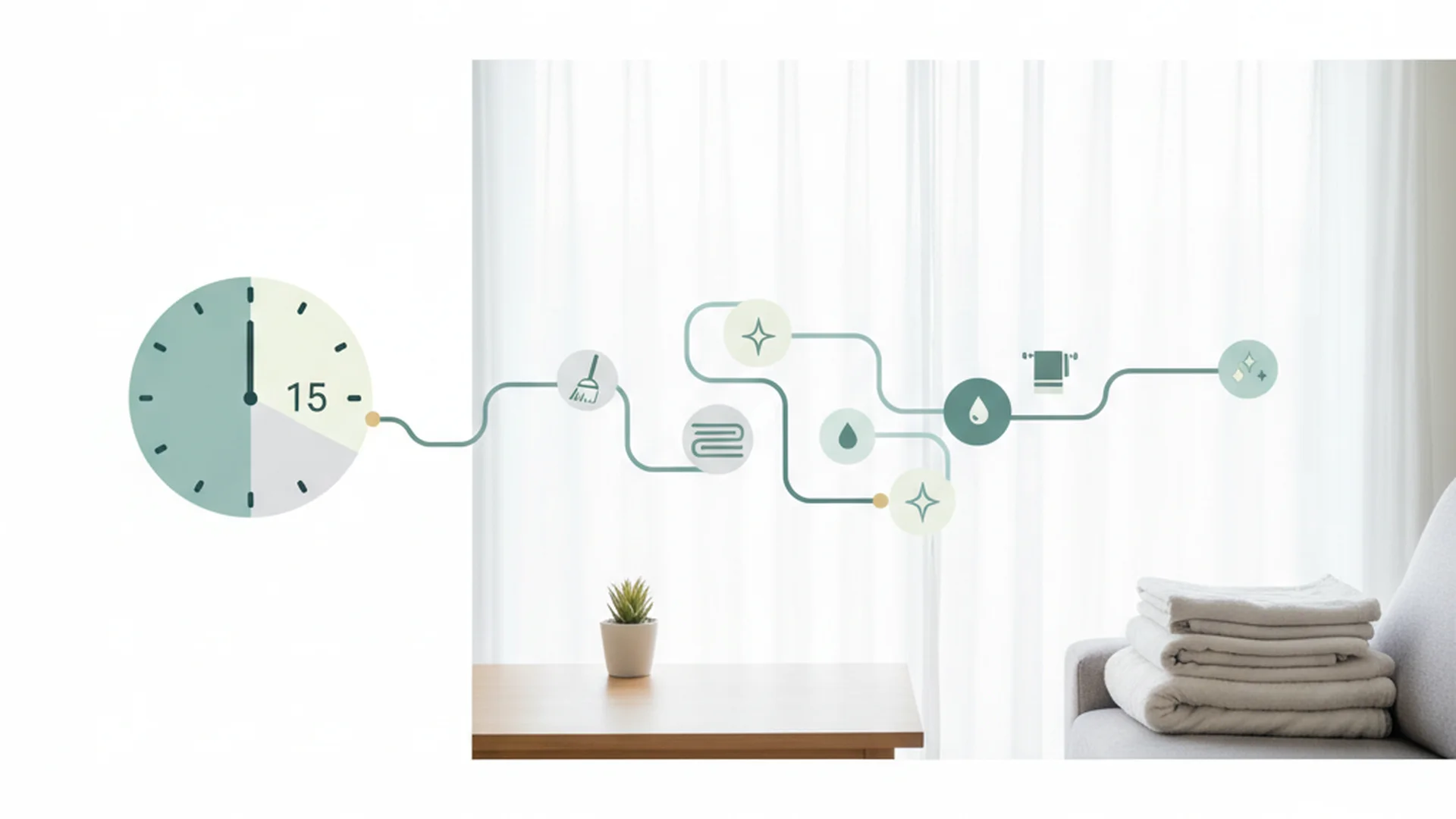
In 2026, the trend of "gamifying" chores is huge. Use a "Cleaning Bingo" card or a "Beat the Clock" playlist. Set a timer for 15 minutes and see how much of Tuesday's bathroom routine you can finish. This creates a dopamine hit upon completion, making you more likely to stick to the routine next week.
Tip: Try "Body Doubling." Join a "Clean With Me" live stream on social media. Cleaning alongside someone else—even virtually—provides accountability and makes the time fly by.
Common Mistakes to Avoid
Even with the best weekly cleaning schedule template, certain pitfalls can derail your progress.
- Cleaning with Dirty Tools: If your vacuum bag is full or your microfiber cloth is saturated with gray water, you aren't cleaning; you're just moving dirt around. Wash your mop heads and cloths weekly.
- The "All-or-Nothing" Fallacy: Life happens. If you miss "Floor Monday," don't abandon the whole week. Simply move the task to a "buffer day" or skip it and start fresh on Tuesday. A resilient schedule is better than a perfect one.
- Over-scheduling: Don't try to deep-clean your entire baseboard collection every Monday. Keep the weekly tasks light enough that they can be finished in 45-60 minutes.
- Neglecting High-Touch Points: Many people mop the floors but forget the areas that actually spread illness: light switches, door handles, and the TV remote. Include these in your Thursday routine.
Warning: Using too many products is a 2026 "no-go." The trend of "Eco-Minimalism" suggests using "The Essential Three": an all-purpose enzyme cleaner, a glass cleaner, and a disinfecting concentrate. This saves money and storage space.
Frequently Asked Questions
How do I start a cleaning schedule when I'm overwhelmed?
What is the difference between daily, weekly, and deep cleaning?
Should I clean room-by-room or task-by-task?
How do I make a cleaning schedule that actually sticks?
Conclusion
Creating and maintaining a weekly cleaning schedule is one of the kindest things you can do for your future self. It removes the guesswork from housework, reduces the "invisible labor" of home management, and ensures that your living space remains a healthy, happy environment. Whether you choose to follow a strict zoning plan or a flexible day-theming approach, the key is consistency over perfection.
Start small, use the right tools, and don't forget to gamify the process to keep your motivation high. By the time 2026 comes to a close, these habits won't just be chores—they will be the rhythm of a well-ordered life.
Success: By implementing this schedule, you can reclaim days' worth of time each year that would otherwise go on inefficient, "panic" cleaning!
Cleaning that keeps score
Every task earns points, every streak multiplies them, and Premium adds a household leaderboard plus a monthly Dustagorgon to beat.
- Free forever
- 30 badges to earn
- Up to 6 in a household
No card needed. Set up your rooms in a couple of minutes.