In this article
What you’ll learn
- Visual tracking makes new cleaning habits far easier to stick to.
- Breaking tasks into micro-actions prevents executive dysfunction.
- A scheduled routine makes managing the home noticeably more efficient.
In the modern household, the "mental load" of management is often more exhausting than the physical labor itself. We spend hours wondering what to clean next, feeling guilty about neglected corners, or succumbing to the "Weekend Warrior" myth where we sacrifice our entire Saturday to a mop. However, transitioning to a visual cleaning schedule can fundamentally change your relationship with your home. By turning abstract chores into a clear, tangible roadmap, you reduce cognitive load and create a repeatable system for success.
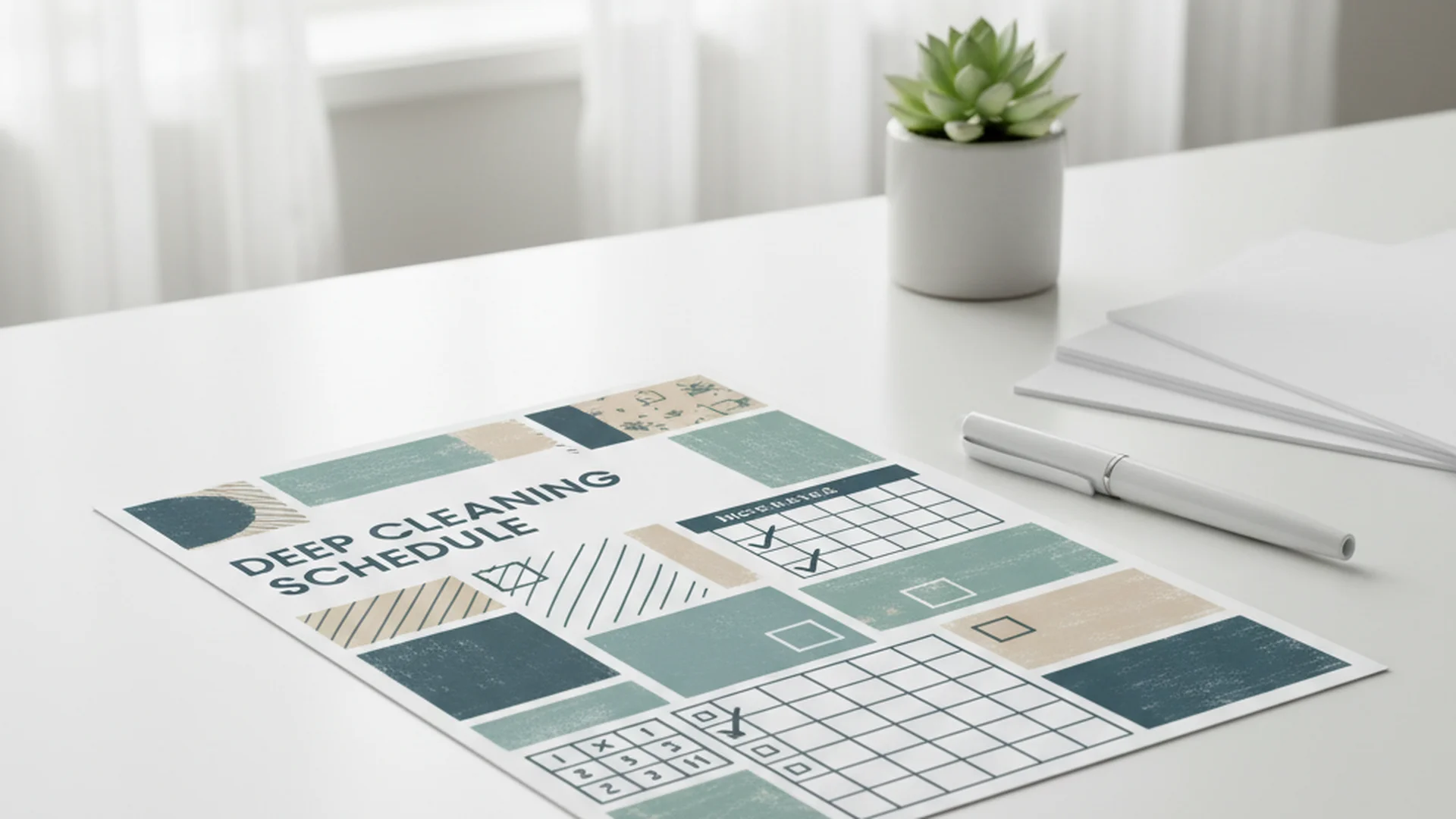
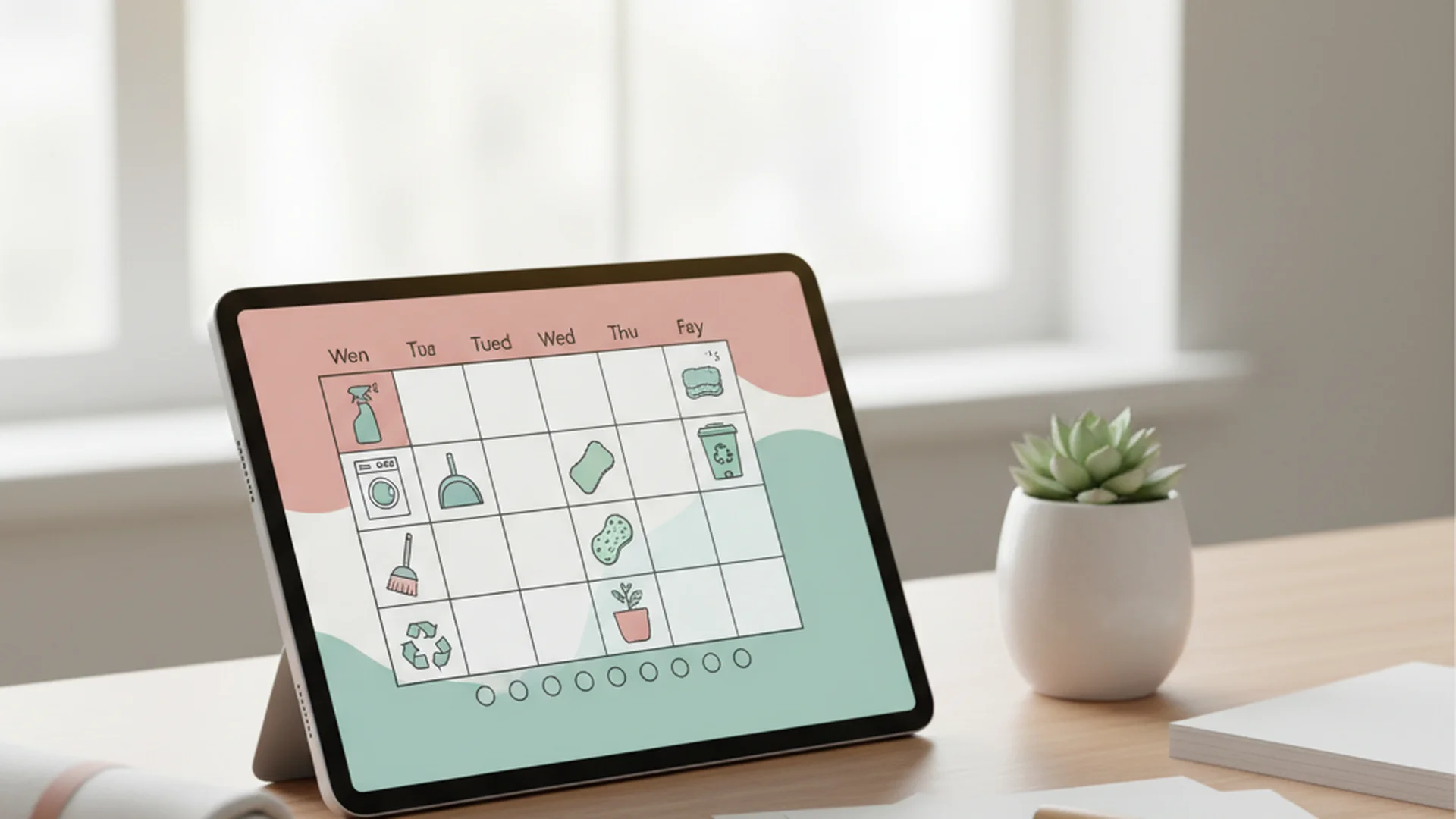
A visual cleaning schedule isn't just a list; it is a psychological tool. Tracking a habit somewhere you can actually see it makes you far more likely to stick with it. Whether you are looking for a free visual cleaning schedule to get started or a sophisticated visual cleaning schedule printable for your home command center, this guide will provide the framework you need to maintain a spotless home with a fraction of the stress.
The Science of Visual Cleaning Systems
Why do our brains respond so well to visual aids? Most people feel noticeably calmer once the cleaning is done, yet the barrier to starting remains high. Visual templates bridge this gap by providing "visual dopamine boosters."
When you see a checkbox or a colorful icon, your brain anticipates the reward of completion. This is particularly effective for goal-setting, because a chart on the wall keeps the goal in front of you instead of buried in your head. By utilizing a visual cleaning schedule printable, you are not just organizing your home—you are hacking your brain’s reward system to make chores feel less like a burden and more like a series of small wins.
Note: A scheduled routine makes managing the home more efficient simply by eliminating decision fatigue.
Best Practices for an Effective Schedule
To make the most of your template, you shouldn't just list tasks at random. Follow a strategic hierarchy to ensure you aren't working against yourself.
The "Top-to-Bottom" Rule
Always list tasks in order of height. Dusting ceiling fans, crown molding, and high shelves must come before vacuuming or mopping. If you clean the floors first, you’ll find yourself re-cleaning them once the dust from the ceiling settles.
The Zone Method
Divide your home into 4–5 distinct zones (e.g., Living Room, Kitchen, Bathrooms, Bedrooms). Instead of trying to deep-clean the entire house at once, focus your deep-cleaning efforts on one zone per week. This prevents burnout and ensures every corner of the house gets professional-level attention at least once a month.
Morning and Evening Bookends
Successful templates often feature "Daily Rhythms." These are 3 small tasks in the morning (like starting a load of laundry) and 3 at night (like wiping down kitchen counters) that keep the house at a functional "baseline" without requiring a full cleaning session.
| Frequency | Tasks | Order |
|---|---|---|
| Daily | Dishes, Counters, High-Traffic Floors | Bottom-to-Top |
| Weekly | Bathrooms, Dusting, Bedding | Top-to-Bottom |
| Monthly | Fridge Interior, Baseboards, Windows | Zone-Based |
| Seasonal | HVAC Filters, Gutters, Deep Carpet Clean | Exterior-to-Interior |
Tip: Match your template icons to physical microfiber cloth colors (e.g., Red for Kitchen, Blue for Bathroom) to prevent cross-contamination and simplify your workflow.
2025–2026 Trends in Home Organization
The landscape of home management is shifting toward "Intelligent" and "Neuro-Inclusive" systems. We are moving away from the rigid, one-size-fits-all grids of the past.
Neurodivergent-First Design
One of the most significant trends for 2026 is the rise of templates designed for ADHD and Dyslexia. These layouts use "flow-state" designs rather than rigid boxes and include "guilt-free" skipping options. If you miss a day, the system encourages you to jump back in where you are, rather than feeling the need to "catch up."
Agentic AI and Smart Syncing
Modern homes are increasingly integrating digital and physical schedules. Smart vacuums and air quality sensors can now sync with your digital visual schedule, alerting you when high-traffic areas actually need attention based on real-world usage, rather than a fixed timer.
Sustainability Audits
Reflecting a 2026 focus on eco-consciousness, modern schedules now include "Eco-Refill" reminders and "Green-Cleaning" audits. This ensures you are not only keeping your home clean but also reducing waste and using plant-based products.
Warning: Avoid overcomplicating your visuals. Using too many colors or fonts can cause "visual overwhelm," making you more likely to avoid the schedule entirely.
Real-World Examples of Visual Schedules
1. The "Micro-Task" Success (ADHD Case Study)
Alex, a college student with ADHD, struggled with the vague instruction "Clean Kitchen." By switching to a free visual cleaning schedule that broke "Kitchen" into two-minute micro-tasks (Empty Dishwasher, Wipe Sink, Clear One Counter), Alex overcame executive dysfunction and maintained a clean space for an entire semester.
2. The "High-Five" Morning (Family Routine)
The Miller family used an icon-based visual cleaning schedule printable for their three-year-old. By representing tasks with pictures (a toothbrush, a toy bin, a bed), the child was able to follow a "High-Five" routine independently, reducing morning stress for the parents.
3. The WFH Sprint (Hybrid Work Example)
Sarah, who works from home, integrated "Deep-Clean Down Days." She identified mid-week lulls in her meeting schedule to tackle 15-minute cleaning sprints. Her visual schedule highlighted these "power hours," allowing her to finish all housework by Friday afternoon.
Common Mistakes to Avoid
Even with the best template, certain pitfalls can derail your progress.
- Cleaning Before Decluttering: This is the #1 mistake. You cannot clean clutter; you can only move it around. Every room-specific list should begin with a "5-Minute Declutter."
- The "Rigid Schedule" Trap: Many believe a system has failed if they miss one day. In reality, the best schedules are "living documents" that act as a guide, not a binding contract.
- Ignoring "Invisible" Areas: Don't forget high-touch hotspots. Doorknobs, light switches, and remote controls are germ magnets that are often left off standard templates.
- The Weekend Warrior Myth: Saving all chores for Saturday is a recipe for burnout. Adopting a 15-minute daily method via your visual guide ensures you actually get to enjoy your weekend.
Success: Transitioning to a visual system cuts the time you spend on housework dramatically when combined with the 15-minute daily method.
Frequently Asked Questions
How often should I actually clean my fridge and windows?
How can I stay motivated to follow a cleaning schedule?
What is the best cleaning schedule for someone with ADHD?
How do I involve my kids in a visual schedule?
Conclusion
A visual cleaning schedule is more than just a piece of paper; it is a commitment to your mental well-being and home efficiency. By leveraging the power of visual tracking, micro-tasking, and modern 2026 trends, you can reclaim your time and enjoy a home that feels like a sanctuary rather than a second job. Start small, use a template that resonates with your personal style, and remember: the goal is progress, not perfection.
Cleaning that keeps score
Every task earns points, every streak multiplies them, and Premium adds a household leaderboard plus a monthly Dustagorgon to beat.
- Free forever
- 30 badges to earn
- Up to 6 in a household
No card needed. Set up your rooms in a couple of minutes.