In this article
What you’ll learn
- The 20/10 rule prevents physical and mental exhaustion.
- UFYH prioritizes accessibility for those with chronic illness or disabilities.
- Consistency and small wins are more valuable than one-time cleaning marathons.
For many of us, the traditional image of a "clean home" feels like an unattainable fantasy fueled by curated social media feeds and high-pressure housekeeping guides. If you are a student, a full-time professional, or someone managing a chronic illness, the standard advice to "just spend Saturday deep cleaning" can feel dismissive and impossible. This is where ufyh method cleaning changes the game.
The UFYH method (short for Unfck Your Habitat*) isn’t about achieving a "Pinterest-perfect" home; it’s about making your space functional and your life manageable. Developed by Rachel Hoffman, this approach acknowledges that your environment impacts your mental health, and that you are "better than your mess." By focusing on sustainability and small, timed bursts of activity, the UFYH method cleaning explained in this guide offers a way out of the cycle of clutter-induced shame.
What is the UFYH Method?
The UFYH method was launched by Rachel Hoffman in 2011, originally as a Tumblr blog that eventually grew into the bestselling book Unfck Your Habitat: You’re Better Than Your Mess*. Unlike traditional cleaning methods that assume every homeowner is a stay-at-home parent with endless energy, UFYH is designed for "real people."
This includes individuals living with roommates, those in small apartments, people working 60-hour weeks, and especially those dealing with executive dysfunction, depression, or physical disabilities. The philosophy is simple: cleaning is a skill, not a personality trait. If you haven't been able to keep your house clean in the past, it’s not because you are a "lazy person"—it’s likely because the system you were using didn't account for your actual life.
Note: UFYH is a "non-judgmental" system. It removes the moral weight often attached to cleanliness. A messy house doesn't make you a bad person.
The Core Principles: How to Use UFYH Method Cleaning
To understand how to use ufyh method cleaning, you must first abandon the idea of the "marathon clean." We have all done it: we wait until the house is a disaster, spend eight hours cleaning on a Sunday until we are exhausted and sore, and then don't touch a sponge for three weeks because we are "burnt out." UFYH replaces this with the following core principles.
The 20/10 Rule
The 20/10 is the heartbeat of the UFYH system. It consists of 20 minutes of focused cleaning followed by a mandatory 10-minute break. This ratio is crucial because it creates a finish line. When you know you only have to work for 20 minutes, the task feels less daunting.
The mandatory break is just as important. During these 10 minutes, you are required to stop cleaning. You can sit down, check your phone, drink water, or read. This prevents the "cleaning hangover" that occurs when you push yourself too hard and end up resenting the work.
"Don't Put It Down, Put It Away"
Hoffman estimates that roughly 75% of domestic clutter is simply things that were "put down" instead of "put away." This mantra encourages you to take the extra five seconds to put the remote back in its cradle, the mail in the bin, or the shoes in the closet. By eliminating the "in-between" stage where items sit on flat surfaces, you prevent clutter from accumulating in the first place.
The 20% Visual Win: Make Your Bed
One of the most criticized yet effective UFYH habits is making your bed every morning. Hoffman refers to this as a "gateway habit." It is estimated that making your bed makes a bedroom look 20% cleaner immediately. This visual win provides a psychological boost, reducing cortisol levels and making the rest of the room’s tasks feel more achievable.
Tip: If you struggle with making the bed due to physical pain, simplify your bedding. Use a single duvet instead of multiple layers of sheets and blankets.
Getting Started: A Step-by-Step Guide
If you are currently looking at a room that feels overwhelming, here is the exact process for ufyh method cleaning explained in a practical, step-by-step format.
Step 1: Set the Timer
Do not start cleaning without a timer. Use your phone, a kitchen timer, or a dedicated app. Set it for 20 minutes (or 10 if 20 feels like too much).
Step 2: "Sink Zero"
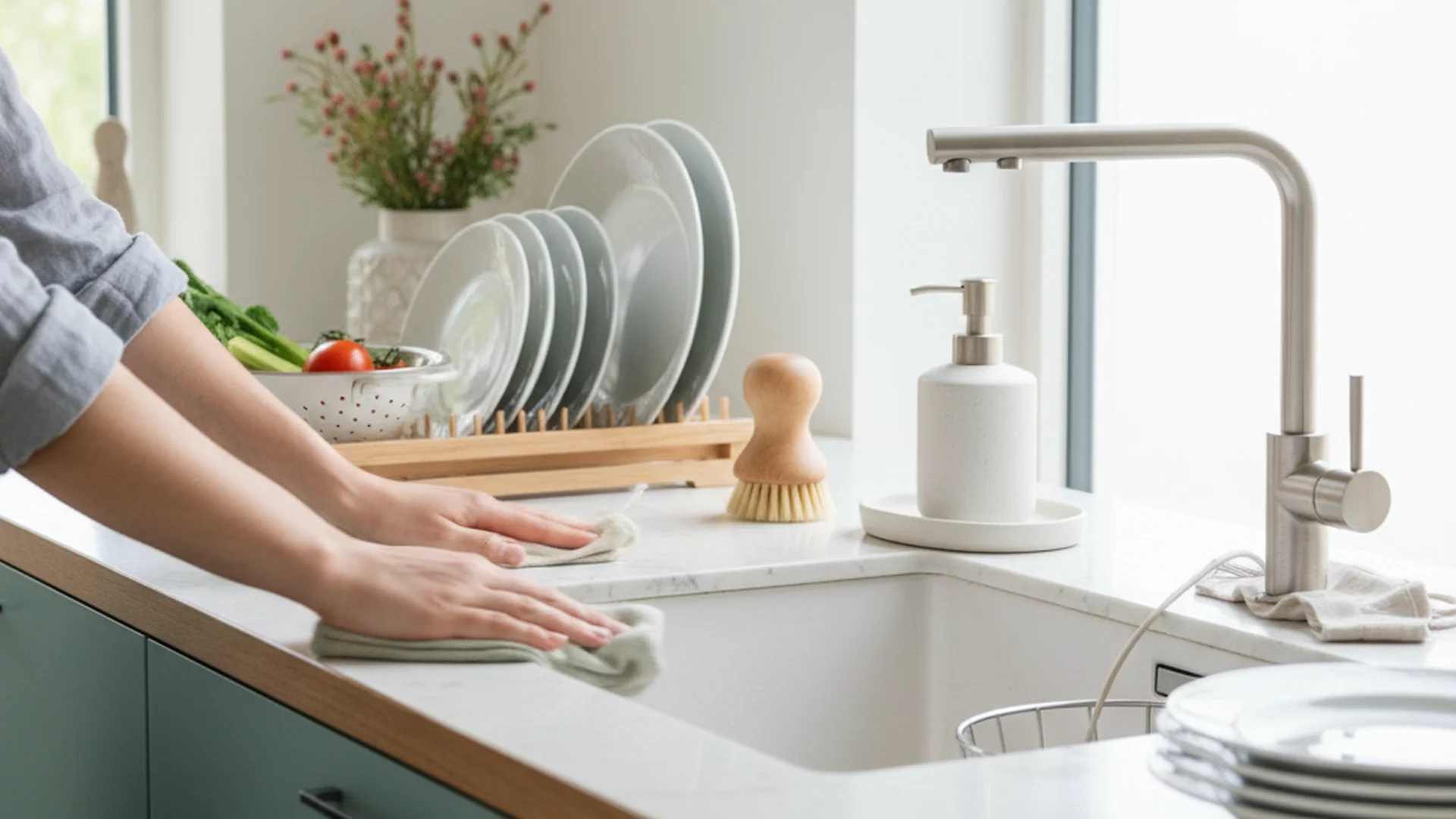
If you don't know where to start, start at the kitchen sink. Clearing the sink and washing the dishes provides an immediate sense of functionality. It allows you to prep food and keeps pests away. In UFYH, "Sink Zero" is the ultimate starting point for a reason.
Step 3: Clear Flat Surfaces
Kitchen counters, coffee tables, and dining tables are "clutter magnets." Clearing these surfaces provides the fastest visual relief. When your flat surfaces are clear, the entire room feels more spacious and functional.
Step 4: Take Your Break
When the timer goes off, stop. Even if you are in the middle of a task, take your 10-minute break. This builds the habit of stopping before you reach a point of exhaustion.
Warning: Do not use your break time to do "just one more thing." A break must be a total cessation of cleaning activity to be effective.
Real-World Examples of UFYH in Action
To see how flexible this method is, let’s look at how different people apply it in 2025.
Example 1: The Corporate Professional
Sarah works 50 hours a week and often comes home exhausted. Instead of ignoring the mess until the weekend, she performs one "10/5" session (10 minutes of work, 5 minutes of rest) every evening. In those 10 minutes, she loads the dishwasher and clears the mail. Because she never lets the mess pile up, she hasn't had to do a "deep clean" in six months.
Example 2: Managing Chronic Illness
Mark lives with a chronic fatigue condition. On high-pain days, he uses "5/5" intervals. He spends five minutes sitting at the table folding laundry, then rests for five minutes. It takes longer to finish the basket, but he completes the task without triggering a flare-up. UFYH allows him to maintain his home without sacrificing his physical health.
Example 3: The ADHD Household
Using modern tools like Goblin.tools, a popular AI task-breaker in 2025, an ADHD user can take a vague UFYH task like "Clean the Kitchen" and break it into tiny steps: "Put three forks in the dishwasher," "Wipe one square foot of counter," "Take out the trash." By combining AI task-breaking with the 20/10 rule, they overcome executive dysfunction and maintain a steady rhythm.
| Cleaning Style | Work Duration | Break Duration | Best For |
|---|---|---|---|
| Standard UFYH | 20 Minutes | 10 Minutes | General Daily Use |
| The Sprint | 10 Minutes | 5 Minutes | High Fatigue / Low Time |
| The Mini | 5 Minutes | 5 Minutes | High Pain / Executive Dysfunction |
| The Marathon | 45 Minutes | 15 Minutes | High Energy / Large Projects |
Modern Trends & Updates (2025–2026)
The UFYH method continues to evolve. In late 2025 and heading into 2026, we are seeing several new integrations with the method:
- The Low-Demand Movement: There is a growing trend toward "Low-Demand Cleaning." This aligns perfectly with UFYH’s focus on removing the moral weight of chores. It’s okay to use paper plates if you are in a depressive episode. It’s okay to "half-ass" a task if that’s all the energy you have.
- Daily Sprints vs. Sunday Resets: While "Sunday Resets" dominated social media for years, 2025 has seen a shift toward "Daily Sprints." People are finding that three 20/10 sessions spread throughout the week are more sustainable than a six-hour Sunday overhaul.
- AI-Assisted Task Breaking: As mentioned, AI tools are now being used to help UFYH users who struggle with "where to start." By asking an AI to "break down a 20-minute kitchen session," users get a checklist that prevents them from wandering aimlessly around the room.
Success: Users of the UFYH method report a 40% reduction in "cleaning-related anxiety" within the first two weeks of implementation.
Common Mistakes to Avoid
Even with a system as flexible as UFYH, there are pitfalls that can derail your progress.
The Marathon Trap
The biggest mistake is thinking, "I have the energy now, so I’ll just skip the break and finish the whole room." This is a trap. Skipping the break leads to the "cleaning hangover." You might finish the room today, but you’ll be so tired tomorrow that you’ll let the mess start building up again. Respect the timer.
The All-or-Nothing Mindset
Many people believe that if they can't clean the whole house, there is no point in doing 20 minutes. UFYH argues that doing something is better than doing nothing. A partially cleaned kitchen is still more functional than a completely dirty one.
The Perfect Product Fallacy
You do not need an arsenal of expensive, specialized cleaners to use the UFYH method. In fact, many experts recommend keeping it simple: white vinegar, baking soda, dish soap, and a few microfiber cloths. Don't let a lack of "proper supplies" be a barrier to starting.
Confusing Reasons with Excuses
A core UFYH concept is that having a disability, a demanding job, or a mental health struggle is a reason to modify your cleaning plan, not an excuse to live in a space that makes you miserable. The method encourages you to adapt the work to your reality rather than giving up entirely.
Frequently Asked Questions
What if I can't do 20 minutes?
Where do I start when I’m completely overwhelmed?
Is this different from the Marie Kondo method?
Do I have to use the official app?
How do I handle "Invisible Labor" with this method?
Conclusion
The ufyh method cleaning system is more than just a way to tidy up; it’s a framework for reclaiming your home from the pressures of perfectionism. By breaking tasks into manageable 20-minute chunks and prioritizing rest, you can maintain a functional, comfortable habitat regardless of your life circumstances.
Remember the UFYH mantra: You are better than your mess. Your home should serve you, not the other way around. Start with one 20/10 session today, clear your sink, and watch how small, consistent actions transform your environment.
Success: By following the UFYH method, you aren't just cleaning a room; you are building the stamina and habits required for long-term domestic stability.
Cleaning that keeps score
Every task earns points, every streak multiplies them, and Premium adds a household leaderboard plus a monthly Dustagorgon to beat.
- Free forever
- 30 badges to earn
- Up to 6 in a household
No card needed. Set up your rooms in a couple of minutes.