In this article
What you’ll learn
- Starting chores at age 3-4 lays the groundwork for a capable, independent adult.
- Using chores as "family contributions" builds executive function and working memory.
- Avoid paying for routine chores, so intrinsic motivation has room to grow.
Every parent wants to raise a child who is capable, confident, and independent. We often look to extracurriculars, advanced tutoring, or sports to give them an edge. However, one of the strongest foundations for a successful, contented adult life isn't an IQ score or a zip code—it is having done chores as a young child. When you teach responsibility chores early on, you aren't just getting help with the laundry; you are building the neurological and emotional framework for a successful life.
Why Chores Predict Success
The effect of household tasks runs deeper than many parents realize. Children who get involved in the work of running a home early develop a "can-do" mindset. That mindset shows up later in finishing what they start, maintaining healthy relationships, and pushing through the hard parts of a career.
The cognitive benefits matter just as much. Regular household tasks stretch a child's executive function, specifically working memory and impulse control. For example, when a child sets the table, they must remember the number of people (working memory), plan the order of items (sequencing), and resist the urge to drop the forks and go play (impulse control).
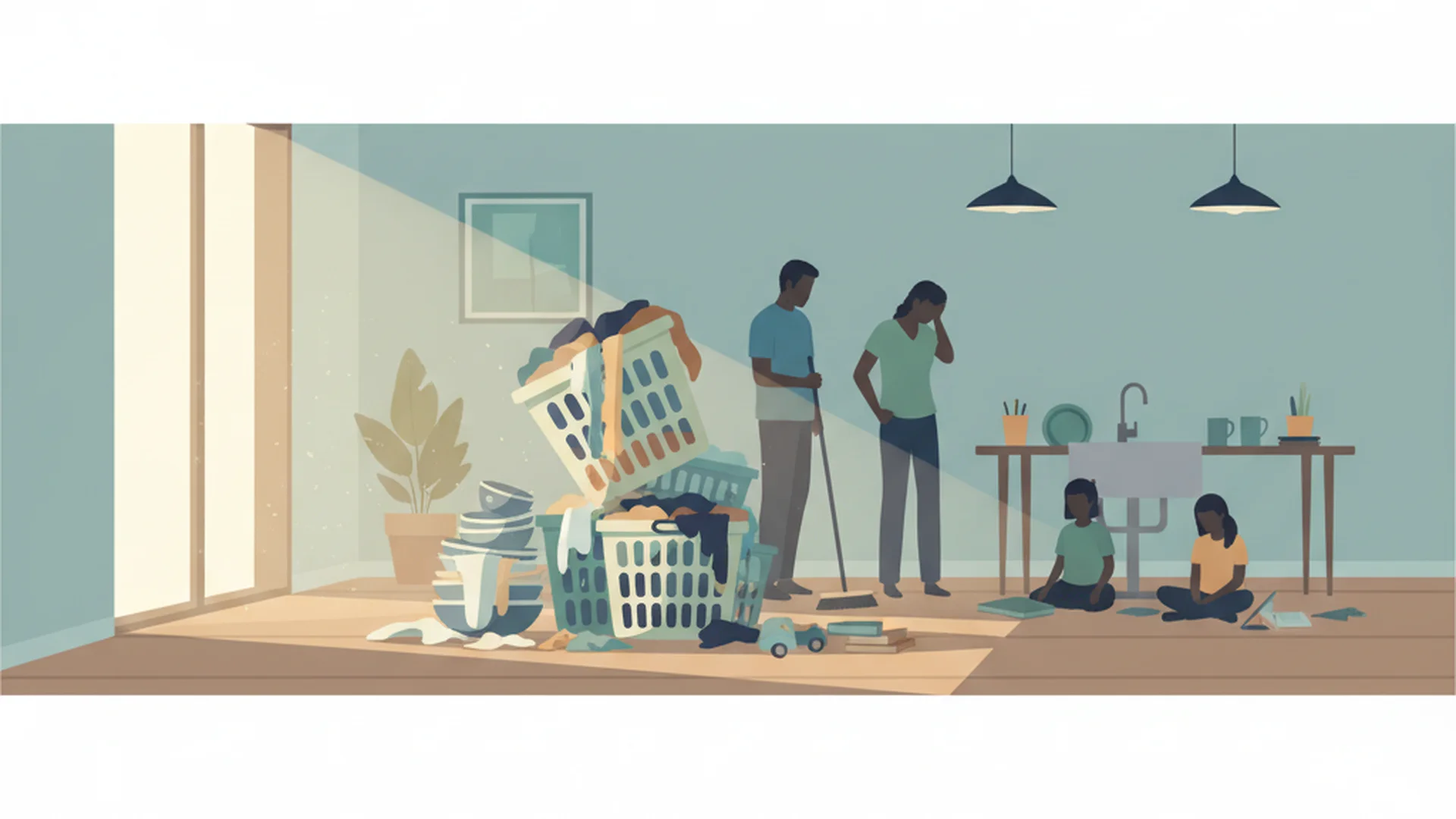
Despite these benefits, we are currently facing a "Chore Gap." Far more of today's adults grew up with chores than assign them to their own children. Many parents cite "overscheduling" as the reason, but chores provide a type of "life-readiness" that no soccer practice or piano lesson can replicate.
The Scaffolding Strategy: "Watch Me, Let's Do, You Do"
One of the biggest hurdles to helping children teach responsibility chores is the initial learning curve. Many parents give up because it’s "easier to just do it myself." To overcome this, use the "Scaffolding" method to build confidence and competence.
Step 1: Watch Me
In this phase, you perform the task while your child observes. This isn't just watching; it’s an interactive demonstration. Explain why you are doing what you are doing. "I'm putting the books on the shelf with the spines facing out so we can see the titles easily."
Step 2: Let’s Do
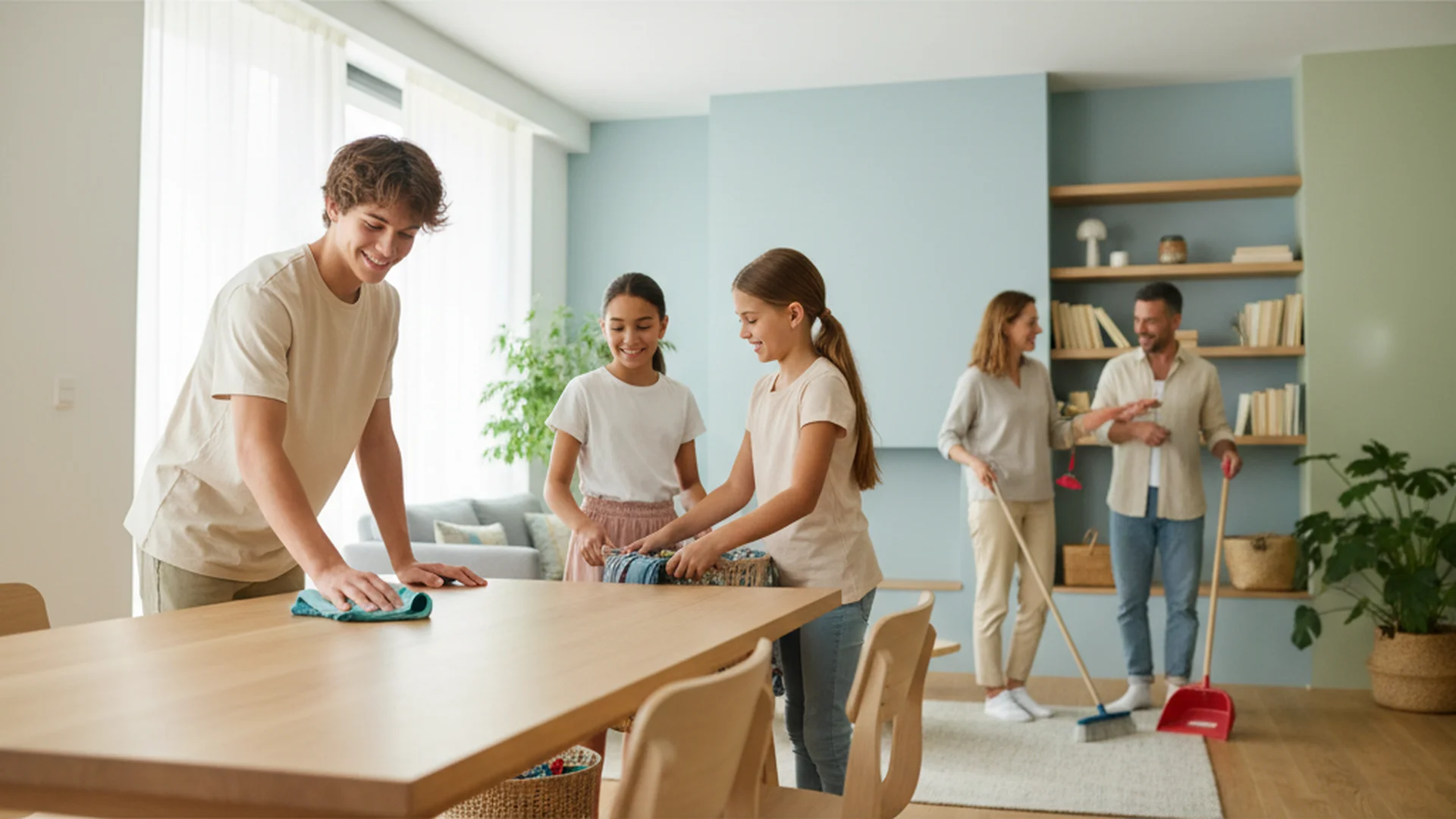
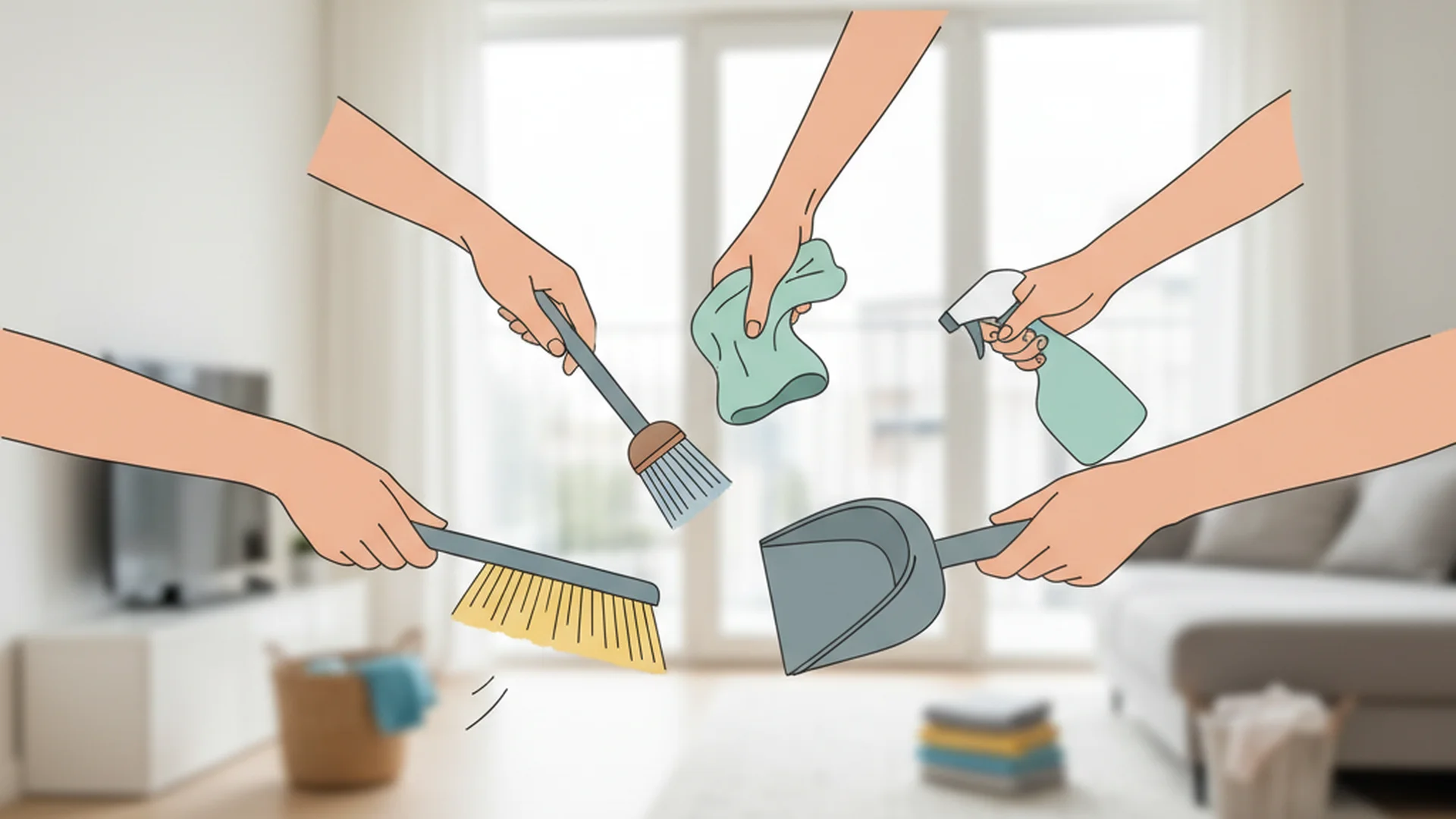
This is the collaborative phase. You might hold the dustpan while they sweep, or you fold the shirts while they fold the washcloths. This reduces the intimidation factor of a new task and reinforces the idea that household maintenance is a shared "family contribution."
Step 3: You Do
Once the child has mastered the mechanics, they perform the chore while you remain nearby for support—but without micromanaging. If they forget a spot while vacuuming, wait until they are finished to ask, "Do you think we got all the crumbs under the table?" rather than jumping in immediately.
Tip: Focus on effort and contribution over perfection, especially for children under 10. A crookedly made bed still represents a job completed!
Your Teach Responsibility Chores List: Age-Appropriate Ideas
If you are looking for a teach responsibility chores ideas guide, it is important to match the task to the child's developmental stage. Starting too late (in the teens) often results in more resistance and fewer long-term benefits.
The Ultimate Teach Responsibility Chores List
| Age Group | Focus Area | Example Tasks |
|---|---|---|
| Ages 2–4 | Habit Formation | Putting toys in bins, sorting laundry by color, helping feed pets (with supervision). |
| Ages 5–7 | Basic Competence | Setting the table, watering plants, making their bed, clearing their own plate. |
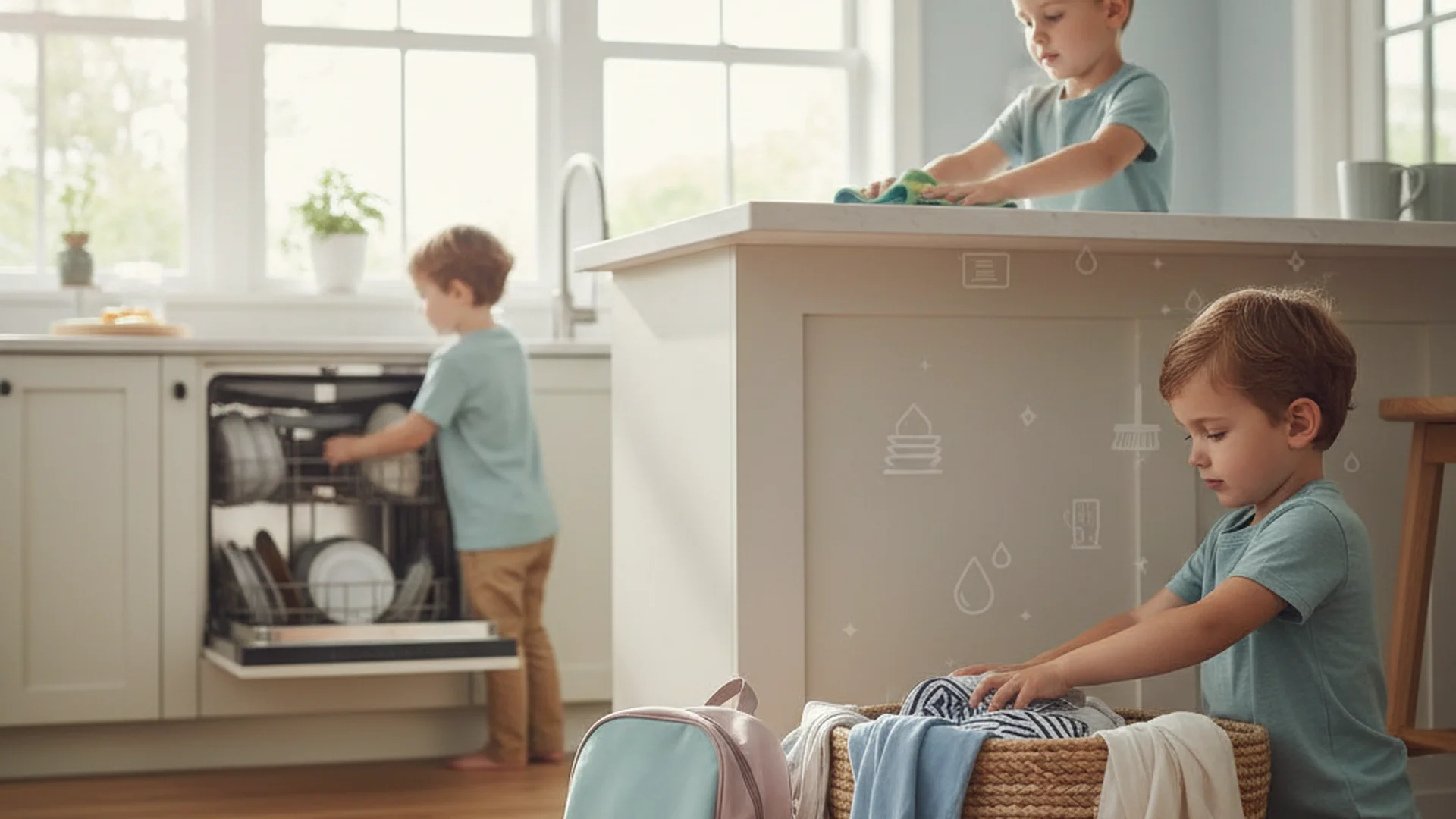
| Ages 8–10 | Sequencing & Flow | Loading/unloading the dishwasher, vacuuming, folding simple laundry, sweeping. |
| Ages 11+ | Independence | Preparing simple meals, mowing the lawn, managing their own laundry, managing "Eco-Chores." |
Real-World Example: The Laundry Loop
A 9-year-old child is assigned the "Laundry Loop." They don't just fold; they are responsible for moving their own basket to the laundry room, helping transfer clothes to the dryer, and then folding and putting away their own items. This teaches the full cycle of a task, which is essential for developing executive function.
The "Pay" Debate: Should You Reward Chores?
A common question parents ask is whether they should tie chores to an allowance. While it may seem like a good way to teach financial literacy, it is better not to pay for routine household chores.
When you pay a child to clear their plate, you create a "rewards economy." The child begins to view help as a transaction rather than a responsibility. This can lead to the child refusing to help if they decide they don't need the money that week. Instead, frame chores as a "family contribution." We all live in this house, so we all help take care of it.
Note: If you want to teach money management, consider offering "Extra Credit" tasks that go above and beyond daily chores, such as washing the car or cleaning out the garage.
Modern Trends for 2025 and 2026
As we move into 2026, the way we manage household responsibilities is evolving. Technology and a focus on cognitive health are changing the landscape.
Gamification 2.0
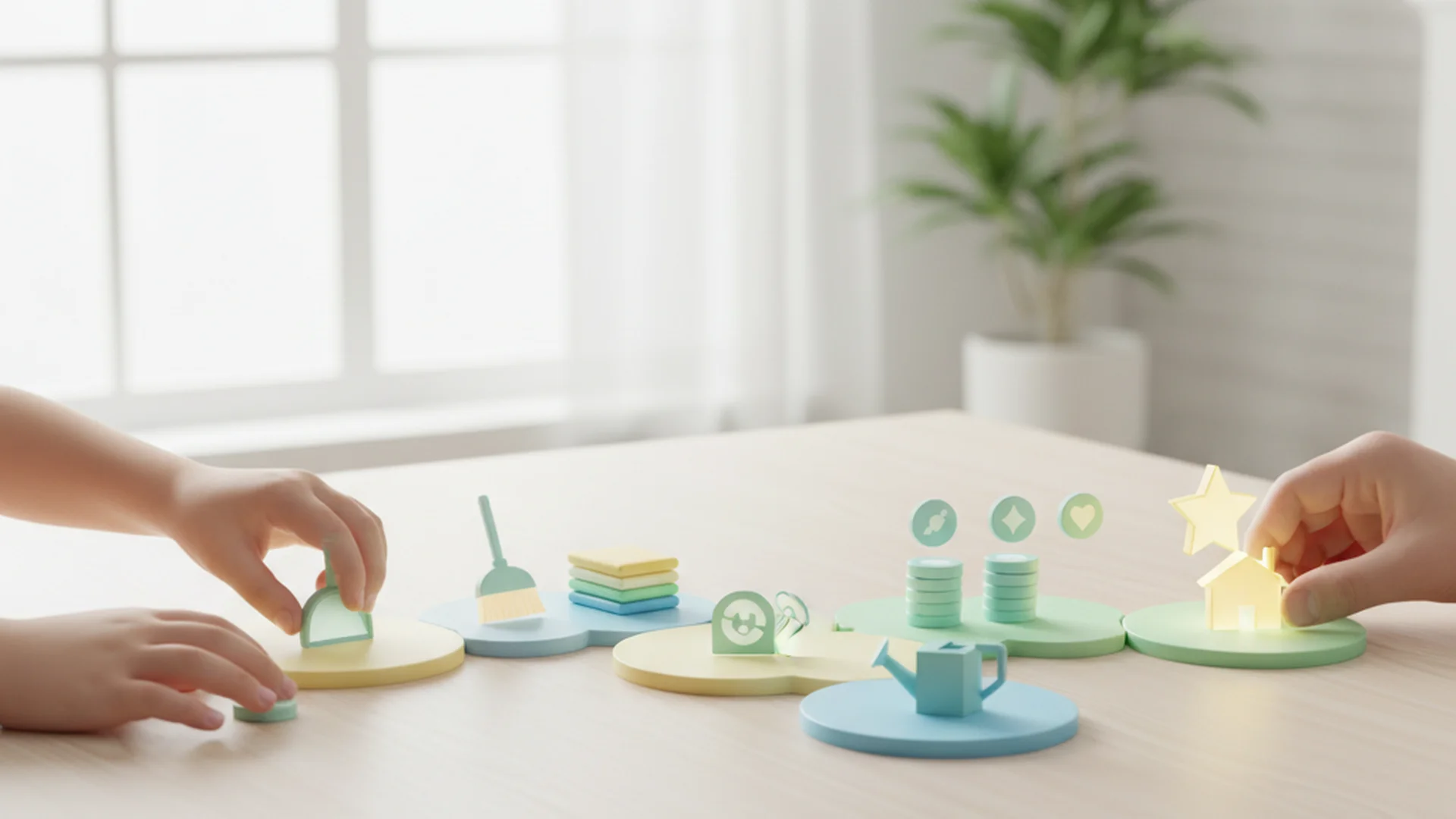
We have moved beyond simple sticker charts. New story-driven apps allow children to help an in-game character progress by completing real-world tasks. This focuses on "emotional design"—the child feels a sense of narrative accomplishment rather than just earning a point.
AI-Personalized Chore Schedules
Parents are now utilizing AI tools to create "Adaptive Difficulty" schedules. These tools can adjust a child's chore load based on their school schedule or even specific learning needs. For a child with ADHD, the AI might break "clean your room" into five distinct, manageable micro-tasks with visual timers.
"Eco-Chores"
In 2025, there is a significant trend toward incorporating sustainability into responsibility. Children are being tasked with monitoring the family's "energy use" (turning off lights), managing compost bins, or sorting recycling. This connects their small daily actions to a larger global impact.
Success: Children who understand the "Why" behind a task—such as helping the environment—are more likely to complete it without being asked twice.
Common Mistakes to Avoid
Even with the best intentions, it’s easy to fall into traps that undermine the goal of raising responsible kids.
- The "Overscheduled" Excuse: Many parents believe their kids are "too busy" for chores. However, the "life-readiness" gained from chores matters just as much as academic or athletic success.
- Using Chores as Punishment: If you tell a child they have to "scrub the floors" because they got a bad grade, they will grow to view responsibility as a burden. Chores should be a neutral or positive part of the daily routine.
- The Perfectionism Trap: If you "fix" a child's work as soon as they are done, you send the message that their contribution wasn't good enough. This kills their sense of self-efficacy.
- Waiting Until "They are Ready": Many parents wait until age 10 or 12 to start. By then, the "mimicry" phase of early childhood has passed, and you are more likely to face power struggles.
Warning: Avoid the "When/Then" trap if it becomes a bribe. Use it as a logical sequence: "When the toys are in the bin, then we have room to play our board game."
Frequently Asked Questions
When should I start giving my child chores?
How do I handle a child who refuses to do their chores?
What if my child does a poor job?
Is it too late to start if my child is already a teenager?
Conclusion
Teaching kids responsibility through chores is one of the most enduring gifts a parent can provide. While it may feel easier in the short term to handle the cleaning yourself, the long-term payoff is real: those 15 minutes of daily "family contribution" are building the executive function, empathy, and work ethic that will carry your child into a successful adulthood.
Start tonight with a simple "5-minute family reset." Set a timer, put on some music, and have everyone contribute to tidying a common area. You aren't just cleaning a room; you are raising a capable human.
Cleaning that keeps score
Every task earns points, every streak multiplies them, and Premium adds a household leaderboard plus a monthly Dustagorgon to beat.
- Free forever
- 30 badges to earn
- Up to 6 in a household
No card needed. Set up your rooms in a couple of minutes.