In this article
What you’ll learn
- Cleaning is a learned executive function skill, not an innate ability.
- Using the 'scaffolding' method ensures long-term independence.
- Visual aids and clear checklists are more effective than verbal commands.
For many parents, the phrase "Go clean your room!" is the opening bell for a recurring family heavyweight bout. We see a mess; they see a playground. We see a deadline; they see an impossible mountain of chores. However, when you teach kids to clean their room, you are doing much more than reclaiming your floor from stray LEGO bricks. You are actually participating in a vital developmental milestone.
Children who grow up doing chores tend to become more capable, more independent adults. By teaching these habits now, you are building the "executive function" pathways in their brain that allow for planning, focus, and task management. It isn't just about the laundry; it’s about their future.
Why Kids Struggle to Clean
Before we dive into the "how-to," it is crucial to understand the "why." If your child stands in the middle of a messy room and does nothing, they aren't necessarily being lazy. They are likely experiencing "task paralysis."
Cleaning a room is a genuinely complex cognitive task. It requires a child to categorize objects, prioritize what to pick up first, and maintain focus despite distractions. For a seven-year-old, a floor covered in toys isn't a series of small tasks; it is one overwhelming, undifferentiated blob of "stuff."
Note: Cluttered environments leave children feeling wound up and anxious. Teaching them to tidy is a form of early mental health support.
Phase 1: The Scaffolding Method
You wouldn't expect a child to solve a calculus equation without learning addition. Similarly, you cannot expect a child to organize a closet without a roadmap. The "Scaffolding" method is the reliable way to move from total parental involvement to total child independence.
The Four Stages of Scaffolding
- Phase 1: Observation. You clean the room while they watch. You narrate your process: "I am putting the blue blocks in the blue bin because that’s where they live."
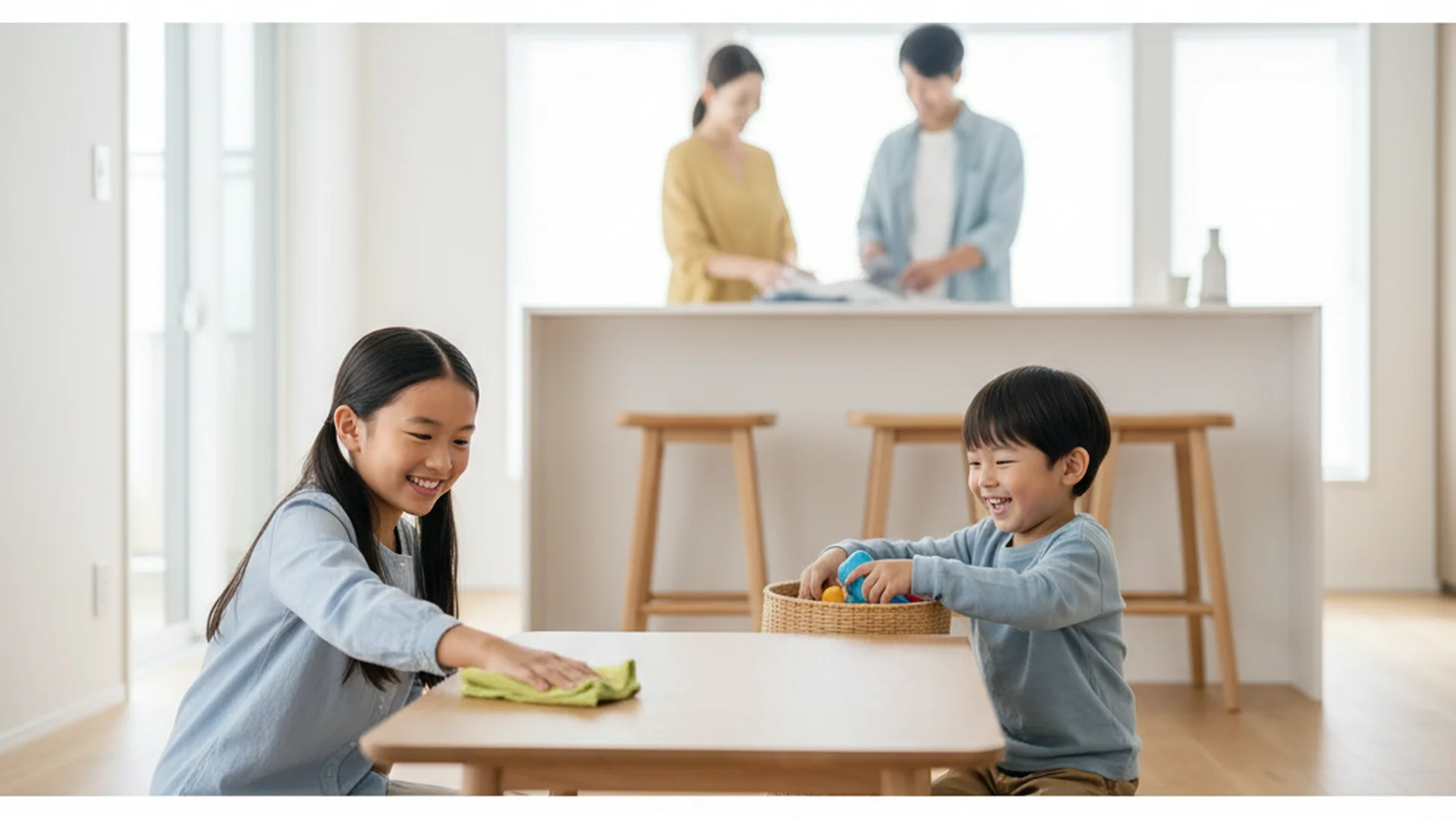
- Phase 2: Collaboration. You clean together. You might say, "I’ll handle the dirty clothes; you pick up the stuffed animals."
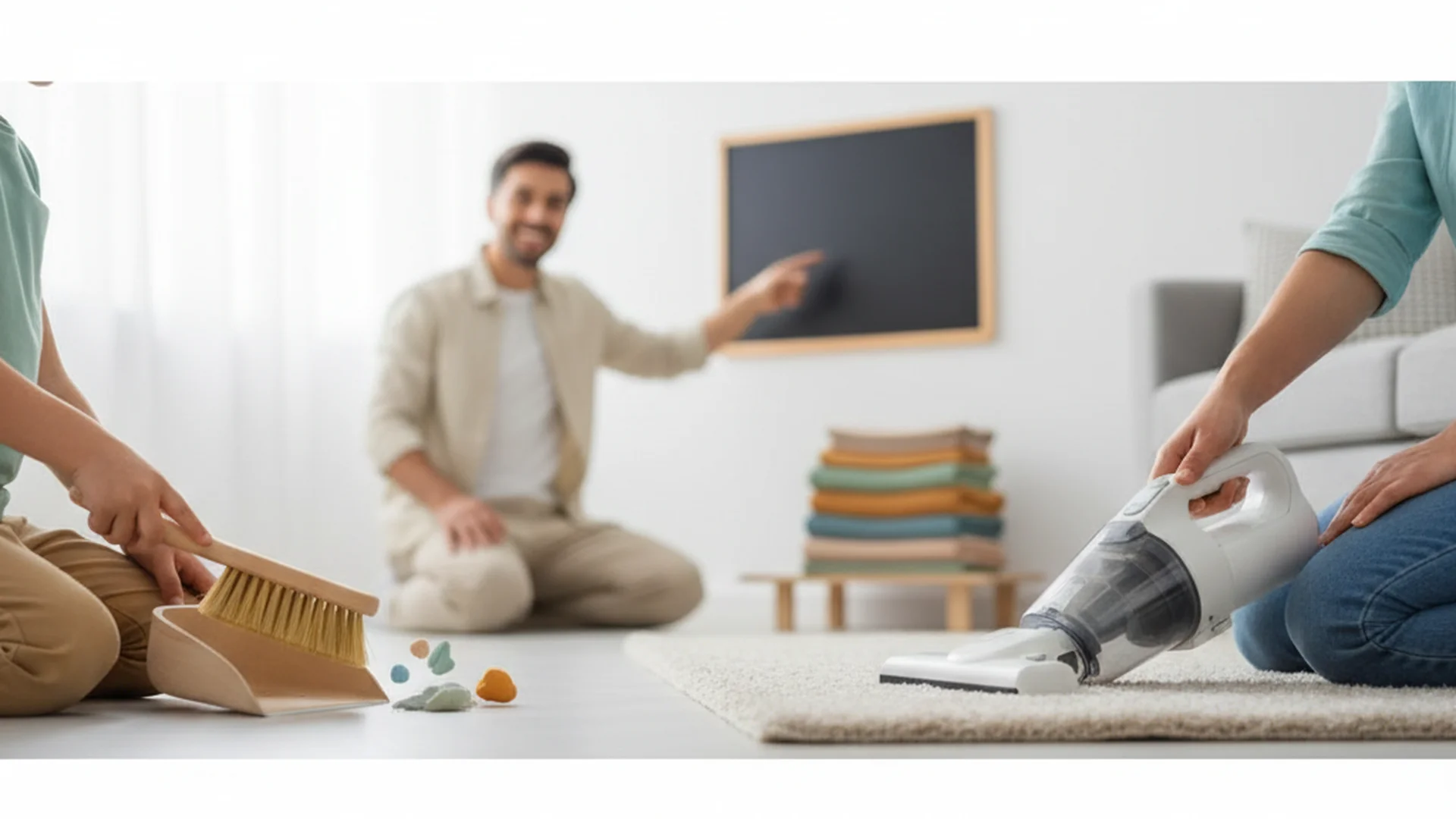
- Phase 3: Supervision. They clean the room while you sit in the room (perhaps folding laundry or reading). Your presence acts as a "body double," keeping them anchored to the task.
- Phase 4: Inspection. They clean independently and call you in for a "final check" when they are finished.
Tip: Use the "Body Doubling" technique popular in 2025 neurodivergent communities. Simply being in the room while they work—without hovering—makes a striking difference to how much they get done.
Phase 2: Create a Visual Teach Kids Clean Room List
The biggest mistake parents make is giving vague instructions. "Clean your room" is too abstract. To bridge the gap, you need a teach kids clean room list that breaks the process down into binary, "done or not done" steps.
| Step | Action Item | Goal |
|---|---|---|
| 1 | The Hamper Run | All clothes off the floor and into the bin. |
| 2 | The Surface Wipe | Clear the desk and nightstand of trash and cups. |
| 3 | The Floor Clear | Group toys into their designated bins. |
| 4 | The Bed Make | Pull up the covers and arrange pillows. |
By using a list, you remove the cognitive load of "what do I do next?" This allows the child to focus solely on the physical action of tidying.
Success: Children as young as five can follow a three-item visual list with icons, while kids aged 8-9 can manage a detailed checklist independently.
Phase 3: Implementing a Teach Kids Clean Room Chart
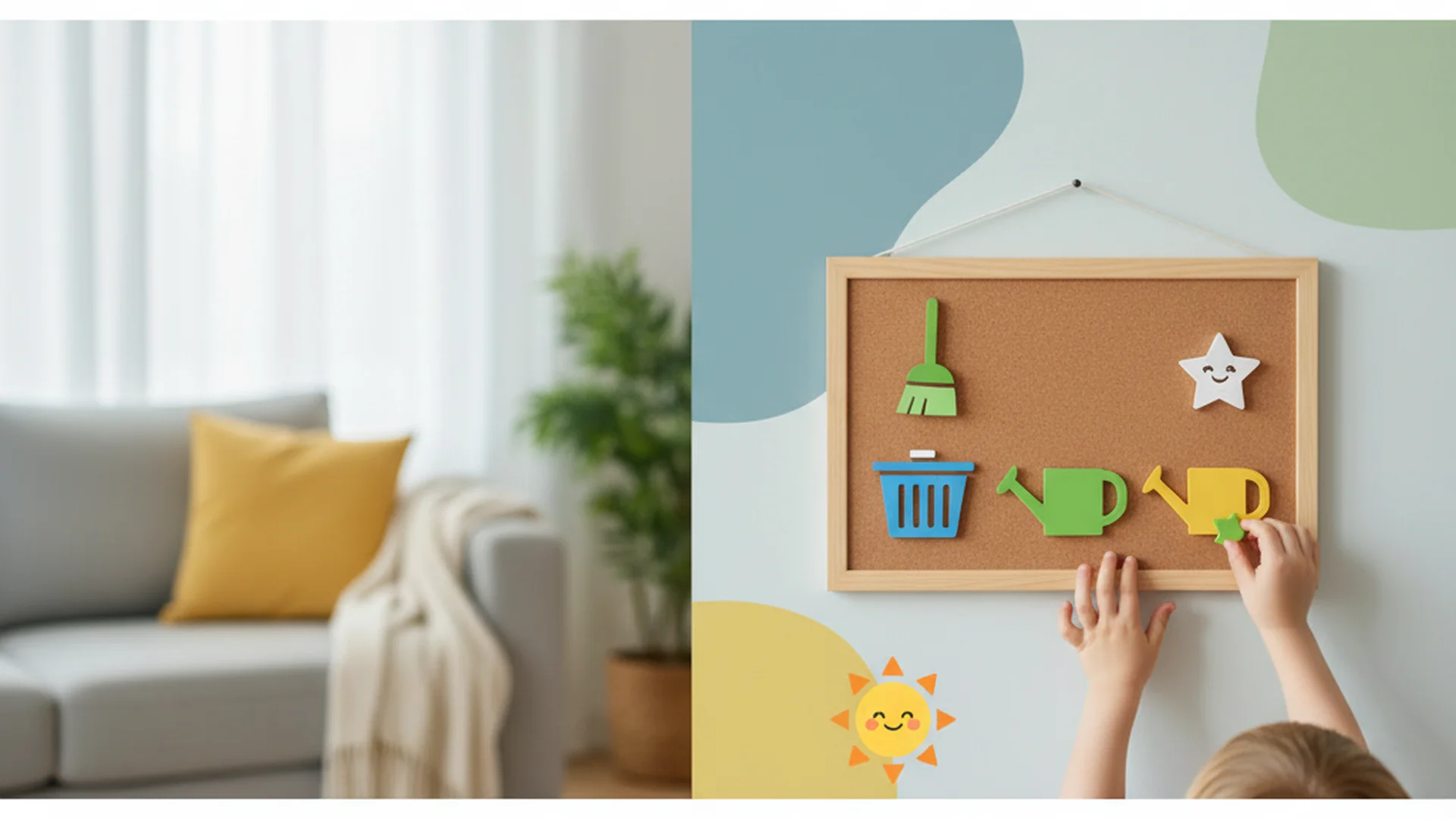
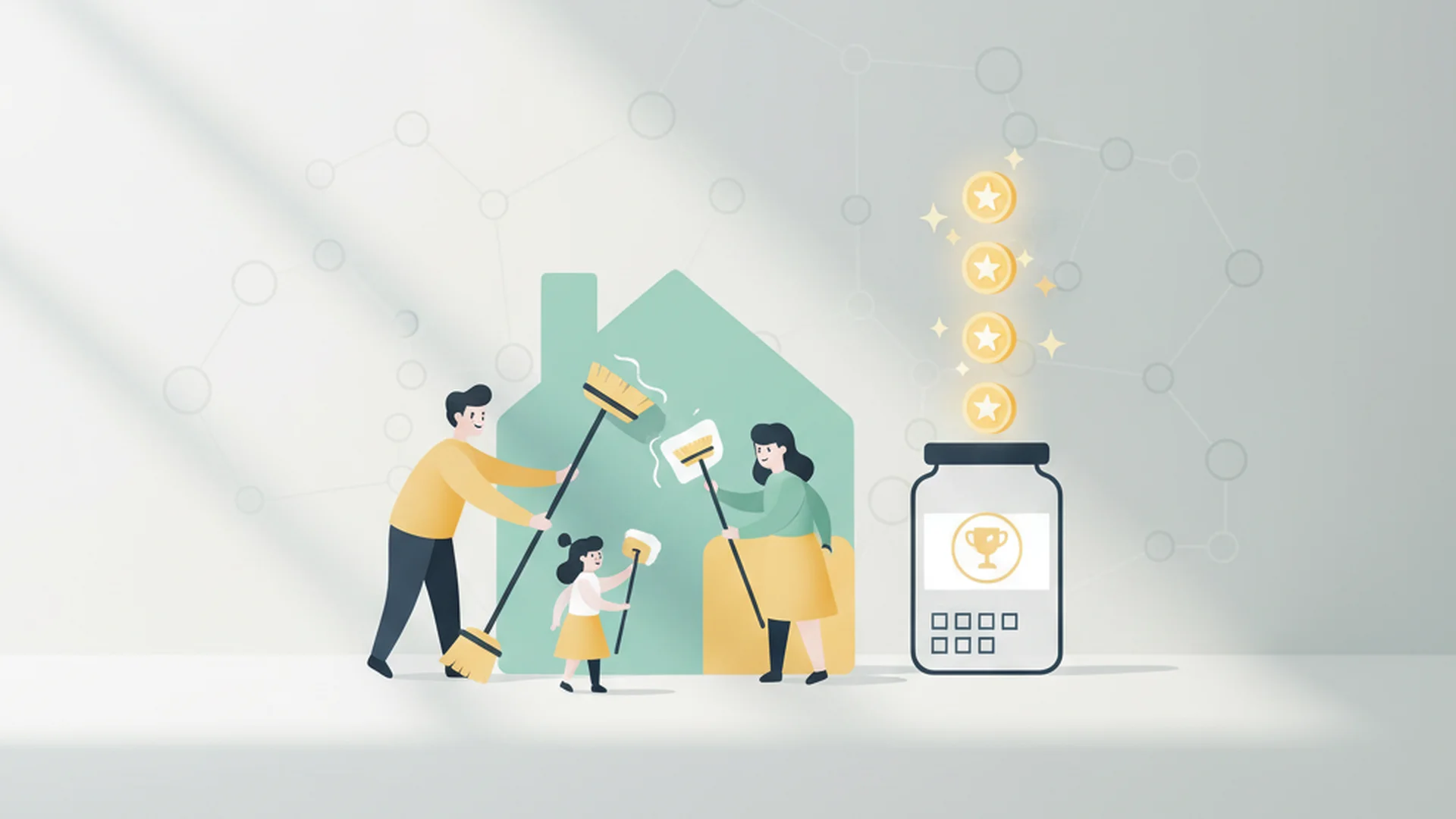
Consistency is the enemy of chaos. A teach kids clean room chart helps turn a one-time event into a predictable habit. In 2025, the trend has shifted toward "gamified" charts that treat cleaning like a quest.
How to Structure Your Chart
- Daily Tasks: Make bed, put laundry in the hamper (5 points).
- Weekly Tasks: Change sheets, vacuum, organize bookshelves (20 points).
- Rewards: Focus on experiences rather than toys. Points could lead to a "movie night" or "30 minutes of extra screen time."
Warning: Avoid using cleaning as a punishment for bad behavior. If "Go clean your room!" is shouted after a tantrum, the child will associate tidying with shame, making them more resistant to the habit in the future.
Modern Strategies for 2025 and 2026
The way we parent is evolving with technology and new psychological insights. Here are the latest trends helping parents win the room war:
1. AI-Driven Gamification
Apps like Joon or Habitica allow kids to create a digital avatar. To "level up" their character or earn digital gold, they must complete real-world chores. In 2025, these apps have become sophisticated enough to integrate with smart home devices, notifying parents when a task is checked off.
2. The 5-Thing Rule
When a room looks like a disaster zone, tell your child: "Just find five things that don't belong and put them away." Once they do that, ask for five more. This lowers the barrier to entry and prevents the "freeze" response.
3. Toy Rotation (Functional Minimalism)
Modern parents are adopting "Toy Rotation" systems. Instead of 50 toys being available at all times, only 10 are out. The rest are stored in the garage or a high closet. With fewer items to manage, the cleanup process takes less than five minutes, reducing friction for both parent and child.
Real-World Example: The "Picture Perfect" Hack
Sarah, a mother of two in Chicago, struggled with her 6-year-old son’s inability to remember where his toys went. She took a high-quality photo of his room when it was perfectly clean and organized. She printed it and taped it to the back of his door. Now, instead of asking "Is it clean?", she asks, "Does the room match the picture?" This provides a visual blueprint that bypasses the need for complex verbal instructions.
Common Mistakes to Avoid
Even with the best intentions, parents often fall into traps that undermine their child’s progress.
- Re-cleaning after them: If your child puts the books on the shelf but they aren't perfectly straight, leave them. If you "fix" their work, you teach them that their best effort isn't good enough and that you will eventually do the job for them.
- The "Trash Bag" Threat: Threatening to throw everything in a trash bag if it isn't picked up creates high-stress environments. While it might work in the short term, it damages the relationship and doesn't teach the value of organization.
- Vague Instructions: Phrases like "Make it look nice" are subjective. Stick to the teach kids clean room list for clarity.
- Ignoring the Bed: The bed is the largest surface in the room. If the bed is made, the room automatically looks 50% cleaner, providing a psychological "win" that motivates the child to finish the rest.
Tip: Use a smart speaker to set a "Cleaning Power Hour." Play an upbeat, 15-minute playlist. Tell the kids the goal is to finish the list before the music stops.
Frequently Asked Questions
At what age should a child be able to clean their room by themselves?
Should I pay my child to clean their room?
Why does my child get overwhelmed and cry when I ask them to clean?
Is a messy room a sign of ADHD?
How often should a child's room be deep cleaned?
Conclusion
Teaching a child to clean their room is a marathon, not a sprint. It is a process of transitioning from "doing for them" to "doing with them" and finally "watching them." By focusing on visual aids like a teach kids clean room chart and maintaining a positive, collaborative environment, you aren't just cleaning a floor—you are raising a responsible, capable adult.
Shift your perspective from achieving a "perfect room" to developing a "responsible child." The dust will always return, but the skills they learn today will last a lifetime.
Success: Consistency is the key. Even if they only do five minutes a day, the habit of "resetting" their space will reduce stress for the entire household.
Cleaning that keeps score
Every task earns points, every streak multiplies them, and Premium adds a household leaderboard plus a monthly Dustagorgon to beat.
- Free forever
- 30 badges to earn
- Up to 6 in a household
No card needed. Set up your rooms in a couple of minutes.