In this article
What you’ll learn
- Chores build the independence and confidence that carry into adult life.
- Starting chores as young as age 2 helps capture the "habit of helping" window.
- Rebranding chores as a "Daily Success Checklist" reduces summer resistance.
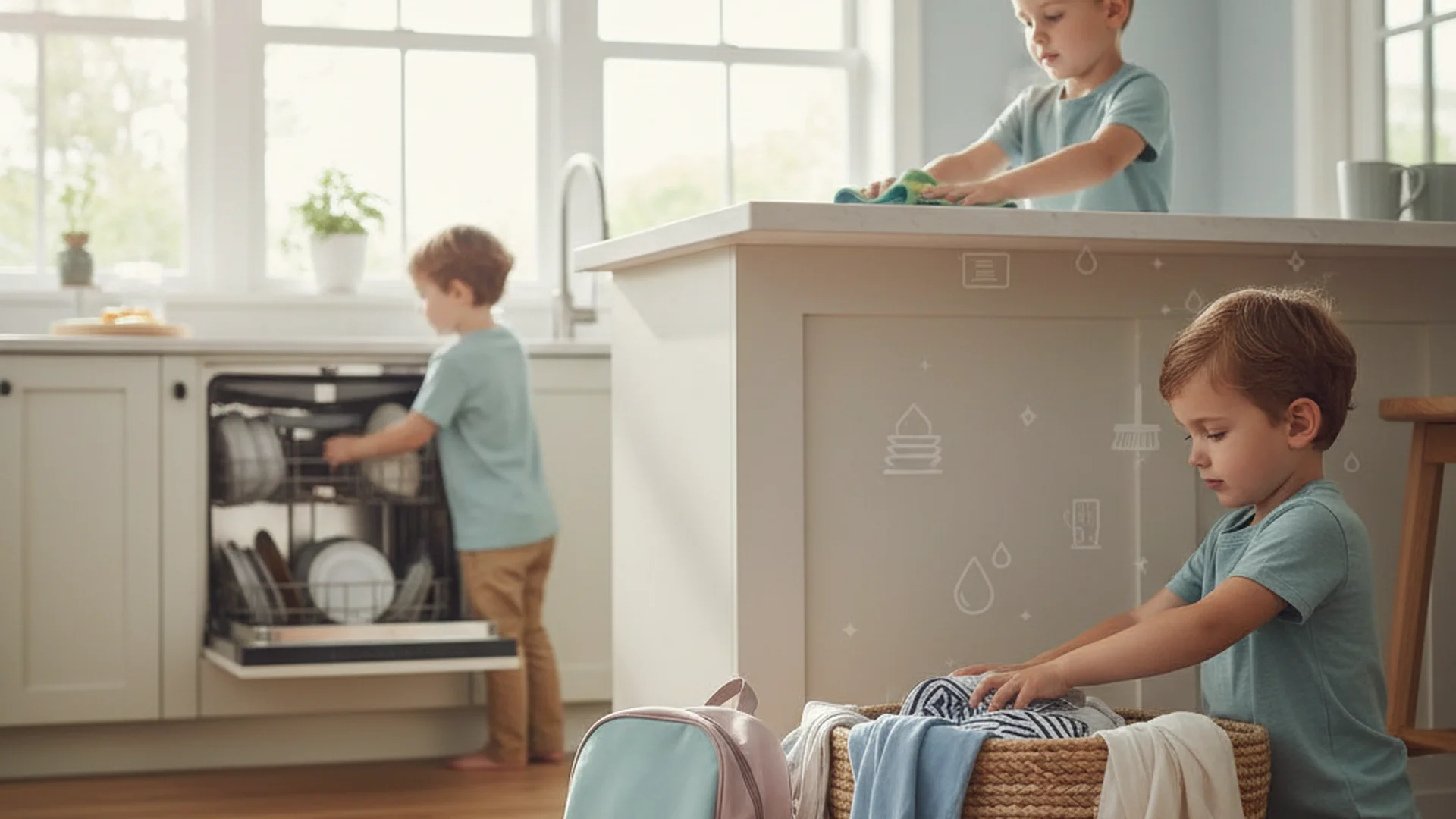
As the school year winds down and the temperatures rise, parents across the country are facing the perennial challenge of the summer slump. While summer is a time for relaxation and play, it is also the perfect opportunity to instill lifelong habits. Implementing summer chores kids age-appropriately doesn’t just keep your house clean; it provides the structure children lose when they leave the classroom. Far from being "free labor," these tasks are foundational building blocks for a child's future.
The benefits of household contributions extend far beyond a tidy living room. Whether you are looking for a summer chores kids age list to post on the fridge or creative summer chores kids age ideas to keep your teens engaged, understanding what these tasks actually develop is the first step toward a more harmonious household.
Why Summer Responsibility Matters
It might feel easier to just do the dishes yourself, but we do our children a disservice by not involving them. Children who grow up doing chores tend to become more capable, more independent adults, and the responsibility they build at home carries directly into their working lives.
Starting early matters too. Children who begin contributing around kindergarten age often find schoolwork and friendships easier to navigate a few years later, because the same habits—finishing what you start, noticing what needs doing, taking your turn—apply everywhere.
Note: Chores aren't just about cleaning; they are about "executive functioning." This is the brain’s ability to plan, focus, and manage time—skills that are critical for long-term academic and professional success.
The 2025 Trend: The "Summer Checklist" Rebrand
In 2025 and 2026, we are seeing a shift away from the traditional "chore chart" toward something better described as the Daily Success Checklist. This rebrand moves chores out of the realm of "punishment" or "work" and into the realm of "personal and family maintenance."
A Daily Success Checklist typically mixes household contributions with self-care and personal development. For example, a child’s list might include:
- Brush teeth and apply sunscreen (Self-care)
- Read for 20 minutes (Development)
- Clear the breakfast table (Household contribution)
This holistic approach reduces resistance because the chores are framed as just one part of a successful, balanced summer day.
Tip: Use visual aids for this checklist. Sticker charts work wonders for children ages 2–5, while digital apps like Mydoh or GoHenry are highly effective for tweens and teens who enjoy gamification and digital rewards.
Age-Appropriate Summer Chore Guide (2025-2026)
To set your child up for success, the tasks must align with their physical and cognitive milestones. Below is a comprehensive breakdown of chores by age group.
| Age Group | Recommended Chores | Developmental Focus |
|---|---|---|
| Toddlers (Ages 2–3) | Put toys in bins, help fill pet bowls, "sock" dusting, wipe spills. | Fine motor skills & Mimicry |
| Preschoolers (Ages 4–5) | Make bed, sort laundry by color, water plants, clear plates. | Categorization & Routine |
| Early Elementary (6–9) | Empty dishwasher, vacuum/sweep, weed garden, fold towels. | Sequencing & Responsibility |
| Tweens (Ages 10–12) | Load dishwasher, wash car, do own laundry, mow lawn (supervised). | Executive Function & Independence |
| Teens (Ages 13+) | Deep clean bathrooms, grocery shop, cook full meals, manage yard work. | Self-sufficiency & Life Skills |
Toddlers (Ages 2–3): Building the Habit
At this age, children are in a "mimicry" phase. They want to do what you are doing. This is the "golden window" to start chores.
Real-World Example: Give your toddler an old sock to put on their hand. "Charge" them with dusting the baseboards while you vacuum. They feel like they are playing a game, but they are actually learning that every family member contributes to the home.
Preschoolers (Ages 4–5): Sorting and Categorizing
Preschoolers are learning to categorize the world around them. Chores that involve sorting are perfect for their developing brains.
Warning: Avoid the temptation to "fix" their work. If they fold a towel unevenly or put the blue shirt in the "darks" pile, let it be. Re-doing their work tells them their effort wasn't good enough and kills their intrinsic motivation.
Early Elementary (Ages 6–9): The Apprentice Phase
By age 6, kids can handle multi-step processes. However, they still need "apprenticeship."
Real-World Example: Don't just tell an 8-year-old to "clean the kitchen." Break it down: "First, put the leftovers in the fridge. Second, load the dishwasher. Third, wipe the counters." Spend three days doing it with them before letting them fly solo.
Tweens (Ages 10–12): Managing Systems
Tweens are ready to manage entire systems, such as the laundry cycle. Taking on these "family-care" chores stretches their working memory and their ability to stick with a job to the end.
Teens (Ages 13+): The Transition to Adulthood
For teens, summer chores should be about life skills. They should be able to manage a budget and prepare nutrition.
Real-World Example: Assign your teen one night a week to be the "Head Chef." They must choose a recipe, check the pantry for ingredients, add missing items to the grocery list, and cook the meal for the family.
The Allowance Debate: To Pay or Not to Pay?
One of the most frequent questions I receive as a home organization expert is whether parents should pay for chores. The approach that holds up best is to separate allowance from chores.
- Chores should be treated as a baseline responsibility of living in a shared space. We do them because we are part of a family.
- Allowance should be treated as a tool for teaching money management (Save, Spend, Give), not as a "salary" for basic hygiene or household help.
Success: By separating the two, you foster "intrinsic motivation"—the internal desire to be helpful—rather than a "transactional" relationship with housework.
Common Mistakes to Avoid
Even with the best intentions, parents can fall into traps that make summer chores a battlefield.
- The "Rewards Economy" Trap: If you offer a treat or money for every single task, children eventually stop helping unless there is a bribe involved. Reserve rewards for "extra-mile" tasks, like cleaning the garage or washing the exterior windows.
- Complexity Overload: Don't overwhelm them. Follow the 3x3 Rule: No more than three tasks that take no more than three minutes for younger children.
- Waiting Too Long: Many parents wait until their children are 10 or 11 to start. By then, the "habit of helping" hasn't been formed, leading to significantly more resistance.
- Using Chores as Punishment: Using "cleaning the bathroom" as a penalty for a bad grade creates a lifelong negative association with cleanliness.
Mental Health and Sustainable Chores
An emerging trend in 2026 is the link between chores and mental health. Routine chores are increasingly seen as a tool for managing anxiety. The predictable structure of a daily chore routine provides a "mental reset" and a sense of agency over one's environment.
Additionally, "Sustainable Chores" are gaining popularity. Tasks like managing a compost bin, sorting recycling, or maintaining a "summer garden" teach environmental responsibility. These tasks often feel more rewarding to kids because they can see the tangible results of their labor—like a growing tomato or a reduced trash bin.
Frequently Asked Questions
At what age should children start chores?
How do I handle "chore resistance" in the summer?
What if they don't do the chore "right"?
Should I use apps to track chores?
Conclusion
Implementing a system for summer chores kids age-appropriately is one of the best gifts you can give your children. By moving beyond the "work" aspect and focusing on the developmental, academic, and mental health benefits, you transform the summer from a period of chaos into a season of growth. Remember, the goal isn't just a clean house—it's raising a capable, responsible, and successful adult.
Success: Following these guidelines will not only keep your home organized but will also strengthen your child's executive functioning and sense of belonging within the family.
Cleaning that keeps score
Every task earns points, every streak multiplies them, and Premium adds a household leaderboard plus a monthly Dustagorgon to beat.
- Free forever
- 30 badges to earn
- Up to 6 in a household
No card needed. Set up your rooms in a couple of minutes.