In this article
What you’ll learn
- The "Hybrid System" balances household responsibility with financial rewards.
- A common rule of thumb is roughly $1 to $2 of allowance per year of age.
- Learning how money works through chores pays dividends well into adulthood.
The debate over whether or not you should pay kids for chores is one of the most enduring discussions in modern parenting. On one side, parents want to foster a sense of "citizenship"—the idea that you contribute to the home because you live there. On the other side, we want to raise financially literate children who understand that money is earned through effort and value.
As we move through 2025, the landscape of parenting and home management has shifted. With the rise of digital banking for minors and a renewed focus on "habit-building" tasks, the question isn't just if you should pay, but how you should structure the system to build a successful future for your children. In this guide, we will break down the systems that work, and provide a comprehensive pay kids for chores list to help you find the right balance for your family.
The State of Allowances in 2025
Parents are increasingly leaning toward a structured "work-for-pay" model. Most families give their children some form of allowance, and a growing majority now tie that money to chores being completed. We are moving away from the "unconditional" allowance toward a system that mirrors the real world.
The stakes are higher than you might think. Early financial literacy—which frequently begins with the "home economy" of chores—shapes how children handle money for the rest of their lives. By teaching your child the relationship between labor and capital early on, you are setting them up for a lifetime of better financial decisions.
Note: Weekly allowances have crept up over the years, though families using digital tracking apps tend to settle on more modest, more consistent amounts.
The Hybrid System: The Best of Both Worlds
The system I recommend to families is the "Hybrid System." This approach solves the "Market Economy Trap," where a child might refuse to do a basic task because they "have enough money" and don't need the dollar.
1. Citizen Chores (Unpaid)
These are tasks required simply because the child is a member of the family. These are non-negotiable and do not earn money.
- Making their own bed.
- Putting dirty clothes in the hamper.
- Clearing their own plate after dinner.
- Keeping their personal bedroom tidy.
2. Commission Chores (Paid)
These are tasks that go "above and beyond" the daily maintenance of their own existence. These chores provide value to the entire household and are where the pay kids for chores logic applies.
- Mowing the lawn.
- Washing the family car.
- Deep cleaning the baseboards or windows.
- Helping with meal prep for the week.
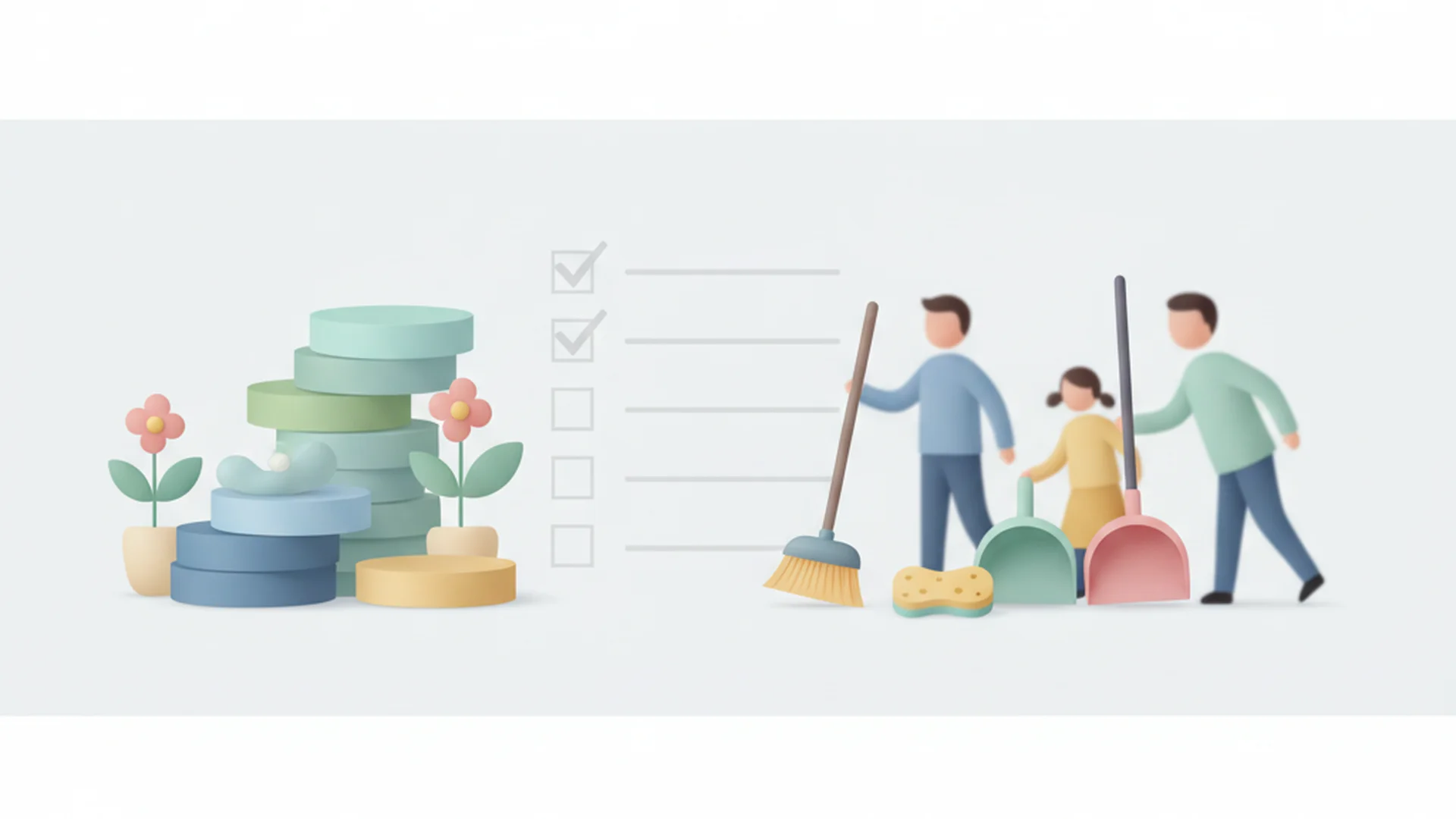
Tip: Clearly define which chores are "Citizen" and which are "Commission" on a physical or digital chart to avoid weekly arguments.
Pay Kids for Chores List: Age-Appropriate Ideas
If you are looking for pay kids for chores ideas, it is essential to match the task to the child's developmental stage. Paying a teenager to pick up their toys is ineffective, just as asking a toddler to mow the lawn is impossible.
Preschool (Ages 3-5)
At this age, the goal is to build the "habit of helpfulness."
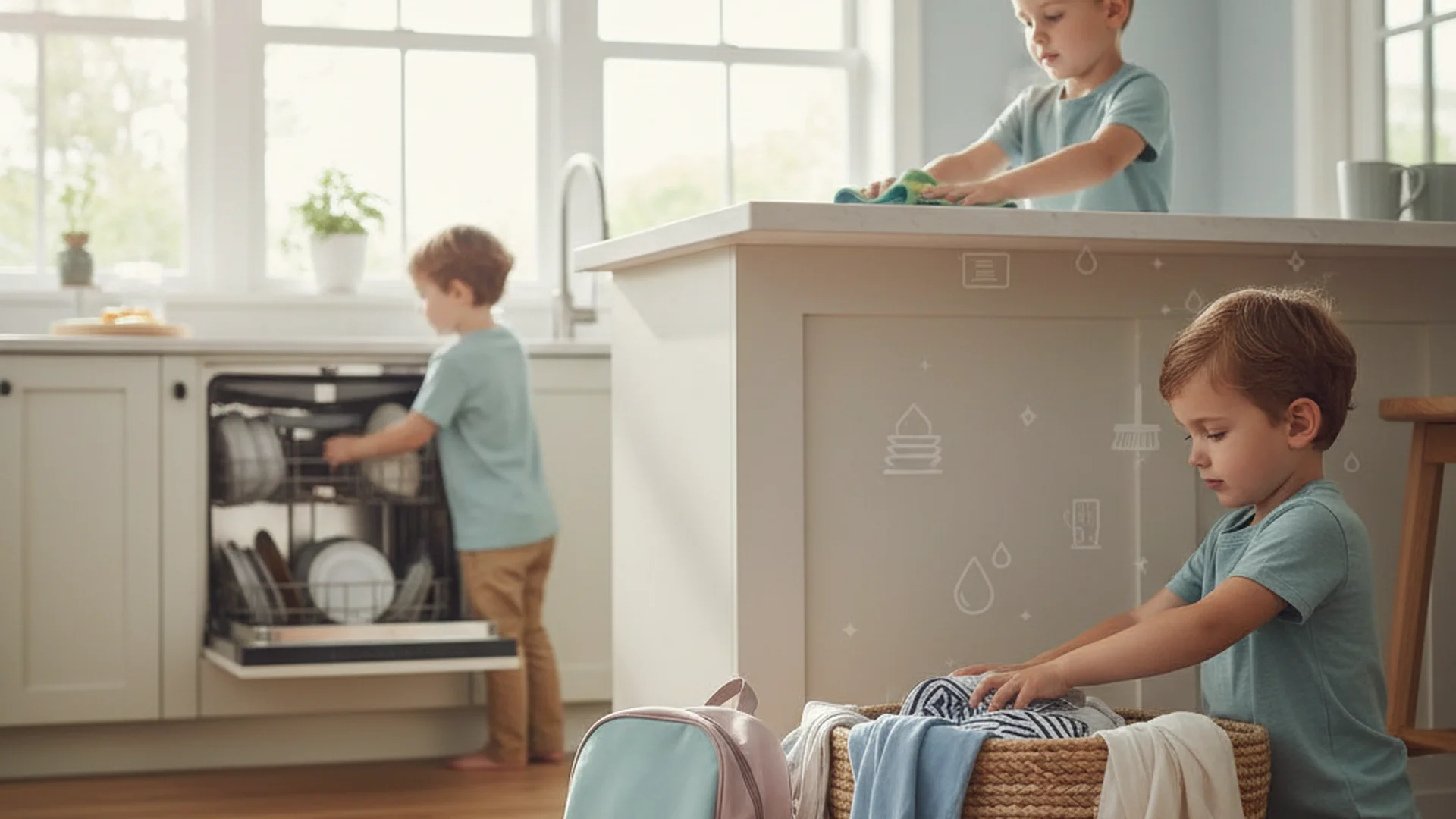
- Chore Ideas: Matching socks, putting toys in bins, wiping low surfaces with a damp cloth.
- Recommended Pay: $1–$3 per week.
Elementary (Ages 6-11)
This is the "golden age" for learning the value of a dollar.
- Chore Ideas: Feeding pets, watering plants, emptying the dishwasher, vacuuming common areas.
- Recommended Pay: $5–$12 per week.
Middle School (Ages 12-14)
Kids at this age are ready for more complex, multi-step responsibilities.
- Chore Ideas: Washing the car, yard work (weeding/raking), doing their own laundry, cleaning a bathroom.
- Recommended Pay: $15–$25 per week.
High School (Ages 15+)
High schoolers should be managing tasks that prepare them for independent living.
- Chore Ideas: Managing grocery lists, deep cleaning the kitchen, babysitting younger siblings, basic home maintenance (changing air filters).
- Recommended Pay: $30+ per week.
| Age Group | Weekly Pay Range | Top Recommended Chore |
|---|---|---|
| Preschool | $1–$3 | Picking up toys |
| Elementary | $5–$12 | Clearing the table |
| Middle School | $15–$25 | Full load of laundry |
| High School | $30+ | Weekly meal prep |
2025-2026 Trends: The Rise of "Self-Care Chores"
One of the most significant shifts we’ve seen in the 2026 trend reports is the surge in parents paying for habit-building or "self-care" tasks. In the past, chores were strictly physical labor. Today, parents are incentivizing personal development.
Pay kids for chores ideas in this new category include:
- Reading for 30 minutes: Encouraging literacy over screen time.
- Practicing an instrument: Rewarding the discipline of practice.
- Physical exercise: Building a healthy lifestyle habit.
- Meditation or mindfulness: Supporting mental health from a young age.
While some purists argue you shouldn't pay a child to take care of themselves, many parents in 2025 find that "priming the pump" with small financial incentives helps these habits stick long-term.
Success: A family in my organization practice recently implemented a "Builder Mindset" bonus where kids earn an extra $2 for every $5 they choose to invest in a fractional stock via a family app.
Managing the Money: The Three-Bucket Method
Teaching a child to pay kids for chores is only half the battle. The other half is teaching them what to do with the money once they have it. The "Three-Bucket Method" is a gold standard for financial management:
- Spend (60%): This money is for immediate gratification—toys, candy, or apps. It teaches them the joy of enjoying the fruits of their labor.
- Save (30%): This is for long-term goals, like a new gaming console or a bike. It teaches delayed gratification.
- Share (10%): This is for charity or community giving. It teaches empathy and the responsibility of wealth.
Warning: Avoid the temptation to "bail out" your child if they spend all their "Spend" money and want something else. The lesson of the "empty bucket" is the most valuable one they can learn.
Common Mistakes to Avoid
Even with the best intentions, chore systems can fail. Here are the most frequent pitfalls I see as a home organization expert:
- Using Money as a Bribe: Never offer money in the heat of a tantrum to get a child to behave. Money should be a reward for completed work, not a tool for negotiation during a conflict.
- Inconsistency: If you forget to check the chores or forget to pay the allowance, the child learns that the system isn't serious. If you can't be consistent manually, use an automated app to track and transfer funds.
- The "Market Economy" Trap: If your child says, "I don't need the money today, so I'm not doing the dishes," the system has failed. This is why you must maintain "Citizen Chores" that are mandatory and unpaid.
- Paying for Grades: Paying for grades tends to backfire, because it chips away at a child's intrinsic motivation to learn. Instead, reward the effort or specific academic habits, like reading.
Frequently Asked Questions
At what age should I start paying for chores?
Should I pay for "basic" chores like making the bed?
Is it better to use cash or a digital app?
What if my child refuses to do their chores even for money?
Conclusion
Deciding to pay kids for chores is a powerful way to introduce real-world concepts into the safety of your home. By using a hybrid system that balances "Citizen Chores" with paid "Commission" tasks, you foster both a sense of duty and a healthy work ethic. Whether you use a paper chart on the fridge or a high-tech gamified app, the goal remains the same: raising responsible, capable, and financially literate humans.
Success: Consistent chore systems reduce household clutter and parent burnout while increasing child independence.
Cleaning that keeps score
Every task earns points, every streak multiplies them, and Premium adds a household leaderboard plus a monthly Dustagorgon to beat.
- Free forever
- 30 badges to earn
- Up to 6 in a household
No card needed. Set up your rooms in a couple of minutes.