In this article
What you’ll learn
- Speed cleaning focuses on high-traffic 'hot spots' rather than deep sanitation.
- Using the 'Top-to-Bottom' and 'S-Pattern' methods cuts cleaning time dramatically.
- Integrating AI and automated tools saves the average household many hours a year.
In the fast-paced world of 2025, few people have the luxury of spending an entire Saturday scrubbing floors and dusting baseboards. As our schedules become increasingly packed, the demand for quick cleaning strategies has transformed from a convenience into a survival skill. We are moving away from the era of the "all-day deep clean" and entering the age of micro-cleaning—a system where efficiency, technology, and professional techniques allow you to maintain a pristine home in a fraction of the time.
The Science of Speed: Why Quick Cleaning Works
Many homeowners believe that if they aren't scrubbing for hours, the house isn't truly clean. The reality is rather different. While some households sink the better part of a day into cleaning every week, a growing number keep their homes tidy in just one to two hours by utilizing speed-cleaning methods.
The secret lies in the difference between "visibility" and "sanitation." Speed cleaning is designed to address the visual clutter and high-traffic grime that accumulates daily. By focusing on these areas, you prevent dirt from "setting," which dramatically reduces the time needed for deep cleaning.
Success: Households that adopt a "clean-as-you-go" approach tend to feel far less stressed than those who wait for a weekend "cleaning binge."
The Professional’s Toolkit: Essential Speed Cleaning Gear
To clean fast, you must stop acting like an amateur and start acting like a professional consultant. Professionals don't waste time walking back and forth to a supply closet under the sink.
The Wearable Cleaning Caddy
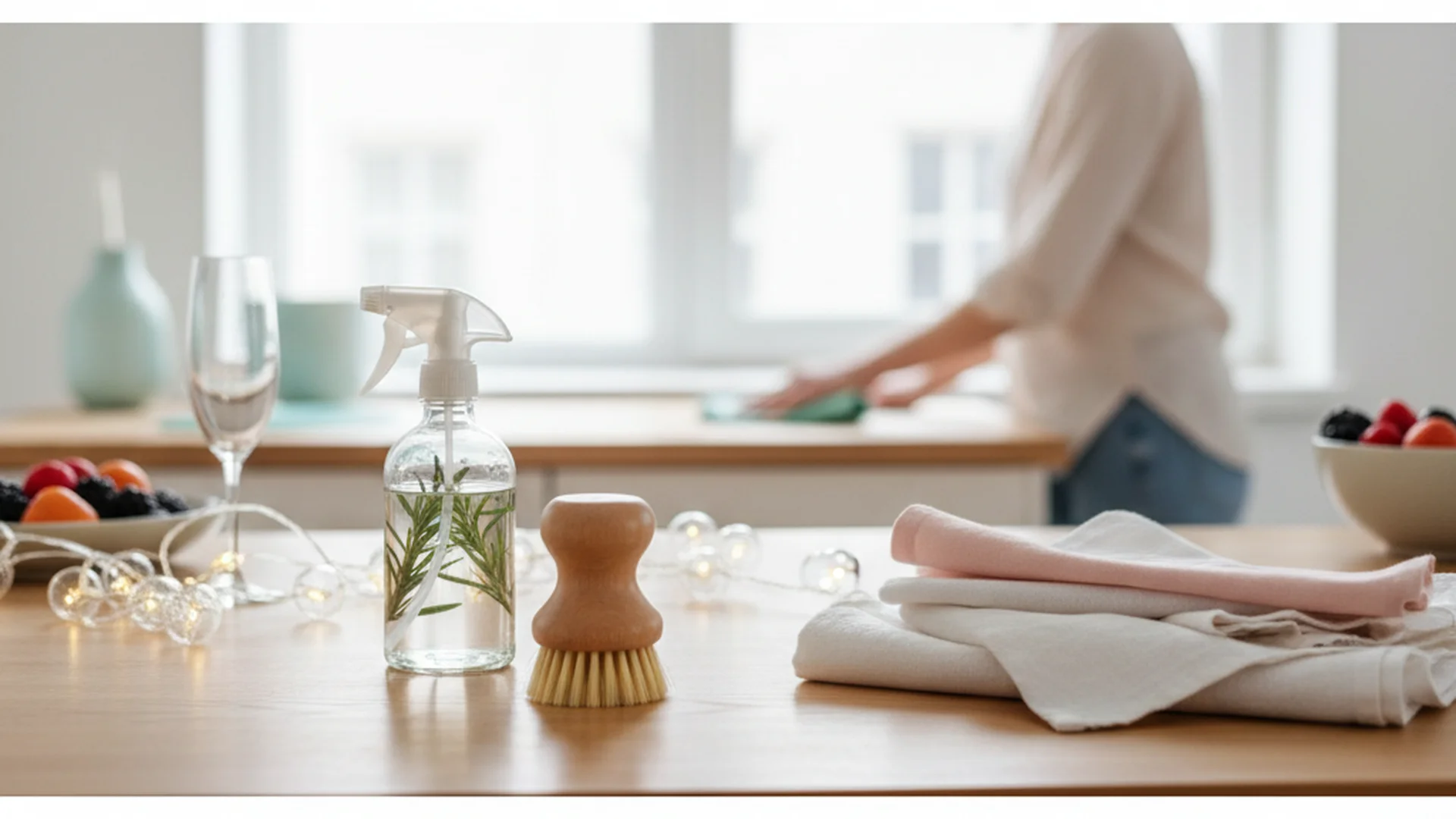
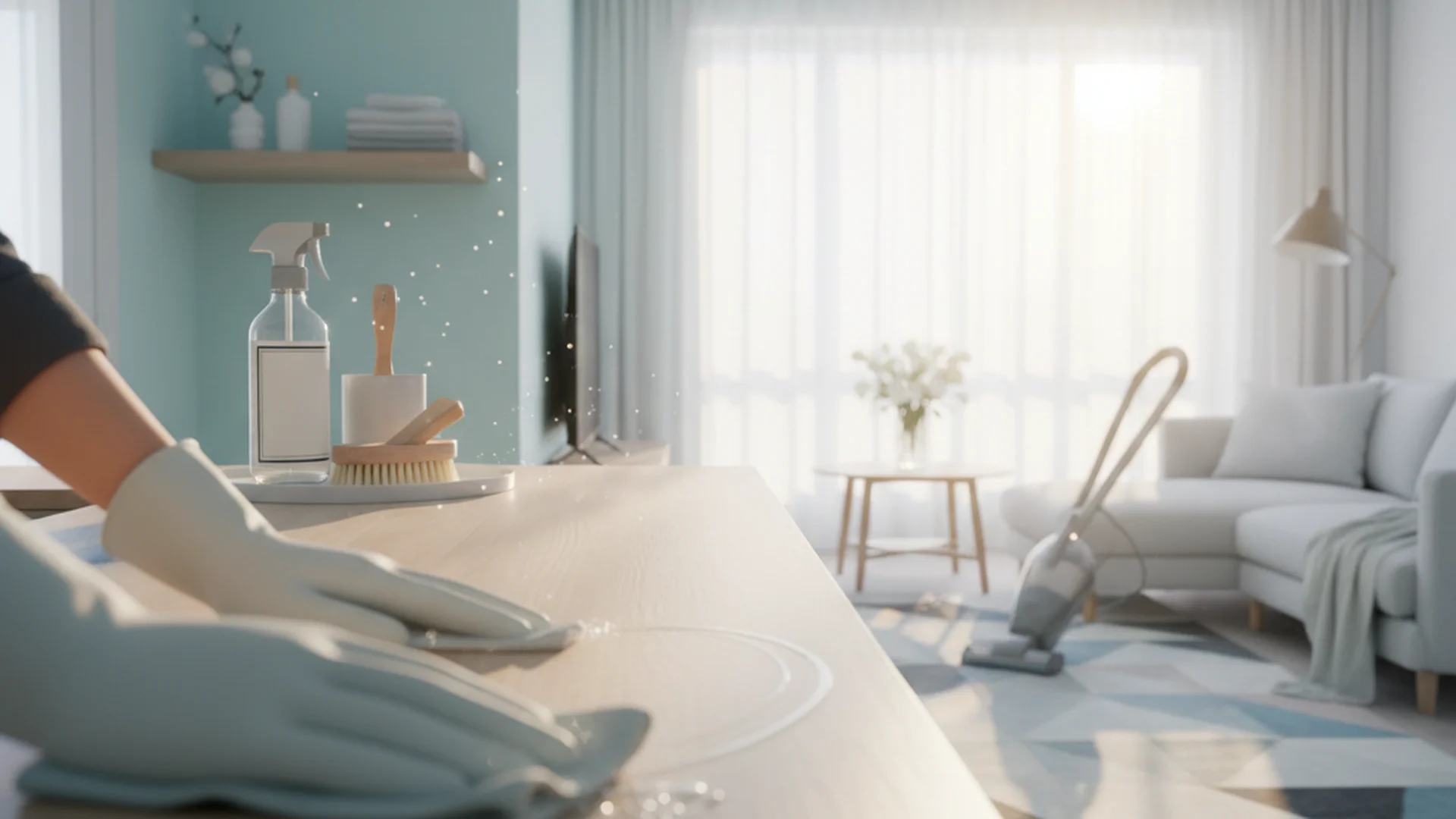
One of the biggest time-wasters in home maintenance is "travel time." Using a cleaning apron or a lightweight caddy allows you to keep your essential sprays, microfiber cloths, and brushes on your person at all times.
High-Potency Concentrates
In 2025, the trend has shifted toward sustainable concentrates. Instead of carrying heavy bottles of water-based cleaners, professionals use high-potency "just-add-water" tablets. These reduce the weight of your kit and ensure you always have the right chemical strength for the job.
Microfiber Over Everything
Ditch the paper towels and cotton rags. Microfiber cloths are engineered to grab dust and bacteria rather than just pushing them around. This means fewer passes over the same surface.
| Tool | Purpose | Speed Benefit |
|---|---|---|
| Cordless Vacuum | Floors/Upholstery | No cord management saves 5-10 mins per room |
| Microfiber Cloths | All surfaces | Captures 99% of debris in one wipe |
| Multi-purpose Spray | General cleaning | Eliminates the need to switch bottles |
| Squeegee | Glass/Showers | Prevents water spots in seconds |
Note: Always ensure your vacuum canister is empty before starting. A full vacuum loses suction, forcing you to move slower and repeat strokes.
The "Golden Rules" of Speed Cleaning
Professional cleaners follow a specific set of physics-based rules to ensure they never have to clean the same spot twice.
1. Top-to-Bottom, Left-to-Right
This is the foundational law of cleaning. Start at the highest point in the room (ceiling fans or the tops of bookshelves) and work your way down. This ensures that any dust or debris you dislodge falls onto uncleaned surfaces. By moving in a circle around the room (left-to-right), you ensure that every square inch is covered without backtracking.
2. The S-Pattern Wipe
Most people clean in a circular motion. This is a mistake; circles simply redistribute dirt into the center of the area you just cleaned. Instead, use an "S" pattern. Start at the top left, wipe to the right, drop down, and wipe back to the left. This "snakes" the dirt off the surface entirely.
3. Strategic Dwell Time
Chemicals need time to work. One of the best fast cleaning tips is to spray your "wet" areas (sinks, showers, toilets) first. Let the cleaner sit for 5 to 10 minutes while you do dry tasks like dusting or tidying. When you return, the grime will wipe away effortlessly, eliminating the need for heavy scrubbing.
Warning: Never mix different cleaning chemicals, especially bleach and ammonia, as this can create toxic fumes.
The 30-Minute "Guest is Coming" Blitz
We’ve all been there: a friend calls to say they’ll be over in half an hour. Instead of panicking, use the "10-10-10 Rule" to create immediate visual order.
10 Minutes: The Kitchen Reset
The kitchen is the heart of the home and the first place guests notice.
- Clear the Launchpad: Clear the "junk" area where keys and mail land.
- The Sink Secret: Don't worry about the dishwasher yet; just get the dirty dishes out of the sink and wipe the basin. A shiny sink makes the whole room look cleaner.
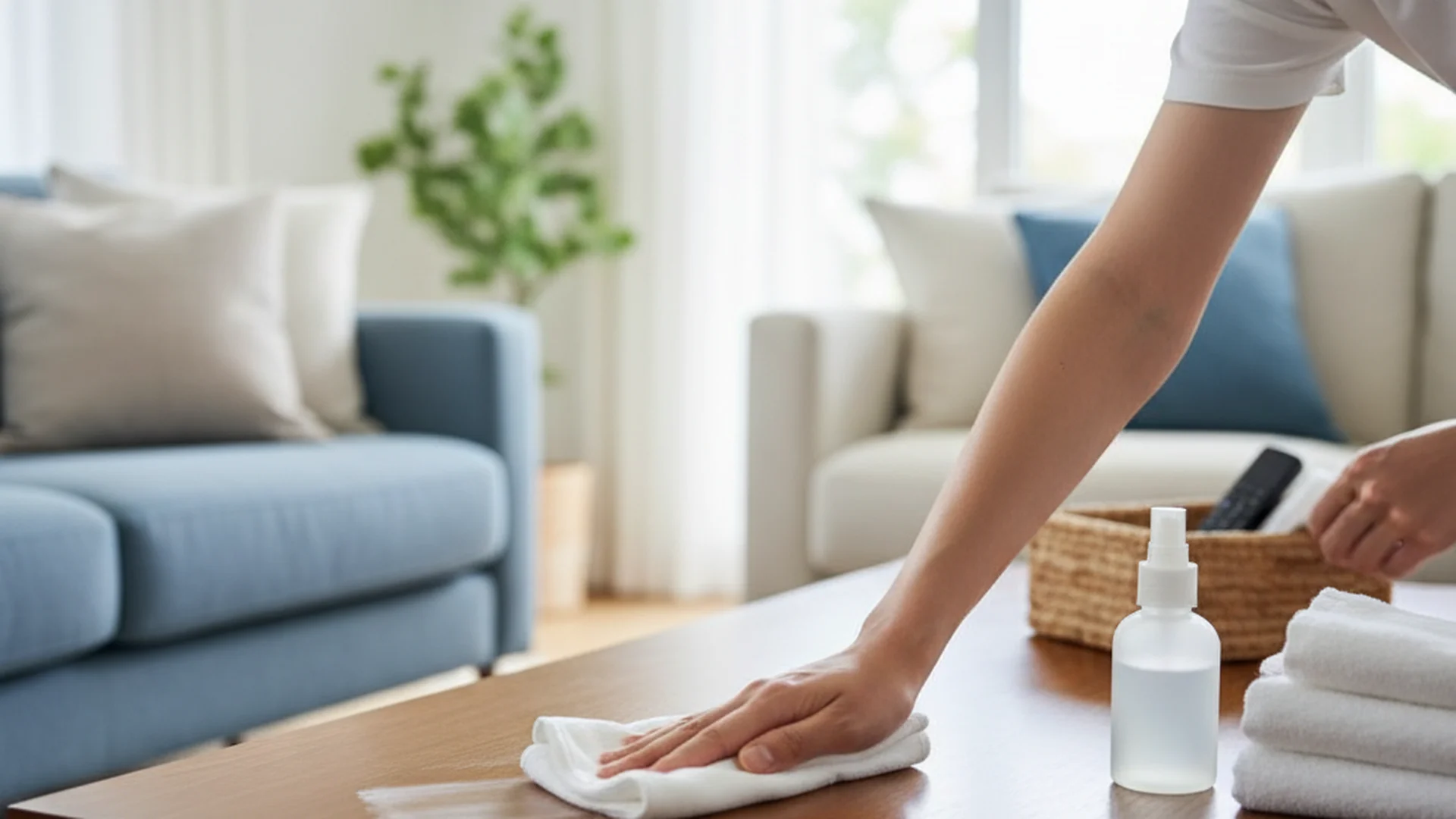
- Wipe Counters: Use a multi-purpose spray and an S-wipe on the main island or counter.
10 Minutes: The Bathroom Polish
- Mirror and Faucet: A spotty mirror screams "dirty." A quick wipe of the mirror and the chrome faucet provides an instant "clean" signal.
- The Toilet Swish: Squirt cleaner, swish with a brush, and wipe the seat.
- Fresh Towels: Swap out used hand towels for fresh, folded ones.
10 Minutes: The Living Area Tidying
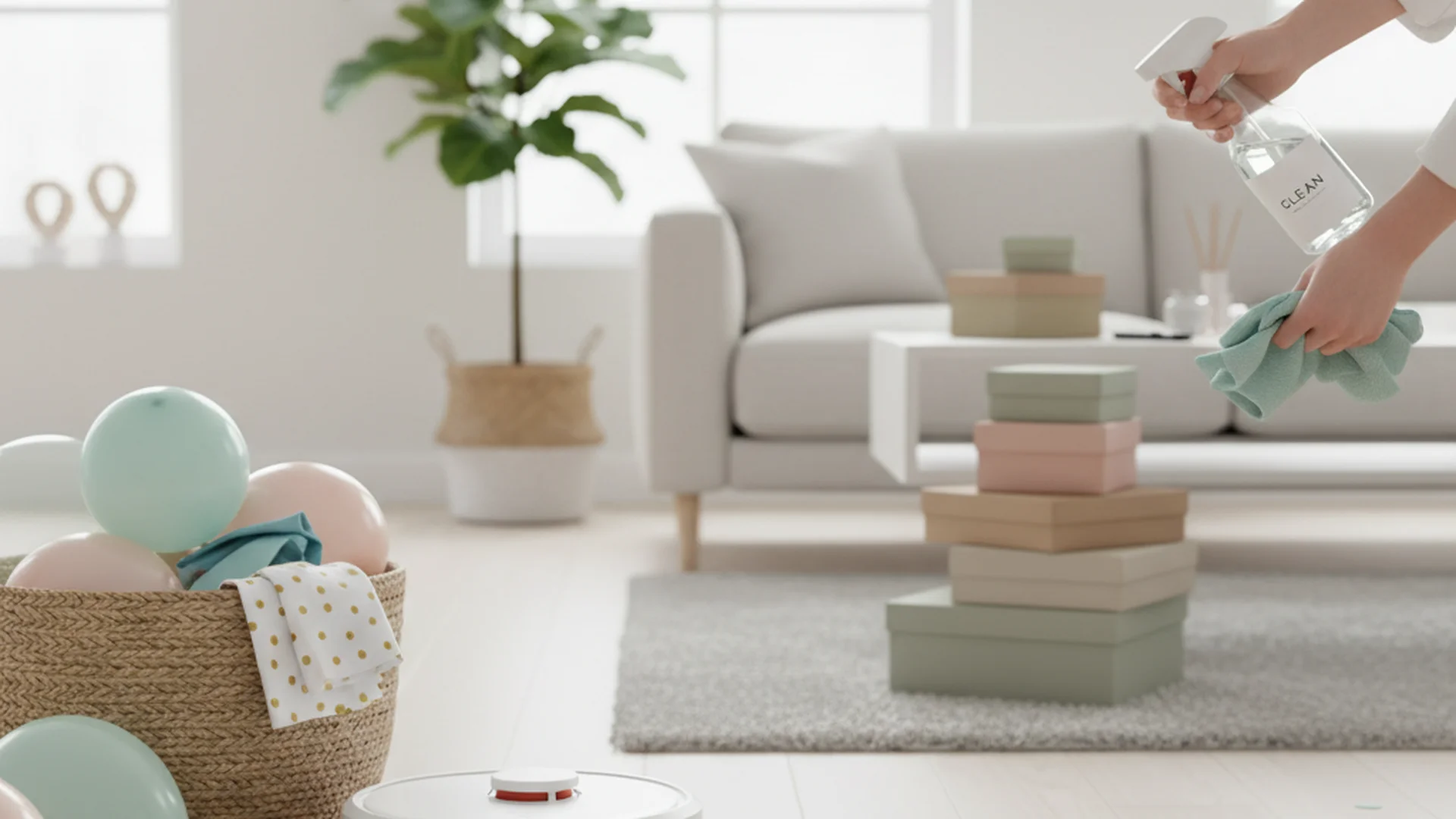
- The "One-Touch" Policy: Pick up stray items. If it doesn't belong in the room, put it in a "transit basket" to be moved later. Do not leave the room to put things away during the 30-minute blitz.
- Fluff the Pillows: Karate-chop the center of your sofa cushions and pillows.
- Floor Scan: Run a cordless vacuum or a dry mop through the center of the room. Ignore the corners; focus on the "walking path."
Tip: If you're short on time, use a flashlight to scan surfaces. If you can't see dust under the light, skip that surface and move to the next.
Recent Trends in Quick Cleaning (2025–2026)
The landscape of home maintenance is changing rapidly due to technology and social shifts.
AI-Powered "Scent Mapping"
A major trend for 2026 is the integration of smart home scent systems. Once you log a "quick clean" in your home management app, the system releases specific scents—like eucalyptus or crisp linen—to psychologically reinforce the feeling of a clean space. It’s the "finishing touch" that makes a 15-minute tidy feel like a 2-hour deep clean.
"Putting the Kitchen to Bed"
This micro-habit has taken social media by storm. It involves a 10-minute nightly reset: loading the dishwasher, clearing the counters, and setting the "launchpad" for the next morning. This prevents the "morning-after" clutter that makes fast cleaning impossible.
Co-Cleaning and Gamification
Families are increasingly using co-cleaning apps like Tody or Jobber. These apps turn chores into a competitive game, assigning point values to tasks. A 15-minute "cleaning blitz" becomes a family challenge, significantly reducing the burden on a single person.
Common Mistakes to Avoid
Even with the best intentions, certain habits can sabotage your speed cleaning efforts.
- The "Circular Buff" Mistake: As mentioned, cleaning in circles leaves streaks. Always use the S-pattern.
- Ignoring Tool Maintenance: Using a dirty microfiber cloth or a vacuum with a full bag can double your cleaning time because you’re simply moving dirt around.
- Spraying Directly on Electronics: In a rush, it’s tempting to spray your TV or laptop. This can damage internal components. Always spray the cloth first, then wipe.
- The "Perfect" Trap: Speed cleaning is about tidiness, not perfection. A "70% clean" house that is consistently maintained is better for your mental health than a "0% clean" house waiting for a perfect day that never comes.
Real-World Examples of Quick Cleaning Success
Example 1: The Busy Professional
Sarah is a corporate lawyer who works 60 hours a week. Instead of cleaning on Saturdays, she uses the "10-minute reset" every evening. By "putting the kitchen to bed" and using a robotic vacuum that runs while she sleeps, she saves 3.5 hours every weekend.
Example 2: The Multi-Child Household
The Thompson family uses a co-cleaning app. Every Sunday before dinner, they set a timer for 20 minutes. The kids handle the "low" areas (baseboards, toy bins) while the parents handle the "high" areas. This "blitz" keeps the home manageable throughout the week.
Example 3: The Minimalist Hosting
Mark hosts a weekly book club. He uses the 30-minute blitz routine focusing only on the "guest zones"—the entryway, the living room, and the guest bathroom. By ignoring the bedrooms and the laundry room, he presents a spotless environment without stress.
Frequently Asked Questions
What is the difference between speed cleaning and deep cleaning?
How can I clean my entire house in 30 minutes?
What tools are essential for fast cleaning?
Does speed cleaning sacrifice hygiene?
How do I stop getting distracted while cleaning?
Conclusion
Mastering quick cleaning is not about working harder; it’s about working smarter. By leveraging the physics of the "S-wipe," the efficiency of "dwell time," and the power of 2026 home technology, you can reclaim your weekends. Remember that maintenance is always superior to a deep-cleaning overhaul. A home that is "mostly clean" all the time is far more enjoyable than a home that is "perfectly clean" once a month.
Start small: try the 10-minute kitchen reset tonight and see how it transforms your morning.
Success: By implementing these speed-cleaning secrets, you can claw back hours of your week, giving you more time for what truly matters.
Cleaning that keeps score
Every task earns points, every streak multiplies them, and Premium adds a household leaderboard plus a monthly Dustagorgon to beat.
- Free forever
- 30 badges to earn
- Up to 6 in a household
No card needed. Set up your rooms in a couple of minutes.