In this article
What you’ll learn
- Timed intervals prevent "vigilance decrement" and maintain high focus levels.
- The 25/5 ratio is the gold standard, but "Flow-modoro" (50/10) works for deep cleans.
- Success depends on pre-timer prep and strict adherence to restorative breaks.
In the fast-paced world of 2025, the struggle to balance a demanding career with a pristine home has never been more intense. Many homeowners find themselves staring at a cluttered living room, paralyzed by the sheer volume of work required. This is where pomodoro cleaning comes into play—a revolutionary adaptation of a classic productivity tool that is currently reshaping how we approach domestic labor. By breaking overwhelming chores into manageable, timed "sprints," you can reclaim your home without the mental exhaustion of a traditional marathon cleaning session.
As a professional cleaning consultant, I have seen clients go from "cleaning burnout" to "cleaning mastery" simply by changing how they view the clock. This isn't just about setting a timer; it is a sophisticated lifestyle framework designed to work with your brain’s natural attention span rather than against it.
Pomodoro Cleaning Explained: The Science of the Sprint
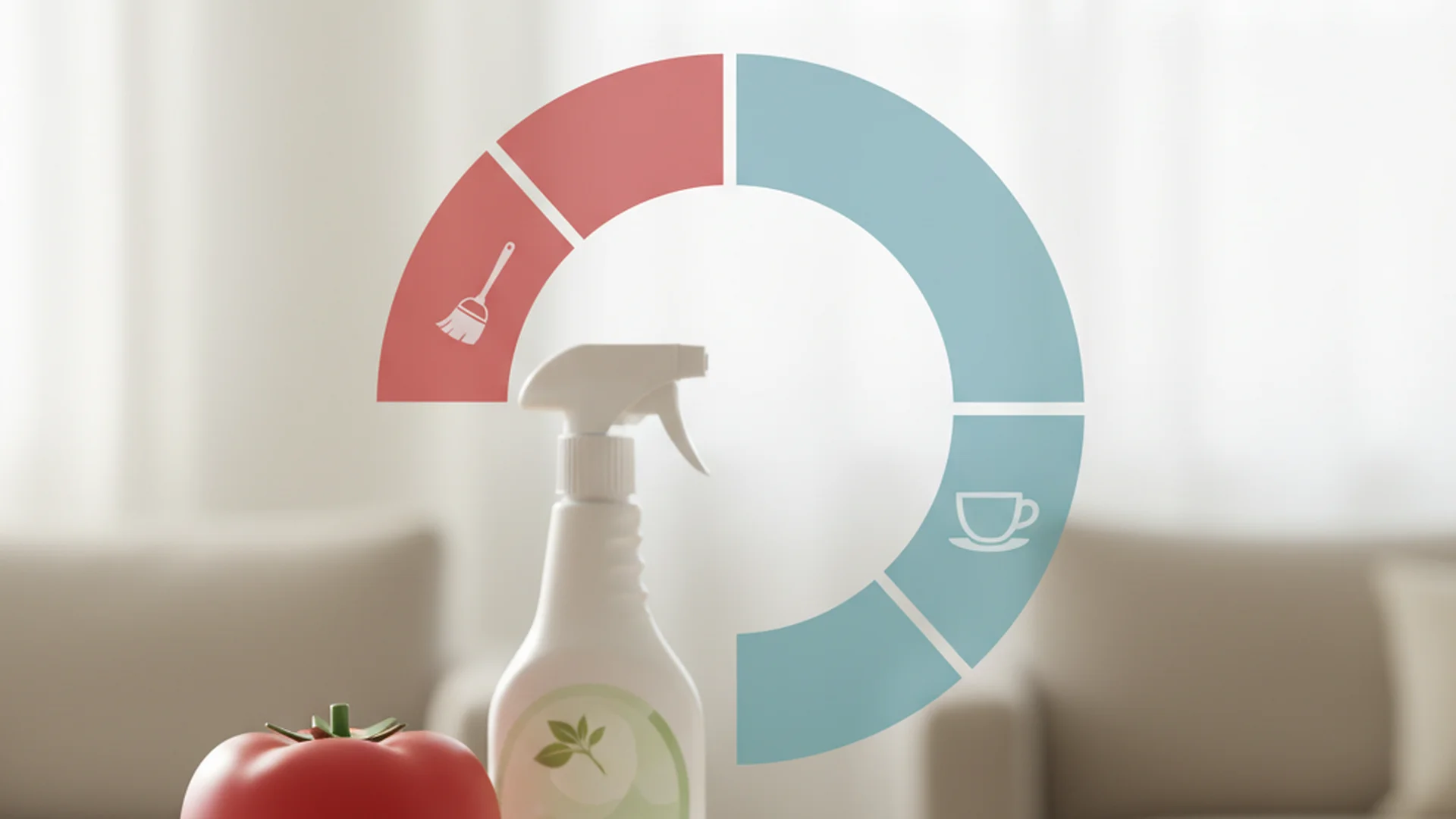
The Pomodoro Technique was originally developed by Francesco Cirillo in the late 1980s using a tomato-shaped kitchen timer ("pomodoro" is Italian for tomato). While it was once the secret weapon of software developers and university students, it has seen a massive resurgence in the home management space over the last two years.
The Attention Span Sweet Spot
Why does a 25-minute timer work so well for scrubbing a bathroom or folding laundry? Research from the University of Illinois indicates that human attention begins to wane after approximately 20–25 minutes. This phenomenon, known as "vigilance decrement," means that if you try to clean for three hours straight, your efficiency drops significantly after the first thirty minutes.
By utilizing a pomodoro cleaning guide, you are effectively ending your work session just as your focus begins to dip. This keeps your energy levels high and prevents the feeling of "drudging" through chores.
Combatting the Zeigarnik Effect
Have you ever felt "mental clutter" because of an unfinished project? This is the Zeigarnik Effect—a psychological phenomenon where people remember uncompleted tasks better than completed ones. In a cleaning context, an entire messy house is one giant uncompleted task.
When you commit to a single 25-minute Pomodoro block, you create a defined "container" for that work. Even if the whole house isn't finished, completing that specific 25-minute block provides a sense of psychological closure, reducing your overall cognitive load and stress levels.
Note: A "Power Pomodoro" (one 25-minute burst) can often accomplish tasks that people estimate would take 60–90 minutes of unstructured time.
The Ultimate Pomodoro Cleaning Guide: Getting Started
To master this method, you need more than just a timer. You need a strategy. Follow these steps to implement the most effective version of the technique available in 2025.
Step 1: The Pre-Timer Prep
One of the biggest productivity killers in cleaning is "task switching." This happens when you start cleaning the kitchen, realize you need a cloth from the laundry room, see a pile of mail on the way, and suddenly find yourself sorting paper instead of scrubbing the sink.
Spend exactly two minutes before you start your timer to gather every supply you need.
- Your Cleaning Caddy: All-purpose cleaner, glass cleaner, and disinfectants.
- Tools: Microfiber cloths, scrub brushes, and a vacuum.
- The Timer: A physical kitchen timer or a visual sand timer is preferred over a phone to avoid digital distractions.
Step 2: The Work Block (25 Minutes)
Set your timer for 25 minutes. During this time, you have one rule: Stay in the zone. If you are cleaning the kitchen, do not leave the kitchen. If you find an item that belongs in the bedroom, place it in a "relocation basket" by the door, but do not leave the room to put it away until the timer is up.
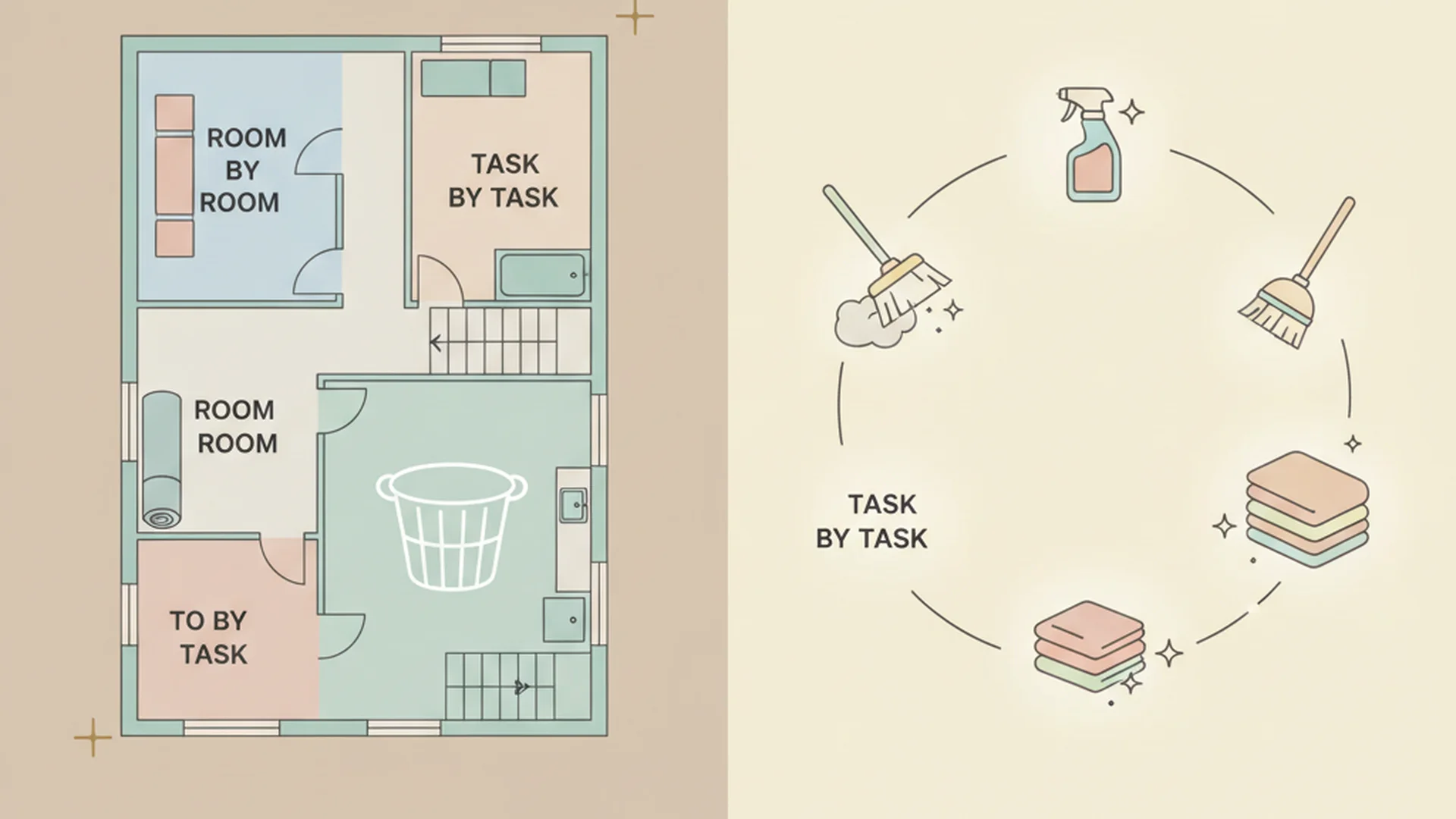
Tip: Use the "One-In, One-Out" rule. Dedicate one 25-minute block to a single room or a single category (e.g., all glass surfaces in the house) to maximize efficiency.
Step 3: The Short Break (5 Minutes)
When the timer rings, you must stop immediately. This is the hardest part for many, but it is the most critical for preventing burnout. Use these five minutes for "active rest."
- Stretch your back and shoulders.
- Drink a full glass of water.
- Step outside for fresh air.
- Avoid social media. "Scroll paralysis" can turn a 5-minute break into a 30-minute lost window.
Step 4: The Long Break (30 Minutes)
After completing four Pomodoro cycles (roughly two hours of total time including breaks), you have earned a long break.
Success: Users who track their timed sessions and respect the long break are 42% more likely to maintain a cleaning habit long-term compared to those who clean without a schedule.
| Feature | Standard Cleaning | Pomodoro Cleaning |
|---|---|---|
| Focus | Scattered | Hyper-focused |
| Burnout Risk | High | Low |
| Tracking | Hard to measure | Sessions completed |
| Motivation | Relies on willpower | Relies on the timer |
Real-World Examples of Pomodoro Cleaning
To see how this works in practice, let's look at three common scenarios where this framework excels.
1. The "Post-Work Reset" (Single Cycle)
Sarah, a busy marketing executive, arrives home to a cluttered living room. Instead of collapsing on the couch, she sets a 25-minute timer. She focuses exclusively on the "reset"—loading the dishwasher, clearing the coffee table, and fluffing cushions. When the timer dings, she is done for the night. She avoids the "all-or-nothing" mentality that usually leads to a messy home.
2. The "ADHD Body Doubling" Sprint
Mark finds it difficult to start tasks due to executive dysfunction. He uses the 2026 trend of "Virtual Body Doubling." He turns on a "Clean With Me: 25/5 Edition" video on YouTube. Seeing someone else on screen working against the same timer provides the external structure he needs to stay on task without getting distracted by side-projects.
3. The "Saturday Deep Clean" (Four Cycles)
A family of four decides to tackle the whole house. They set an AI-integrated smart home system to "Pomodoro Mode." The house lights brighten, and high-tempo music plays for 25 minutes while everyone tackles their assigned zones. Every 25 minutes, the music switches to lo-fi beats, and the lights dim slightly for a 5-minute family hydration break. After four rounds, they stop completely and go out for a celebratory lunch.
Warning: Never use your 5-minute break to "just finish the dishes." This creates a mental association that breaks are just "more work," leading to rapid fatigue.
2025–2026 Trends in Timed Cleaning
The world of pomodoro cleaning has evolved. We are no longer just using simple egg timers; we are using integrated technology and energy-based management.
Energy-First Management
The latest shift in productivity is moving away from "Time Management" toward "Energy Management." This involves scheduling your Pomodoro blocks during your peak energy hours. If you are a morning person, do your "Power Poms" at 8:00 AM. If you struggle with morning brain-fog, save your deep-cleaning sprints for the early evening and use "Micro-tidies" (10-minute bursts) for the morning.
AI and Smart Home Integration
In 2025, smart home systems like Alexa and specialized cleaning apps now offer dedicated Pomodoro modes. These systems can:
- Lock your phone's distracting apps during the work block.
- Change the "soundscape" of your home to match the intensity of the task.
- Provide a "co-pilot" voice that announces when 10 minutes are remaining, helping you pace your effort.
The "Flow-modoro" (50/10 Rule)
For deep-cleaning tasks like scrubbing grout or organizing a garage, 25 minutes might feel too short. The "Flow-modoro" is the 2025 answer. If you find yourself in a "flow state," you extend the work block to 50 minutes. However, you must double your break to 10 minutes to compensate for the higher energy expenditure.
Common Mistakes to Avoid
Even with a clear pomodoro cleaning guide, it is easy to fall into traps that negate the benefits of the system.
1. Overscoping the Block
Do not try to "clean the whole house" in 25 minutes. You will feel rushed, panicked, and eventually defeated. Instead, set a goal like "clean the kitchen counters and stovetop." If you finish early, you can start on the sink, but the goal should always be achievable within the window.
2. Ignoring the Long Break
Many people feel a surge of productivity during the third or fourth cycle and decide to "power through" their 30-minute rest. This is the leading cause of "Cleaning Fatigue." The long break is essential for physical and mental recovery. If you skip it, you are significantly less likely to want to use the technique again next week.
3. Using Digital Timers on Phones
Using your phone as a timer is a dangerous game. Every time you check how much time is left, you are one notification away from a 20-minute Instagram rabbit hole. Use a dedicated physical timer to keep the "mental cleaning seal" intact.
Note: The Pomodoro is about the effort, not the outcome. If the timer goes off and the kitchen isn't perfectly clean, you haven't failed. You simply need another block.
Frequently Asked Questions
Is 25 minutes really enough to clean a room?
Does this work for people with ADHD?
What if I’m in a 'flow state' when the timer goes off?
What should I do during the 5-minute break?
Conclusion: Embrace the Power of the Timer
The pomodoro cleaning method is more than just a trick to get the dishes done; it is a way to respect your time and your mental health. By working in harmony with your brain's natural rhythms, you can maintain a home that feels like a sanctuary rather than a source of endless stress. Whether you are doing a single 25-minute "Micro-Pom" to clear your desk or a full four-cycle marathon to prep for guests, the power of the sprint will always outperform the exhaustion of the marathon.
Start today: pick one room, set a timer for 25 minutes, and see just how much you can achieve when you stop racing against the house and start working with the clock.
Cleaning that keeps score
Every task earns points, every streak multiplies them, and Premium adds a household leaderboard plus a monthly Dustagorgon to beat.
- Free forever
- 30 badges to earn
- Up to 6 in a household
No card needed. Set up your rooms in a couple of minutes.