In this article
What you’ll learn
- Weight chores by time and 'dread factor' for maximum fairness.
- Separate basic citizenship chores from high-value 'work-for-hire' tasks.
- Refresh your reward system every two weeks to prevent 'reward fatigue.'
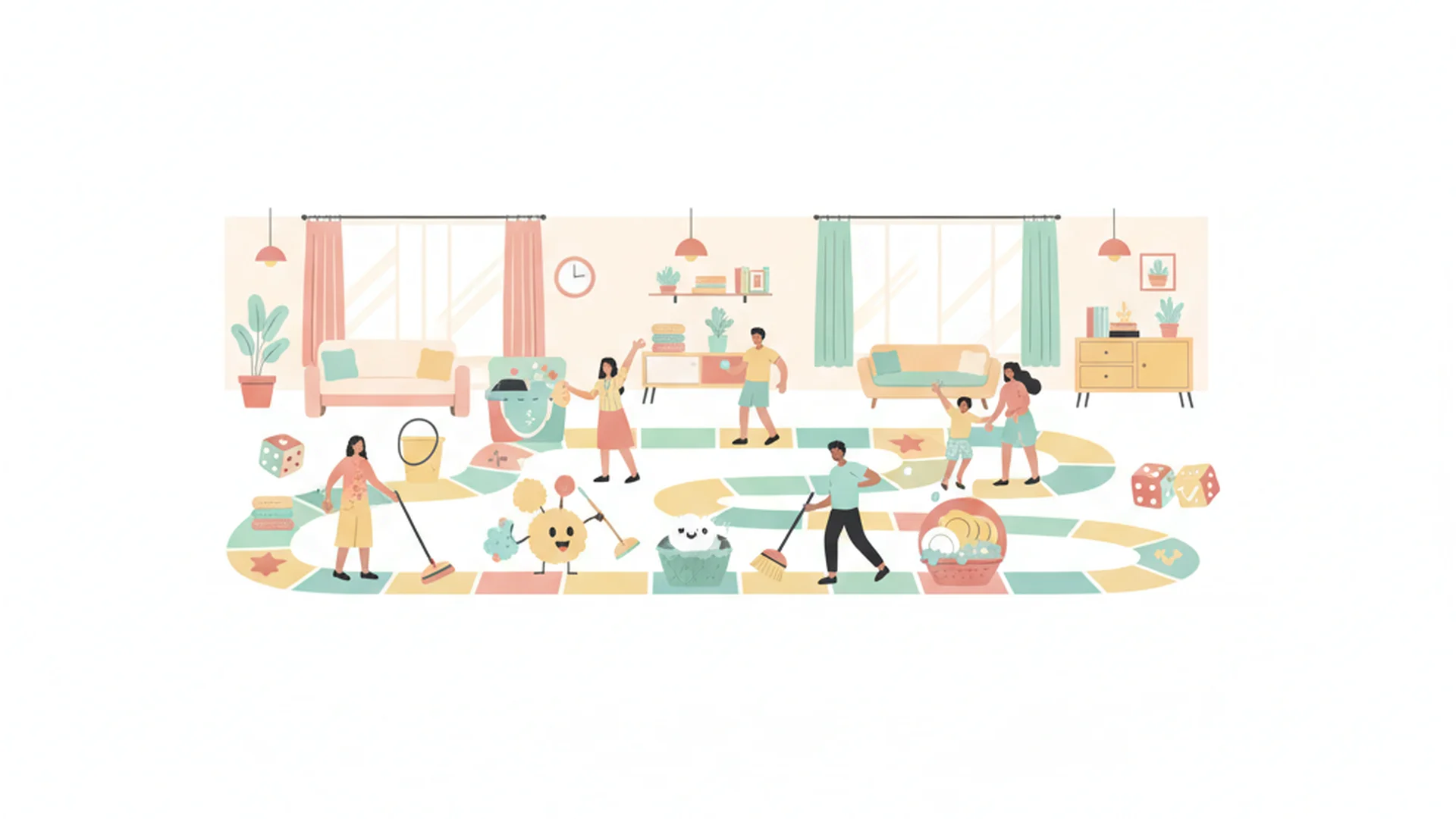
For decades, the standard approach to managing a home was a simple, static list taped to the refrigerator. Perhaps there were a few gold stickers involved, but the motivation usually fizzled out by Tuesday. In 2025, the landscape has shifted. We have moved beyond the chore chart and into the era of the points system chores ecosystem. By borrowing mechanics from the world of video games—points, leveling up, and collective quests—households are finally finding a way to make the mundane manageable.
As a professional cleaning consultant, I’ve seen how a well-structured points system can transform a chaotic home into a high-functioning environment. Whether you are a parent trying to motivate a toddler, a roommate looking for equity, or an adult managing ADHD, gamification offers the external scaffolding needed to initiate tasks that our brains naturally want to avoid.
The Evolution of Gamified Cleaning
The modern points system isn't just for children. While children as young as three can begin participating in household tasks to build self-esteem, the most significant growth in this sector has been among adults. For the many adults living with ADHD, these systems serve as essential "dopamine tools."
Gamified productivity platforms like Habitica and Nipto are built on a simple premise: people stick with daily habits far better when there is a game layered on top of them. This is because games provide immediate feedback. When you finish a task and see a digital bar move or a point total climb, your brain receives a small hit of dopamine that bridges the gap between the effort of the chore and the long-term satisfaction of a clean home.
Note: A points system is not a "set it and forget it" tool. To remain effective, the system must be iterative, meaning you should review and adjust it weekly.
How to Points System Chores: A Step-by-Step Design
Building a system that actually lasts requires more than just assigning random numbers to tasks. If the "cost" of a reward is too high or the points for a difficult chore are too low, the system will collapse.
Step 1: Weighting Your Chores
When brainstorming points system chores ideas, avoid the trap of making every task worth the same amount. Instead, use a two-factor weighting system:
- Time Factor: A general rule of thumb is 1 point per minute of work.
- Dread Factor: This is the "subjective weight." If everyone in the house hates cleaning the bathroom, that chore should earn a 10–20 point bonus.
Step 2: Defining the "Definition of Done"
One of the biggest causes of domestic friction is the "Subjective Parent" or "Subjective Partner" trap. This happens when someone completes a chore, but the "manager" of the house decides it wasn't good enough to earn points.
Warning: Subjective grading causes immediate resentment and system abandonment. Always define a "Definition of Done" for every chore before it is added to the list.
Step 3: Establish the "Work-for-Hire" Model
Divide household labor into two distinct categories to maintain a healthy family or roommate dynamic:
- Citizenship Chores: These are basic tasks required for being a member of the household (e.g., putting your own dishes in the dishwasher). These earn low points or are expected without reward.
- Work-for-Hire Chores: These are optional, larger tasks that earn significant points or "Chore Bucks" (e.g., cleaning the baseboards or washing the windows).
Sample Points Allocation Table
To help you get started, here is a standard baseline for common household tasks in a 2025 gamified system.
| Chore Category | Specific Task | Point Value | Frequency |
|---|---|---|---|
| Quick Wins | Making the Bed | 5 Points | Daily |
| Maintenance | Loading Dishwasher | 15 Points | Daily |
| Deep Clean | Scrubbing Shower | 50 Points | Weekly |
| Outdoor | Mowing the Lawn | 100 Points | Bi-Weekly |
| Invisible Labor | Inventory/Grocery List | 30 Points | Weekly |
Real-World Examples of Points Systems in Action
1. The "Questing" Family
The Miller family uses an "RPG Mode" system. Every Sunday, they set a collective household goal of 1,000 points. If the family hits the goal, they "unlock" a Saturday morning trip to the local water park. This encourages the children to help each other finish tasks rather than competing for individual rewards, fostering a sense of teamwork.
2. The ADHD Professional
Sarah, a freelance graphic designer with ADHD, uses a "Photo Verification" system. She assigns high points to "task initiation" (the act of just starting). To claim her points, she must take a "before and after" photo and upload it to her app. This visual evidence of progress provides the "body doubling" effect she needs to stay on task without an external manager.
3. The Equitable Roommates
Three college students use a points system to manage a shared apartment. Instead of a rigid cleaning rotation, they have a "bounty board." Chores that are neglected for more than three days automatically see their point value increase by 5 points every day. This creates a market-based system where the "grossest" jobs eventually become so valuable that someone is motivated to do them.
Tip: Use "Body Doubling" for difficult tasks. If a child or partner is struggling to start a high-point chore, simply sit in the room and work on a different task nearby. This presence often breaks "task paralysis."
Advanced Trends for 2025 and 2026
The world of points system chores is rapidly integrating with smart home technology and AI. We are no longer limited to manual tracking.
AI-Powered Assignments
New platforms like S'moresUp or Chaos now utilize AI to analyze your family's schedule. If the AI sees that a teenager has a heavy exam week, it will automatically shift high-point "heavy" chores to a different family member or suggest "micro-tasks" that take less than five minutes.
Smart Home Synchronization
In 2025, we are seeing the rise of "Smart Chores." For example, a smart dishwasher can now send a notification to a child’s phone the moment the cycle finishes, stating "15 Points Available: Unload Dishwasher." Once the sensors detect the racks are empty, the points are automatically credited to their digital wallet.
Health and Learning Integration
The most sophisticated systems now sync with wearables. Kids can earn bonus "Chore Points" by hitting their daily step goals or completing a language lesson on Duolingo. This creates a holistic "Growth Economy" within the home where physical, mental, and household contributions are all valued.
Common Mistakes to Avoid
Even the best-designed systems can fail if you fall into these common traps:
- The Over-Complexity Trap: Many people start with a 50-item list and 10 reward tiers. This leads to "system collapse" within a week. Start with three "anchor chores" and one clear reward.
- Using Chores as Punishment: Never deduct points from the chore system for behavior unrelated to chores (like getting a bad grade at school). This makes the chores feel like a weapon rather than a game.
- The Reward Fatigue Peak: Static rewards tend to lose their appeal within a couple of weeks. You must refresh the "Reward Shop" frequently to keep interest high.
- Ignoring the 3-to-1 Praise Ratio: Points are an extrinsic motivator, but intrinsic motivation comes from feeling seen. For every point assigned, offer three verbal "process praises" (e.g., "I noticed how carefully you wiped those corners").
Success: When a points system is treated as a collaborative game rather than a top-down mandate, households are far more likely to still be using it six months later.
Frequently Asked Questions
How many points should a chore be worth?
Should I tie points directly to money (allowance)?
What if my child refuses to do the chore even with points?
Are point systems effective for adults and couples?
Conclusion
Implementing a points system chores framework is about more than just getting the floors mopped; it’s about changing the culture of your home. By moving away from nagging and toward gamification, you create an environment where contributions are recognized, expectations are clear, and the "mental load" is shared by everyone.
Start small, define your "Definition of Done," and don't be afraid to let the AI or smart home tech do the heavy lifting of tracking. With a little bit of strategy and a focus on positive reinforcement, you can turn the daily grind into a rewarding household quest.
Cleaning that keeps score
Every task earns points, every streak multiplies them, and Premium adds a household leaderboard plus a monthly Dustagorgon to beat.
- Free forever
- 30 badges to earn
- Up to 6 in a household
No card needed. Set up your rooms in a couple of minutes.