In this article
What you’ll learn
- An effective morning reset should only take 15–20 minutes to be sustainable.
- Prioritize the "calm makers": making the bed and clearing kitchen counters.
- Incorporate "habit stacking" to make cleaning feel effortless.
Have you ever noticed how the state of your home in the first hour of the day dictates your entire mood? Implementing a consistent morning cleaning routine isn't just about aesthetics; it is a powerful tool for mental clarity and daily productivity. As we move into 2025 and 2026, the focus of home maintenance has shifted from grueling chores to "mindful resets"—short, intentional bursts of activity that prepare both your home and your mind for the day ahead. By mastering a few simple habits, you can transform your living space from a source of stress into a sanctuary of focus.
The Science of a Clean Space
The urge to tidy up in the morning isn't just "being particular"—there is a real psychological pull behind it. Understanding why we clean can provide the necessary motivation to stick to a new habit.
Nearly everyone feels better, mentally and physically, in a space that is clean. This isn't a coincidence. A high-clutter environment keeps you subtly on edge all day. When your visual field is crowded with dirty dishes or unfolded laundry, your brain perceives it as "unfinished business," which triggers a low-level stress response.
Furthermore, efficiency is the greatest reward of a daily schedule. A well-planned morning cleaning routine cuts your overall weekly cleaning time considerably. By preventing mess from accumulating, you avoid those overwhelming weekend "cleaning marathons" that eat into your rest time.
Generational Shifts in Cleaning
Interestingly, the way we approach cleaning is changing. Younger adults tend to tidy their common areas—bedrooms and living rooms—noticeably more often than their parents' generation did. This shift suggests that younger generations view a tidy environment as an essential component of their wellness and self-care routines rather than just a traditional chore.
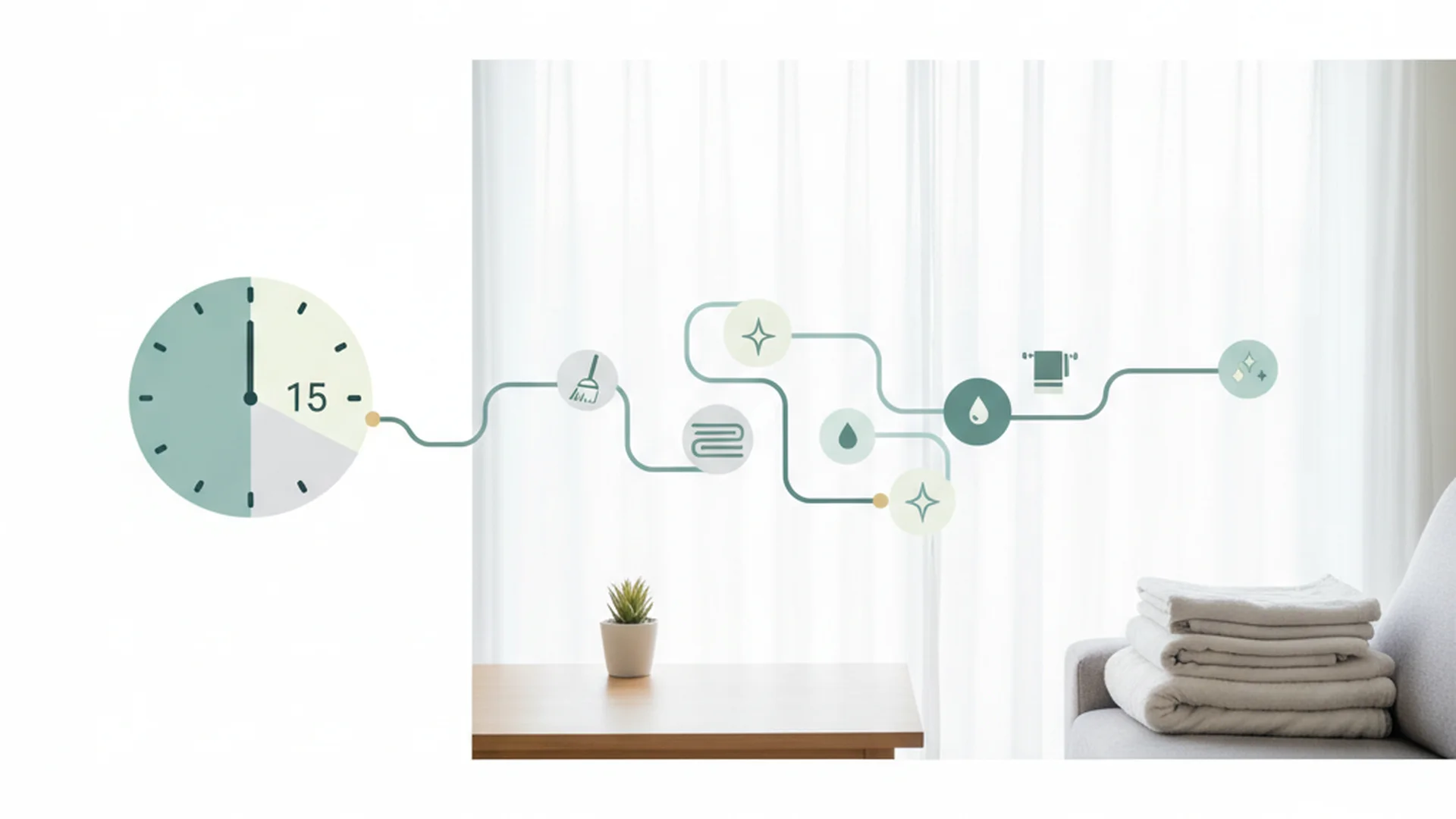
The 15-Minute Morning Reset Checklist
To make this routine sustainable, it must be fast. If your routine stretches past 20 minutes, it becomes a "deep clean," which belongs on a weekly or monthly schedule. Use the following structure to create your own morning cleaning routine template.
1. The Kitchen Core (7 Minutes)
The kitchen is the heart of the home, but it’s also the primary source of morning chaos.
- Empty the Dishwasher: Do this while the coffee is brewing. It creates a "sink vacuum"—a place for dirty dishes to go immediately throughout the day.
- Wipe the Counters: Use a quick all-purpose spray to remove crumbs from breakfast.
- The Sink Shine: Give the sink a quick rinse so no food particles linger.
2. The Living Area Sweep (5 Minutes)
Focus on the "high-impact" visual areas that you see as you move through your home.
- The 5-Minute Clutter Sweep: Use a basket to quickly collect items that aren't in their place (shoes, mail, toys) and return them to their home.
- Fluff the Pillows: A straightened sofa instantly makes a room look "done."
3. The Bedroom & Bathroom (3 Minutes)
- "Air" the Bed: Instead of making the bed immediately, pull back the duvet for 20 minutes while you get ready.
- Surface Wipe: After brushing your teeth, use your hand towel to quickly wipe the bathroom faucet and countertop.
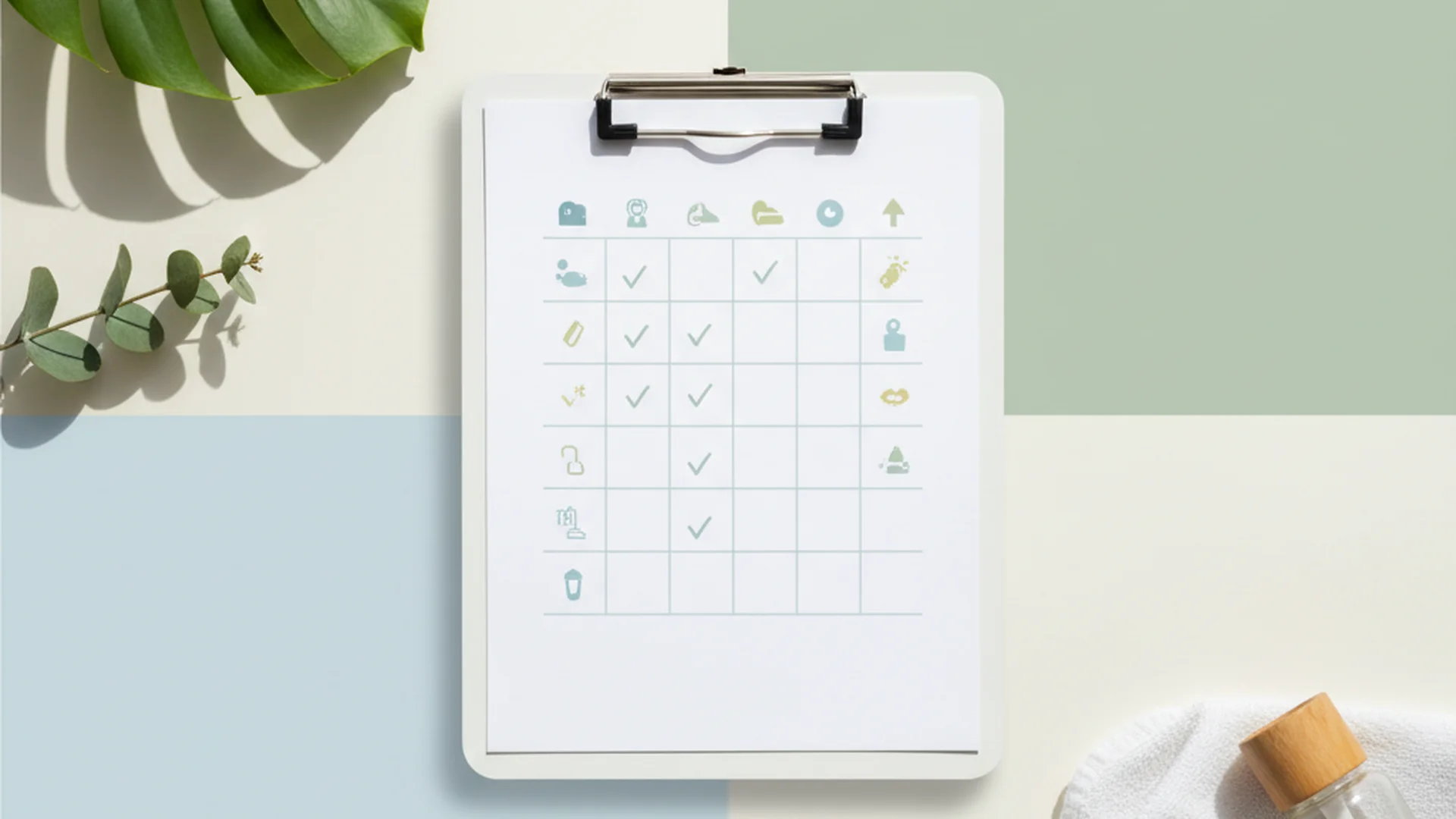
Tip: If you're a visual person, keep a morning cleaning routine printable on the inside of your cleaning cupboard or fridge to stay on track without having to think about the next step.
2025–2026 Cleaning Trends: The Future of the Home
The landscape of home maintenance is evolving rapidly. We are seeing a move away from "aggressive" cleaning toward more integrated, technological, and mindful approaches.
Mindful & Therapeutic Cleaning
The biggest trend for 2025 is viewing cleaning as a form of self-care. Instead of a frantic rush, many are incorporating aromatherapy—diffusing essential oils like lemon or peppermint—to ground themselves. "Slow cleaning" to a curated morning playlist is becoming a popular way to transition from sleep mode to work mode.
AI and Automation
Robot vacuums are now a fixture in a great many homes, and that number is climbing. The trend for 2026 is "smart scheduling." Homeowners are using AI-powered apps to ensure vacuums run the moment the last person leaves the house, ensuring they return to "vacuum lines" on the carpet without ever lifting a finger.
Green Cleaning 2.0
We are moving beyond simple "non-toxic" labels. The current focus is on ultra-concentrated refills and plastic-free compostable wipes. This reduces the carbon footprint of shipping water-heavy cleaners and aligns with a zero-waste lifestyle.
ADHD-Friendly Routines
There is a massive surge in "body doubling" for home tasks. This involves cleaning while on a video call with a friend or watching a "clean with me" video on social media. This method provides the external accountability many neurodivergent individuals need to overcome executive dysfunction and complete a morning cleaning routine.
Best Practices from the Experts
When it comes to cleaning, the "how" is often more important than the "what."
The "One Load" Rule
Start one load of laundry first thing in the morning. This prevents the "weekend laundry mountain." The goal is to move it to the dryer before you leave for work or start your remote shift. By the time you’re done with your day, the clothes are ready to be folded.
The Science of "Airing" the Bed
It sounds counterintuitive, but you shouldn't make your bed the second you wake up. Pulling back the duvet for 20 minutes allows moisture and body heat to escape. This simple act reduces the accumulation of bacteria and dust mites, which thrive in the warm, damp environment of a freshly occupied bed.
Habit Stacking
The easiest way to build a routine is to "stack" a cleaning task onto an existing habit.
- Example: Wipe down the shower walls while you are still inside the shower.
- Example: Clear the table while you are waiting for the toaster to pop.
Success: Habit stacking reduces the "activation energy" required to start a task, making it much more likely that you will stick to your routine long-term.
Common Mistakes and Misconceptions
Even the most well-intentioned cleaners can fall into traps that waste time or damage their homes. Avoid these common pitfalls to keep your morning efficient.
Mistake: Dusting First Thing
Many people think dusting should be the first task of the day. However, in the morning, HVAC systems ramp up and sunlight stirs up particles. Dusting is actually more effective in the afternoon or evening when the air is calmer and particles have settled onto surfaces.
Mistake: Cleaning Windows in Sunlight
It’s tempting to clean glass when the morning sun reveals every streak. However, direct sunlight causes cleaning solutions to dry too quickly, which actually creates stubborn streaks. Save window cleaning for a cloudy day or late afternoon.
Mistake: The "One Cloth" Trap
Using the same microfiber cloth for the bathroom and then the kitchen is a recipe for cross-contamination. A color-coded system keeps your home hygienic.
| Cloth Color | Room/Task | Purpose |
|---|---|---|
| Blue | Bathroom | Faucets, mirrors, and tiles |
| Red | Kitchen | Counters and stovetops |
| Yellow | Dusting | Furniture and electronics |
| Green | Glass | Windows and mirrors |
Misconception: "Vinegar Cleans Everything"
While vinegar is a fantastic eco-friendly tool, it is an acid.
Warning: Never use vinegar on natural stone like granite or marble, as it can etch the surface. It can also degrade the rubber seals in appliances like dishwashers over time.
Mistake: Forgetting "Dwell Time"
Most disinfectants are not "spray and wipe." They require 3–10 minutes of "dwell time" to actually kill bacteria and viruses. If you are cleaning a high-touch surface like a doorknob, let the spray sit while you do another task.
Real-World Examples of Morning Routines
Case Study 1: The Remote Professional
Mark, a software engineer, used to start work at 8:00 AM surrounded by last night's dinner dishes. By implementing a 15-minute morning cleaning routine, he created a "mental boundary" between his home life and work life. He now empties the dishwasher and clears his desk while his coffee brews, which he says has made an enormous difference to his focus.
Case Study 2: The Busy Parent
Sarah, a mother of three, uses the "One Load" rule religiously. By starting a load of laundry at 6:30 AM, she ensures that soccer uniforms and school clothes never pile up. She uses a morning cleaning routine template posted on the fridge so her older children can help with small tasks like fluffing sofa pillows.
Case Study 3: The ADHD Student
Leo found traditional cleaning overwhelming. He began using "body doubling" by joining a Discord server where students clean their rooms together on camera. This social accountability helped him turn a 15-minute reset into a consistent daily habit, reducing his anxiety before heading to campus.
Note: Your routine doesn't have to be perfect; it just has to be consistent. Some days you might only have 5 minutes—focus on the bed and the counters on those days.
Frequently Asked Questions
How long should a morning cleaning routine take?
What should I prioritize if I only have 5 minutes?
Should I clean in the morning or at night?
Is it better to vacuum in the morning?
Conclusion
A morning cleaning routine is one of the simplest yet most transformative habits you can adopt. By shifting your perspective from "chores" to "self-care," and utilizing modern strategies like habit stacking and AI automation, you can maintain a pristine home with minimal effort. Remember, the goal is not perfection—it is to create a functional, peaceful environment that supports your goals for the day.
Start small tomorrow. Put your dishwasher on its "sink vacuum" mission, air out your bed, and spend just five minutes clearing the visual clutter. You'll be amazed at how much lighter your day feels.
Success: Consistency over perfection is the key. Even a 5-minute reset can take the edge off and set a positive tone for the next 24 hours.
Cleaning that keeps score
Every task earns points, every streak multiplies them, and Premium adds a household leaderboard plus a monthly Dustagorgon to beat.
- Free forever
- 30 badges to earn
- Up to 6 in a household
No card needed. Set up your rooms in a couple of minutes.