In this article
What you’ll learn
- Focus on maintenance rather than deep cleaning to prevent 'disaster mode.'
- Use the 3x5 method to divide tasks into manageable 5-minute blocks.
- Implement 2025 trends like probiotic cleaners and AI scheduling for maximum efficiency.
In the fast-paced world of 2026, the traditional "Saturday morning deep clean" is becoming a relic of the past. For many of us, spending four to six hours of our precious weekend scrubbing baseboards is neither sustainable nor desirable. Cleaning quietly swallows several hours of the average week. However, by shifting to a consistent 15 minute cleaning routine, you can reduce your total weekly cleaning time to just 1.75 hours while maintaining a home that feels permanently guest-ready.
This shift isn't just about saving time; it’s about mental health. There is a real "Cortisol Connection," and living in a cluttered environment tends to keep stress levels simmering. Conversely, plenty of people say they clean specifically to reduce stress and regain a sense of control. By mastering a daily 15-minute reset, you aren't just tidying your house—you are optimizing your headspace.
The Science of the 15-Minute Habit
Why is 15 minutes the "magic number"? Short cleaning bursts are simply easier for the brain to process than overwhelming marathons. When we look at a trashed kitchen, our brains often freeze in a state of "decision paralysis." However, anyone can commit to 15 minutes.
A new routine takes anywhere from a few weeks to a few months to become second nature. The goal of a 15 minute cleaning routine is to move from "chore mode" to "automatic mode." Once the habit is locked in, you’ll find yourself tidying as you move through the house without even thinking about it.
Boosting Productivity Through Tidiness
Physical clutter competes for your attention, dragging down performance and winding up your stress levels. By maintaining a tidy environment through short daily resets, you give your focus and productivity room to recover. In the era of remote work and hybrid offices, your home environment is your primary productivity engine.
Success: Consistent 15-minute daily sessions prevent "disaster mode," ensuring your monthly deep cleans take only 30 minutes instead of an entire afternoon.
The Blueprint: Your Daily 15-Minute Rotation
To make the most of your time, you shouldn't just wander aimlessly with a spray bottle. You need a strategy, and a structured approach is what prevents burnout.
The "3x5" Method
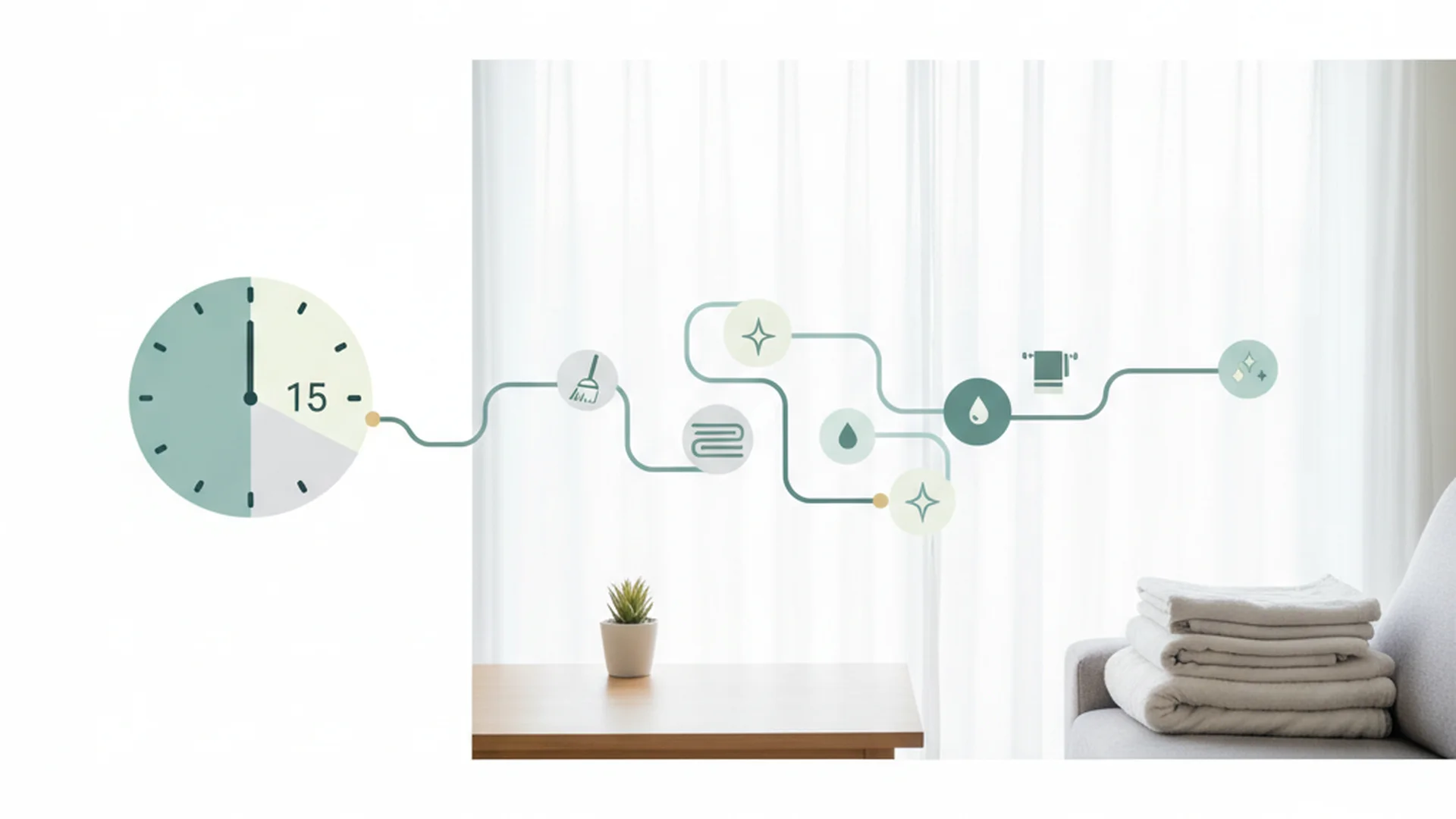
One of the most effective ways to utilize your time is to divide your 15 minutes into three distinct 5-minute blocks. This creates a sense of urgency and ensures you don't spend the whole time over-scrubbing a single sink.
- Block 1: The High-Impact Zone (Kitchen) – Focus on counters, the sink, and the dishwasher.
- Block 2: The Refresh Zone (Living Areas) – Fluff pillows, fold blankets, and clear the coffee table.
- Block 3: The Hot Spot (Entryway or Bathroom) – Tackle the area that collects the most "daily debris."
Weekly Schedule Example
If you prefer a "Task-a-Day" approach, use this 15 minute cleaning routine template to guide your week:
| Day | Focus Area | Primary Task |
|---|---|---|
| Monday | Kitchen | Clear counters, wipe appliances, scrub sink |
| Tuesday | Bathrooms | Wipe mirrors, swish toilets, refresh towels |
| Wednesday | Dusting | Top-down dusting of shelves and electronics |
| Thursday | Floors | Quick vacuum of high-traffic zones or spot mop |
| Friday | Declutter | 15-minute "toss or donate" sweep of the house |
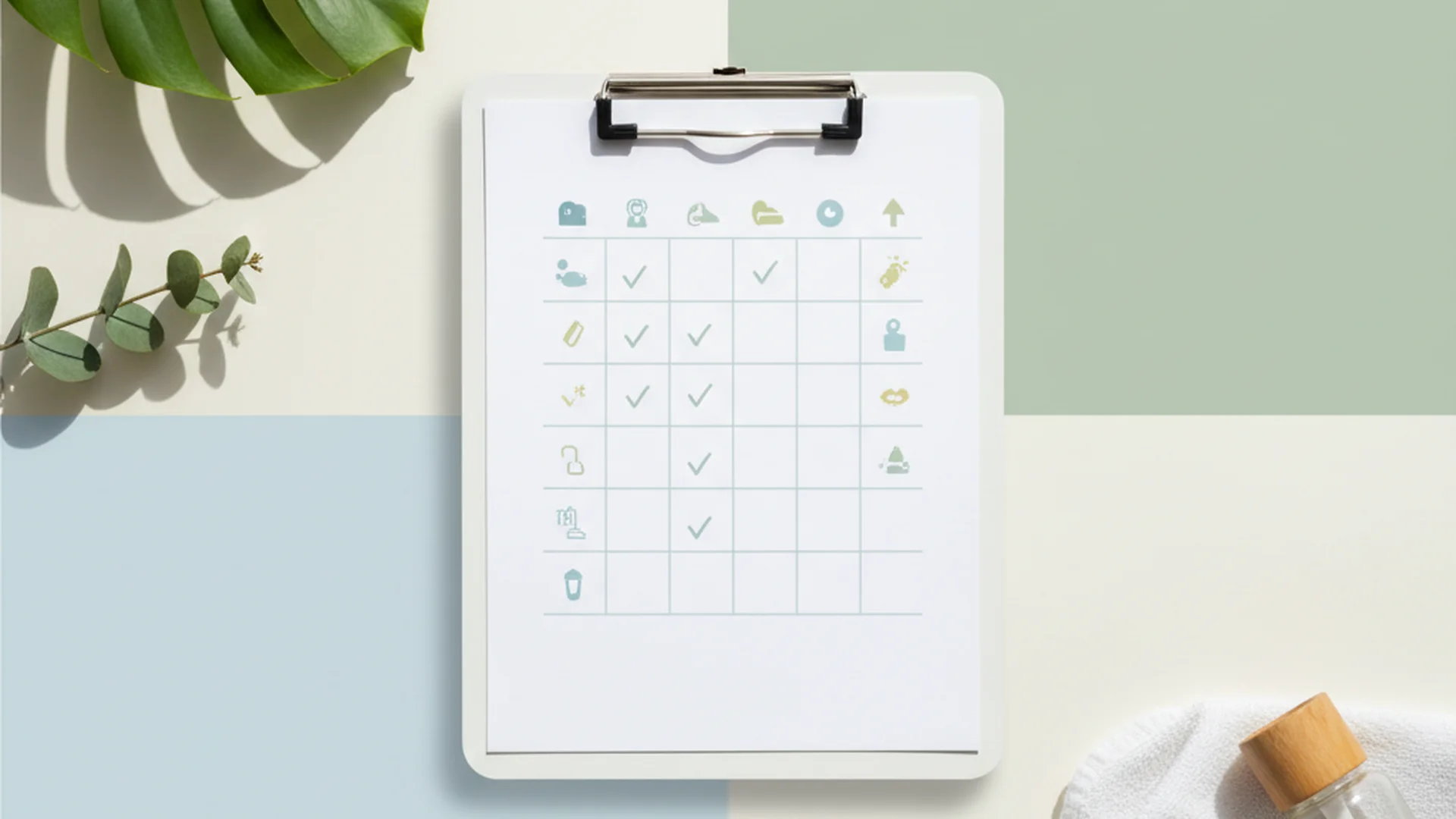
Tip: Keep a 15 minute cleaning routine printable on your fridge. Checking off a box provides a dopamine hit that reinforces the habit.
Expert Strategies for Maximum Efficiency
If you only have 15 minutes, you cannot afford to waste five of them looking for a sponge. Efficiency is the difference between a clean home and a frustrated homeowner.
The Top-Down Rule
Always start cleaning at the highest point in a room (ceiling fans, top shelves) and work your way down. This ensures that any dust or debris that falls during the process lands on uncleaned surfaces. If you clean the floors first and then dust the shelves, you’ll have to clean the floors a second time.
The "S" Pattern Wiping Technique
Many people wipe in circular motions, but that simply moves dirt around. Instead, use an "S" pattern: start at the top left, wipe across to the right, then drop down and wipe back to the left. This ensures every inch of the surface is contacted by the cloth.
The "Spray and Sit" Technique
Don't waste time scrubbing. Most modern cleaners need "dwell time" to break down grime. Spray your shower or kitchen counters first, then go spend two minutes tidying a drawer or emptying the trash. When you return, the dirt will wipe away with minimal effort.
Note: Professional-grade tools like microfiber cloths cut your cleaning time considerably because they trap more dirt in a single pass than traditional cotton rags.
2025–2026 Trends: The Future of Fast Cleaning
As we move through 2025 and into 2026, the way we approach our 15 minute cleaning routine is evolving. It is no longer just about removing dirt; it’s about sustainability and wellness.
Cleaning as "Self-Care"
The trend of "ritualized cleaning" is growing. This involves using functional fragrances—essential oils like eucalyptus for energy or lavender for calm—to transform a chore into a sensory experience. By pairing your 15-minute reset with a favorite podcast or high-energy playlist, you create a "habit stack" that makes the time fly by.
AI-Powered Scheduling
New apps like Tody and Sweep now use AI to predict when your home needs attention based on traffic patterns and household size. These apps can send "15-minute alerts" to your smartwatch, telling you exactly which task will have the highest impact at that moment, removing the mental load of planning.
Probiotic Cleaners and Minimalism
The "Underconsumption Core" movement has led to a rise in minimalist cleaning kits. Instead of a cabinet full of plastic bottles, households are switching to one or two high-quality, refillable multi-purpose concentrates. Furthermore, probiotic cleaners are becoming mainstream; these leave "good" bacteria on surfaces that continue to eat away at grime for days after your 15-minute session is over.
Warning: Never mix different cleaning chemicals, especially bleach and ammonia, as this can create toxic fumes. Stick to a single multi-purpose cleaner for your 15-minute bursts.
Common Mistakes to Avoid
Even the best intentions can be derailed by these common pitfalls:
- Aiming for Perfection: Remember, the 15-minute routine is a reset, not a deep sanitize. If you spend the whole time scrubbing grout with a toothbrush, you've missed the point. Focus on visible surfaces.
- Spraying Directly on Surfaces: This often leaves a sticky residue that actually attracts more dust. Instead, spray your microfiber cloth first, then wipe.
- Cross-Contamination: Using the same cloth for the bathroom and the kitchen is a hygiene nightmare. Use a color-coded system (e.g., Blue for bathroom, Red for kitchen).
- Ignoring the Tools: A dirty vacuum filter or a bacteria-laden sponge makes your 15 minutes ineffective. "Reset" your tools once a week to ensure they are working at peak performance.
Frequently Asked Questions
Can you really clean a whole house in 15 minutes?
Where should I start if I am completely overwhelmed?
How do I involve my kids in such a short window?
Should I clean by room or by task?
What should be in my 15-minute cleaning kit?
- One high-quality multi-surface concentrate.
- Three color-coded microfiber cloths.
- A handheld vacuum or a quick-sweep broom.
- A small caddy to keep everything together.
Conclusion
The secret to a clean home isn't a hidden supply of professional chemicals or a live-in maid; it’s the power of the 15 minute cleaning routine. By committing to a small, daily investment, you reclaim your weekends, reduce your stress levels, and create an environment where you can truly thrive. Whether you are using a digital AI scheduler or a classic 15 minute cleaning routine printable, the most important step is simply to start.
Set your timer, grab your microfiber cloth, and see how much your home—and your mood—can change in just a quarter of an hour.
Success: By adopting these habits, you join the thousands of households who have traded cleaning-day burnout for daily peace of mind.
Cleaning that keeps score
Every task earns points, every streak multiplies them, and Premium adds a household leaderboard plus a monthly Dustagorgon to beat.
- Free forever
- 30 badges to earn
- Up to 6 in a household
No card needed. Set up your rooms in a couple of minutes.