In this article
What you’ll learn
- Japanese cleaning is a spiritual ritual called 'Kiyomeru' aimed at purification.
- Success depends on the order of operations, specifically top-to-bottom and single-direction wiping.
- Decluttering (Danshari) must always precede cleaning (Soji) for maximum efficiency.
In many Western cultures, cleaning is often viewed as a weekend burden or a necessary evil to be finished as quickly as possible. However, japanese cleaning methods offer a radical shift in perspective, transforming these daily chores into a form of "moving meditation." In Japan, the act of cleaning is not just about removing dirt; it is an act of Kiyomeru—a ritual of purification that clears the mind as much as the floor. By adopting a japanese cleaning methods guide, you can move beyond simple maintenance and toward a lifestyle of mindfulness and shared responsibility.
The Three Pillars: Ritual, Routine, and Release
To truly understand japanese cleaning methods explained, one must look at the three foundational concepts that govern the Japanese home: Oosouji, Soji, and Danshari. These are not merely words but a framework for living.
Oosouji: The Annual Spiritual Reset
Oosouji, which translates to "Big Cleaning," is a ritual performed every December. While it may look like "spring cleaning," its roots are much deeper. Originating from the Heian era tradition of susuharai (soot removal), it was originally intended to welcome the Toshigami (the New Year deity).
By cleaning every nook and cranny—even the "invisible" spots behind the refrigerator—households drive away the lingering "dust" of the previous year’s misfortunes. Despite the rise of professional services, most households still perform this ritual themselves to start the year with a pure heart.
Soji: The Daily Practice of Mindfulness
Unlike the once-a-week deep clean common in other parts of the world, Soji is a daily, micro-cleaning habit. This is the practice of "cleaning as you go." It emphasizes that dirt should never be allowed to settle. In a traditional Japanese home, the goal is to keep the space in a perpetual state of "readiness."
Danshari: The Art of Letting Go
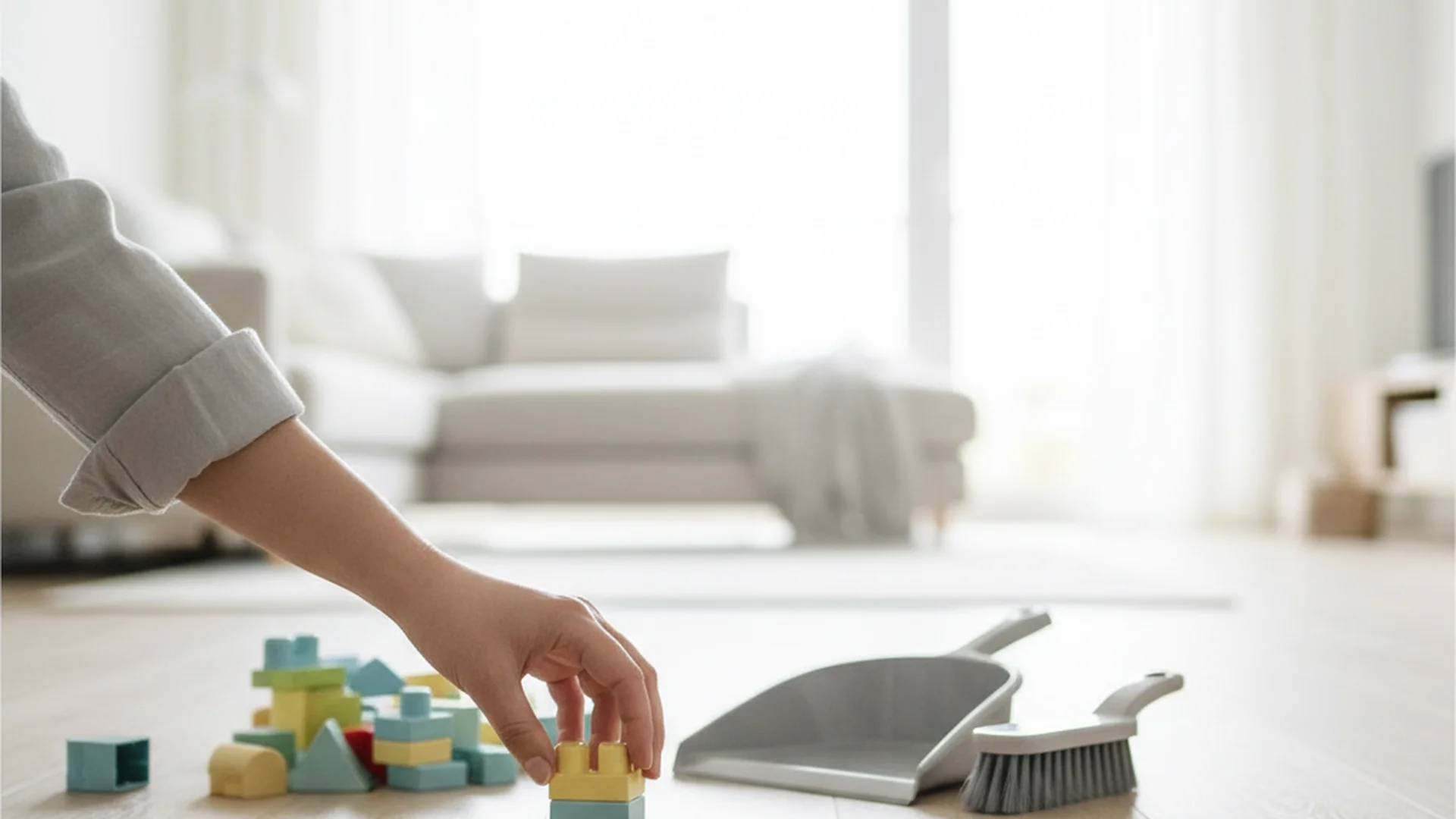
Often confused with the KonMari method, Danshari is a broader philosophy of decluttering. The term is composed of three kanji: Dan (refusal), Sha (disposal), and Ri (separation). You cannot effectively clean a space that is overflowing with items. Danshari must happen before Soji can begin.
Tip: Before you pick up a broom, spend 15 minutes identifying items that no longer serve a purpose. You cannot clean around clutter; you must remove it.
The Pro’s Toolkit: Traditional Tools vs. 2026 Tech
The Japanese approach to cleaning tools is a fascinating blend of ancient wisdom and futuristic innovation. As we head into 2025 and 2026, we are seeing a return to eco-conscious, traditional tools alongside high-tech "invisible" cleaning solutions.
Traditional Heirlooms
In Japan, cleaning tools are often treated with respect, sometimes even viewed as having their own spirit.
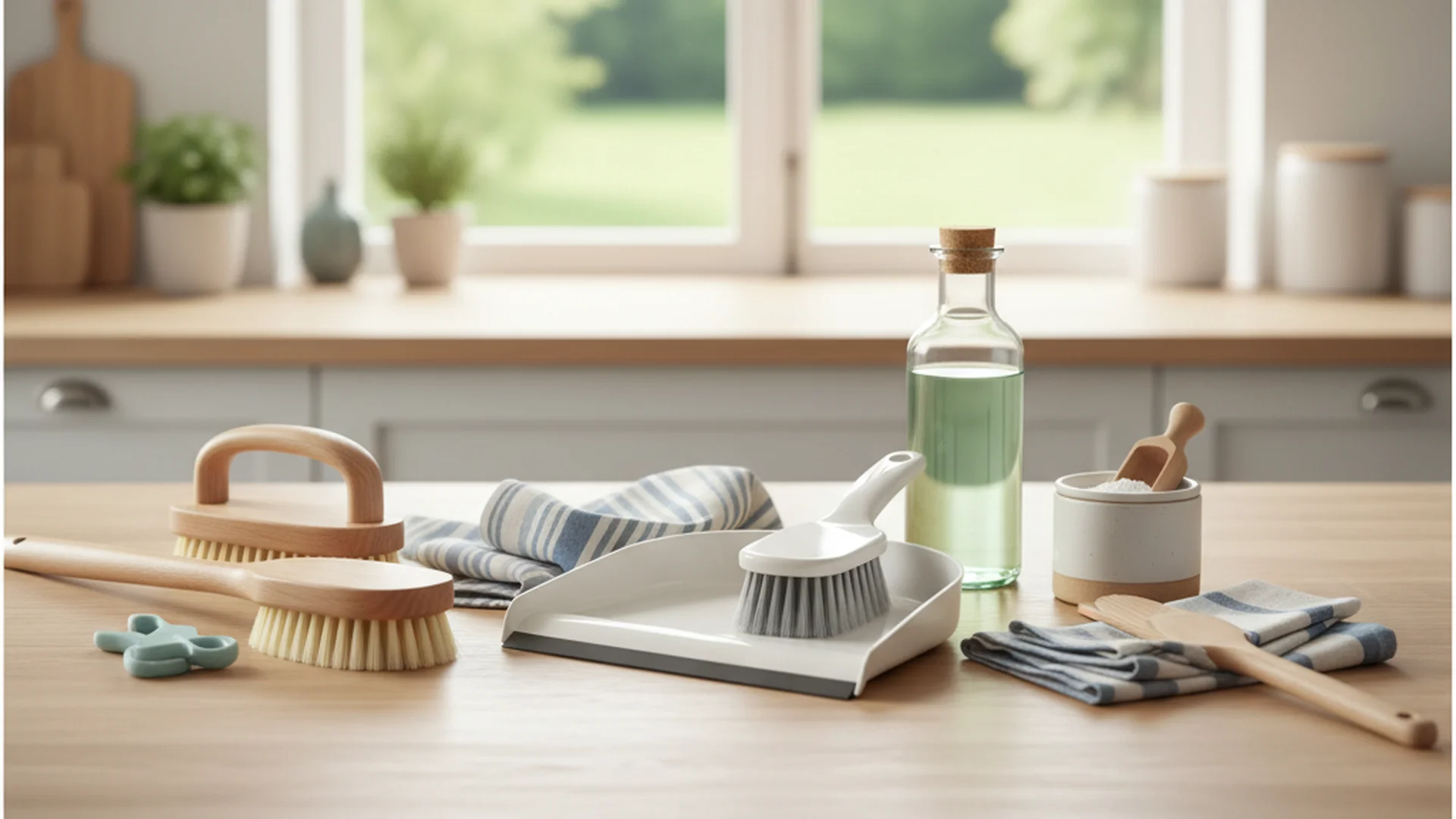
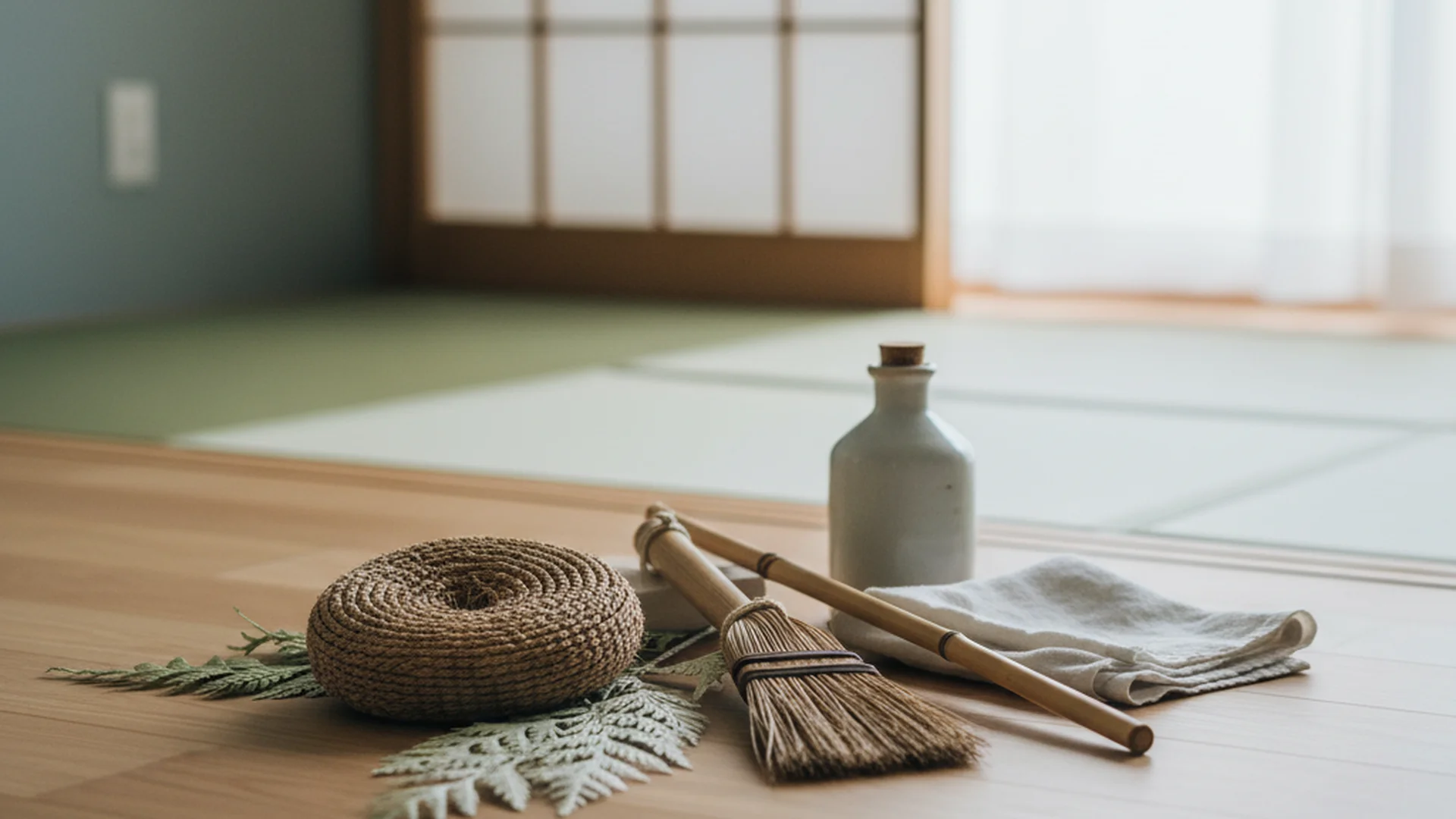
- Tawashi: These are stiff palm fiber scrubbers. They are virtually indestructible and perfect for scrubbing root vegetables or cast-iron pans without the need for harsh detergents.
- Houki: Handmade grass brooms that are designed to last decades. Unlike plastic bristles, these grass brooms contain natural oils that help collect fine dust.
- Zokin: Traditional cleaning cloths made from upcycled fabric (usually old towels or kimonos). They are hand-stitched for durability and used for zokin-gake (floor wiping).
2026 Smart Cleaning Trends
The Japanese market is currently leading the "Invisible Cleaning" movement. Because urban spaces are compact, bulky vacuums are being replaced by:
- AI-Integrated Robotic Mops: These 2026 models use UV-C light to sanitize floors instantly, catering to an aging population that may struggle with manual scrubbing.
- Subscription Professionalism: There is a growing trend of hiring pros for "task-stacking"—specialized deep cleans of air conditioners and kitchen hoods—leaving the daily Soji to the residents.
| Tool Type | Example | Best Use Case |
|---|---|---|
| Traditional | Tawashi | Tough grease and root vegetables |
| Traditional | Zokin | Hand-wiping wooden floors |
| Modern | UV-C Mop | Sanitizing without chemicals |
| Modern | Citric Acid | Removing hard water stains |
Note: The 2026 "J-Clean" aesthetic prioritizes plastic-free tools that look beautiful enough to be displayed on the wall, rather than hidden in a closet.
The "How-To" Guide: Master the Technique
If you want to follow a japanese cleaning methods guide, you must master the physics of the process. The tradition works with gravity and friction to ensure that no effort is wasted.
The Top-to-Bottom Principle
This is the golden rule of Soji. Always start with the highest point in the room—ceiling fans, the tops of door frames, and high shelves. Gravity ensures that dust falls to the floor. If you clean the floor first and then the shelves, you will find yourself cleaning the floor a second time.
Single-Direction Wiping (Ichiho Fuki)
One of the most common mistakes in Western cleaning is the back-and-forth scrubbing motion. The Japanese approach is Ichiho Fuki, or single-direction wiping.
- Why? Most dust particles have tiny "hooks." When you scrub back and forth, you are simply re-attaching the dust you just lifted. By wiping in one continuous motion, you trap the dust in the cloth and remove it entirely.
The "Dry-First" Rule
This is particularly important in bathrooms. Spraying liquid cleaner directly onto a dry, bacteria-laden surface causes "micro-splatter," flinging germs well beyond the original spot.
- The Method: Always wipe the surface with a dry paper towel or cloth first to remove the bulk of the dust and hair. Only then should you apply your cleaning solution.
Warning: Never spray cleaning liquid onto a dusty toilet seat. Always wipe dry first to prevent the aerosolization of bacteria.
The Genkan (Entryway) Reset
The entryway is considered the most sacred part of the Japanese home because it is where the outside world meets the private sanctuary.
- Sweep daily: Prevent outside "energy" and dirt from entering the home.
- Shoe Orientation: Line up shoes facing the door. This symbolizes being ready for the next step in your life and shows respect to guests.
Why Character Matters: Lessons from the Japanese School System
One of the most striking real-world examples of japanese cleaning methods is Gakko Soji—school cleaning. In Japan, public schools require students to clean their own classrooms, hallways, and even bathrooms.
There are typically no janitors for basic daily cleaning. This practice isn't about saving money; it’s about "character training." By age six, Japanese children learn that they are responsible for their environment. This fosters a lifelong habit of shared responsibility, which goes a long way toward explaining why Japanese cities are so famously free of litter. When everyone is a cleaner, no one wants to be a litterer.
Success: Implementing a "10-minute family clean" every evening can replicate this sense of shared responsibility in your own home, reducing the burden on a single person.
Common Mistakes to Avoid
While the japanese cleaning methods guide is highly effective, many people outside of Japan fall into common traps when trying to implement it.
Mistake 1: Cleaning Before Decluttering
You cannot clean around "dead" objects. If you have boxes of items you haven't touched in a year, you are just moving dust from one side of the box to the other. You must perform Danshari first.
Mistake 2: The "Minimalist" Facade
There is a misconception that Japanese homes are naturally empty. In reality, many struggle with ura (hidden clutter) while maintaining a perfect omote (public facade). The goal is not a "magazine-perfect" home, but the pursuit of order in all areas, including the hidden ones.
Mistake 3: Over-Reliance on Harsh Chemicals
In the compact, often poorly ventilated spaces of urban Japan, harsh bleach can be overwhelming. Traditional methods rely on natural disinfectants:
- Rice Rinse Water: Used to polish wood floors.
- Citric Acid: Excellent for water stains in the kitchen.
- Baking Soda: The go-to for degreasing range hoods.
Tip: Use the leftover water from rinsing rice to mop your wood floors. The natural grain oils act as a gentle, non-toxic polish.
Frequently Asked Questions
Is Japanese cleaning the same as the KonMari Method?
What is Oosouji?
Why do Japanese people use rice water to clean floors?
Do Japanese people really clean their own schools?
Conclusion: Turning a Chore into a Moment of Gratitude
Adopting japanese cleaning methods is about more than just a spotless house. It is about shifting your mindset from "I have to clean" to "I am caring for the space that protects me." Whether it is the single-direction wipe of a table or the daily reset of your entryway, these small acts of Soji accumulate into a life of greater peace and order.
As we look toward 2026, the blend of traditional mindfulness and smart technology allows us to maintain our homes with less stress and more intention. Start small: sweep your entryway tomorrow morning and face your shoes toward the door. You might be surprised at how much lighter the air feels.
Success: By practicing Soji for just 15 minutes a day, you keep household allergens from building up and take the edge off daily stress.
Cleaning that keeps score
Every task earns points, every streak multiplies them, and Premium adds a household leaderboard plus a monthly Dustagorgon to beat.
- Free forever
- 30 badges to earn
- Up to 6 in a household
No card needed. Set up your rooms in a couple of minutes.