In this article
What you’ll learn
- Always use a top-down cleaning approach starting with the roof and gutters.
- Avoid power washers and ammonia-based cleaners to protect seals and vinyl.
- Implement a bi-annual deep cleaning schedule to maintain energy efficiency and structural integrity.
A sunroom is more than just an architectural addition; it is a sanctuary that bridges the gap between the comfort of your home and the beauty of the outdoors. As we move into 2025, the sunroom has evolved from a simple seasonal porch into a high-tech, multi-functional space often serving as a home office or a biophilic retreat. However, because these rooms are primarily composed of glass and specialized frames, learning how to clean sunroom structures properly is essential for maintaining both their aesthetic appeal and their thermal efficiency.
A clean and well-maintained sunroom does more than just look good—it makes the space somewhere you actually want to spend time. In this guide, we will explore the professional techniques, eco-friendly solutions, and material-specific strategies required to keep your sunroom pristine.
Why Sunroom Maintenance Matters in 2025
The modern sunroom is a feat of engineering. With over 52% of the market now driven by energy-efficient upgrades like Low-E glass, the "old way" of cleaning—spraying everything with a hose and using harsh chemicals—can actually do more harm than good.
Dirt, pollen, and industrial pollutants don't just obscure your view; they can degrade the specialized coatings on your glass and cause the mechanical parts of your windows to seize. Furthermore, since vinyl sunrooms account for 33.1% of the market, understanding how to treat synthetic frames versus aluminum ones is the difference between a room that lasts forty years and one that requires expensive repairs in ten.
Essential Sunroom Cleaning Checklist
Before you begin, you need the right tools. Using the wrong equipment can lead to permanent scratches or failed seals.
The Professional Toolkit
- A-frame ladder: Essential for reaching the roof without leaning against the structure.
- Squeegee with a telescopic pole: For streak-free glass at heights.
- Microfiber cloths and mops: To avoid lint and scratching.
- Soft-bristle extension brush: For frames and gutters.
- Silicone-based lubricant: For tracks and hinges.
- Vacuum with HEPA filter: To capture fine dust and allergens.
Material-Specific Cleaning Table
| Component | Best Tool/Method | Cleaning Solution |
|---|---|---|
| Glass Panels | Squeegee & Microfiber Cloth | 1 part vinegar to 10 parts water or mild dish soap. |
| Vinyl Frames | Soft cloth (circular motions) | Mild detergent; avoid ammonia or bleach. |
| Aluminum Frames | Soft extension brush & hose | Warm soapy water; rinse thoroughly. |
| Polycarbonate Roof | Soft mop or sponge | Lukewarm water with specialized "plastic-safe" cleaner. |
| Screens | Remove & rinse with hose | Gentle scrubbing with a soft-bristle brush. |
Tip: Always perform your cleaning on a cloudy day. Direct sunlight causes your cleaning solution to evaporate too quickly, leaving behind those frustrating "checkerboard" streaks and mineral spots.
Step-by-Step: How to Clean Sunroom Surfaces Properly
To achieve a professional finish, you must follow a logical order of operations. This prevents you from getting dirt on surfaces you have already cleaned.
Step 1: Roof and Gutters
Always start at the very top. Debris from the roof will inevitably wash down onto the windows. Sunroom gutters are unique because they are often installed "level" rather than sloped. This means they collect stagnant water and sludge faster than your primary house gutters.
Warning: Never walk on the sunroom roof. These structures are designed for snow loads and wind resistance, not the concentrated weight of a human foot. Use a sturdy A-frame ladder positioned alongside the structure.
- Clear the gutters by hand or with a small garden trowel.
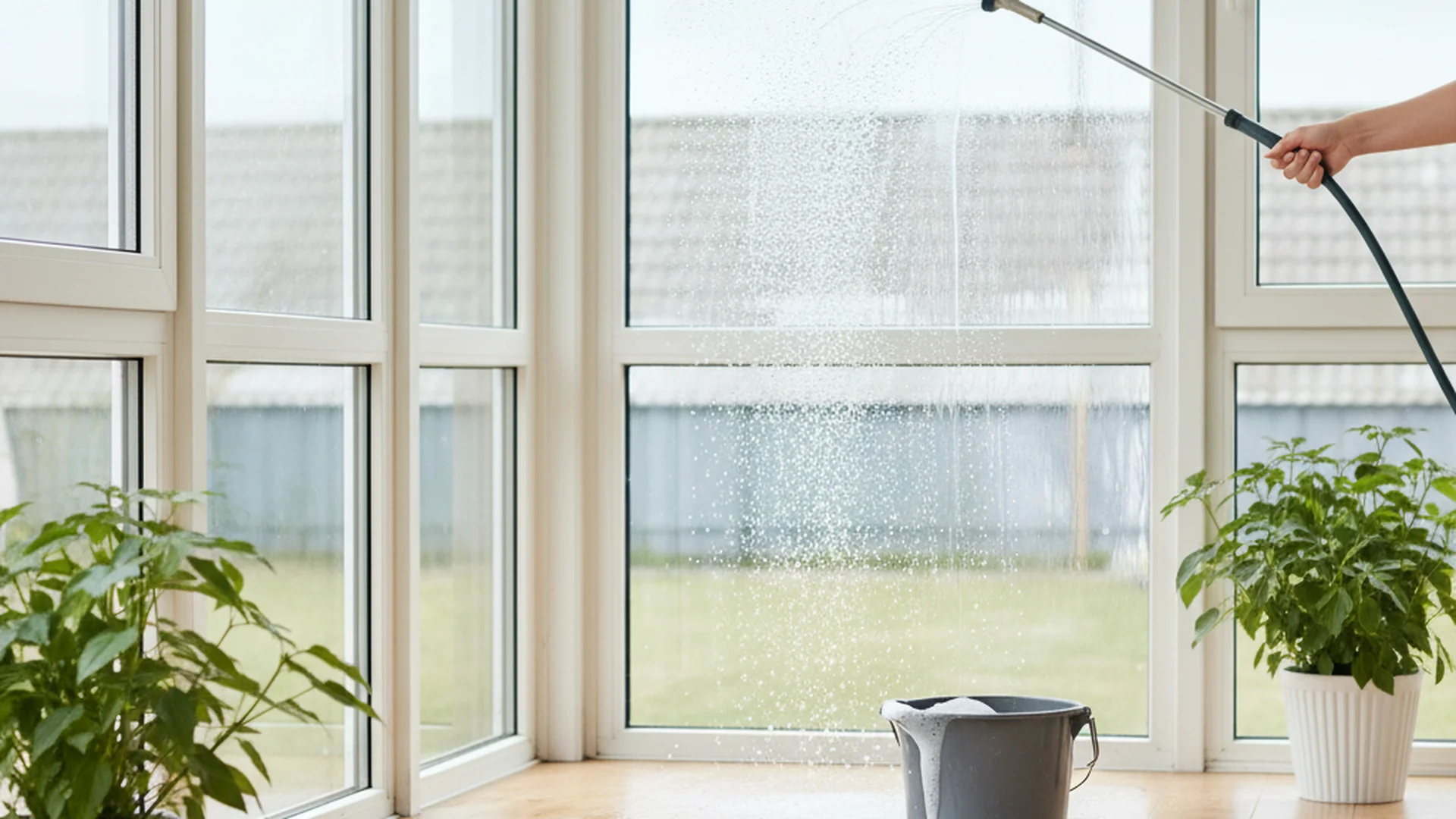
- Rinse the roof using a low-pressure garden hose.
- If you have a polycarbonate roof, use a soft mop. These surfaces scratch much easier than glass.
Step 2: Frames and Tracks
Once the roof is clear, focus on the "skeleton" of the room. Dirt trapped in window tracks is the leading cause of hardware failure.
- Vacuum first: Use a crevice tool to suck out dead insects, sand, and dust from the tracks.
- Wipe frames: Use a soft cloth with mild soapy water. For vinyl frames, avoid any abrasive pads that could dull the finish.
- Lubricate: Once dry, apply a silicone-based lubricant to the tracks. Avoid WD-40, as it can attract more dust over time.
Step 3: The Glass Panels
This is where the transformation happens. When learning how to clean sunroom glass, the secret is in the technique.
- Apply your vinegar-water solution with a soft sponge.
- Use the squeegee in a single, fluid motion. Wipe the squeegee blade with a dry cloth after every stroke.
- For the interior, use a microfiber cloth to buff out any remaining smudges.
Step 4: Screens and Flooring
Finally, remove the screens and give them a gentle scrub on the lawn with a soft brush and soapy water. While they dry, vacuum and mop the sunroom floor, paying special attention to the transition zones where the sunroom meets the rest of the house.
Note: If you have integrated "Smart Glass" (auto-tinting technology), do not use standard glass cleaners. Use only distilled water or manufacturer-approved electronic-safe cleaners to protect the conductive coatings.
Real-World Examples of Sunroom Maintenance
Example 1: The High-Density Biophilic Sunroom
Consider "The Garden Room"—a sunroom filled with indoor plants. While beautiful, the high humidity and soil can lead to mold growth on the frames and a film of organic "fog" on the glass. In this scenario, homeowners should use bio-based enzyme cleaners that are safe for plants but aggressive against fungal spores. Cleaning here requires moving the plants away from the glass monthly to ensure air circulation.
Example 2: The Modern Home Office
Many 2025 sunrooms serve as home offices. This introduces sensitive electronics into a high-light environment. To clean these spaces, "electronic-friendly" methods are required. This includes using anti-static dusters to prevent dust from jumping from the window sills onto your laptop, and utilizing HEPA-filter vacuums to ensure that pollen (a major sunroom intruder) doesn't settle into your keyboard.
Example 3: The Coastal Sunroom
A homeowner living near the coast faces "salt spray" issues. Salt can corrode aluminum frames and "etch" glass if left too long. In this case, the cleaning frequency must increase to once every three months, with a heavy emphasis on rinsing the exterior frames with fresh water to neutralize the salt before deep scrubbing.
Recent Trends and Updates (2025-2026)
The world of home maintenance is shifting toward sustainability and high technology. Here are the latest sunroom cleaning tips regarding new industry standards:
- Eco-Friendly Standard: There is a massive shift toward bio-based, enzyme cleaners. These products break down organic matter (like bird droppings and pollen) without the use of harsh phosphates that can damage your garden when they run off the roof.
- Smart Glass Maintenance: As auto-tinting glass becomes more common, the use of distilled water is now a requirement for many warranties. Tap water contains minerals that can interfere with the electronic sensors over time.
- HEPA Integration: Since sunrooms are "pollen traps," using a vacuum with a HEPA filter is no longer optional for allergy sufferers. It ensures that the cleaning process doesn't simply redistribute allergens into the air.
Common Mistakes to Avoid
Even the most well-intentioned homeowner can make mistakes that lead to costly repairs. Here is what to avoid:
- The "Windex on Everything" Myth: Ammonia-based cleaners are the enemy of vinyl and polycarbonate. Over time, ammonia causes these materials to yellow and become brittle. Stick to mild dish soap or vinegar for everything except the glass itself.
- Power Washing: It is tempting to blast away the dirt with a pressure washer. However, high-pressure water can easily blow through the rubber seals and "isobar" strips, leading to internal leaks and fogging between double-pane glass.
- Leaning on the Structure: Sunroom frames are designed for structural integrity, not lateral weight. Leaning your body or a heavy ladder against the frames can cause them to shift slightly, potentially cracking the glass or breaking the weather seal.
- Neglecting the "Level" Gutters: Because sunroom gutters don't slope like traditional ones, they require more frequent attention. If water sits in them, it will eventually back up under the roof tiles or glass panels.
Warning: Using abrasive pads or steel wool on aluminum or vinyl frames will permanently remove the factory finish, making them more susceptible to UV damage and staining.
Frequently Asked Questions
How often should I clean my sunroom?
Can I use a power washer on the exterior?
What is the best way to remove bird droppings?
Why are there streaks on my glass even after cleaning?
How do I clean the hard-to-reach parts of a glass roof?
Conclusion
Mastering how to clean sunroom spaces is a vital skill for any homeowner looking to preserve the value and beauty of their home. By following a top-down approach, using the correct material-specific solutions, and avoiding the temptation of high-pressure washing, you ensure that your sunroom remains a clear, bright, and efficient space for years to come.
Regular maintenance doesn't just improve the view; it protects the structural seals and mechanical hardware that keep the elements at bay. Whether your sunroom is a high-tech home office or a lush indoor garden, a dedicated cleaning routine is the key to enjoying the best of the outdoors from the comfort of your indoors.
Success: Consistent maintenance can extend the lifespan of your sunroom seals by up to 10 years and improve the natural light transmission by 30%.
Cleaning that keeps score
Every task earns points, every streak multiplies them, and Premium adds a household leaderboard plus a monthly Dustagorgon to beat.
- Free forever
- 30 badges to earn
- Up to 6 in a household
No card needed. Set up your rooms in a couple of minutes.