In this article
What you’ll learn
- Implement the 80/20 toy rule to reduce clutter and cleaning time.
- Sanitize hard plastic toys weekly to reduce germ spread in the household.
- Use clear bins and picture labels to create a self-sustaining organization system.
Entering a playroom can often feel like walking into a colorful disaster zone. Between the stray building blocks, the mountain of plushies, and the mysterious sticky spots on the floor, knowing how to clean playroom areas effectively is a skill every parent needs. In 2025, the focus has shifted from mere "tidying" to creating a sustainable, hygienic environment that fosters better play with fewer items. By following a structured approach, you can transform this high-traffic area from a source of stress into a streamlined space for creativity.
Why Playroom Hygiene Matters More Than Ever
Before we dive into the physical labor of cleaning, it is vital to understand the "why" behind the process. Recent research into household hygiene has highlighted playrooms as significant germ hotspots.
The Science of Playroom Germs
Playroom floors are statistically one of the most bacteria-heavy surfaces in any home. Because children spend a significant amount of time sitting, crawling, and playing on these surfaces, they are frequently exposed to allergens and pathogens. Studies show that sanitizing toys weekly can significantly reduce the spread of common respiratory illnesses in households.
The 80/20 Toy Rule
From an organizational standpoint, the "80/20 Toy Rule" is a game-changer. Research indicates that children typically play with only 20% of their toys 80% of the time. The remaining 80% often just serves as "clutter" that makes the cleaning process more difficult. Identifying that core 20% is the first step in any successful cleaning guide.
Note: A DIY sanitizing solution consisting of 1 tablespoon of bleach per gallon of water costs approximately 3–5 cents per application, making it a highly cost-effective alternative to expensive commercial sprays.
The Multi-Stage Playroom Cleaning Checklist
To maintain a pristine environment without burning out, it is best to break the work into manageable stages. This playroom cleaning checklist divides tasks into daily, weekly, and monthly categories.
Daily: The "Home Reset"
The daily reset is designed to prevent the "snowball effect" of clutter. It should take no more than 15 minutes.
- Pick up the floor: Return all toys to their designated, labeled bins.
- The Art Table Wipe: Use a non-toxic spray to remove crayon marks or glue residue.
- The "Mouth Toy" Audit: For households with toddlers, move any toys that have been in a child's mouth to a "to-be-sanitized" bin.
- Surface Check: Quickly scan for any food crumbs or spills that could attract pests.
Weekly: The "Deep Refresh"
This is when the actual cleaning and sanitizing happen.
- Vacuuming: Research suggests that making multiple slow passes with a vacuum is 50% more effective at removing deeply embedded dust and allergens than one quick pass.
- Toy Sanitization: Soak hard plastic toys in a sanitizing solution or run them through the top rack of the dishwasher.
- Electronic Care: Use 70% isopropyl alcohol on a microfiber cloth to wipe down game controllers and tablets.
- Air Circulation: Open the windows for 15-20 minutes to flush out stale air and reduce indoor pollutants.
Monthly: The "Maintenance Purge"
- Fabric Care: Launder dress-up clothes, floor pillows, and machine-washable plush toys.
- Dusting: Target the areas often missed, such as baseboards, light fixtures, and the very tops of bookshelves.
- Safety Inspection: Conduct a "broken toy audit." Discard anything cracked, leaking batteries, or missing vital pieces.
| Task Category | Frequency | Tools Needed |
|---|---|---|
| Sanitizing Toys | Weekly | Bleach/Water or Dishwasher |
| Laundering Soft Goods | Monthly | Washing Machine |
| Vacuuming Rugs | 2x Weekly | HEPA Vacuum |
| Floor Mopping | Weekly | Microfiber Mop |
Warning: Unsecured furniture is a major safety risk. Always ensure all shelving units and heavy toy chests are tethered to the wall to prevent tipping accidents.
Modern Playroom Cleaning Tips and Trends (2025-2026)
As we move through 2025 and into 2026, the way we approach playroom maintenance is evolving. Technology and new materials are making it easier to keep these spaces clean.
AI-Assisted Organizing
Many parents are now using AI tools to manage the mental load of cleaning. For example, you can take a photo of your messy playroom and ask an AI (like ChatGPT) to "create a 15-minute step-by-step cleaning plan for this specific mess." This helps break down an overwhelming task into manageable instructions.
Sustainable Materials
There is a massive shift away from plastic storage toward sustainable materials like bamboo, water hyacinth, and recycled felt. Not only are these better for the environment, but they also tend to harbor fewer static-charged dust particles than traditional plastic bins.
Magnetic Storage Solutions
Utilizing vertical space is a top trend for 2026. Heavy-duty magnetic caddies attached to metal doors or wall strips are being used to keep art supplies, such as scissors and markers, out of reach and off the floor.
Tip: If you are dealing with a massive "Lego explosion," try using a specialized play mat that cinches up into a storage bag. It cuts cleanup time from ten minutes to ten seconds.
Expert Organizational Strategies
Cleaning is infinitely harder if the room isn't organized. Use these expert strategies to make your how to clean playroom routine much smoother.
The "Everything Has a Home" Philosophy
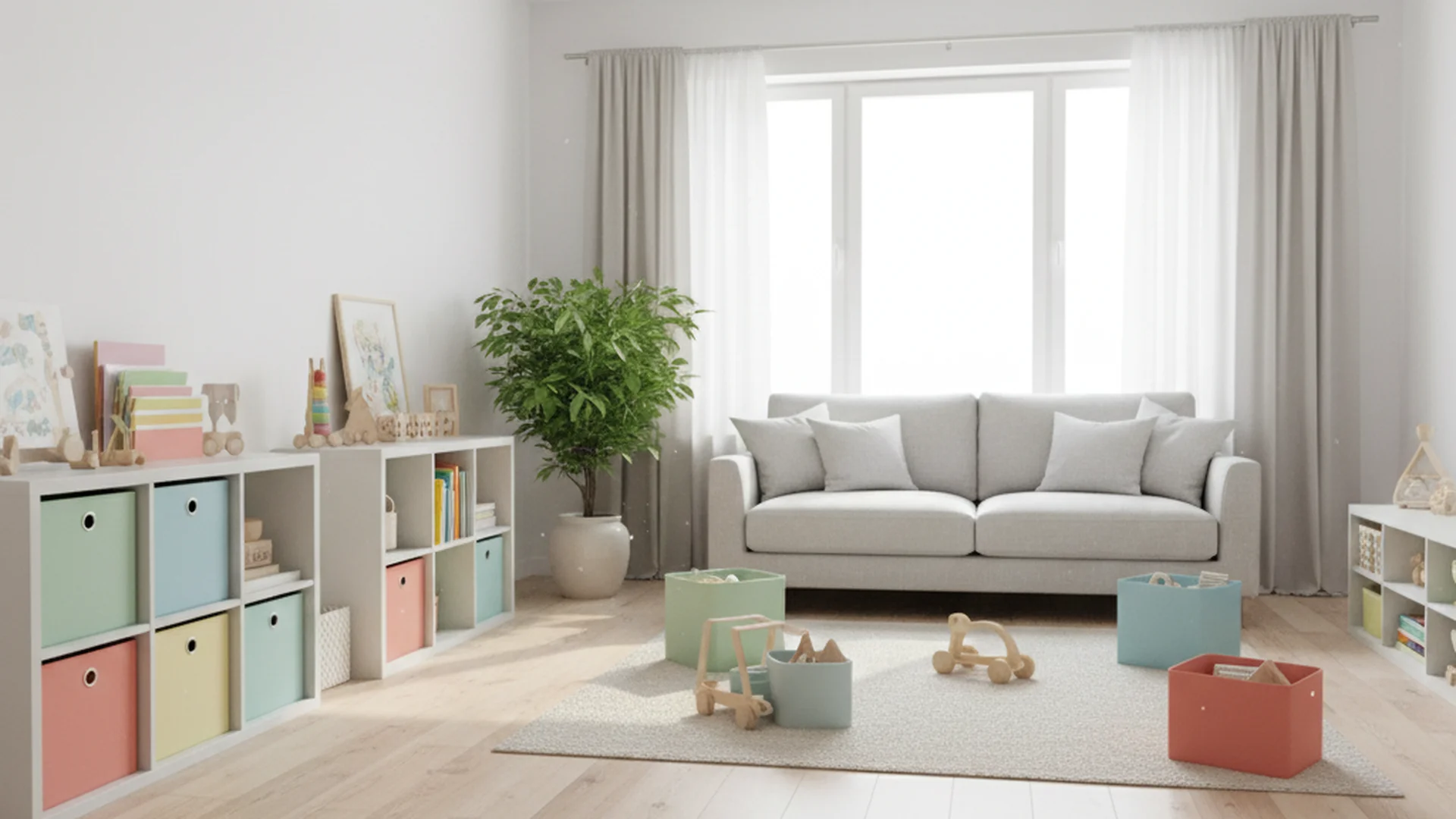
If a toy doesn't have a specific place to go, it will inevitably end up on the floor. Use clear bins so children can see the contents without dumping them out. For younger children, use picture labels (a photo of a block, a photo of a car) so they can participate in the cleanup process.
Implementing Toy Rotation
Don't keep every toy out at once. Keep 50% of the toys in a "closet library" and swap them out once a month. This keeps engagement high, reduces "choice paralysis" in children, and—most importantly—halves the amount of stuff you have to clean.
Zoning the Room
Divide the playroom into distinct zones:
- Active Zone: For climbing structures or tumbling mats.
- Quiet Zone: A reading nook with pillows and books.
- Creative Zone: An art desk and building blocks. Zoning helps contain specific types of messes to specific areas, preventing the "whole-room spread."
Success: Children who play in "low-clutter" environments have been shown to have longer attention spans and more creative play sessions.
Real-World Examples of Playroom Success
Example 1: The "15-Minute Timer" Technique
The Miller family in Chicago struggled with a playroom that was perpetually covered in tiny plastic figurines. They implemented a "15-minute reset" every evening before dinner. By making it a game with a high-energy soundtrack, the children learned to associate cleaning with fun rather than a chore. Within two weeks, the deep-cleaning time on weekends was cut in half.
Example 2: Transitioning to Minimalist Play
A mother of three decided to follow the "Urge to Purge" movement of 2025. She removed 60% of their toys, donating them to a local shelter. She found that the children actually played more because they weren't overwhelmed by options. Her daily cleaning routine went from a 30-minute struggle to a 5-minute breeze.
Example 3: Solving the Plushie Problem
One family struggled with dust allergies. They switched all their soft storage to "stuffable" bean bags. These bags hold the plush toys inside a zippered fabric shell, which the kids then use as a chair. This kept the dust off the toys and made vacuuming the floor significantly easier.
Common Mistakes to Avoid
When learning how to clean playroom environments, many parents fall into the same traps. Avoid these common pitfalls:
- Hiding Toys in Deep Chests: Large, opaque toy chests are where toys go to die. Kids will dump the entire chest to find one item at the bottom. Stick to shallow, clear bins or open shelving.
- Complex Systems: If a child has to open three different lids or navigate a complex filing system to put away one toy, the system will fail. Aim for "one-step cleanup."
- Pushing Furniture Against Walls: While it seems like it creates more space, it often creates a "dead zone" in the middle of the room where clutter accumulates. Using furniture to create islands or zones helps contain the mess.
- Assuming All Plush is Washable: Always check the tags. Some high-end plushies or those with internal electronics will be ruined in a washing machine. For these, use a UV-C sanitizing wand or a damp cloth.
Frequently Asked Questions
How often should I deep clean the playroom?
Is it better to clean with or without the kids?
What is the difference between cleaning, sanitizing, and disinfecting?
How do I clean wooden vs. plastic toys?
How do I get rid of the "stale" smell in a playroom?
Conclusion
Mastering the art of how to clean playroom spaces isn't just about aesthetics; it's about creating a healthy, functional environment where your children can thrive. By implementing a consistent playroom cleaning checklist, utilizing the 80/20 rule, and staying ahead of modern trends like sustainable storage and AI scheduling, you can reclaim your home from the chaos. Remember, the goal isn't a museum-perfect room—it's a space that is easy to reset so that the focus remains on what truly matters: play.
Success: By reducing the volume of toys by just 30%, most parents report a 50% reduction in daily cleaning time.
Cleaning that keeps score
Every task earns points, every streak multiplies them, and Premium adds a household leaderboard plus a monthly Dustagorgon to beat.
- Free forever
- 30 badges to earn
- Up to 6 in a household
No card needed. Set up your rooms in a couple of minutes.