In this article
What you’ll learn
- Emptying the pantry completely is the only way to ensure a true deep clean.
- Using the FIFO (First In, First Out) method saves households real money on wasted food.
- Professional cleaning requires vacuuming dry debris before applying any liquid solutions.
A pantry is more than just a storage closet; it is the engine room of your home’s nutrition and a significant factor in your monthly budget. However, for many homeowners, the process of how to clean pantry shelves feels like an insurmountable task. Given how much money the average household throws away in spoiled and forgotten food each year, maintaining an organized, clean pantry isn't just about aesthetics—it is a financial and environmental necessity.
In this guide, we will walk through a professional-grade framework for deep-cleaning your pantry. Whether you have a small reach-in cupboard or a sprawling modern scullery, these techniques will help you eliminate pests, reduce waste, and create a system that stays clean long after you've finished scrubbing.
The High Cost of Pantry Neglect
Before we dive into the scrubbing, we must understand the "why." A meaningful share of all the food we buy is wasted at home rather than in the supply chain. This often happens because items are pushed to the back of dark, cluttered shelves and forgotten until long after their "Best By" dates have passed.
Furthermore, improper storage—such as keeping flour in its original paper bag—is the leading cause of pantry moth infestations. These pests can destroy hundreds of dollars worth of dry goods in a matter of weeks. By learning how to clean pantry spaces effectively, you are protecting your health, your home, and your wallet.
The Step-by-Step Deep Clean Process
A professional clean requires a systematic approach. Do not attempt to clean around your boxes and cans. To do this right, you must follow the "Empty-First" rule.
Step 1: The Total Empty
Take every single item out of the pantry. Use your kitchen counters or dining table as a staging area.
Tip: If you are short on time, use the "Shelf-by-Shelf" method. This prevents the "overwhelmed" feeling that comes with seeing your entire food supply scattered across the floor.
Step 2: The 2026 Pantry Audit
As you remove items, check their labels. A lot of perfectly good food gets binned simply because the dates on the packet are misunderstood.
- "Best If Used By": This is a quality indicator, not a safety date. The food is often still safe to eat after this day.
- "Use By": This is the last date recommended for the use of the product while at peak quality.
Discard anything that is leaking, bulging, or clearly expired. If you find items that are still good but you know you won't use, set them aside in a "Donate" box for your local food bank.
Step 3: Vacuum Before You Wipe
One of the most common mistakes people make when learning how to clean pantry shelves is reaching for the spray bottle first.
Warning: Never apply liquid cleaners to loose flour or crumbs. This creates a sticky "paste" that is incredibly difficult to remove and can actually attract more pests.
Instead, use a vacuum with a brush attachment to suck up every loose grain of rice, flour dust, and stray onion skin. Pay special attention to the corners and the undersides of shelves, as these are the primary hiding spots for pantry moth larvae.
Step 4: The Deep Scrub
Once the dry debris is gone, use a mixture of warm water and mild dish soap or a vinegar-water solution.
- Vinegar Solution: Mix equal parts white vinegar and water. This is particularly effective because it kills microscopic eggs left behind by pests.
- Dry Completely: Use a microfiber cloth to dry the shelves immediately. Moisture is the enemy of wood and wire shelving alike.
Organization Masterclass: Zoning and FIFO
Cleaning is only half the battle; the second half is ensuring the mess doesn't return. Professional organizers in 2026 emphasize "Zoning."
Implementing the FIFO Method
FIFO stands for First In, First Out. When you return items to your clean shelves, place the ones with the closest expiration dates at the front. New purchases should always go to the back. This ensures you are rotating through your stock and minimizing waste.
The Professional Zoning Strategy
Group your food by usage rather than by size or brand. Here is a standard 2026 zoning template:
| Zone Name | Contents | Storage Tip |
|---|---|---|
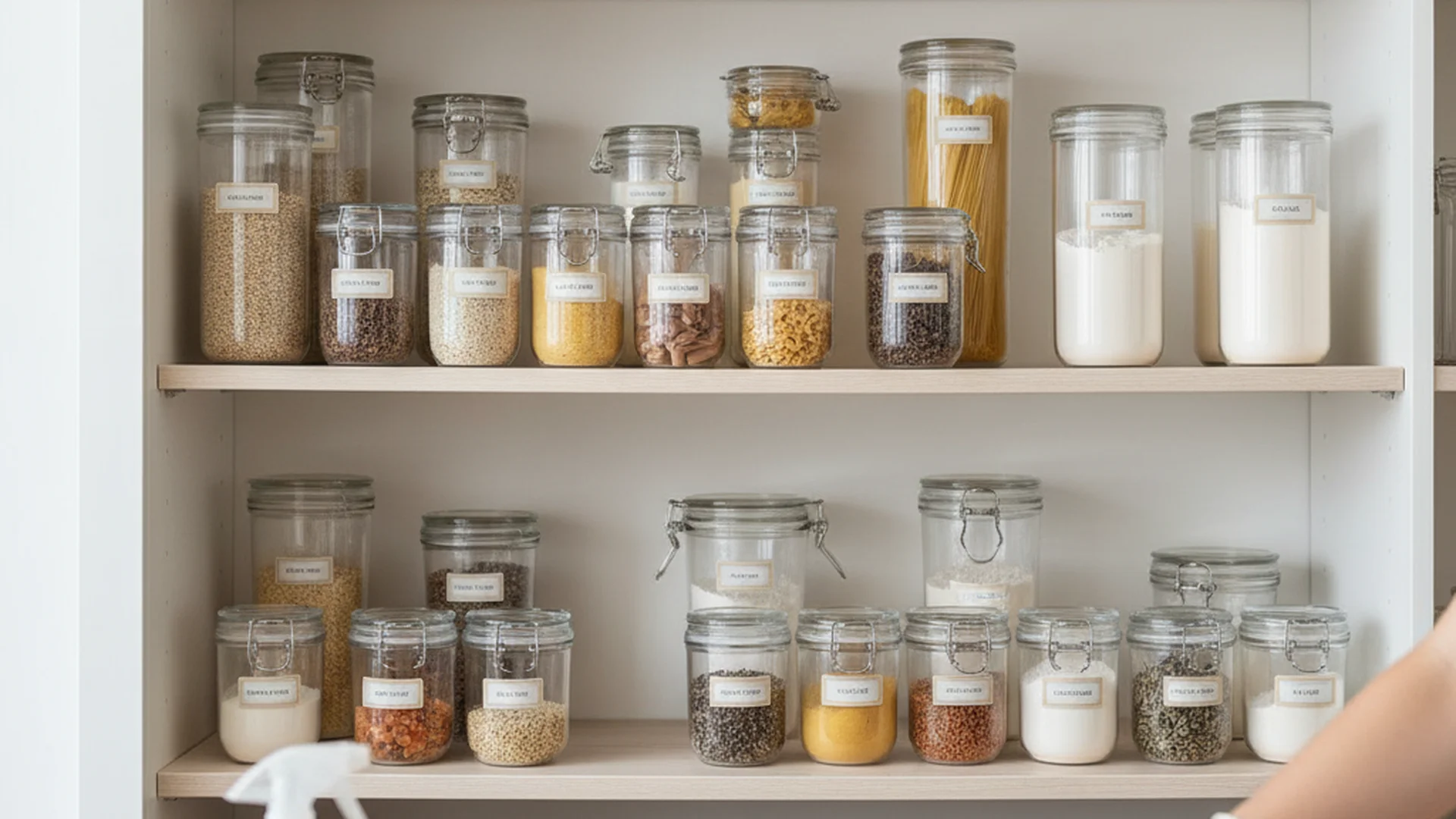
| Baking | Flour, sugar, baking soda, yeast | Use airtight borosilicate glass |
| Quick Meals | Pasta, rice, jarred sauces, quinoa | Keep at eye level |
| Grab-and-Go | Snacks, granola bars, fruit pouches | Place in low, open baskets for kids |
| Breakfast | Cereals, oats, pancake mix, syrups | Use "stadium" risers for visibility |
| The Backstock | Bulk items, extra paper towels | Store on the highest or lowest shelves |
Success: Categorizing by zone cuts out most of the time spent "searching" for ingredients, making meal prep significantly faster.
2026 Pantry Trends: Aesthetic and Function
The 2026 "Warm Minimalist" trend has changed how we look at pantry design. It is no longer just about white plastic bins; it's about sustainable materials and integrated technology.
The Shift to Sustainable Materials
The "acrylic aesthetic" of the early 2020s is being replaced by natural elements.
- Glass & Borosilicate: These are preferred over plastic due to concerns over microplastics and their superior airtight seals.
- Bamboo & Seagrass: Use bamboo lids for jars and seagrass baskets for bulkier items like potatoes and onions to add warmth to the space.
Tech-Enhanced Storage
In 2026, we are seeing more:
- Digital QR Labels: Instead of large chalkboard labels, many homeowners use small QR codes that link to inventory apps, alerting them when an item is about to expire.
- Motion-Sensor LED Lighting: Installing battery-powered LED strips under each shelf ensures no item is ever lost in the shadows.
The "Appliance Garage"
A major 2026 trend is the integration of deep shelves designed specifically to house bulky appliances like air fryers, stand mixers, and bread makers. This keeps your kitchen counters clear while keeping the appliances easily accessible.
Common Mistakes to Avoid
Even with the best intentions, many people fail at pantry maintenance because of a few common errors:
- Storing in Original Packaging: Thin cardboard and paper are easily breached by moisture and pests. Always transfer dry goods to airtight containers.
- Organizing by Height: Putting tall items in the back and short in the front creates a "hidden" zone. Use tiered shelf risers so you can see every label.
- Ignoring Vertical Space: The back of the pantry door is prime real estate for spices, wraps, or small snacks.
- Over-Buying Bulk: A "deal" at a warehouse club isn't a deal if half of it expires before you can use it. Only buy bulk for items you consume weekly.
Note: If you find a single pantry moth, you must act immediately. Throw away all unsealed grains and wipe every surface with vinegar to prevent a full-blown infestation.
Real-World Examples
Example 1: The "Moth Meltdown"
A client in Seattle kept all their expensive organic flours in the original paper bags. One bag of rye flour brought in larvae from the grocery store. Within two weeks, the moths had spread to the cereal, the chocolate chips, and even the birdseed stored in the back. The solution? A total purge, a vinegar-wash deep clean, and a transition to airtight glass jars.
Example 2: The Hidden Snack Problem
A busy family of four struggled with "snack chaos." The kids would rip open boxes and leave half-eaten bags at the back of the shelf. We implemented a "Grab-and-Go" zone using clear, open-front bins at the children's eye level. This stopped the "hidden" waste and made school lunch prep 10 minutes faster every morning.
Example 3: The Bulk-Buying Blunder
A homeowner had 15 cans of pumpkin puree and three 10-pound bags of rice, most of which were expired. They were buying "deals" without checking their current inventory. By implementing a "one-in, one-out" rule and using a simple whiteboard on the pantry door to track bulk stock, they had trimmed their grocery bill noticeably within three months.
Frequently Asked Questions
How often should I deep clean my pantry?
Should I take everything out at once?
Are plastic or glass containers better?
How do I get rid of pantry moths?
Conclusion
Mastering how to clean pantry spaces is a fundamental skill for any organized home. By following the "Empty-First" rule, utilizing the vacuum-before-wiping technique, and implementing a zoning strategy based on 2026 trends, you can transform a cluttered closet into a functional, aesthetic, and money-saving asset.
A clean pantry does more than just look good on social media; it provides mental clarity, reduces your environmental footprint, and ensures that the "heart of the home" is a place of health rather than hidden waste.
Success: A well-organized pantry saves a household serious money over a year by preventing over-buying and food spoilage.
Cleaning that keeps score
Every task earns points, every streak multiplies them, and Premium adds a household leaderboard plus a monthly Dustagorgon to beat.
- Free forever
- 30 badges to earn
- Up to 6 in a household
No card needed. Set up your rooms in a couple of minutes.