In this article
What you’ll learn
- Learn the top-to-bottom cleaning method to save time.
- Understand the importance of disinfectant dwell time.
- Discover 2025–2026 trends like UV-C sanitization and smart mudrooms.
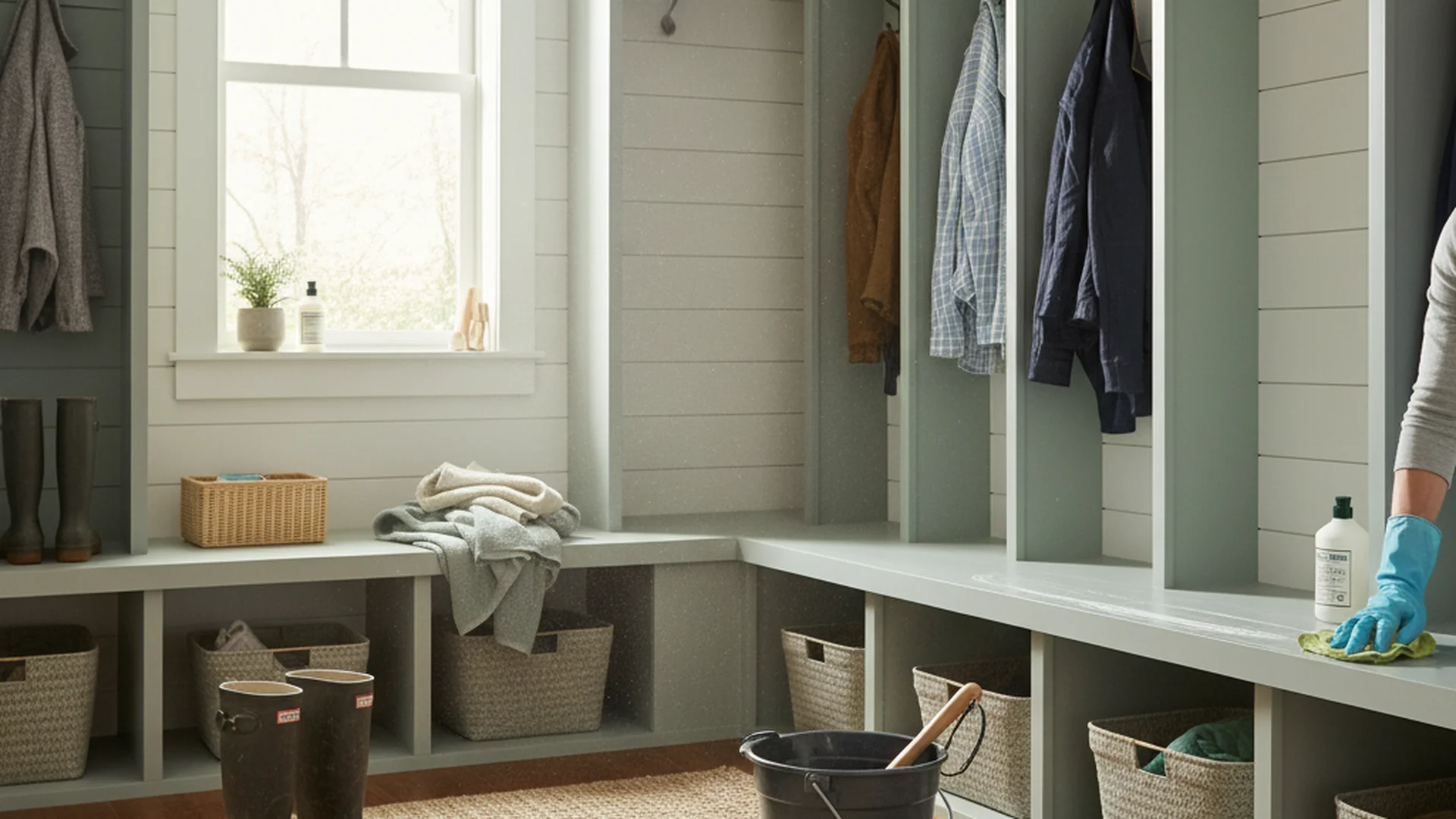
Your mudroom is the unsung hero of your home. As the "first line of defense," it bears the brunt of every season, from winter slush to spring mud and summer sand. The vast majority of the dirt in a home arrives on the soles of shoes. This means that if you master how to clean mudroom spaces effectively, you can cut a serious chunk out of your overall household cleaning time. In this comprehensive guide, we will explore the most efficient ways to sanitize, organize, and maintain this high-traffic zone using the latest 2025–2026 standards.
Why the Mudroom is Your Home’s Most Important Room
In the modern era of home design, the mudroom has evolved from a simple entryway into a high-tech transition zone. Mudrooms consistently rank among the most desirable rooms for homebuyers, and plenty of buyers treat them as a genuine priority.
Beyond real estate value, the mudroom serves as a biological airlock. In 2025, the global cleaning industry has seen a massive shift toward "green cleaning" and antimicrobial surfaces. Cleaning this room isn't just about aesthetics; it’s about household health. By containing outdoor pollutants, allergens, and pathogens at the door, you protect the air quality and cleanliness of the rest of your living space.
The Ultimate Mudroom Cleaning Checklist
To maintain a pristine entryway, you need a tiered approach. Breaking tasks down into daily, weekly, and seasonal intervals ensures the work never becomes overwhelming.
Daily Maintenance (The 1-Minute Reset)
- Shoe Alignment: Straighten shoes and ensure they are placed in their designated trays or cubbies.
- Bag Hanging: Hang backpacks, purses, and coats immediately upon entry.
- Mat Shake: If the weather is dry, give the exterior and interior mats a quick shake to remove loose debris.
Tip: Encourage family members to follow the "One-Touch" rule. Coats go directly on hooks, and shoes go into designated trays immediately upon entry to prevent pile-ups.
Weekly Deep Dive
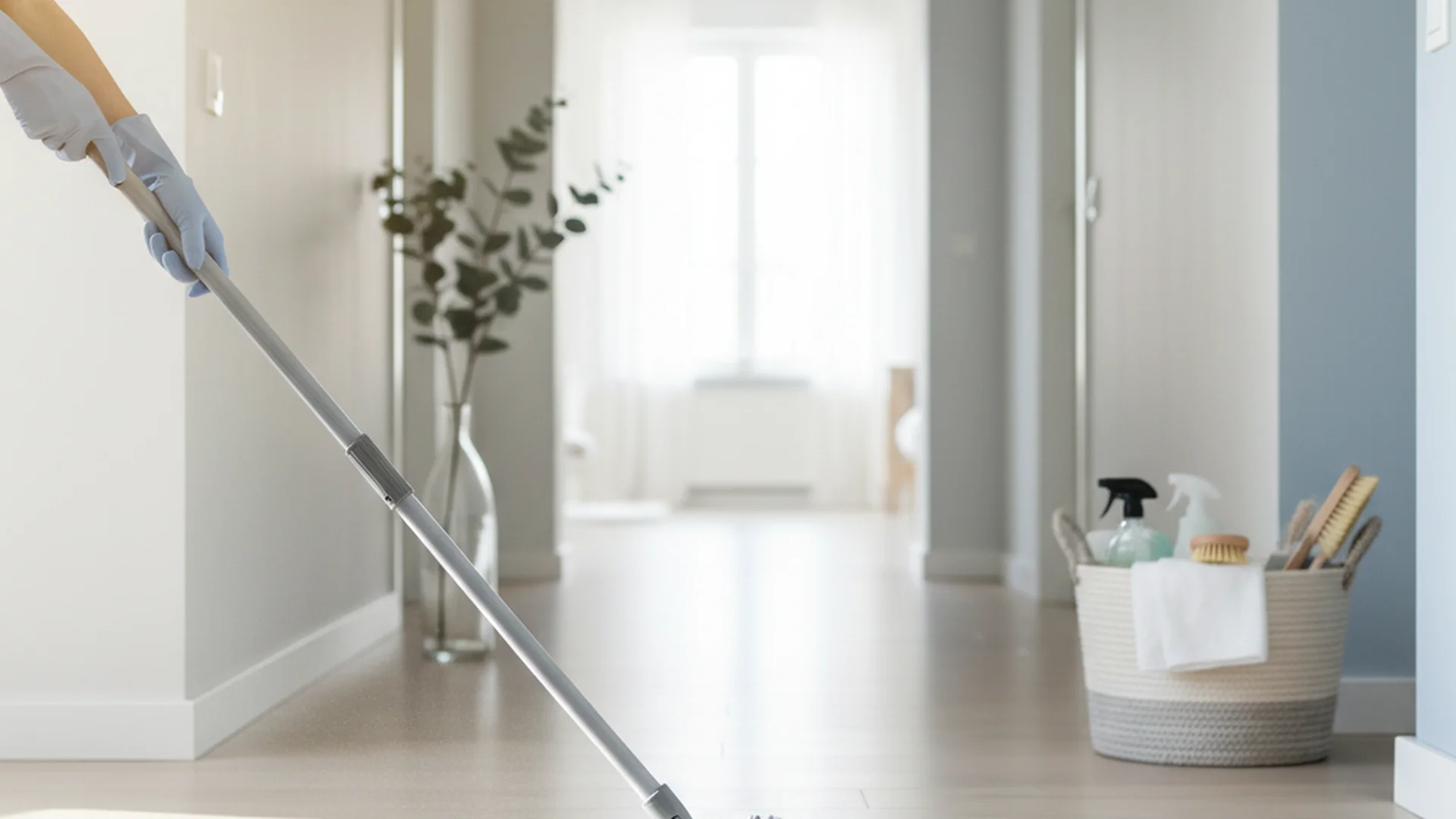
- Floor Sweep & Mop: Use a vacuum or shop vac first to remove grit, then mop with a material-appropriate cleaner.
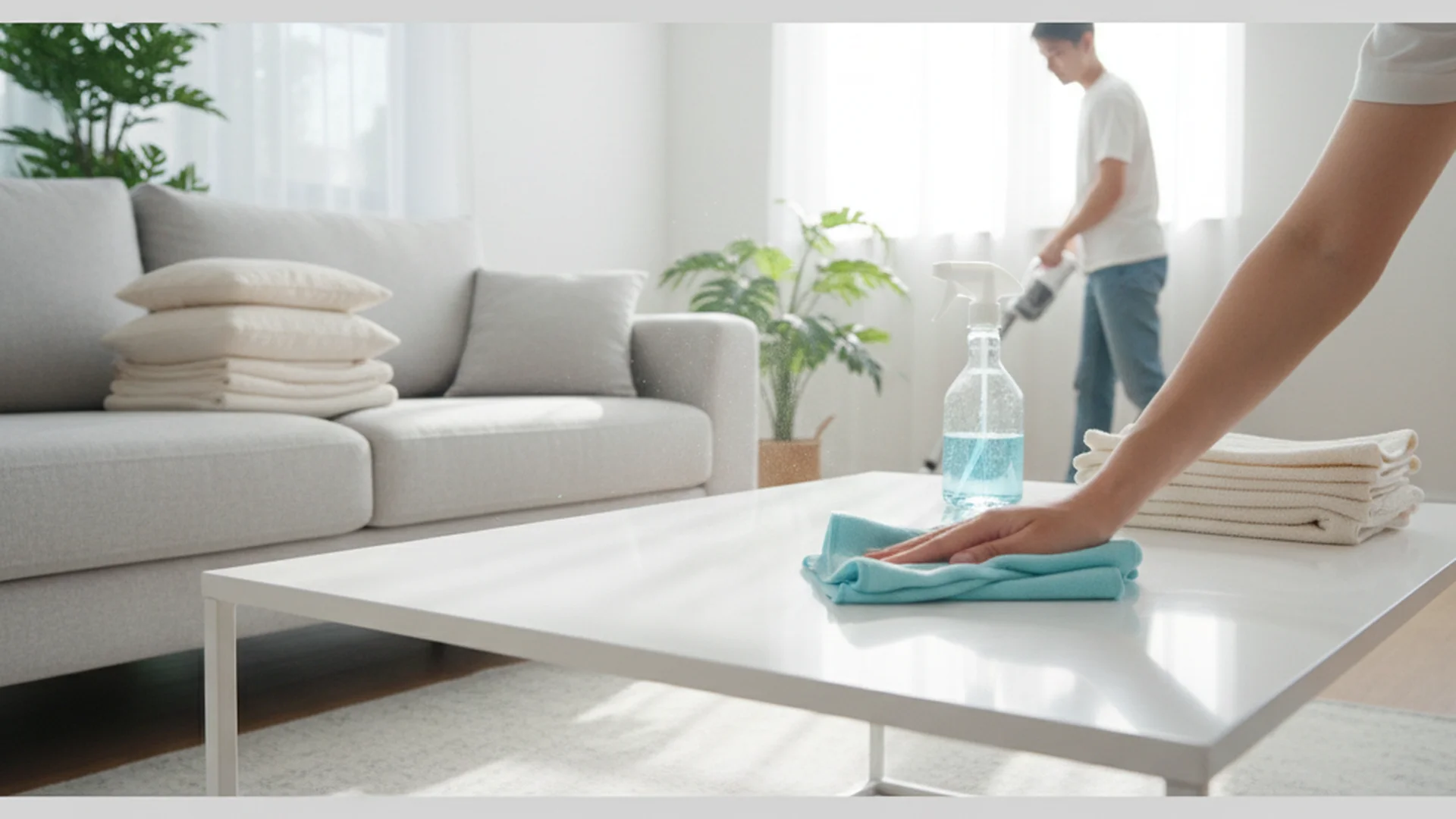
- High-Touch Point Disinfection: Wipe down door handles, light switches, and locker pulls.
- Rug Lift: Lift your rugs to ensure no moisture is trapped underneath, which can lead to mold or floor damage.
Monthly and Seasonal Overhaul
- Bin Sanitization: Empty all storage bins and wipe them down with a disinfectant.
- Wall & Baseboard Wipe: Use a damp microfiber cloth to remove scuffs and dust from vertical surfaces.
- Vent Cleaning: Vacuum the HVAC vents or baseboard heaters that often collect dust bunnies in small entryways.
- Gear Swap: At the end of each season, remove out-of-season gear (like heavy coats or beach bags) to make room for current essentials.
| Task Category | Frequency | Tools Needed |
|---|---|---|
| High-Touch Points | Weekly | Disinfectant, Microfiber |
| Floor Mopping | Weekly | Mop, Neutral Cleaner |
| Bin Sanitizing | Monthly | All-purpose cleaner |
| Gear Swap | Seasonal | Storage bins, Vacuum |
Best Practices & Expert Recommendations
When it's time for a deep clean, working smarter—not harder—is the key. Here are the professional techniques that make a difference in 2025.
The Top-to-Bottom Method
Always start cleaning from the ceiling and work your way down. Dust light fixtures, the tops of lockers, and wall corners for cobwebs first. Any dust that falls will be captured when you eventually clean the benches and floors. If you clean the floors first, you’ll likely have to do them again after dusting the shelves above.
The "Shop Vac" Advantage
In a mudroom, a standard broom is often your enemy. Brooms tend to kick fine outdoor dust and allergens into the air. Instead, use a small shop vacuum with a HEPA filter. These are far more effective at sucking grit out of tile grout, corner crevices, and the tracks of sliding doors.
Mastering Dwell Time
One of the most common mistakes people make when learning how to clean mudroom surfaces is wiping away disinfectant too quickly. Most cleaners require 5–10 minutes of "dwell time" (staying visibly wet on the surface) to actually kill the bacteria and viruses brought in from the outdoors.
Warning: Never mix different cleaning chemicals, such as bleach and ammonia, as this can create toxic fumes. Always ensure the mudroom is well-ventilated when using strong cleaners.
2025–2026 Mudroom Trends: The Smart Entryway
The way we clean and maintain mudrooms is changing due to new technology and design shifts. If you are looking to upgrade your space, consider these emerging trends.
Smart Integration and UV-C Sanitization
We are seeing a surge in "Smart Mudrooms." This includes app-controlled drying racks for wet boots and integrated charging stations for tech. Perhaps most impressive is the rise of UV-C sanitizing bins. These high-tech cubbies use ultraviolet light to sanitize shoes, backpacks, and keys, providing a chemical-free way to maintain household hygiene.
The "Dog Wash" Station
Modern mudrooms are increasingly including built-in pet showers or "paw wash" stations. This allows homeowners to stop mud at the source—the paws. If you have a dog wash, cleaning involves sanitizing the basin weekly and ensuring the drainage remains clear of pet hair.
Color Drenching and Moody Tones
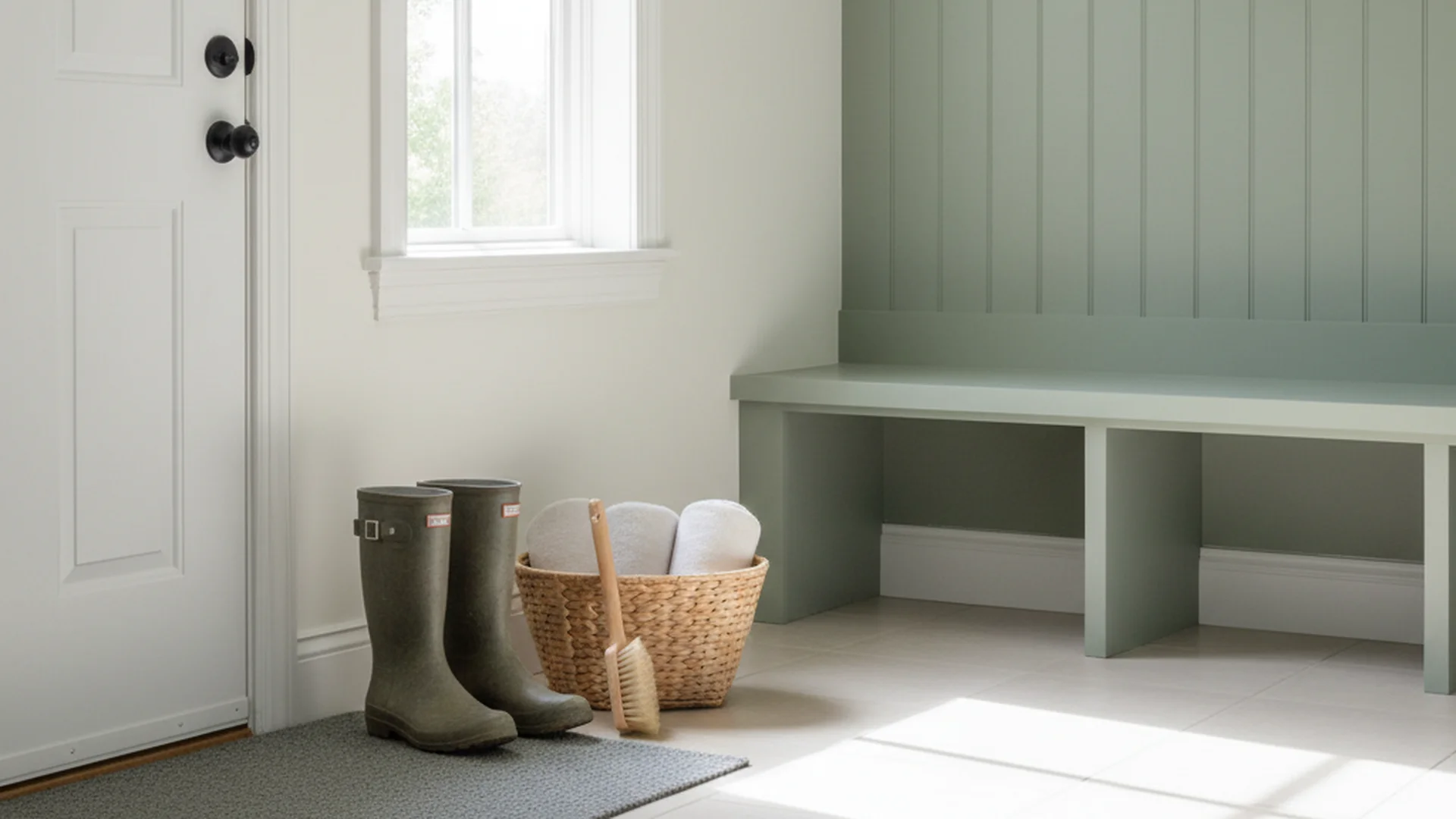
Design-wise, 2025 is the year of "moody mudrooms." Dark greens, deep blues, and "color drenching" (painting walls, trim, and cabinets the same color) are trending. Not only do these look sophisticated, but they are also practical—darker tones are much better at hiding the inevitable scuffs and splashes that occur in an entryway.
Note: If you choose a "color drenched" look, ensure you use a high-quality, scrubbable paint finish like satin or semi-gloss to make cleaning easier.
Common Mistakes to Avoid
Even the most diligent cleaners can fall into traps that make the mudroom harder to maintain.
- Using Too Much Product: Many believe more soap equals a deeper clean. In reality, excessive product leaves a sticky residue that attracts more dirt and makes floors slippery.
- Forgetting the "Mat Under the Rug": Moisture often seeps through or around rugs. If you don't dry the floor beneath the rug weekly, you risk damaging wood floors or encouraging mold growth.
- Cleaning Windows on Sunny Days: If your mudroom door has windows, avoid cleaning them in direct sunlight. The heat causes the cleaner to dry too fast, leaving unsightly streaks.
- Neglecting User Flow: If your organization system is too complicated (e.g., heavy bins that are hard to pull out), family members will simply drop items on the floor. Keep your cleaning and organization systems intuitive.
Real-World Cleaning Examples
Example 1: The Active Family Scenario
The Miller family has three children involved in sports. Their mudroom often smells like "wet dog" and old cleats. To manage this, they utilize charcoal odor absorbers in every shoe bin and perform a "Friday Flush" where all sports gear is removed, the bins are sprayed with an enzyme-based cleaner, and the floors are vacuumed with a shop vac to remove turf beads and dried mud.
Example 2: The Pet Owner's Sanctuary
Sarah has two large golden retrievers. Her mudroom includes a built-in paw wash. Her cleaning routine focuses on the "Splash Zone." After every walk, she rinses the dogs, then uses a dedicated squeegee to push water toward the drain. Once a week, she uses an antimicrobial sealant on the tile grout to prevent the "wet dog" smell from seeping into the floor.
Example 3: The Urban Apartment Entry
James lives in a small apartment with a tiny "drop zone" instead of a full mudroom. He focuses on verticality. He uses a wall-mounted pegboard for keys and bags and a slim, tiered shoe rack. His cleaning secret? A daily 30-second wipe-down of the small rubber mat where his shoes sit, ensuring that city grime never migrates into his living room.
Success: By implementing a consistent "top-to-bottom" cleaning routine and utilizing modern tools like HEPA vacuums, you can keep your mudroom both beautiful and functional for years to come.
Frequently Asked Questions
How often should I clean my mudroom?
How do I get rid of the "wet dog" or musty shoe smell?
What is the best floor material for a mudroom?
How do I organize a mudroom with no space?
Can I use a steam mop in my mudroom?
Conclusion
Mastering how to clean mudroom areas is about more than just aesthetics; it's about creating a healthy, efficient transition for your household. By following the top-to-bottom method, paying attention to dwell times, and staying ahead of seasonal clutter, you can ensure your entryway remains an asset rather than a chore. Whether you are dealing with a high-tech smart mudroom or a simple apartment "drop zone," consistency is the key to a spotless home.
Cleaning that keeps score
Every task earns points, every streak multiplies them, and Premium adds a household leaderboard plus a monthly Dustagorgon to beat.
- Free forever
- 30 badges to earn
- Up to 6 in a household
No card needed. Set up your rooms in a couple of minutes.