In this article
What you’ll learn
- Never use your shirt or paper products to clean lenses.
- Daily cleaning with mild dish soap is the gold standard.
- Frames harbor significant bacteria and require weekly deep cleaning.
For many of us, our eyeglasses are the first thing we reach for in the morning and the last thing we set aside at night. Yet, despite being essential for our daily function, many people are unsure of how to clean glasses correctly. It may seem like a trivial task, but improper maintenance can lead to permanent damage and compromised eye health. Reaching for the hem of a shirt to wipe a lens is almost universal — and it is a shortcut that causes microscopic scratches over time.
In this guide, we will explore the best way to clean glasses at home, debunk common myths, and look at the future of eyewear maintenance. Whether you wear standard prescription lenses, blue-light blockers, or the latest smart glasses, keeping your vision clear is an investment in your long-term health.
Why Proper Eyewear Hygiene Matters
It is easy to focus only on the smudges that obstruct our view, but the hygiene of your frames is just as critical as the clarity of your lenses. Plenty of glasses wearers wash their frames only once a month or less, if ever. This neglect creates a breeding ground for germs.
Assume your eyeglasses harbour bacteria — worn daily against the skin, they always do. The most contaminated areas are the nose pads and ear clips, which sit in constant contact with your skin's oils and sweat. These areas often carry pathogens like Staphylococcus and E. coli, which can lead to skin irritation or even eye infections if not addressed.
Note: Lenses should be cleaned daily to maintain optical clarity, while frames should be washed thoroughly once a week to remove skin oils that degrade frame materials.
The Professional 5-Step Cleaning Routine
To maintain your eyewear like a pro, skip the quick-wipe methods and follow this structured routine. This is widely considered the best way to clean glasses without risking the integrity of expensive coatings.
1. Prep Your Hands
Before touching your glasses, wash your hands with lotion-free soap. Skin oils, dirt, and debris from your fingers can easily transfer to the lenses, making the cleaning process more difficult and potentially causing streaks.
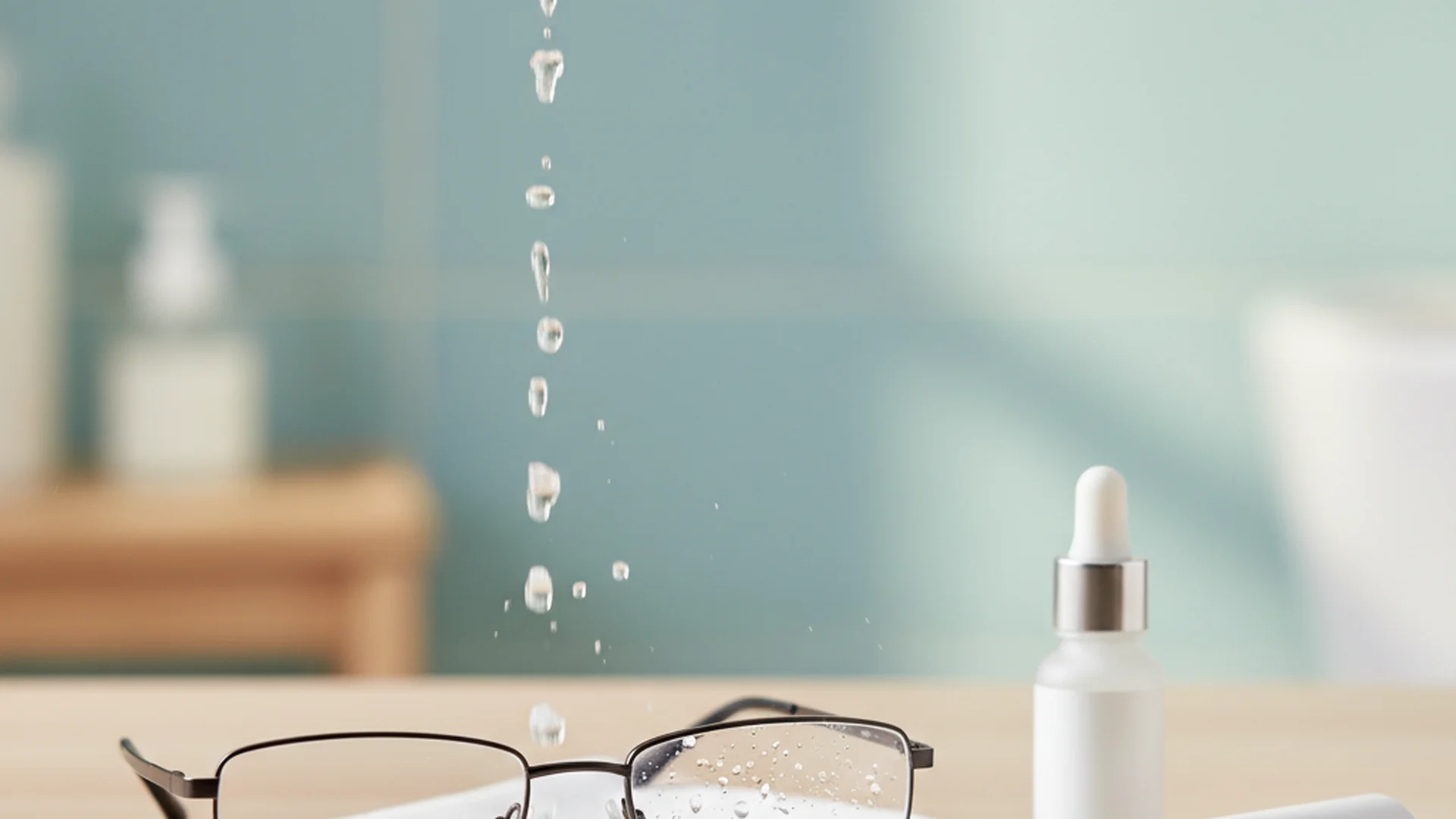
2. Rinse Under Lukewarm Water
Hold your glasses under a gentle stream of lukewarm tap water. This is a crucial step to remove dust, grit, and tiny particles that could act as abrasives when you start rubbing the lens.
Warning: Never use hot water. Extreme temperatures can warp certain plastic frames and cause the delicate layers of anti-reflective or UV coatings to expand and crack.
3. Apply a Tiny Drop of Mild Dish Soap
Use a lotion-free, citrus-free dish soap (such as basic Dawn). Apply a tiny drop to each lens and use your fingertips to gently lather both sides of the lenses and the entire frame. Don't forget the nose pads and the "temples" (the arms of the glasses), as these areas accumulate the most sweat.
4. Rinse Thoroughly
Rinse the glasses again under the faucet to ensure all soap residue is gone. Leftover soap is the primary cause of the "streaky" look people often complain about after cleaning.
5. Dry with a Clean Microfiber Cloth
Gently pat the lenses and frame dry with a dedicated, lint-free microfiber cloth. Inspect the lenses in the light to ensure no spots remain.
Tip: Avoid using fabric softener when washing your microfiber cloths. The chemicals in fabric softeners leave a waxy residue on the cloth that will smear onto your lenses.
Common Mistakes to Avoid
When you are in a rush, it is tempting to use whatever is nearby to clear a smudge. However, these common mistakes can lead to "crazing"—a network of tiny cracks—or permanent scratches.
Using Paper Products
Tissues, napkins, and paper towels might feel soft to your skin, but they are made from wood pulp. These fibers are highly abrasive to delicate lens coatings and will cause "swirl marks" that eventually make your vision appear cloudy.
The "Heat Trap"
Leaving your glasses on a car dashboard in the sun is a recipe for disaster. This creates a "heat trap" that causes thermal expansion. Because the lens and the coating expand at different rates, the coating will eventually crack or peel, a process known as crazing.
Household Chemical Cleaners
Standard window cleaners (like Windex) often contain ammonia or bleach. While these are great for glass windows, they are far too harsh for modern polycarbonate or high-index lenses. They will eat away at anti-reflective (AR) and blue-light coatings within weeks.
DIY Scratch Repair
A popular internet myth suggests using toothpaste or furniture polish to "buff out" scratches. These substances are abrasives. Instead of fixing a scratch, they strip away the protective coatings, potentially changing the optical power of the lens and ruining your prescription.
| Material to Avoid | Reason for Danger |
|---|---|
| Shirt/Clothing | Trapped grit causes scratches |
| Paper Towels | Wood pulp fibers are abrasive |
| Window Cleaner | Ammonia destroys AR coatings |
| Saliva | Introduces bacteria and lacks lubrication |
Real-World Examples: When to Clean
Understanding how to clean glasses involves knowing when a simple wipe isn't enough. Here are three common scenarios:
Example 1: The Kitchen Splatter
Imagine you are searing a steak or frying eggs. Micro-droplets of oil and grease inevitably land on your lenses. If you simply wipe these with a dry cloth, you are just spreading the grease around. In this case, the dish soap method is mandatory to break down the lipids and restore clarity.
Example 2: The Gym Routine
During a workout, salt from your sweat accumulates on the nose pads and the hinges of your frames. Over time, this salt can corrode metal frames or turn plastic frames brittle and white. A daily rinse after the gym is essential for frame longevity.
Example 3: Smart Glasses and AR Wearables
With the rise of 2025-era smart glasses, maintenance has become more complex. These devices contain internal sensors and microphones. Using a standard liquid spray can damage the electronics. For these, use a specialized non-conductive cleaner, or dampen the cloth rather than spraying the device directly.
Trends and Innovation in 2025-2026
- Sustainable Solutions: We are seeing a massive shift toward biodegradable lens sprays and compostable microfiber alternatives made from plant-based polymers, reducing the plastic waste associated with eyecare.
- Antimicrobial Coatings: New for late 2025, several manufacturers have released lenses with self-disinfecting coatings. These use silver or copper ions to naturally reduce germ buildup on the surface of the lens and frames.
- Replenishment Kits: Services like Zeiss and Koala now offer subscription models that deliver fresh microfiber cloths and pH-balanced cleaning solutions every few months, ensuring users aren't using old, grit-filled cloths that could damage their investment.
Success: By adopting a daily cleaning habit, you can extend the life of your eyewear by up to two years and significantly reduce the risk of skin irritation around your eyes.
Frequently Asked Questions
Can I use hand sanitizer or alcohol to clean my glasses?
Is it okay to use my breath to "fog" the lenses for a quick clean?
How often should I clean my microfiber cloth?
Why do my glasses still look streaky after I clean them?
Conclusion
Learning the best way to clean glasses is a simple yet powerful way to protect both your vision and your financial investment. By moving away from "shirt-wiping" habits and adopting a 5-step routine with mild dish soap and microfiber, you ensure your lenses remain scratch-free and your frames stay hygienic. As technology advances with antimicrobial coatings and smart glasses, the fundamental principles of gentle, consistent care remain the same.
Success: Clear vision starts with a clean lens. Follow these steps daily to see the world as it was meant to be seen.
Cleaning that keeps score
Every task earns points, every streak multiplies them, and Premium adds a household leaderboard plus a monthly Dustagorgon to beat.
- Free forever
- 30 badges to earn
- Up to 6 in a household
No card needed. Set up your rooms in a couple of minutes.