In this article
What you’ll learn
- Earbuds can harbour a surprising amount of bacteria if not cleaned regularly.
- Use the downward brush technique and Blu-Tack to safely remove stubborn earwax.
- Modern tech like micellar water and UV-C cases are changing maintenance standards in 2025.
In our modern, high-tech world, earbuds have become an extension of ourselves. Whether you’re listening to a podcast during your commute, hitting a personal best at the gym, or taking back-to-back Zoom calls, these tiny devices rarely leave our ears. However, few users realize just how much grime they accumulate. Learning how to clean earbuds isn't just about aesthetics; it is a critical practice for maintaining both your ear health and the longevity of your device. Because these devices sit inside the warm, moist environment of your ear canal, they become a breeding ground for bacteria and debris.
The Hidden Hygiene Crisis in Your Pocket
Most of us wouldn't dream of going months without washing our towels or cleaning our kitchen counters, yet our earbuds often go ignored for an entire year. Because they spend hours sealed inside a warm ear canal and then get dropped into a pocket or a bag, on-ear and in-ear headphones can end up carrying far more bacteria than the surfaces we scrub obsessively — including the bathroom fixtures most people assume are the dirtiest thing they touch.
Frequent earbud users tend to see real bacterial growth on their devices. A common culprit is Staphylococcus aureus, a bacterium that can lead to painful ear infections like otitis externa (swimmer's ear). Despite these risks, daily cleaning is rare — most people go weeks or months between wipe-downs, if they clean at all.
Note: Beyond health risks, dirty earbuds directly impact performance. Accumulation of earwax can noticeably muffle audio output long before the hardware actually fails.
The Best Way to Clean Earbuds at Home: Essential Tools
Before you start digging into the delicate mesh of your $300 AirPods or Bose Buds, you need the right kit. Using the wrong materials is the fastest way to turn a cleaning session into an expensive trip to the electronics store.
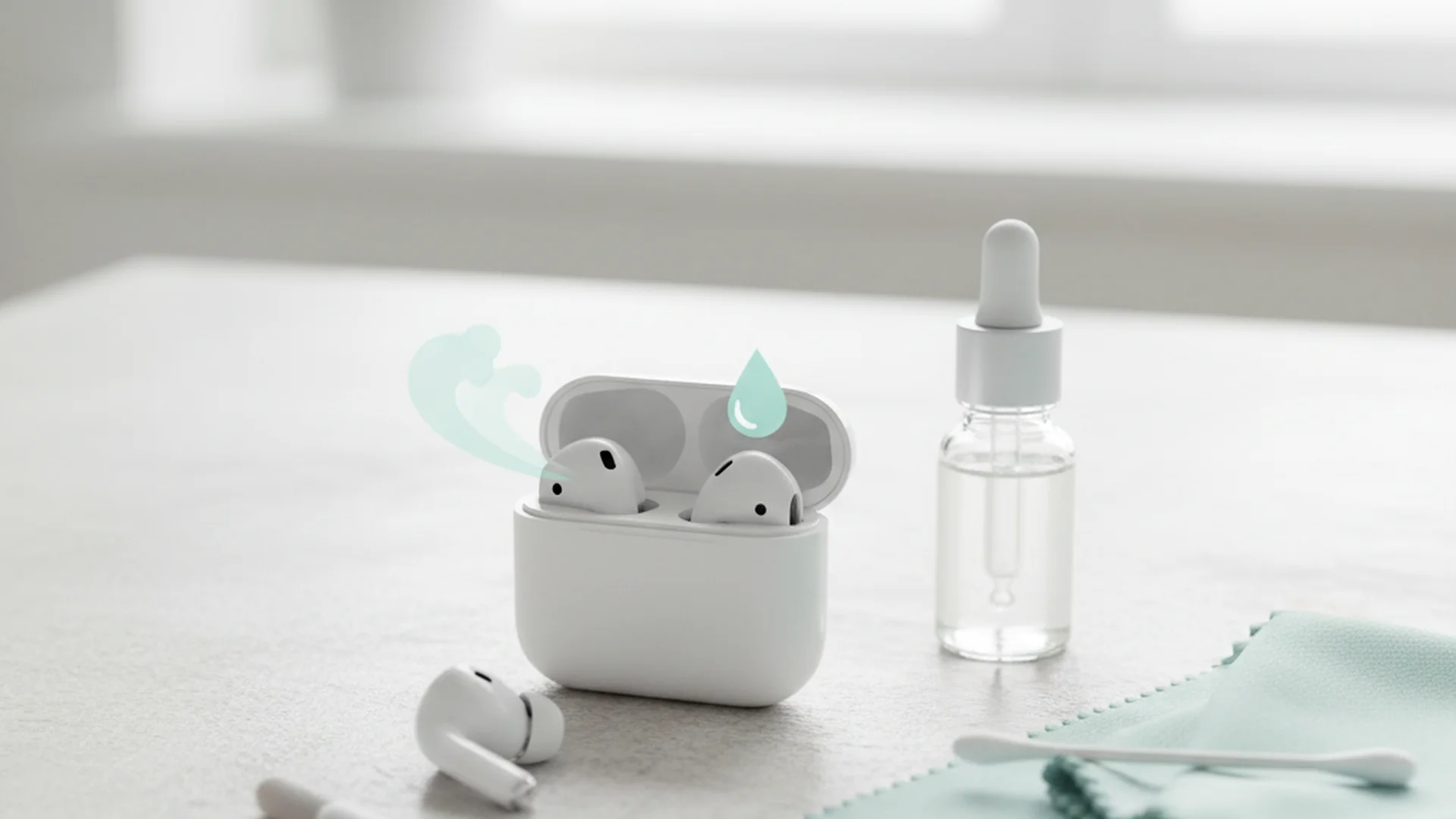
The 2025 Cleaning Kit Checklist
- 70% Isopropyl Alcohol: The industry standard for disinfecting hard plastic and silicone.
- Micellar Water: The new 2025 recommendation for delicate acoustic meshes.
- Mounting Putty (Blu-Tack): The secret weapon for wax removal.
- Soft-Bristled Toothbrush: Specifically for the "Downward Brush" technique.
- Microfiber Cloth: Lint-free cleaning for the exterior.
- Cotton Swabs: For reaching the deep "wells" of the charging case.
Tip: If you have high-end earbuds with leather or fabric accents, skip the alcohol on those specific parts to prevent cracking or discoloration.
Step-by-Step Guide: How to Clean Your Earbuds Safely
Cleaning your earbuds requires a delicate touch. You are dealing with microscopic diaphragms and sensitive sensors that can be easily displaced.
Step 1: Remove and Clean the Tips
If your earbuds have silicone or foam tips, remove them first. This is where the bulk of the wax lives.
- Silicone Tips: Soak them in a small bowl of warm, soapy water for five minutes. Rinse and let them air dry completely.
- Foam Tips: Do not use alcohol or soap. Simply wipe them with a dry, lint-free cloth. Foam is porous and chemical cleaners can cause it to lose its "memory" and shape.
Step 2: The Downward Brush Technique
This is a professional secret for cleaning the mesh. Hold the earbud with the speaker mesh facing downward toward the floor. Use a dry, soft toothbrush to gently brush the mesh.
- Why it works: Gravity ensures that the loosened wax and skin cells fall out of the earbud rather than being pushed further into the driver.
Step 3: The Blu-Tack Method for Stubborn Wax
For wax that is embedded deep in the mesh holes, use a small piece of mounting putty (like Blu-Tack). Press the putty gently against the mesh and pull away quickly. The wax adheres to the putty more effectively than it does to the metal mesh.
Warning: Never use a needle, safety pin, or toothpick to pick at the mesh. A single slip can puncture the acoustic membrane, permanently ruining the sound quality and active noise cancellation (ANC).
Step 4: Sanitizing the Body
Wipe the exterior plastic housing with a cloth slightly dampened with 70% isopropyl alcohol. For the acoustic mesh itself, 2025 updates from Apple Support suggest using micellar water (specifically brands containing PEG-6 Caprylic/Capric Glycerides). It breaks down oils without the harshness of high-concentration alcohol, which can sometimes degrade the glue holding the mesh in place.
| Material | Recommended Cleaner | Avoid |
|---|---|---|
| Hard Plastic | 70% Isopropyl Alcohol | Acetone / Bleach |
| Silicone Tips | Warm Soapy Water | High Heat |
| Acoustic Mesh | Micellar Water | Sharp Objects |
| Charging Pins | Dry Cotton Swab | Any Liquid |
Don't Forget the Charging Case
Cleaning your earbuds is a wasted effort if you put them back into a filthy case. The case acts as a dark, enclosed incubator for bacteria.
- The Wells: Use a cotton swab dampened (not dripping) with alcohol to clean the internal "wells" where the buds sit.
- The Charging Pins: Use a dry swab for the metal contact pins. Moisture here can cause corrosion or short circuits.
- The Port: Check the USB-C or Lightning port for pocket lint. A wooden toothpick (used very gently) can clear out debris that prevents a solid charging connection.
Success: Regular case maintenance prevents "phantom battery drain," where debris prevents the earbuds from fully seating and turning off.
Advanced Trends and 2025/2026 Updates
The world of personal audio is evolving, and so are the cleaning requirements.
UV-C Self-Cleaning Cases
In 2025, we've seen a massive surge in brands adopting LG's UVnano technology. High-end earbuds now often come with charging cases equipped with internal UV-C LED lights. These lights can kill up to 99.9% of bacteria on the speaker mesh automatically while the device charges. However, this does not remove physical wax; you still need to manually brush away debris.
Health Sensor Maintenance
The latest AirPods Pro 3 (released late 2025) and competing models from Samsung now feature heart rate and body temperature sensors. These sensors rely on "optical windows." If these windows are smudged with ear oil, your health data will be inaccurate. Use a microfiber cloth to keep these windows crystal clear.
Magnetic Fluid Drivers
New audiophile-grade earbuds, such as the 2026 releases from Technics, utilize magnetic fluid in their drivers to reduce distortion. These are incredibly sensitive to pressure.
- Example: A user in Seattle recently reported "muffled audio" after using compressed air on their Technics buds. The air pressure displaced the internal magnetic fluid, requiring a professional repair. Never use canned air on modern earbuds.
Common Mistakes to Avoid
- The "Waterproof" Myth: Even if your earbuds have an IPX7 rating, this only covers fresh water. Sweat contains salt, and cleaning supplies contain chemicals that can erode internal seals over time. Never submerge them.
- Over-Saturating: Always apply your cleaner to the cloth or swab, never directly to the device. Capillary action can pull liquid into the internal circuitry.
- The Rush Job: Always allow your earbuds to air dry for at least 2 hours before placing them back in the case. Trapping moisture inside the case is a recipe for hardware failure.
Frequently Asked Questions
Can I use Hydrogen Peroxide to dissolve wax?
How often should I clean my earbuds?
Why do my earbuds sound muffled?
Is rubbing alcohol safe for all parts of the earbud?
Conclusion: A Sound Investment in Health
Taking the time to learn how to clean earbuds properly pays off in three major ways: it protects your hearing from infections, ensures your $200+ investment lasts for years, and maintains the crisp sound quality you paid for. By adopting the "Downward Brush" and "Blu-Tack" methods, you can keep your devices as pristine as the day you unboxed them.
Success: By following this weekly routine, you'll keep bacterial contamination down and prevent the muffled, quiet sound typically caused by wax buildup.
Cleaning that keeps score
Every task earns points, every streak multiplies them, and Premium adds a household leaderboard plus a monthly Dustagorgon to beat.
- Free forever
- 30 badges to earn
- Up to 6 in a household
No card needed. Set up your rooms in a couple of minutes.