In this article
What you’ll learn
- Starting chores around age 3 builds independence that carries into adulthood.
- Focus on "family-care" tasks to boost executive functioning.
- Emphasize contribution over perfection to build toddler confidence.
If you are a parent of a young child, you have likely watched them try to "help" you unload the dishwasher or push a heavy vacuum. While these moments often feel like they slow us down, introducing first chores for toddlers is one of the most significant investments you can make in their future development. In 2025, we understand more than ever that these small acts of service are not just about a tidy home; they are the building blocks for executive function, empathy, and lifelong independence.
Why Toddlers Need Chores: The Science of Helping
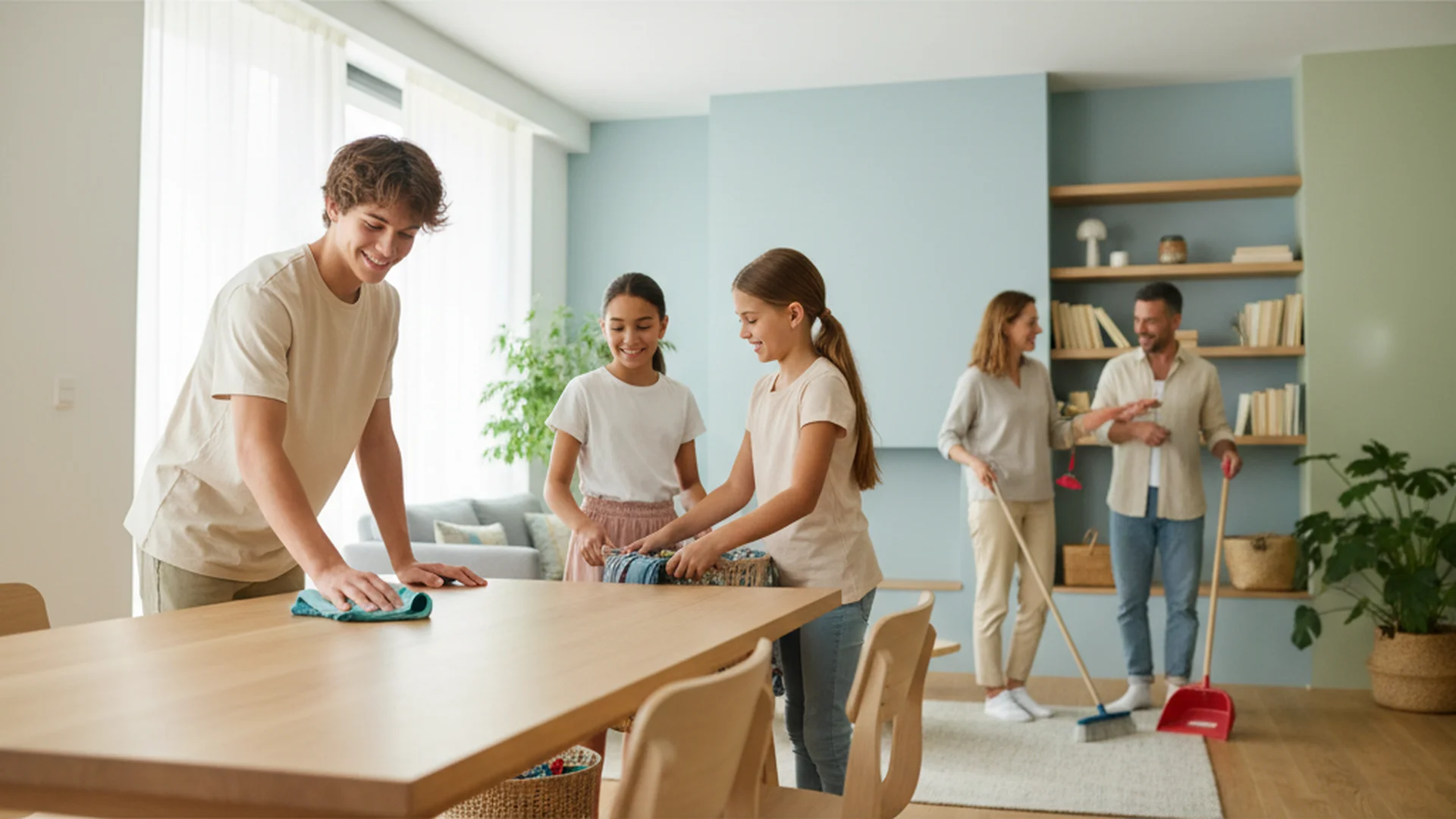
Introducing household responsibilities early isn't about manual labor; it's about brain development. Children who begin helping around the house as early as age 3 or 4 tend to grow into young adults who handle education, work, and relationships with more confidence.
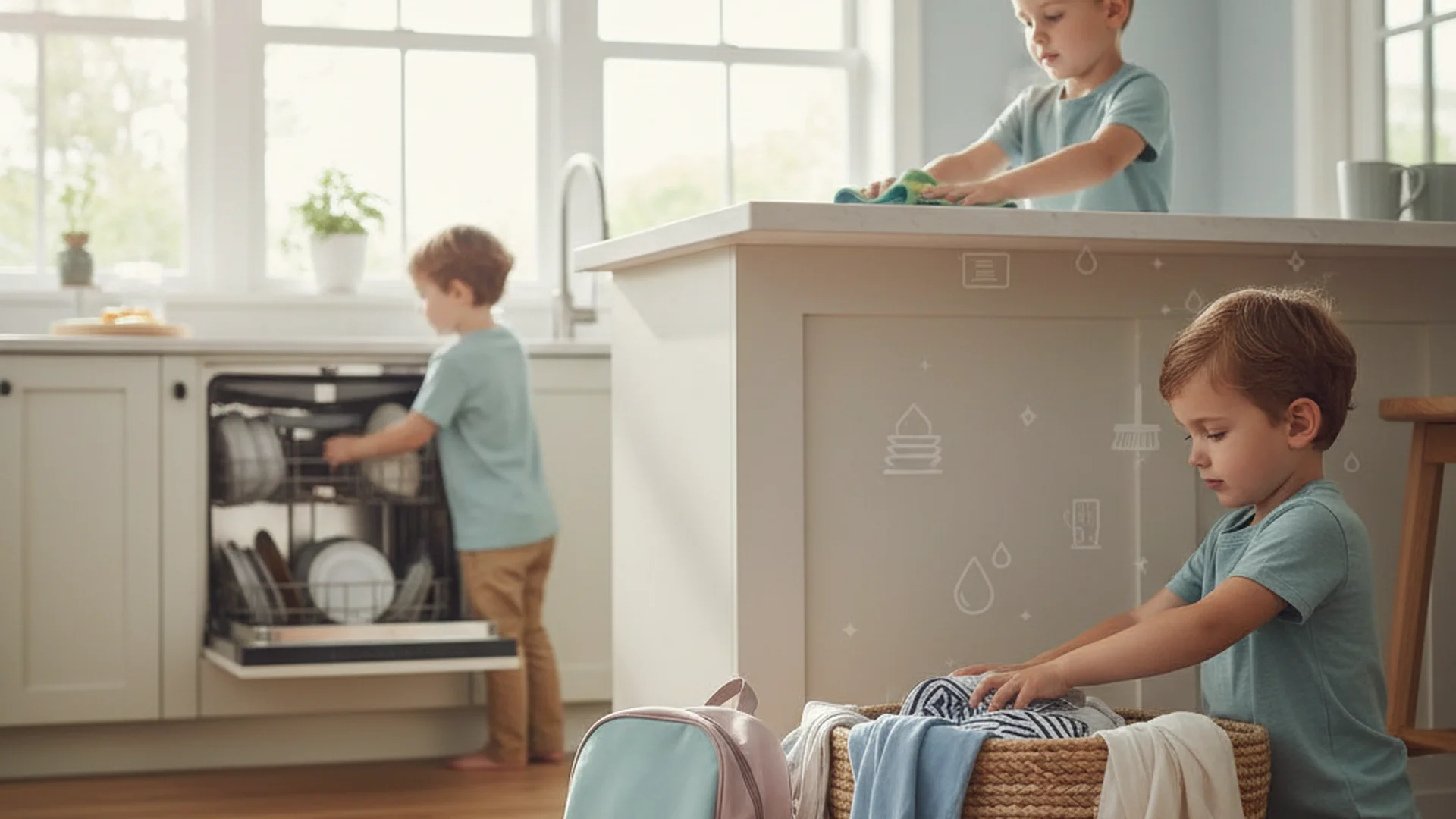
The "Start Early" advantage is rooted in the way a toddler's brain processes tasks. When a child engages in first chores for toddlers, they aren't just moving objects; they are practicing "executive functions." "Family-care" chores, such as setting the table, stretch working memory and impulse control far more than simple self-care tasks like brushing teeth.
The habit also tends to carry forward into adult life. By contributing to the family unit, toddlers learn that they are a vital part of a community, fostering a sense of belonging and self-worth.
Note: Children who perform chores tend to have higher self-esteem and are better equipped to handle frustration later in life.
The Ultimate "First Chores" List for Toddlers
Toddlers are naturally in a "copy-cat" stage. They want to do what you are doing. By providing a first chores toddlers list, you can capitalize on this natural curiosity before it turns into teenage resistance.
The Success List (Ages 2–4)
| Chore Category | Specific Task | Skill Developed |
|---|---|---|
| Laundry | Sorting whites and colors | Categorization & Color Recognition |
| Pet Care | Scooping dry food into a bowl | Fine Motor Skills & Empathy |
| Table Prep | Placing napkins at each seat | Counting & Spatial Awareness |
| Plant Care | Watering with a small can | Nurturing & Cause/Effect |
| Bedroom | Putting dirty clothes in the hamper | Routine Building & Organization |
| Cleanup | Putting toys in designated bins | Classification & Completion |
Real-World Example: The "Laundry Sort"
Imagine you have a basket of clean laundry. Instead of folding it alone, invite your toddler to find all the "white socks." This simple version of first chores toddlers ideas turns a mundane task into a matching game. Not only does it help you, but it reinforces cognitive sorting skills that are essential for early math.
Real-World Example: The "Table Captain"
Assign your three-year-old the role of "Table Captain." Their job is to put one napkin and one plastic cup at every chair. This introduces "one-to-one correspondence," a foundational literacy and numeracy skill, while making them feel like a leader in the household.
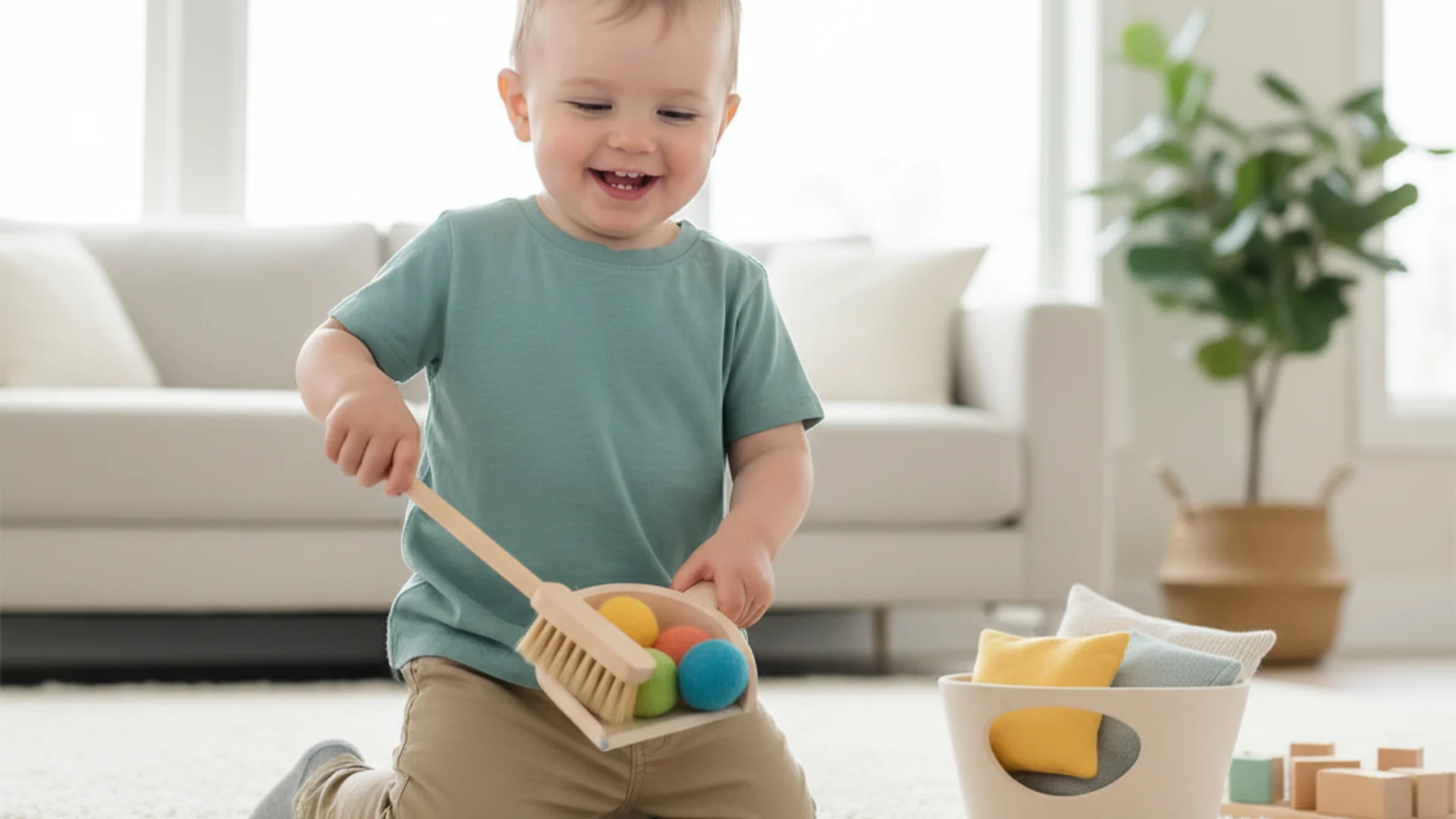
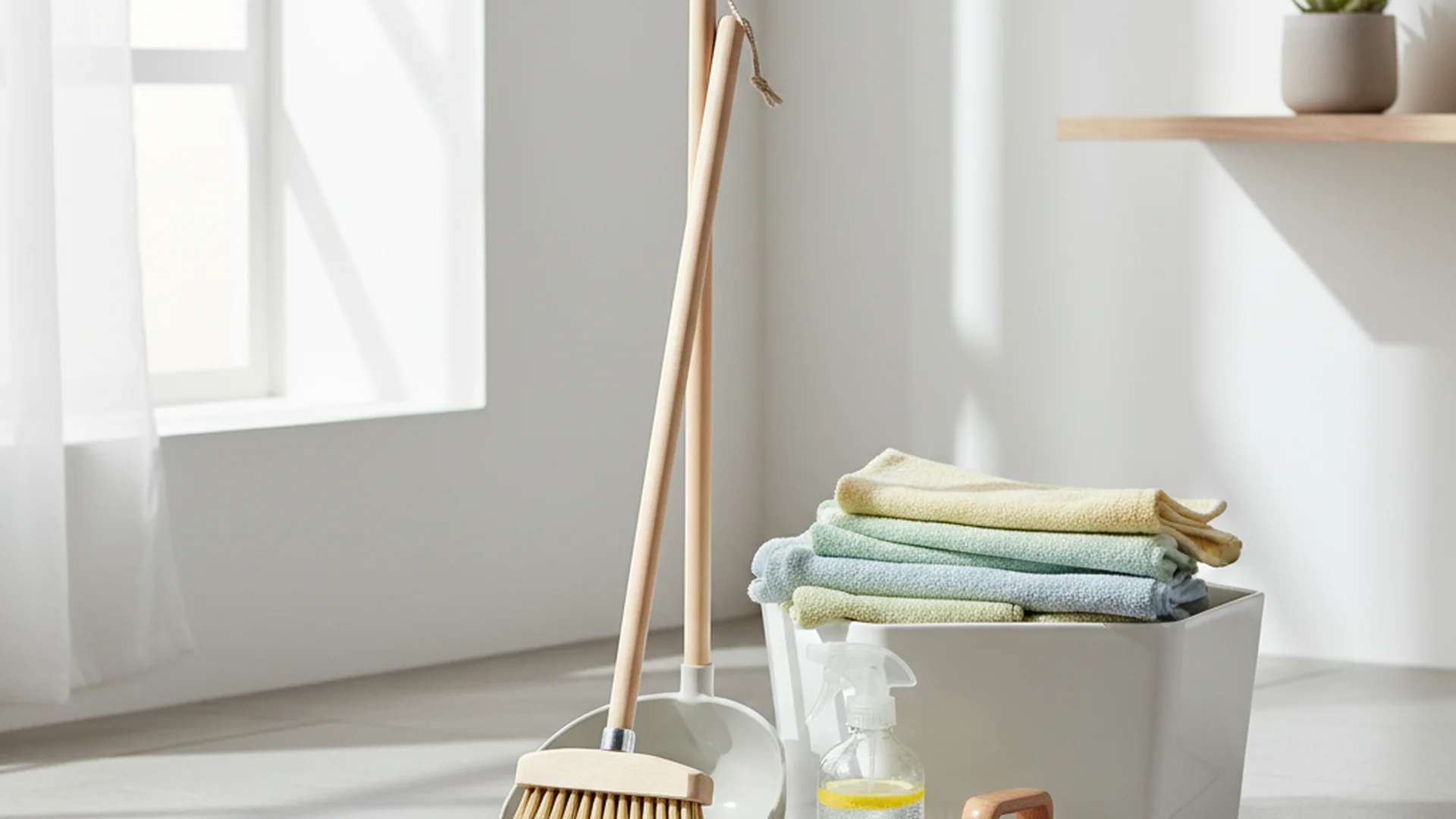
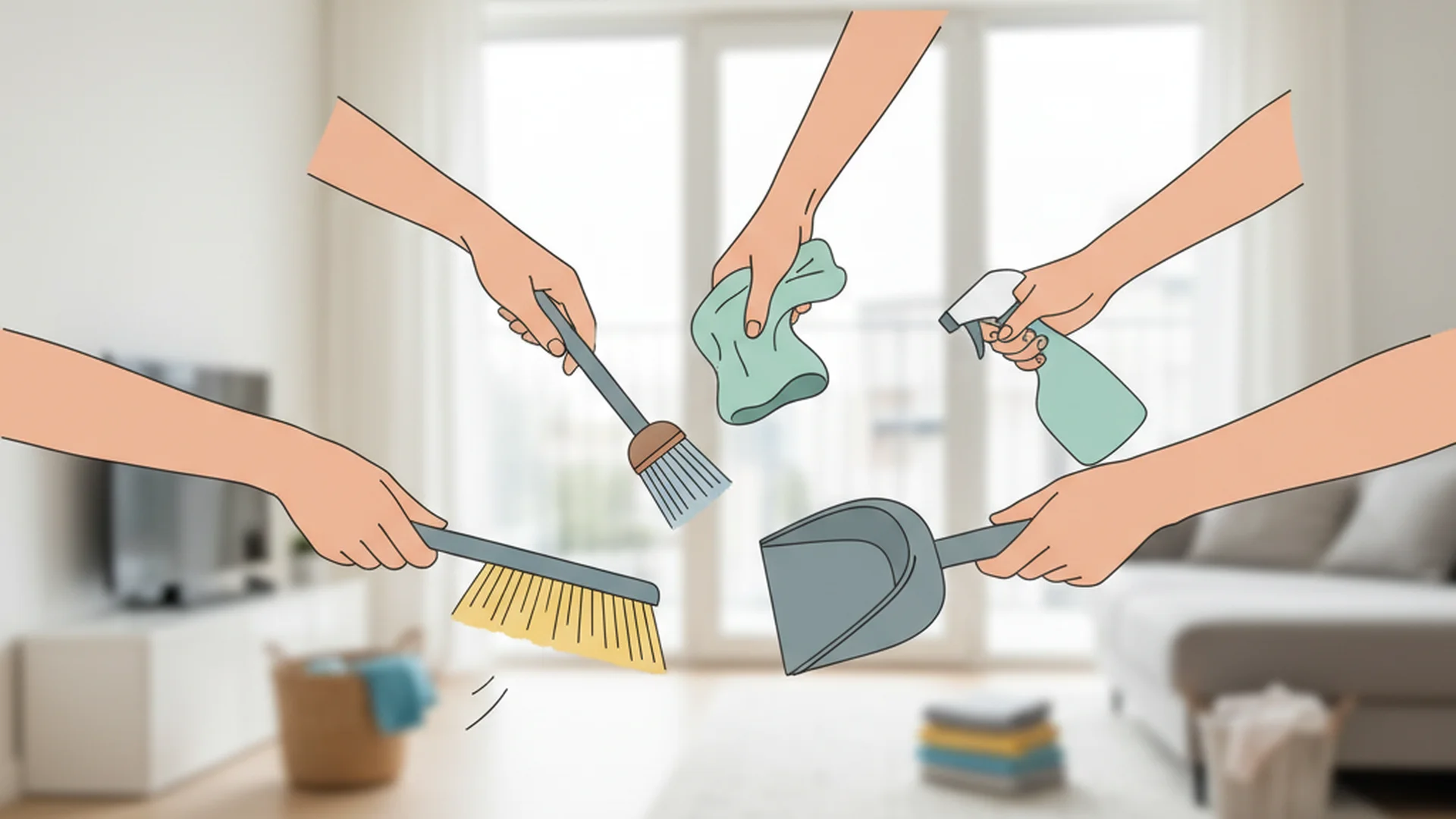
Tip: Use child-sized tools. A toddler will find a full-sized broom frustrating, but a small, hand-held brush and dustpan makes them feel capable and successful.
Best Practices for Introducing Chores
When implementing first chores for toddlers, the method is just as important as the task. The following strategies help ensure a positive experience:
The Montessori "Practical Life" Approach
Montessori educators refer to chores as "Practical Life Skills." The goal is to provide the environment and tools for the child to succeed physically. This means low hooks for coats, accessible bins for toys, and "child-sized" cleaning supplies.
Use the "Scaffolding" Method
Never expect a toddler to understand a multi-step task immediately. Use the "Watch me, help me, I'll help you, you do it" progression.
- Watch me: You do the chore while narrating your actions.
- Help me: You and the child do the chore together.
- I’ll help you: The child takes the lead, and you provide minimal assistance.
- You do it: The child completes the task independently.
Warning: Resist the urge to "re-do" the chore in front of the child. If they wipe a table and leave a streak, wait until they leave the room to finish it. Re-cleaning in their presence can crush their sense of competence.
Visual Reinforcement
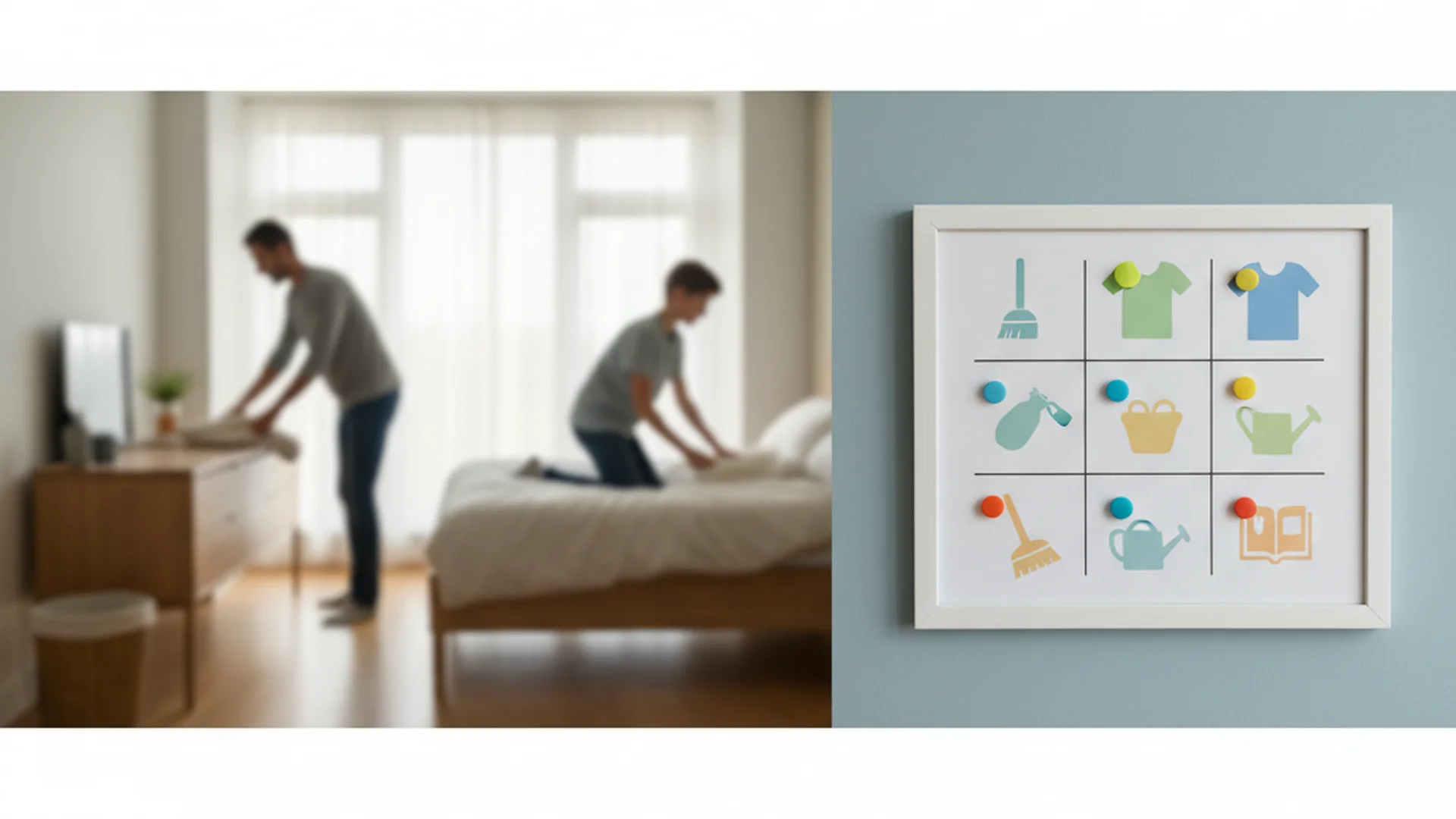
Since most toddlers cannot yet read, a standard chore chart won't work. Instead, use a visual chart with pictures. Seeing a photo of a toy bin and then moving a magnet to a "Done" column provides a significant dopamine hit, encouraging them to repeat the behavior.
2025 Trends in Toddler Chores
As we move through 2025 and into 2026, the way we approach family responsibilities is evolving with technology and new parenting philosophies.
Gamification and AI
New tools like Pastory and Greenlight are trending for their ability to turn tasks into "quests." For toddlers, this involves interactive sounds and digital "stickers" that sync with parent devices. Some parents are even using AI-powered "Parenting Pods" to generate custom "Chore Stories." In these stories, the child is a superhero who must "defeat the Laundry Monster" to save the kingdom, keeping the engagement levels high.
Eco-Chores and Sustainability
A rising trend in 2025 involves "Eco-Chores." Parents are teaching toddlers to sort compostable scraps or use "Earth-friendly" cleaning supplies like vinegar and water. This makes the child an "Earth Warrior," connecting household maintenance to a larger global purpose.
The "Lighthouse Parenting" Evolution
Moving away from "Helicopter Parenting," the 2025 "Lighthouse" trend emphasizes standing back. It involves letting the child struggle slightly with a task—like trying to fit a lid onto a container—to build resilience. You are the light guiding them, but they are the ones steering their own small boat.
Success: Children raised with the "Lighthouse" approach tend to show higher levels of problem-solving skills and lower anxiety when facing new challenges.
Common Mistakes to Avoid
While the intention is good, certain habits can derail the benefits of introducing chores.
- Using Chores as Punishment: If "cleaning the baseboards" is the penalty for a tantrum, the child will develop a lifelong resentment for cleaning. Chores should always be framed as a positive contribution to the family.
- The "Rewards Economy": Giving a gummy bear or a coin for every toy picked up creates a "What’s in it for me?" mentality. In the long run, you want them to help because they are part of the family, not for a bribe.
- Gender-Coding: Avoid the trap of assigning "indoor" chores to girls and "outdoor" chores to boys. Children in homes with gender-neutral chore distribution tend to develop more empathy and a broader set of life skills.
- The "Speed" Trap: Many parents think, "It’s faster if I just do it myself." While true today, this is a "long-term loss." Investing the extra 10 minutes now to teach your toddler saves you years of doing their laundry and cleaning their rooms later.
Frequently Asked Questions
Should I pay my toddler an allowance for chores?
How long should a toddler's chore take?
What if my toddler refuses to help?
Is it safe for toddlers to use cleaning products?
Conclusion
Introducing first chores for toddlers is about so much more than a clean house. It is about raising a person who sees a need and fills it, who understands the value of work, and who feels like a capable, contributing member of their family. By starting small, staying patient, and focusing on the process rather than the result, you are setting your child up for a lifetime of success.
Success: By the time your toddler reaches school age, these small habits will have formed a foundation of self-reliance that makes the transition to "big kid" responsibilities seamless.
Cleaning that keeps score
Every task earns points, every streak multiplies them, and Premium adds a household leaderboard plus a monthly Dustagorgon to beat.
- Free forever
- 30 badges to earn
- Up to 6 in a household
No card needed. Set up your rooms in a couple of minutes.