In this article
What you’ll learn
- Always dust before you vacuum to utilize the gravity rule.
- Wait 15–20 minutes between dusting and vacuuming for particles to settle.
- Use microfiber cloths instead of feather dusters to trap allergens.
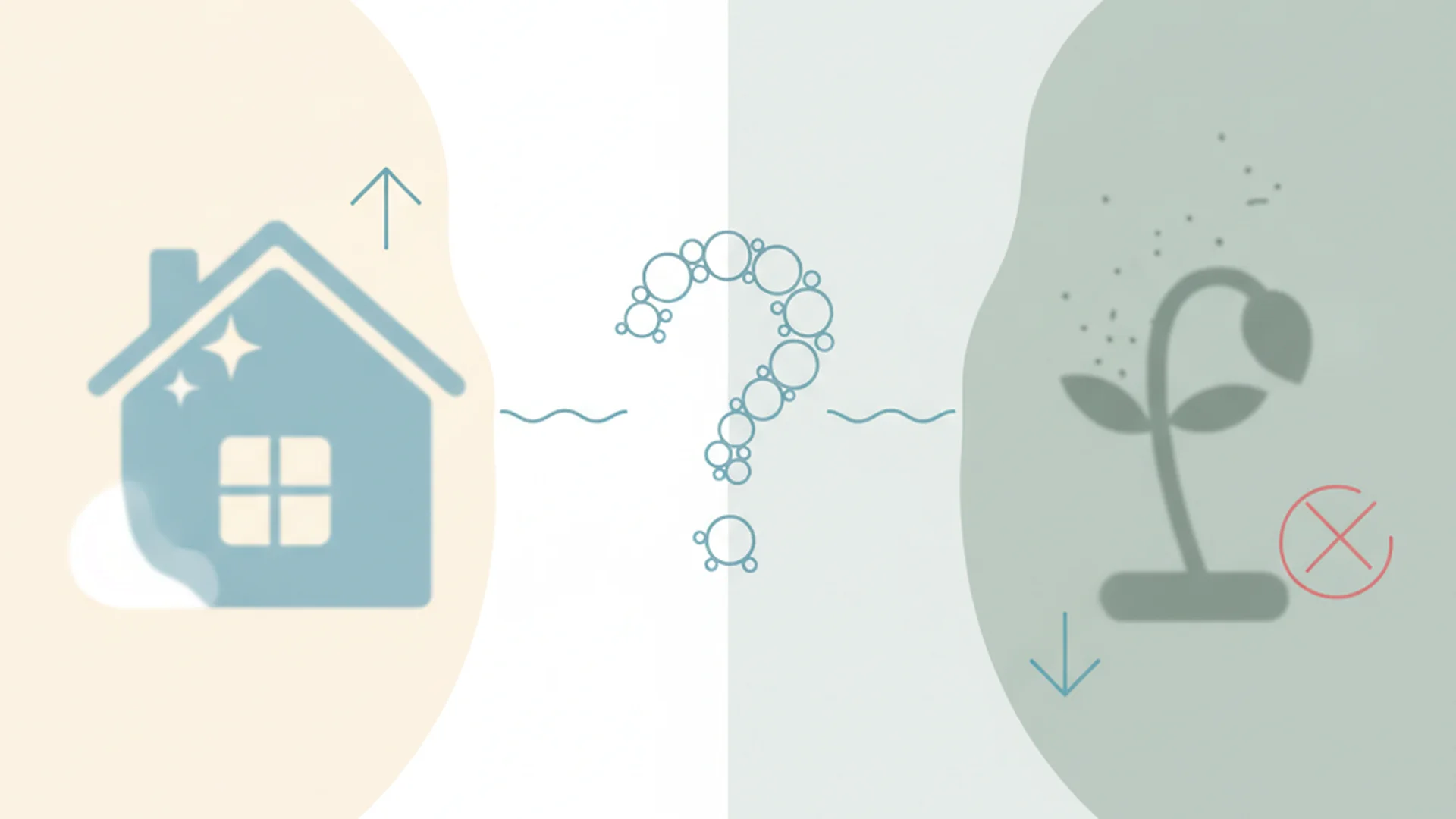
Are you working harder, not smarter? It is one of the most debated questions in home maintenance: should you dust or vacuum first? While it might seem like a trivial detail, the order in which you tackle these chores can be the difference between a truly clean home and one where you are simply moving allergens from one surface to another. The dust or vacuum first answer is refreshingly clear: you should almost always dust first.
By understanding the physics of dust and the "Gravity Rule," you can optimize your cleaning routine to ensure that your indoor air quality remains high and your surfaces stay cleaner for longer. In this guide, we will break down the reasoning, explore the latest 2025-2026 cleaning technologies, and provide a step-by-step strategy for a more efficient home.
Why Dusting First Wins
The primary reason to dust before you vacuum is governed by the laws of physics—specifically, gravity. Even with the most advanced 2025 cleaning tools, the act of dusting inevitably disturbs a portion of fine particulates. These particles become airborne and slowly drift downward.
If you vacuum first and then dust, those airborne particles will eventually settle on your freshly cleaned carpets and floors, effectively undoing half of your hard work. By dusting first, you ensure that any "secondary" dust that escapes your cloth lands on a floor that hasn't been vacuumed yet.
Indoor Air Quality and Health
Indoor air quality (IAQ) has become a major focus for homeowners in 2025. Indoor air is frequently more polluted than the air outside. Dust is not just an aesthetic nuisance; it is a complex cocktail of dead skin cells, pet dander, pollen, and microscopic dust mites.
If you or anyone in your household has a dust mite allergy, the sequence of cleaning is a health priority. An incorrect cleaning order redistributes these allergens into the breathing zone. Utilizing the correct "top-to-bottom" sequence ensures these triggers are actually removed from the environment rather than recycled through the air.
Note: We spend the overwhelming majority of our lives indoors, making the efficiency of dust removal a critical health factor rather than just a cosmetic chore.
The Top-to-Bottom Methodology
Professional cleaners and domestic efficiency specialists use a "top-to-bottom" approach. This ensures that as you move through a room, you are never cleaning a surface that will be "re-contaminated" by a higher surface later.
1. High Surfaces (The Ceiling and Walls)
Start with ceiling fans, crown molding, and the tops of high bookshelves. These are the primary collectors of "old" dust that can be shed into the room whenever there is a draft.
2. Mid-Level Surfaces (Furniture and Decor)
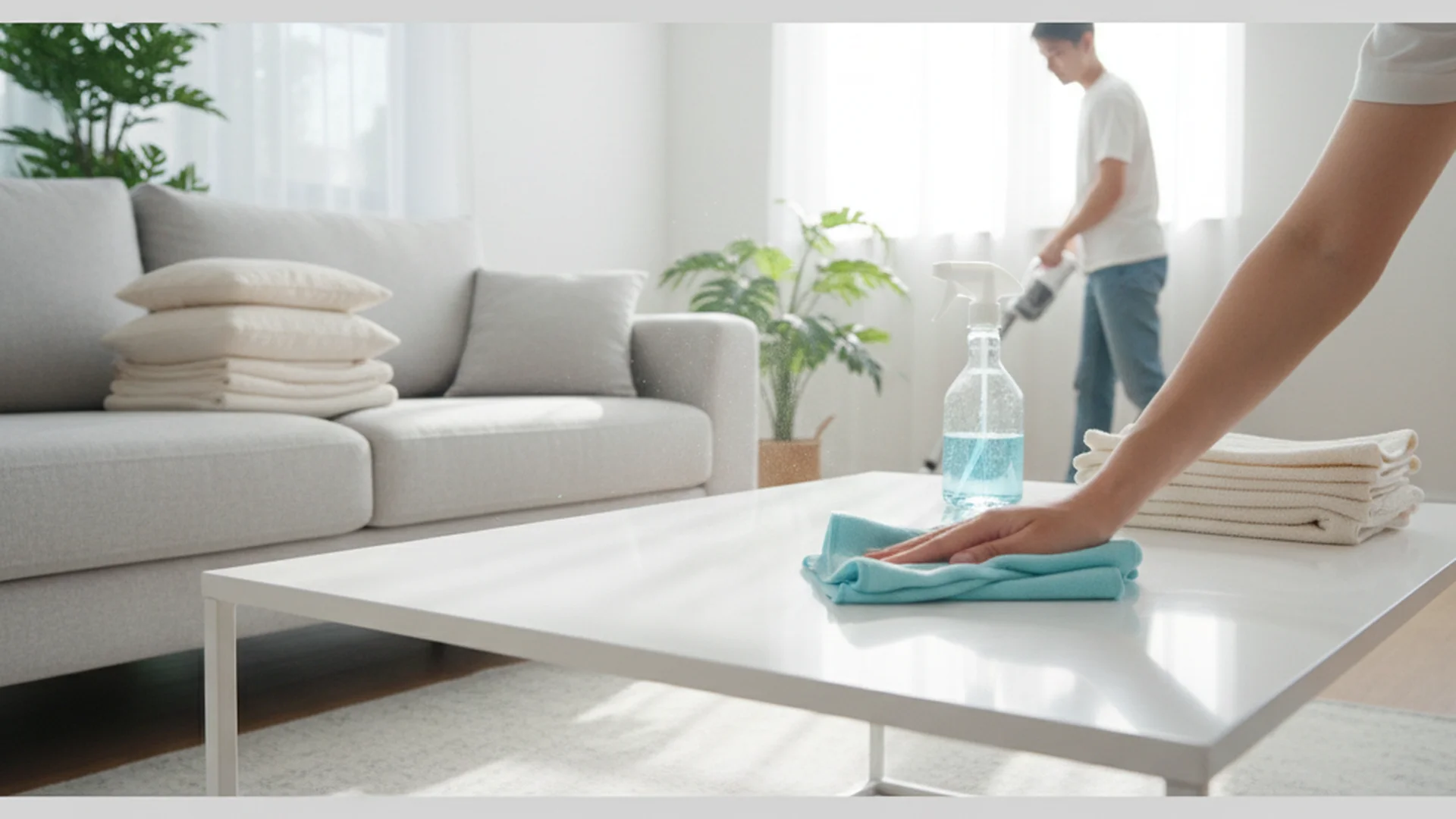
Once the highest points are addressed, move to eye-level surfaces like picture frames, television screens, and tabletops.
3. The 15-Minute Waiting Rule
This is the secret of professional cleaners. After you finish dusting all surfaces, do not start the vacuum immediately. Wait 15 to 20 minutes. This allows any particulates you disturbed to fully settle onto the floor.
Tip: Use this 15-minute gap to switch out trash liners, water plants, or tidy up clutter. This makes your cleaning flow more continuous.
Real-World Examples of the Sequence in Action
To understand how this looks in a modern home, let's look at three common scenarios.
Example 1: The Multi-Level Living Room
In a living room with a ceiling fan and a fireplace mantle, the dust levels are often high. If you were to vacuum the rug first, then clean the ceiling fan, the centrifugal force of the fan blades would spray dust across your clean rug. By dusting the fan first, you capture 90% in a cloth, and the remaining 10% falls to be sucked up by the vacuum later.
Example 2: The High-Tech Home Office
Home offices are magnets for dust due to the static electricity generated by monitors and CPUs. Dusting these electronics with a microfiber cloth first is essential. Because electronic dust is often "charged," it tends to cling. Dusting first breaks that bond, allowing the fallen debris to be cleared from the floor in the final step.
Example 3: The Hardwood Hallway
Even without carpets, the order remains the same. Dusting baseboards and console tables first allows the debris to land on the hardwood. You can then use a vacuum (on the hard floor setting) or a microfiber mop to finish the job.
Warning: Never use a dry feather duster on electronics. They often generate static which can attract more dust or, in rare cases, cause small electrostatic discharges.
2025-2026 Trends: The Future of Dust Removal
The cleaning industry has seen massive technological shifts recently. If you are looking to upgrade your routine, keep these 2025 trends in mind:
| Technology | Benefit | 2025 Impact |
|---|---|---|
| AI LiDAR Sensing | Robot vacuums detect dust clouds | Automated cleaning after you dust |
| UV-C Vacuum Heads | Kills bacteria and dust mites | Sanitizes floors after dusting |
| HEPA H14 Filters | Captures 99.99% of particles | Prevents "dust spray" from the vacuum exhaust |
| Sustainability | Washable microfiber | Reduced waste compared to disposable wipes |
AI-Integrated Cleaning
High-end robot vacuums in 2025 now feature "Dust-Sensing LiDAR." These smart machines can communicate with your home’s air purifiers. When the air purifier detects a spike in particulates (which happens when you are dusting), it can automatically trigger the robot vacuum to sweep the area 20 minutes later, perfectly timed for when the dust has settled.
The Sustainability Shift
There is a significant move away from disposable dusting wipes. Modern consumers are opting for high-density, washable microfiber cloths that can withstand over 500 washes. This is not only better for the environment but also more effective at "trapping" dust rather than just pushing it around.
Common Mistakes to Avoid
Even if you have the sequence right, these common errors can undermine your efforts:
- The Feather Duster Fallacy: Feather dusters are essentially "dust spreaders." They flick particles into the air rather than removing them. Switch to a damp microfiber cloth for better results.
- Racing the Vacuum: Moving the vacuum too fast doesn't give the brush roll enough time to agitate the carpet and suck up the fine dust that just fell from your shelves. Slow, overlapping passes are required.
- Neglecting the Filter: If your vacuum filter is dirty or not HEPA-rated, you are essentially "spray-painting" your room with fine dust while you vacuum.
- Ignoring Baseboards: Baseboards are the final resting place for fallen dust before it hits the floor. They should always be dusted before the final vacuum.
Success: By slowing down your vacuuming speed by 50%, you can increase dust pickup by up to 30% in high-pile carpets.
Frequently Asked Questions
Does it really matter if I have a HEPA vacuum?
Should I wait between dusting and vacuuming?
What if I have hardwood floors instead of carpet?
What is the "Martha Stewart Nuance"?
Conclusion
The debate is settled: to achieve the cleanest, healthiest home possible, you must always dust first and vacuum second. By following the gravity rule and implementing the 15-minute waiting period, you ensure that your efforts result in a total removal of allergens rather than a simple redistribution.
In the 2025 cleaning landscape, leveraging technology like HEPA filtration and microfiber materials makes this process even more effective. Remember to work from the ceiling down to the floor, and don't be afraid to take a short break to let the dust settle before your final vacuuming pass.
Success: Mastering the correct cleaning sequence will reduce the time you spend cleaning over the long term, as dust will accumulate much more slowly on your surfaces.
Cleaning that keeps score
Every task earns points, every streak multiplies them, and Premium adds a household leaderboard plus a monthly Dustagorgon to beat.
- Free forever
- 30 badges to earn
- Up to 6 in a household
No card needed. Set up your rooms in a couple of minutes.