In this article
What you’ll learn
- Mudrooms host 400x more bacteria than toilet seats; deep cleaning is essential.
- Use the "Sandwich" floor method for a truly debris-free finish.
- Seasonal deep cleans prevent the spread of lead dust and pesticides.
The mudroom is the unsung hero of the modern home. It is the frontline defense against the elements, catching everything from winter slush and spring pollen to the daily grit of suburban life. However, because it is designed to get dirty, we often overlook just how contaminated this space becomes. To truly protect your home's air quality and hygiene, you need to deep clean your mudroom with a strategy that goes beyond a simple sweep and mop.
Recent studies highlight a startling reality: the average pair of shoes carries over 421,000 units of bacteria. When you consider that 90% of that bacteria transfers directly to your floors upon entry, the mudroom becomes the most critical "decontamination zone" in your house. In this guide, we will walk through a professional-grade mudroom deep cleaning checklist updated for 2025 standards, ensuring your entryway is as healthy as it is organized.
The Science of the Mudroom: Why Deep Cleaning Matters
Before we dive into the "how," it is vital to understand the "why." Research from the University of Arizona, led by Dr. Charles Gerba, found that 96% of shoes contain fecal coliforms (E. coli). While most people focus their cleaning efforts on the bathroom, the average shoe carries 400 times more bacteria than a toilet seat.
A mudroom functions as a pollutant barrier. When properly maintained, it can reduce indoor lead dust and pesticide exposure by up to 50%. However, without a seasonal deep clean, the mudroom stops being a barrier and starts being a reservoir for toxins that eventually migrate into your carpets and bedrooms.
Preparation: Gathering Your 2025 Cleaning Arsenal
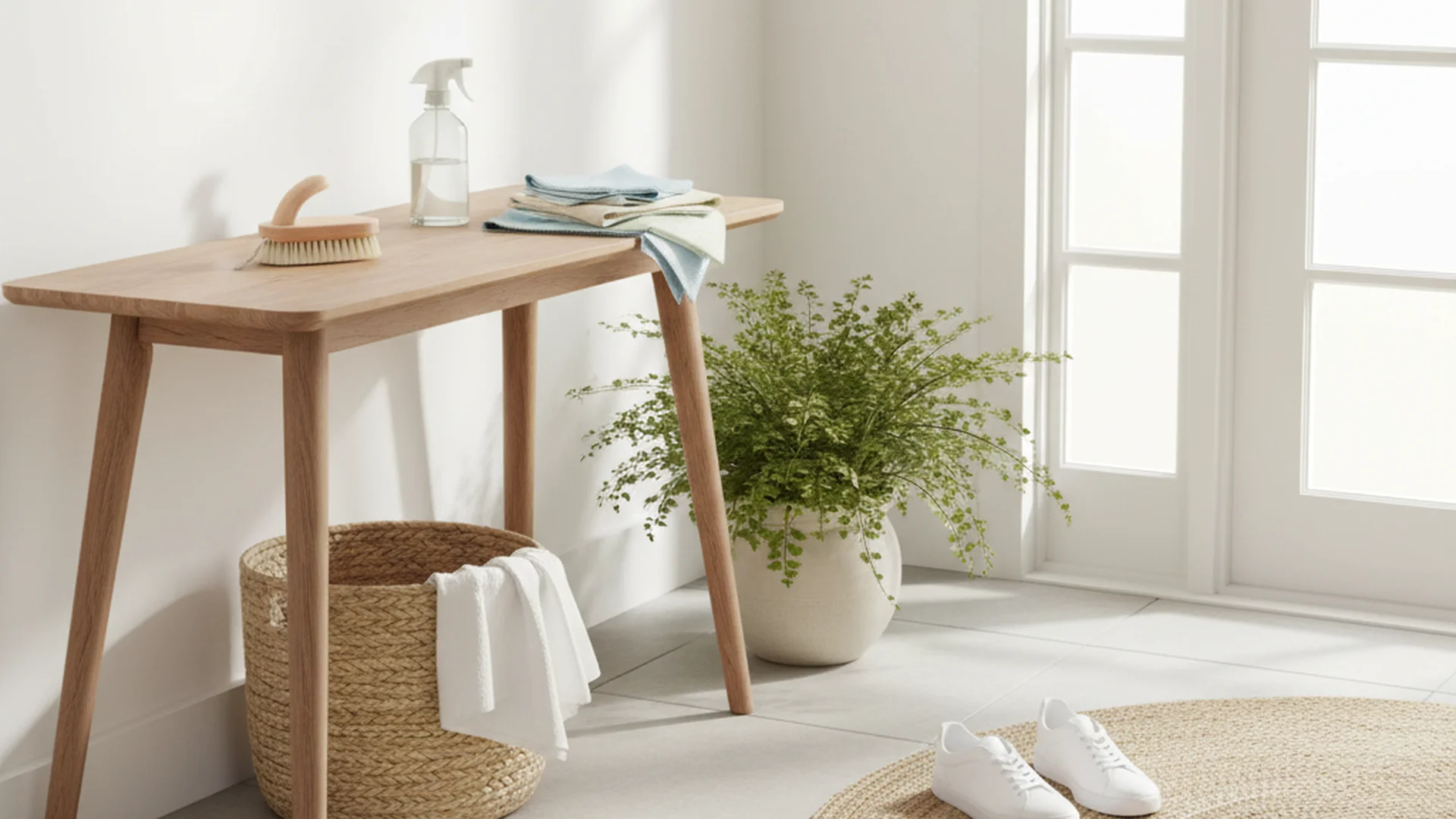
Deep cleaning a high-traffic area requires more than a rag and a bucket. To achieve professional results, gather these supplies:
- HEPA-filter Vacuum: Essential for capturing microscopic allergens and lead dust.
- pH-Neutral Cleaner: Safe for tile, stone, and wood.
- Microfiber Cloths: To trap dust rather than move it around.
- Steam Mop: For chemical-free sanitization of hard floors.
- Charcoal Deodorizers: To eliminate the "damp shoe" smell.
- Soft-Bristle Brush: For scrubbing grout and textured cubbies.
Note: For 2025, many homeowners are opting for eco-friendly, low-VOC cleaners to maintain indoor air quality while deep cleaning.
The Ultimate Mudroom Deep Cleaning Checklist
Follow these steps in order to ensure you aren’t just moving dirt from one spot to another.
Step 1: The "Cull the Herd" Declutter
You cannot deep clean a room full of clutter. Empty every single cubby, bin, and hook.
- Sort: Create three piles: Keep, Donate, and Relocate.
- Seasonal Swap: If it is currently summer, those heavy winter parkas and snow boots should be moved to long-term storage after being laundered.
- The "One-Year" Rule: If a pair of boots hasn’t been worn in a full year, it’s time to donate them.
Step 2: Top-Down Dusting and Surface Prep
In cleaning, gravity is your enemy if you don't plan for it. Always work from the ceiling down to the floor.
- Light Fixtures & Fans: Use a damp microfiber cloth to wipe away dust from bulbs and shades.
- High Shelves: Dust the tops of cabinets and built-ins where "dust bunnies" thrive undisturbed.
- Walls: Wipe down the walls, especially the areas behind where wet coats hang. These are prime spots for mildew growth.
Tip: Use a 1:1 vinegar and water solution to wipe down walls and baseboards. It’s effective against most household molds and is safe for most paint finishes.
Step 3: Sanitize High-Touch Zones
The mudroom is full of "touchpoints" that everyone handles as they enter. Use a disinfectant to clean:
- Door handles and deadbolts.
- Light switches and smart home panels.
- Cabinet pulls and drawer handles.
- Bench seating surfaces.
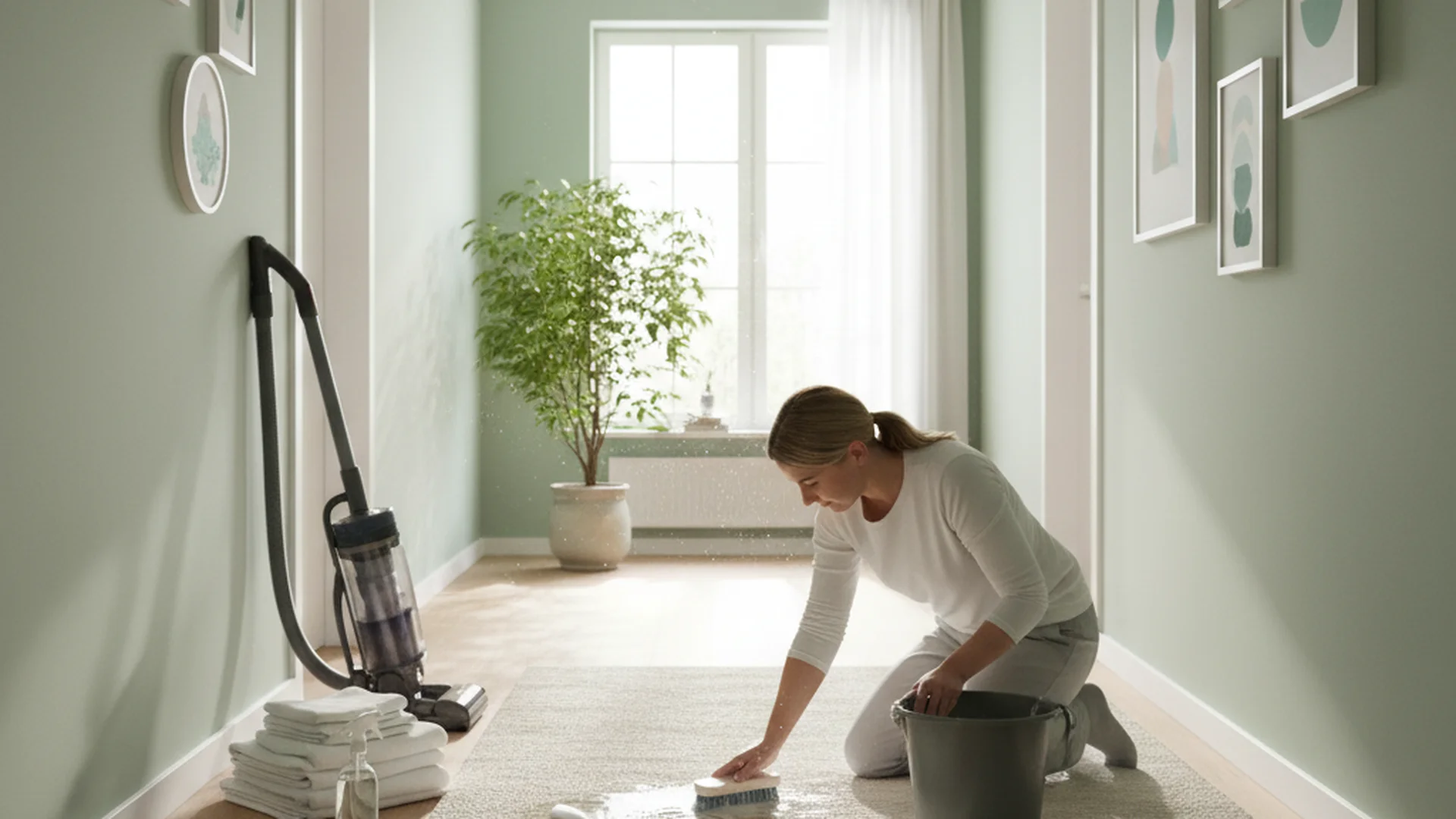
Step 4: The "Sandwich" Floor Method
For 2025, cleaning experts recommend the triple-pass "sandwich" method to handle the heavy grit found in mudrooms.
- Dry Vacuum: Use a high-suction vacuum (or shop vac) to remove all loose sand, salt, and dirt.
- Deep Mop/Steam: Use a steam mop or a damp microfiber mop with a pH-neutral cleaner. Avoid over-saturating wood floors to prevent warping.
- Post-Dry Vacuum: Once the floor is 100% dry, vacuum one more time. This catches the fine debris that was "dislodged" by the moisture but not fully picked up by the mop.
Warning: Never use a soaking wet mop on laminate or hardwood mudroom floors. Excess water can seep into the seams, causing permanent swelling and damage.
Step 5: Wash the "Unwashables"
Don't forget the accessories that live in the mudroom.
- Wicker Baskets: Vacuum the interiors with a brush attachment to remove dust trapped in the weave.
- Floor Mats: Shake them outside, vacuum both sides, and if they are machine-washable, toss them in.
- Cushions: Launder bench covers or use a fabric steamer to refresh non-removable upholstery.
2025-2026 Mudroom Trends to Incorporate
As you deep clean, you might realize your mudroom needs a functional upgrade. Here are the top trends for the coming years:
Pet-Centric Hybrid Stations
The biggest trend for 2025 is the integration of "dog wash" stations. These are tiled foot baths located at floor level with a hand-held sprayer. If you don't have a built-in station, consider adding a dedicated "paw-cleaning" kit with microfiber towels and a gentle pet-safe sanitizer.
Smart Storage & AI Integration
Many homeowners are now installing docking stations inside mudroom cabinets for AI-driven wet/dry vacuums (like Tineco or Roborock). Having these tools pre-charged and hidden in the mudroom allows for "instant" deep cleaning the moment a spill occurs.
Moody Aesthetics
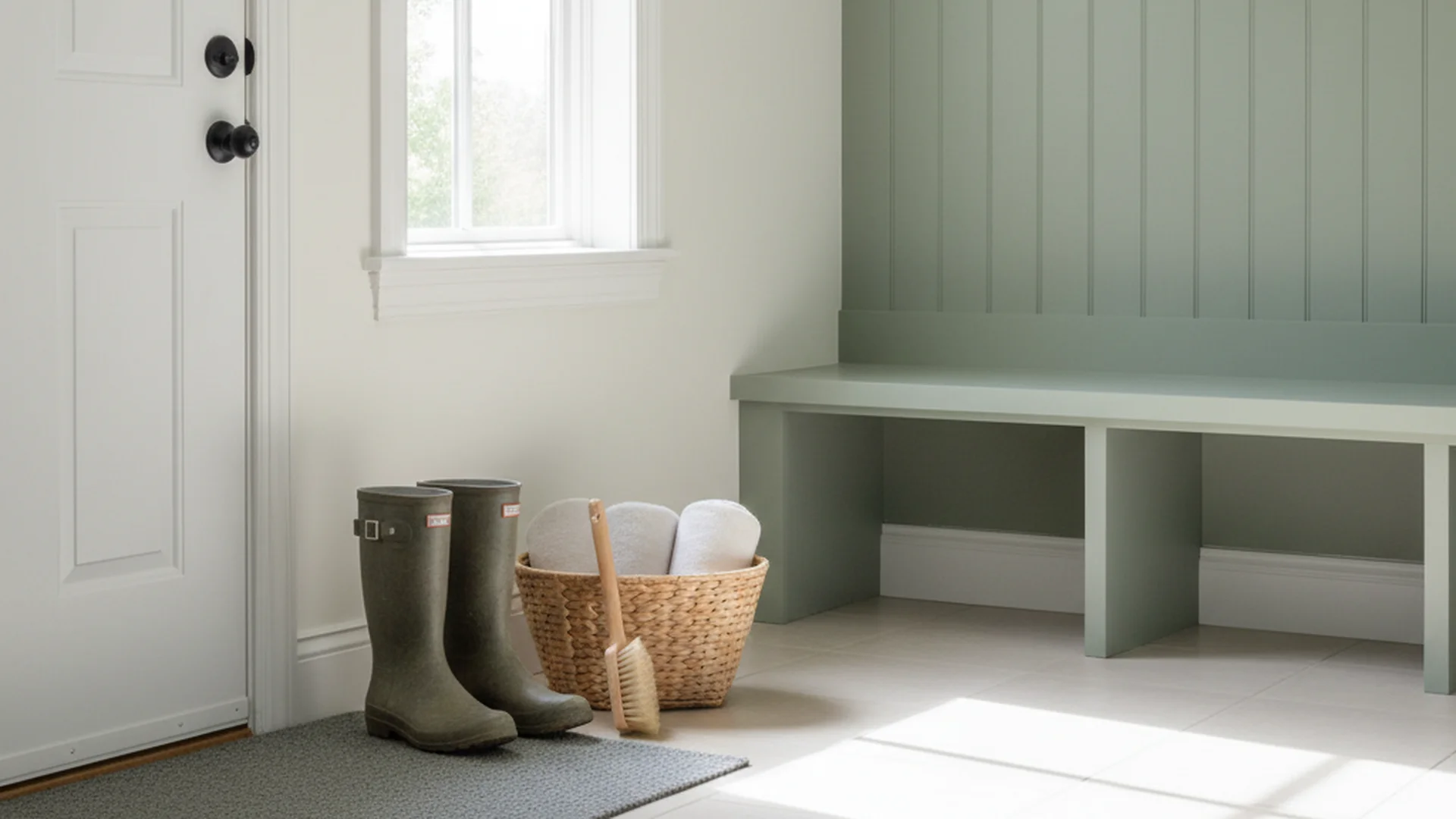
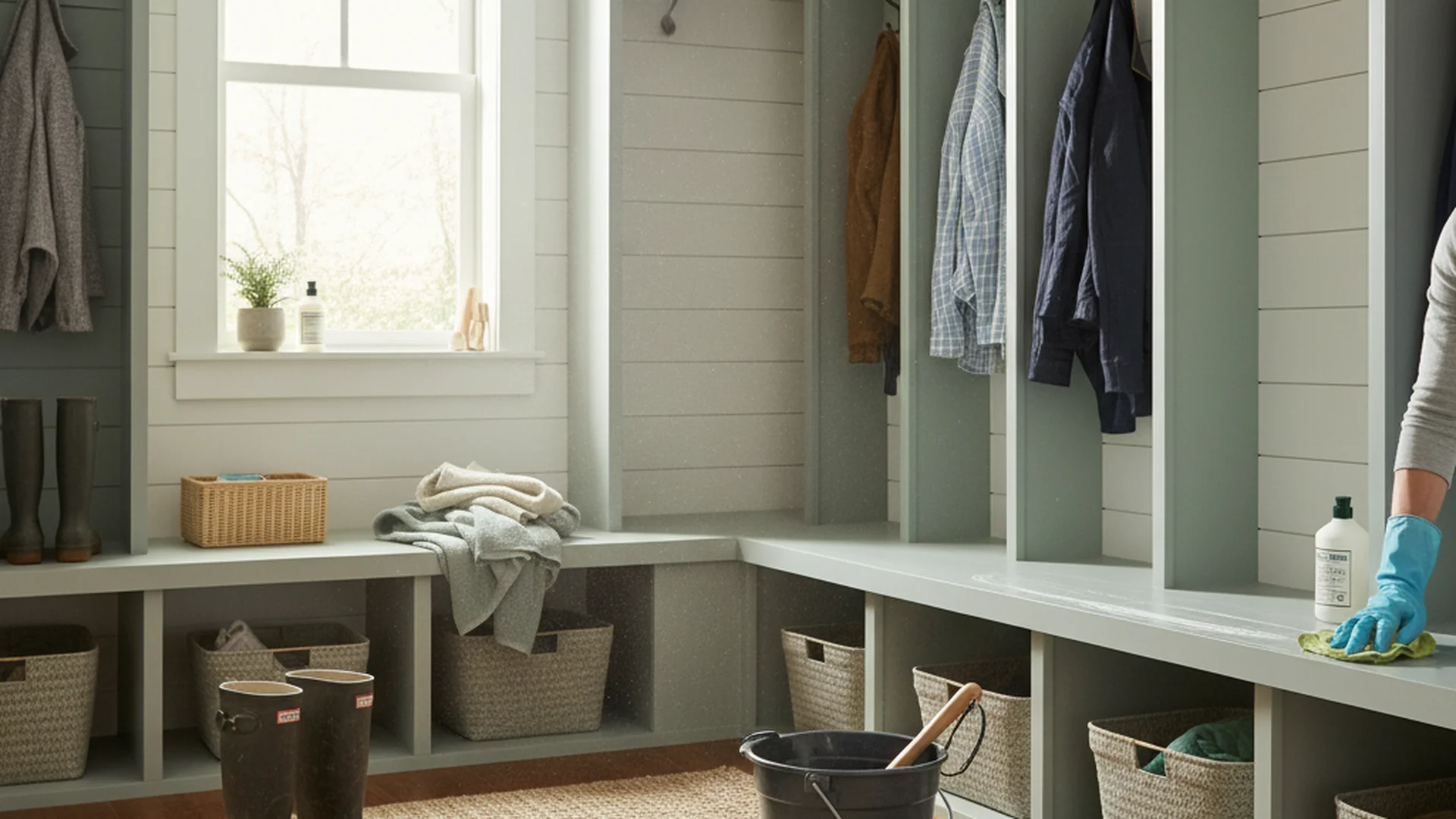
The era of the "all-white farmhouse" mudroom is fading. In 2025, dark, moody colors like forest green, navy, and charcoal are taking over. These colors are not only stylish but are far more practical for hiding the inevitable scuffs and dirt that come with high-traffic entryways.
| Trend | Benefit | Maintenance Level |
|---|---|---|
| Cork Flooring | Antimicrobial & Water-resistant | Low |
| Built-in Charging Pods | Organizes tech "drop zones" | Minimal |
| Dark Green Cabinets | Hides dirt and scuff marks | Low |
| Tiled Paw Wash | Prevents mud from entering the home | Moderate |
Real-World Examples: Deep Cleaning in Action
Example 1: The "Muddy Paws" Scenario
The Johnson family in Seattle has two Golden Retrievers. Their mudroom often smelled like "wet dog." During their deep clean, they discovered that the smell wasn't coming from the floor, but from the wicker baskets holding the dogs' leashes and toys. By switching to washable canvas bins and adding a charcoal deodorizer to the cubby, they eliminated the odor entirely.
Example 2: The "Winter Salt" Battle
In Chicago, Sarah found that her dark slate mudroom floors looked "ashy" even after mopping. The culprit was salt buildup. She implemented the "Sandwich" floor method, specifically using a vinegar-based solution during the wet phase to break down the alkaline salt minerals. The result was a restored, deep black finish to the stone.
Example 3: The Digital Family Command Center
The Martinez family used their deep clean to transition their mudroom into a "Command Center 2.0." They cleared out a junk drawer, installed a wall-mounted tablet for family scheduling, and added wireless charging pads. By cleaning the "invisible" areas—like the dust behind the tablet mount—they ensured their tech would run cool and last longer.
Common Mistakes to Avoid
- Cleaning Bottom-to-Top: Starting with the floor is the most common error. Dust from shelves and hooks will simply fall on your clean floor as you work. Always start at the ceiling.
- Relying Solely on a Broom: Brooms are great for large debris, but they often kick fine dust and bacteria into the air. A HEPA-filter vacuum is necessary for a true "deep clean."
- Ignoring the "Invisible" Areas: Don't forget to vacuum the underside of benches and the interior corners of shoe cubbies. These are prime locations for spiders and allergens to collect.
- Neglecting Your Tools: If you use a dirty mop or a vacuum with a full bag, you are simply spreading bacteria around. Deep clean your tools before you start the room.
Success: A properly deep-cleaned mudroom not only looks better but acts as a functional "air filter" for your home, stopping dirt and germs at the door.
Frequently Asked Questions
How often should I deep clean my mudroom?
What is the best way to clean mudroom floor mats?
How do I get rid of the "mudroom smell"?
Should I use bleach on mudroom surfaces?
Conclusion
Deep cleaning your mudroom is one of the most impactful things you can do for your home's overall health and organization. By following a top-down approach, utilizing the "sandwich" floor method, and addressing the invisible bacteria brought in by shoes, you create a safe, welcoming transition space for your family.
Remember, the mudroom is the gatekeeper of your home. Treat it with the care it deserves, and it will keep the rest of your living space cleaner, fresher, and safer for years to come.
Cleaning that keeps score
Every task earns points, every streak multiplies them, and Premium adds a household leaderboard plus a monthly Dustagorgon to beat.
- Free forever
- 30 badges to earn
- Up to 6 in a household
No card needed. Set up your rooms in a couple of minutes.